

SAN QUENTIN STATE PRISON

SAN QUENTIN STATE PRISON

SAN QUENTIN STATE PRISON

San Quentin, CA 94964

Marin County

1. A. Who is the C.E.O.?

B. Is he/she elected or appointed? If appointed, by who and for how long?

If elected, how long is the term?

1. A. Ronald Davis is the warden at San Quentin State Prison. He has been in this administrative position at the facility since 2014. He was previously the head of Valley State Prison in Chowchilla up to 2014 and was deputy warden at Avenal State Prison from 2010 to 2012. He has served in other similar positions in Salinas Valley State Prison ranging from the lieutenant, correctional officer, and sergeant.

(http://www.cdcr.ca.gov/Facilities_Locator/SQ.html)

            B. Governor Edmund G. Brown of California appointed Ronald Davis, the warden at SanQuentin State Prison where he had been serving as acting director since 2014. (http://www.insidecdcr.ca.gov/2015/06/governor-appoints-ronald-davis-as-san-quentin-sp-warden/)

2. A. Discuss the main function/responsibility of the correctional department or facility? (Do not answer anything related to the welfare/care/safety/well-being-feeding, medical care, bathing/education/training/rehabilitation/social programs/preparation for release. If the Dept. only had funds to do ONE thing what would that first thing be? ). Think about this one; you already know the answer, the basics.

B. Describe the population’s “classifications” of the inmates. Hint: Is it pre-sentence, post-sentence, or both? Male, Female, Juvenile or a combination, if so list percentages.

C. Describe and discuss the security classifications (maximum, medium minimum, etc.)

2. A. The primary function of San Quentin State Prison is to ensure criminal offenders are housed in a secure way.  This is the State’s only gas chamber, and all condemned inmates are located here. The prison facility has death row divided into three sections; the north segregation for prisoners who don’t usually cause trouble, the East block and the Adjustment Center for the worst criminal offenders. There is a psychiatric facility that serves the prisoners and a converted shower bay for holding religious activities.

However, most of the functions and programs available at the facility are not accessible to death row inmates. In 2007, a new execution chamber was built at san Quentin with a 230 square feet injection chamber and three viewing areas for family, victim and members of the press. Other than state executions, the prison facility carries out federal executions although in rare cases. So far, only three such executions have taken place on criminals who had been incarcerated at Alcatraz Island federal penitentiary. Notably, this is the only inmate-produced newspaper in California and one of the few in USA.

(http://abc7news.com/news/rare-look-inside-san-quentin-prison-home-of-death-row/1471159/)

B. Initially a combination of both male and female inmates, San Quentin bay facility is strictly a male prison. It houses post-sentence criminal offenders who have committed serious crimes such as murder. The original plan for establishing the facility was to replace a prison known as Waban and since the French revolution of 1852 during the Bastille Day, the state prison has been known as Bastille by the Bay.

During its construction, inmates slept on the prison ship at night and labored to build the new facility during the day. San Quentin house used to house both male and female inmates until 1933 when Tehachapi women’s prison was constructed. (http://www.cdcr.ca.gov/Facilities_Locator/SQ.html)

C. Although the Quentin State Bay Prison has a death row operation for serious criminal offenders, it does not fall under the category of maximum, medium or minimum security prison. Rather, it exhibits all the features and facilities of the three security classifications. There is one maximum security cell block known as the adjustment center, and a medium security setting. There is also a minimum security firehouse, and a central health care service. The walled prison comprises four elephant cell blocks; West, South, North and east blocks.

( http://www.cdcr.ca.gov/Facilities_Locator/SQ.html)

3. What is the Mission Statement? (Can be a cut and paste, in quotations)

“We enhance public safety through safe and secure incarceration of offenders, effective parole supervision, and rehabilitative strategies to successfully reintegrate offenders into our communities”.

(www.cdcr.ca.gov/About_CDCR/vision-mission-values.html)

4. A. What is correctional accreditation?

B. Is the agency accredited? If yes, what is the title of the accreditation and since when?

A. Correctional accreditation is meant to enhance the operations of prison facilities by ensuring they adhere to standards relevant to all areas of operations. These areas include safety, security, inmate care, administration, justice and programs. The accrediting body ensures the correction facility follows to these standards by continuous assessment, contracting, preparation, and audit for final accreditation decision. The body works hand in hand with the facilities being examined to introduce them to the process of accreditation, provide necessary documentation, assign auditors to each levels of the facility and discuss various requirements for each standard.

(https://www.aca.org/ACA_Prod_IMIS/ACA_Member/Standards___Accreditation/About_Us/ACA_Member/Standards_and_Accreditation/SAC_AboutUs.aspx?hkey=bdf577fe-be9e-4c22-aa60-dc30dfa3adcb)

5. B. The prison agency was accredited by the Commission on Accreditation for Corrections in 2015. The commission had in previous year accredited eight additional California departments of corrections and rehabilitation prisons, such as Chukawalla Valley state prison and Folsom State prison. 

San Quentin State Bay Prison was accredited alongside Avenal State Prison, California State Prison-Los Angeles County, Deuel Vocational Institution, California Medical Facility, California State Prison-Corcoran, Salinas Valley State Prison and California State Prison-Los Angeles County.

( http://www.insidecdcr.ca.gov/2014/08/8-california-prisons-accredited-with-the-american-correctional-association-total-now-16/)

6. List the number (how many) of sworn personnel and the number of civilian personnel.

            As of March 22, 2017 San Quentin State Bay prison had a total capacity of 3, 760 inmates. This is in excess of the initial design capacity, given that the facility was meant to house a maximum of 3, 082. This facility is 122 percent occupied, with a staff capacity of 3, 956 personnel.

 7. A. Staff Personnel Diversity- What percent of the personnel in the agency are minorities, give breakdown, if it’s readily available (website)?

 B. Inmate Population Diversity- Advise on the inmate populations (percentage or actual   numbers) information: Male/Female, Adult/Juvenile, Race, and Ethnicity.

7. A. The facility hosts personnel of diverse cultures and origins, age and gender. The minority are female personnel.

(http://www.corrections.com/articles/21703)

7. B. Given that the facility is a male-only prison, there is no diversity of the population of inmate. There are 3, 076 male inmates who the occupy 122 percent of the facility’s capacity.

8. Inmate housing classification. How are they segregated: Is it by offense type, age, sex, and medical, all of the aforementioned? Explain.

Correctional officers are permitted to impose a wide range of disciplinary actions to maintain order in the prison. Reasonable sanctions may be imposed to classify and segregate inmates in terms of crime, mental illness and their conduct within the facility. However, corporal punishment, extreme isolation conditions, handcuffs, restraint chairs and any other form of cruel treatment is not acceptable. In the most severe cases of disciplinary crimes, inmates may be isolated for safety and security reasons.

Prisoners can also be segregated in protective custody or any other form of restriction than those used on the general population at the facility. This is mainly done to protect the prisoner from sexual abuse, manipulation, physiologically harm, verbal abuse or physical torture. This can also be applied to prisoners who request protection from other violent inmates. This type of segregation cannot exceed 30 days unless there is a serious and credible threat to the prisoner’s safety and the officers are unable to sufficiently offer protection.

9. Staff Personnel Work Schedules: How are the staff personnel that directly supervise the inmates assigned? (i.e. what are the shifts, 5/8s, 4/10’s, 3/12’s, or other) ?

The personnel work schedule involves three shift commanders who are changed after every eight hours. The commanders have the power to make decisions at the post unless they are litigating eventualities from top a senior manager.

 (https://forum.jpay.com/forum/state-specific-forums/colorado-doc/532-chain-of-command-in-a-prison-facility)

10. Your text Chpt. 12 discusses Centralization vs. Decentralization in prisons. A. Is your correctional department operating as centralized or decentralized, or is it in transition?

B. Explain what specific factors are present in the management and administration that resulted in your answer for A.

10. A. Effective management of San Quentin facility requires the implementation of an approach to management that appreciates the complexity of the correctional organization and the inmate’s environment. As a result, the management has adopted a decentralized system that effectively integrates inmate supervision and quality service delivery to the larger population while recognizing the needs of the staff.

(https://www.correctionsone.com/jail-management/articles/3440029-Prison-management-styles/)

          10. B. Like most of the US prisons and jails, San Quentin prison bay is a decentralized collection systems. The federal government, states and a lot of counties operate individual but interconnected networks. The prison organizational structure involves several individuals and agencies responsible for decision making and running of the facility. This relies on team environment at various levels in the organization where each individual has some authority to make decisions.

( https://eric.ed.gov/?id=EJ483118)

11. A. Are the personnel that directly supervise inmates assigned to the same area for any period of time? (3mo/6mo/year).

B. What is the process for them to change shifts? And Change Assignments?

A. The personnel that supervise inmates are assigned to the same area but a specific [period of time. This can range from months to one year.

B. For change in assignment or shifts, the personnel can fill in one staff is missing, and the next above them takes the position of whoever was assigned that duty.

(https://forum.jpay.com/forum/state-specific-forums/colorado-doc/532-chain-of-command-in-a-prison-facility).

 12. Organizational chart- detailed (can be an attached sheet). Do not provide a link.

13. Your text, chapter 5 explains Organizational Conflict and how it can be used to bring attention to issues and ultimately result in a positive outcome. These issues in a correctional setting can be potentially explosive, and diffusing them quickly is paramount. Discuss a real example that occurred in your selected Correctional Department.

        The complexity of San Quentin prison facility makes it difficult to manage, and even harder to resolve conflicts that arise from perceived opposition of values, needs and interests between the management and the inmates. On august 2015, the facility almost exploded into chaos after the first of six prisoners tested positive for legionnaire’s disease. The outbreak started with inmates for death row to solitary confinement, with 95 more inmates reporting the disease’s symptoms in the last few days.

None of the 95 inmates received official diagnosis of legionnaire’s infection. The California department of corrections and rehabilitation department sought to identify and treat potentially infected inmates. The outbreak was a result of water contamination with Legionella bacteria was aspirated, and the inmates possibly breathed in as moisture in the air conditioning.

The diseases claimed the lives of 12 people who had been sick because of contaminated cooling towers .This resulted to unusual lockdown of the facility, where visitors were prohibited from seeing inmates while the prisoner’s movement was highly restricted. The staffs were also subjected to difficult measures, being expected to be clean and many programs coming to a standstill.

Another incident happened on August 2013 where about 30 000 inmates in California prisoners went on hunger strikes, reusing state issued meals.  The prisoners demanded an end to the increasingly common practice of long-term solitary confinement.        (https://www.nytimes.com/2015/09/03/us/san-quentin-prison-scrambles-after-outbreak-of-legionnaires-disease.html?_r=0)

14. A. What is the ratio of corrections staff to inmates?

B. How does management ensure security in a facility/Dept/Prison when the correctional staff is always so out-numbered (basic principle used in all jails/prisons) ? Explain the physical settings and procedures that ensure officer safety and prevent inmates from taking over and escaping? This includes Physical barriers/ allocations of inmates/officer safety procedures and disciplinary deterrence’s. Address each of these.

C. What inmate medical, social services, educational/training programs, and religious opportunities are available for inmates?

 D. What inmate services would YOU say are lacking at the Department or Facility.

14. A. Currently, San Quentin State Bay prison has a total capacity of 3, 760 inmates and staff capacity of 3, 956 personnel. This will result to a ration of correction staff to inmates of 989: 940

14 B. The physical settings include level 2 housing; an open dormitory with secured perimeter and armed coverage. There is a Condemned Unit, and a reception center that provides housing on short term basis to process and evaluate inmates. Maintaining security in prison facilities involves cooperation between the inmates and the correctional officers. Sometimes, the correctional officers may be outnumbered by the inmates, and the management needs to highlight strategies to handle such an eventuality.

Having strong leadership is the first key solution to ensure the officers have all the support they need. Good leadership ensures prisons are well supervised ad there is minimum level of violence within the prison. The administration can ensure strong leadership by subjecting the officers to quality training and sufficient time on the job.

( http://www.cdcr.ca.gov/Facilities_Locator/SQ.html)

14 C. Inmates at the facility are allowed to engage in various social activities such as sports. Since 1994, prisoners have been allowed to play baseball with players from outside the prison- the games take place twice a week through the summer. There is an on-site degree granting program run by the Prison University Press that begun in 1996. Counter force is a non-profit organization that educates and supports people who are incarcerated.  It has various programs like the peer health education program that offers effective health information to prisoners, and the Back to Family Program that enables men to effectively re-connect with their families. ( http://www.cdcr.ca.gov/Facilities_Locator/SQ.html)

14 D. Despite the numerous social and educational services and programs available at the facility, there are services that are lacking. There are no sufficient religious programs to take care of diverse inmates needs effectively, and the available ones are lacking in terms of support and effectiveness. Only baseball sport is available, yet there should be more activities ranging from football, rugby and athletes.

15. A. Citing from the various specific Management and Leadership Styles discussed in your textbook, what leadership style would best for use by the Director or Warden towards his staff personnel? Comprehensively explain why?

    B. What leadership style would be best for correctional line personnel towards the inmates? Comprehensively explain WHY?

A. For effective running of the facility, a Laissez-faire leadership style would be best suited to deliver quality services while paying attention to the missions and goals of the organization. Using this style, the warden will be able to give subordinate staff enough freedom in doing their work at the facility. This leadership will result to job satisfaction by the correctional officers.

(https://www.google.com/url?sa=t&rct=j&q=&esrc=s&source=web&cd=13&cad=rja&uact=8&ved=0ahUKEwjbwf2NlvfSAhUHuo8KHfWEBP4QFghUMAw&url=http%3A%2F%2Fwww.leadership-toolbox.com%2Fautocratic-leadership.html&usg=AFQjCNGv-Zxmoh93xeJLTM4SrkGEAHUJRg&sig2=yZsDLIIffwJt5aUL48Paqg&bvm=bv.150729734,d.c)

             B. Due to the complexity of managing and getting inmates to do what is expected of them, an autocratic leadership style by the correctional personnel would be highly effective. An autocratic officer will make decision without asking or consulting with inmates, an appropriate style when decisions have to be made quickly. In most cases, agreement with the prisoners about key issues affecting the facility is not relevant.

16. Discuss THREE problems/issues related to the administration or management of the department or facility and explain how YOU would resolve each one IF you were the C.E.O. (Warden or Director, or …) List them as A. B. and C. (Hint: This could be budgetary, corruption, staffing, grievances, organizational, disciplinary, or …)

             One of the major problem facing the prison is overcrowding of inmates. This has resulted to increased difficulty in execution of key operations and has fueled grievances from the prisoners.  With an overcrowded facility, there is risk of controlling inmate behavior, minimizing incidences of violent attacks and it becomes problematic to monitor disease outbreak such as Legionnaires infection.

.Classification of inmates in terms of their ethnicity and race is another problematic issue related to the administration of the facility. This is especially the case with prisoners of Jewish origin, who fall somewhere between White and Asian.  Accusation have been forwarded against the administration for using race as a predominant factor in categorizing cellmates and putting Jews in dangerous positions when classified as White. As a result, the Jews might find themselves in same cell with racists and end up being mistreated.

(https://www.google.com/url?sa=t&rct=j&q=&esrc=s&source=web&cd=3&cad=rja&uact=8&ved=0ahUKEwjynPrSl_fSAhVElxoKHeGvBdAQFggrMAI&url=http%3A%2F%2Fwww.jweekly.com%2F2003%2F12%2F05%2Fasian-inmate-at-san-quentin-challenges-prison-s-classification-ofjews%2F&usg=AFQjCNH2yldcnmC5znnMCpVeOi76Gi1xGA&sig2=_K8jqy5CJIMOVRs0asef4g)

 The third administration challenge that requires immediate intervention is the question of correctional officer- inmate relationships. While some inmates make it harder to administer the facility due to their violent and stubborn behavior, there are cases when officers use extreme measures to achieve order. This has resulted to complain from inmates, human rights activists and other stakeholders demanding better treatment of the prisoners. The Adjustment Center (AC) is one cause of problem. Now partially exposed by the media, the AC has resulted to hunger strikes at the facility by inmates who demand an end to extreme torture.

17. A. Define the managerial concept of span of control as it relates to management of a CJ agency.

B. Apply the concept and tell me what the span of control is for TWO management or supervisory assignments.

17. A. Span of control refers to the number of employee who report to the manager in a hierarchy of command. When there are more people under the control of the manager, the span of control becomes wider. Less people mean a smaller span of control. It is the highest number of people supervised by a manager, and the number may be increased or reduced according to the nature of the work done. Span of control allows an organization to experience a smooth running of functions.

(https://www.google.com/url?sa=t&rct=j&q=&esrc=s&source=web&cd=12&cad=rja&uact=8&ved=0ahUKEwjR4p3ZmPfSAhXEpY8KHYl5AqMQFghZMAs&url=http%3A%2F%2Fstudy.com%2Facademy%2Flesson%2Fspan-of-control-in-management-definition-disadvantages-advantages.html&usg=AFQjCNG5_MqfkZXSN3WU2YSbAz5QTJk-8Q&sig2=7Y1_cv0DamWDI5d9G9js-g&bvm=bv.150729734,d.d2s)

B. For an organization with two managements, span of control concept means that the employees will be reporting to two managers within the same organization at different levels of management. This also means that the organization has only two levels of management where decisions are made.

18. Describe the physical layout of the correctional facility. IF you selected to do a Department, pick one facility in the department and describe its physical and staffing facets. Publicly available information only, include the address, number of dormitories, etc. Google EARTH may assist you with this question. If they tell you that its confidential for security, they are misunderstanding the question. You want the public basics only, if they have a concern, advise them of this.

             The physical address of San Quentin prison facility is CA 94964, California. The complex is mounted on Point San Quentin which entails 1.75 Km2 northern San Francisco Bay. It stretches 275 acres and has its own ZIP code for mail sent to prisoners. It’s bordered by San Francisco Bay to the south. They prison comprises four cell blocks, one maximum security block, central healthcare building, medium security dorm n a firehouse house.

19. Hierarchy of command.

A. Define it (in the context of Criminal Justice)

B. List all (hierarchy of command) ranks of correctional personnel that are responsible for custody of the inmates, from bottom to top. Start with title of the persons that directly have care and custody responsibilities of the inmates (often titled “correctional officer”) and End with the C.E.O., often titled the “Warden” or “Director” (note: Its not the Governor or President) , or they may have another title in your selected Department. Do not list the NAMES of personnel, ONLY the title, like Ofc. Sgt, Lt. …. or similar for YOUR selected Department.

19. A. A chain of command refers to a group of individuals who execute orders based on authority within the group. Its part of structure that delegates how power is distributed form the top most management to the rest of the people in an organization.

19 B. Shift Commanders

  Commanding Officer

            Sergeant

             Lieutenant

             Captain

             Warden: Title for the administrative head

19. Answer ONLY A or B and C.

A. IF your agency has a DEATH ROW, describe how many males and females are housed there. Also, describe the cell (size and what’s in it, sink? Bed? Toilet? Desk? And describe the daily life activity of a death row inmate (how many hours of outside area time, etc.).

                San Quentin has the largest death row for male inmates, and the largest in United States. The different units house 725 male inmates. However, there has not been any death execution for the past ten years as a result of challenges to the execution protocols. The cells in the facility look old, given by the fact that much of the structure were built 100 years ago. There is nothing automatic with the sinks, beds, doors and cells. Each cell must be locked manually using hands.

20. No right or wrong answer: Just a personal survey, with 5 easy points credited.

 A. How many actual hours did it take to complete this assignment? Between 40 to 50 hours.

B. Did you find it difficult? Yes. The assignment was a little frustrating but become easy and interesting towards the end.

C. Did you find it was a good review/repeat of the text material that ensures a student a student learned/understood what was to be learned in the course? Yes, the assignment is a good review to help understand classroom knowledge.

D. Most write that at first it looks tough and.. But later write that it was a great asset to the course, mostly only repeating the same concepts and terms, do you feel that way, that you learned a lot? Yes, it looked challenging given that information is not readily available. In the end, I realized there is much about correctional facilities that I learned.

E. What would you change? F. Any personal comments? This is all used to improve the content and RA for the future. The assignment should not be limited to correctional facilities in states of Alabama, Illinois, Kansas, Texas, New Orleans, Utah, California, Minnesota, Idaho, or Wisconsin

Want help to write your Essay or Assignments? Click here
Critical path in managing of project teams

Critical path
Critical path

Managing Project teams: The Role of Critical Path

Introduction

Management of project teams is one aspect of project management that should be handled with care. This should be done through coming up with proper schedule of events. The roles of each team player should be well defined. The processes to use for the purpose of achieving various objectives should be set out well. This essay describes management of project teams through use of various tools. This essay details the the role of the critical path method regarding task assignments and the negotiation of resource allocation within the project team. This essay is based on Electronic Health register project for hospitals.

Project schedule on the project tasks to be performed and the contribution of individual team members behavior in allocation of tasks

Project schenduling involves the time frame  set for  the project to be operational. Identification of dependencies in EHR  implementation  plays a major part in project scheduling of activities. This scheduling  may touch some hospitals for pilot and later all hospitals inclusively ; and the number of participants  are determined  directly proportional to the number of hospitals there in. In this project , all objectives are achieved within a certain set period under a given resource as depicted by the project schedule below.

 Project Management Improvement Project – Phase 1Effort Estimate in DaysPlanned Start DatePlanned End DateResource
1EHR implimentation
1.1Training on implimentation of EHR    
 Training on implimentation of EHR10.0006/01/1606/08/16IT officers, HR, officers, community members and clinical officers
2Plan Project
2.1planning, staffing, budgeting and project timing10.0007/01/1607/29/16Funds Sourcing (Accountants and project co-ordinators)
2.2EHR Control tools7.0007/15/1607/29/16Initiating budget cellings (budget committee)
2.3EHR Expected Benefits5.0007/22/1607/29/16Time Control tools,(reduced queing)
3EHR WEB FRAMEWORK AND FORMATS
3.1Design Framework    
3.1.1Designing EHR web framework delivery tools & Content formats8.0008/01/1608/15/16EHR technical committee (Software engineers)
3.2EHR TOOL PROTOTYPE
3.2.1Build web tool prototype and review content for quality97.0009/01/1610/31/16Clinical officers , Software engineers and Audit team
3.3EHR USABILITY &FEEDBACK ADJUSTMENT
3.3.1Test usability of web tool13.0009/19/1611/30/16EHR audit team and Clinical officers
3.4ANNOUNCE AVAILABILITY OF MODERN DATA REGISTRY
3.4.1Replace traditonal data entry with modern one.6.0012/01/1612/30/16EHR technical team and the community representatives.
4PROJECT EXIT AND POST PROJECT PREVIEW
4.1Conduct Post-Project Review6.0001/03/1701/10/17Audit team and technical experts

How the behavior of individual team members can determine the tasks they receive

Management of project  depends on availability  of resources  which are always scarce. This calls for  expertise and and structures so as to  attain projected goals of a project. Individual characters and task groups play a major role in the project planning process, forming and execution. The behavior that each of the project team members exhibit determines the roles that are allocated.

The allocation of duties by management is relatively subjective due to the desired success factors. For this project, the behavior of the project team members has been measured through use of knowledge and understanding of the project. This has let to responsibilities being issued on the basis of : Knowledge and understanding about the operation and implementation of  the modern  Electronic Health Register .

Those who have holistic understanding of the project cycle are given more responsibilities than those who do not. Ability to give progress reports is another behavioral factor to consider. Team members who are used to forwarding their reports in time have end up being assets to project managers. This is because project management requires timely updates.

Additionally, individuals who are team players get assigned roles much easier than those who are not. Team spirit when upheld, builds innovative capacity and  cohesiveness which is the focal point for an organizations success. Group members demonstrating high levels of maturity and leadership are selected to monitor and control organizational politics which sometimes become an impediment to the progress of an organization.

Geographical location also plays a major part in roles allocation, as those who come from a certain geographical area especially where the EHR will be implemented may be assigned more roles or certain roles as its difficult for them to receive rejection from their community. It is important to carefully assign duties to avoid frustration of organizations activites and minimize conflicts that may impair progress of a project.

Key processes to follow when managing the project schedule and oversight each project team member may require based on their behavior.

Project management is usually based on processes. It involves discharge of  managerial   procedures, materials and  essential techniques in  unraveling the project schedule. EHR implimentation is of prime importance as it saves patients money, time  and allows customers to enjoy optimal functionality of the health sector.

These processes endeavour to deliver quality patient care, uphold efficiency and effectiveness in hospitals, promote  timely attendance to customers and strive to  exceed customers satisfaction in order  mantain loyalty from all its clients. These processes are grouped  phases depending on the service anticipated or sought.They include:

1. Recourse Planning – This is the overall technical and material required to run the project as per the plan without budget strains. They include the  human capital, the  equipment needed and  the material levels  necessary. This process is fundamental in estimating the budget necessary for the implementation of the electronic health register. This stage consists of professionals who hardly require longer supervision. Support staff in this phase may be guided by the professionals , however little external oversight is necessary to eliminate defiance and promote peer interaction.

2. Project Cost Estimation –  This revolves around projected financial estimates that the whole project will incur. It is necessary to develop this projection to enable the project manager to determine whether the available funds are sufficient to implement the project and if not, to open up on better ways to source  for finances. Budget committees constitute the financial projection team. Thorough supervision should be given at this phase to avoid over or under estimation of figures.

3. Project Activity Budgeting – This involves allocating a vote to every program. It determines the cost of each individual activity that enables the organization arrive to its cost estimates.  It is important to do activity costing to seal loop holes for inefficiencies and promote overall effectiveness of the project activities. Each group here gives its individual budget on the basis of tasks  allocated. Supervision is critical here to control exaggeration of figures.

4. Cost Control –  This process is about controlling changes to project budget. This also involves controlling projects expenses to  ensure that the intended project remain within budget limits. It basically targets to eliminate wastes and enhance project efficiency through the stakeholders and the  project manager.

Precedence diagram method in managing team tasks and team conflicts

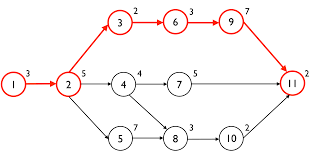
Precedence diagram is a management tool that involves graphical presentation of sequential activities  to explain inter–dependencies and order . It is also called activity on node. This tool is of necessity in drawing critical path network diagrams.It makes use of arrows and nodes. The arrows pointing the end activity. Precedence diagrams are critical in fostering information reliance to the stakeholders.

These diagrams normally use four types of dependencies. One of the dependencies is finish to start dependencies. This explains that the second activity can not be performed without actualizing the first activity. The other dependency is finish to finish events which explains that the first activity and the second activity should start simultaneously. For example crafting of managerial tools is dependent on the tools used in the implementation of EHR and when one activity will be over, the other one will definitely come to an end.

Start to start events is the other dependence. It states that the first activity should start at the same time with the second activity. For example replacement of old health register will be over when the electronic health register will come in to operation. Proper documentation of activities or tasks by the use of the critical path plays a major part in making teams to understand what activities are important than others.

The critical path also plays a major part in explaining the reasons for allocating resources in other tasks earlier than others. It also enables all task teams to understand why they receive a certain compensation interms of bonuses while others do not.

The role of the critical path method regarding task assignment and the negotiation of resources allocation within project teams

Critical path method is one of the oldest mathematical programming models that was operationalised  by DuPoint in 1950 in the missile defense construction projects. This was in a view to schedule the activities done on the basis of their importance in order to determine the longest time consumed so as determine the shortest time to be taken for a project completion.

The critical and the  non-critical events determine  how the essential activities will consume resources and the time they will take to be completed. It is represented by a critical path diagram. In order to make proper use of the critical path method, work packages are  grouped and assigned to the project deliverables to aid in project planning and execution. These packages are assigned completion times which at times depict the cost accrued from the project actualization.

When all these packages are linked,  they form a schedule. The below example explains  WBS of Hospital activities that are crafted and networked to be represented in a network diagram. In EHS implimentation, activities are inter inter linked from training up to the project exit. Each task is carefully managed since the work outflow is sequential through the critical path.

Negotiation of resources allocation within project team

Projects are mostly construed by resources against the wide and diversified requirements and ever shifting priorities. Negotiation plays a critical role in organization’s performance and specifically on  EHR resource allocation. The critical path method helps the EHR project manager in determining the resource limits to allocate to the project teams. This may be either on the basis of the priority or logic. Projects that start earlier than others are allocated resources first in assistance of the tools and expertise needed.

Critical path method is necessary in ensuring a win – win situation for the project teams and the project management. Resource negotiation  plays a key role in determining eligible overtime, in evaluation of performance to determine on  the bonuses to be given and determining on whether to extend the team members contract or not. This also helps in analyzing whether an event is critical or non-critical in a bid to determine resource allocation.

References

Kallantizis, A, (2014), Critical path determination by incorporation dminimum and maximum time and distance constraints into linear scheduling(Online) Retrieved from http://search.proquest.com/business/docview/218673381/8B842A2DE4C34529PQ/2?accountid=45049   ,Last Accessed 26 th march, 2017

Want help to write your Essay or Assignments? Click here

E-COMMERCE STRATEGIES

e-commerce strategies
E-COMMERCE STRATEGIES
E-COMMERCE STRATEGIES IN THE UK FASHION INDUSTRY. A CASE STUDY OF BURBERRY

Burberry is one of the most popular online retail brands and this success can be attributed to utilization of e-commerce strategies by establishing online marketing websites.  E-commerce is attaining relevance in the fashion industry with progress being made online by the large fashion retailers. With the evolution of technology and introduction of new innovations, companies must strive to adapt to the new changes so as to survive in the stiff competition.

However, despite these changes, many businesses have not fully utilized e-commerce as the utilization is still underdeveloped. Organizations that have utilized e-commerce have proven to be successful and such is Burberry. Burberry is the perfect example of an organization that has fully utilized digital marketing strategy through e-commerce.

The brand utilizes the social platforms such as twitter and Facebook to reach out to all its customers by optimizing the content to suit each platform. For instance, it uses Facebook to showcase live streams of their products, a method that has seen it gain very many followers online.

There are various e-commerce strategies used by ten companies to advertise its brand and reach out to the customers, all of which have increased the profitability of the organization. Burberry is the one brand that has exemplified an outstanding digital marketing performance by using the various social media channels to attract young customers.

The result demonstrated further the influence e-commerce strategies and attitudes held by people have on the modernization of a company. The best strategies for e-commerce which proved to have a positive impact on modernization of a company include maintaining effective communication with employees of the company, always informing them about matters that pertain to the organization, paying attention to workers and slotting them in when making decisions, encouraging creativity along with innovation, creating an environment which is positive and maintaining motivation for employees, which was the case with Burberry.;;:;

Cosby, Peter (2016). Overcoming the Top E-Commerce Challenges for Brands. Contemporary E-commerce;. Available at: http://www.salsify.com/blog/3-biggest-ecommerce-challenges-and-how-to-overcome-themsx

Want help to write your Essay or Assignments? Click here

Kinky Feet Case Study

Kinky Feet Case Study

Kinky Feet Case Study

  1. Analyze and identify the problems in Kinky Feet

Irregular Orders

Kinky Feet is facing a lot of challenges including random orders which occur to change in order seasons especially during winter and summer because during the start of either season people will be looking into changing their wardrobe hence the increase in orders. However, when they settle down the company will be out of enough orders to keep their employees occupied in all seasons (Kinky Boots Case Study, 2017, p.1-2).

Inadequate Cash flow

Kinky Feet also faces little cash flow because the money is always with the retail customers.  The problems arise as a result of the company allowing retailers to pay the company within a period of 60 days.  This, therefore, hurts the company regarding cash flow because it might be able to pay most of its obligation on time leading to the company being in debts.

The increase in inventory especially buying of material to a considerable amount leads to most company money lying just in warehouse especially when orders are in low seasons because the production manager has been given enough powers to request for more material and is delivered without much scrutiny by the owner (Kinky Boots Case Study, 2017, p.1-3).

Lack of Extra Funds

The company also faces the challenge of enough capital to acquire new manufacturing equipment that will assist in increasing styles and color. This is because the banks have refused to offer more loans to Kinky Company and the fact that the cash flow is slow. This, therefore, calls for new ideas that will give the company extra money to buy the equipment.

The purchase of information system is also imminent, particularly when the business is trying to get its inventory, cash flows, and orders in place. The whole process, therefore, means the company may have to partner with another financial institution or get a willing partner who will bring in money to allow the purchase of required equipment (Kinky Boots Case Study, 2017, p.2-4).

Lack of efficient manager

The kinky feet company also has a shortage on the person equipped to run the business successfully. This is because Selvi who currently runs operations in the unit is overwhelmed and lack strong business skills to ensure success. Lack of experienced manager is evident especially since the production manager has its way of convincing that he needs more material, but according to the finance director, most of the purchased material lay aimlessly in the warehouse because whenever the pre-ordered material is not what is trending in the market its left for some time without being used.

Selvi is not able to see the need to buy the information system or doesn’t feel comfortable partnering with someone else. This is bad for business because strong skills need to be applied to ensure sustainability; this, therefore, means that the current manager may need to take a back seat and let someone else run the operation because employees and retailers seem to be taking advantage of her softness (Kinky Boots Case Study, 2017, p.4).

Future Dilemmas

The company is also faced with making crucial decisions in different areas on constant pestering insinuation. For instance, it needs to conduct a research if little delays are going to harm the business or not. It also needs to agree with the retailer on the exact time they are to pay for delivered goods to prevent the company from having to be short of cash flow. These dilemmas need to be sorted out immediately to come up with the way forward that the organization will take (Kinky Boots Case Study, 2017, p.4-5).

  • Designate whether the problems you have identified in 1 are hard or soft system problems. You need to explain why you have made your decision.

The identified problems above can be segmented to either hard or soft. For example, the acquisition of new IS equipment’s, and production equipment is a soft system issue. This is because the company can still run successfully with its older material’s that is already in place because even if the company does not commit to purchasing a new equipment the old one will still ensure that orders are delivered on time and even analyzing the firm activities is still possible without any new purchases (Kinky Boots Case Study, 2017, p. 5).

Inadequate cash flow graduates as a hard system problem because without drastic changes the company bill will always run late and may affect that offering support skill to ensure the business runs smoothly.

The fact that the company is always in debts because of cash delays will cost the company integrity even from the financial institution because the company may be viewed not to be able to pay loans off they happen to borrow because of inconsistencies (Kinky Boots Case Study,  2017, p. 5-6).

Lack of efficient management qualifies as a hard system problem because, in the long run, bad decisions may lead to the closure of the company due to poor management. The inability to make quick decisions that will ensure the existence of business leads to in operational business unless the management is changed to include one give strong rules to be followed (Kinky Boots Case Study, 2017, p.6-7).

Lack of extra funds to ensure company investments and is a hard system problem because the inability of the business to invest to ensure future sustainability will mean that the business will not be able to guarantee its market share because of the competition (Kinky Boots Case Study, 2017, p.4-6).

  • Identify key stakeholders and problem owners.

The primary stakeholders at kinky feet include both the employees and Selvi who is the owner of the business because they all benefit from the firm regarding salaries and general revenue from the organization.  Problems owners refer to those directly affected by decisions that are going to be made. In the case of kinky feet company, problem owners include Selvi who is the current manager in the organization.

She is affected because according to Kevin she needs to be relieved from running the business and instead Kevin should run it because Kevin believes that Selvi will do well in designing department especially since she is the one who comes up with new ideas.

The production manager-Fred is also affected because Kevin beliefs that were investing in equipment that will be taking orders and regenerating it after the stock are over will benefit the company. This, therefore, means that in the long run Fred’s’ initial job description will change and might have to be moved from the department in the end (Kinky Boots Case Study, 2017, p.5-6).

The sales staffs are also affected because according to Kevin when they are out in the field taking orders they give retailer promises that the company strains at the time to meet their demands concerning delivery dates. The uses of Navision equipment will rid the business of making wrong orders and from suffering from a lot of requirements that the sales team keep promising the retailers (Kinky Boots Case Study, 2017, p.5-6).

  • List possible models, tools, and techniques that can be used to analyze the current system. Critique each of these model, tools, and techniques in addressing the problems in the case study.

Object Oriented Analysis Model

Object oriented analysis and structured oriented analysis can be used to analyze the current system. Object oriented analysis has functionality restrictions within objects. This, therefore, will be problematic since the currents system has already set procedures and computation that require one to follow them. The object oriented analysis cannot also identify which objects would generate the necessary system design hence making one to take a lot of time in identifying objects that will make up the whole system.

The analysis in an object-oriented model does not readily show the link or communication between the objects in the system. The analysis interfaces between the objects cannot be presented in a single diagram (Kinky Boots Case Study, 2017, p.6-7).

Structured Analysis Model

Structured Analysis, on the other hand, has a primary challenge because it dictates that one phase should be established first before starting on the next step, this, therefore, outlines a problem in the design especially if an error occurs that will require the change of all initially constructed objects. 

The construction of structured analysis is a costly process because the whole system is designed and built systematically hence leaving few Avenue to provide additional functions for the system. The formal model analysis does not allow code to be reused making its development costly and time-consuming on the part of developing more features (Kinky Boots Case Study, 2017, p.6-8).

List of References

Kinky shoes Case Study. 2017. Pg 1-8

Want help to write your Essay or Assignments? Click here

Five Year Trajectory Plan

five year trajectory plan
Five Year Trajectory Plan

Five Year Trajectory Plan

Introduction

            The need for a trajectory plan cannot be ignored in the life of a nurse. This is based on the fact that it ensures that goals are set to guide the career path. Despite the career path chosen by a nurse, there is a great need to have this plan, both on a short- and long-term basis, and revise it regularly so that appropriate adjustments can be made. For a novice advanced practice nurse intending to transit successfully to a professional informatics role and specialize in the same, the trajectory plan can help to a very great extent.

Purpose statement; for me to be able to transition properly to the informatics nurse specialist role, being very dynamic and focused can promote efficiency.

The plan

            As a nurse I possess some strengths that have enabled me practice effectively with time, as well as ensure positive outcomes at the work environment and for the patients. I possess strong communication skills and I can manage applying problem solving skills to different scenarios to solve practice issues. Whenever offering care, I use the patient-centered or individualized approach, that enables me assess the personal factors contributing to the state of health.

I have strong critical analysis and judgment skills, and I normally apply the various ethical frameworks and code of practice, as well as the professional standards when offering care. This enables me practice based on the requirement. To develop as the informatics nurse specialist, I would need to be more computer competent and be more knowledgeable about the various technologies (Robin, Xavier & Agrawal, 2016). My coordination and time management skills would also need to improve so that I would not cause delays and inconvenience other multidisciplinary team members.

            As an informatics nurse specialist, I can easily become a nurse educator or nursing administrator. In case I intend to concentrate on information technology, then I would easily become an information technology nursing advocate or even a chief information officer. At the same time, I would be acting as the bridge between information technology and the clinical universe spheres. Therefore, both professional growth and career opportunities are immense in this role (Robin, Xavier & Agrawal, 2016). Other related specialties include consumer needs consultant, research nurse or public health nurse.

            The talents and strengths that I would need to focus on so as to be highly competent in the role include decision making and judgment. This would enable me choose appropriate actions considering the relative benefits and costs. Moreover, critical thinking, active listening, and reading comprehension would enable me remain highly relevant to the needs of my patients. At the same time, the complex problem solving skills would need to be emphasized. Monitoring and assessing performance would enable uptake of proper actions at all times.

            Additional skills and knowledge would also help. One of these is instructing, that is, teaching others on how they can do different things. Technology design would enable me adapt and generate technology and equipment to the server user needs. At times, it would be necessary to apply mathematics in solving problems, making this a very essential skill.

The coordination skills would greatly help me to adjust actions based on the actions of other people. With negotiation skills, I can easily manage personnel resources by directing, developing, and motivating people as they carry out their various roles. These skills and knowledge are indispensable in enabling me function appropriately as an informatics nurse specialist (Nelson & Staggers, 2013). 

            One of the strategies for promoting a successful transition would be reading and attending trainings where I would learn more about the role and what it requires to be effective in it. While acquiring the different knowledge and skills, I would visualize myself in the role and begin practicing while applying these. The second strategies would be talking to people who are already practicing as informatics nurse specialists.

This would be done with the aim of ensuring that all the challenges they face are highlighted so that while getting into the practice, I can know what to expect. The essentials would also be highlighted, making me prepare my mind effectively so as to be effective (Robin, Xavier & Agrawal, 2016). Apart from attending trainings, I would also carry out personal researches to know how the experiences of people has been. At the start of my role as an informatics nurse specialist, I would work alongside a more experienced person who can guide and orient me accordingly.

            Within the next 2 or 5 years, I intend to join a network of informatics nurse specialists, either online or at the workplace. this will enable me remain connected and be conversant with all the issues that are coming up and how to address them. I intend to contribute actively in the network and in case there is none at the moment, I can create an online group. I also intend to have explored one or more of the career growth and advancement opportunities I have.

I am really interested in being a nurse education, as this will enable me transfer  the immense knowledge and skills I have to others (Fitzpatrick & Ea, 2012). While doing this, I will also be learning a lot. At the same time, I intend to explore the research nurse role, where based on the issues that are being raised by the nurses I am educating, I can conduct some researches. This would enable me transform the practice and promote the uptake of the evidence-based practice.

            To achieve these goals, I intend to manage my time very well. On a daily basis, I will have a list of the most important things I should do and ensure that procrastinating is avoided. Through proper time management, I will have adequate time to do many of the things I intend to engage in, as well as assist my colleagues (Fitzpatrick & Ea, 2012). 

The second action will be ensuring that I am focusing on efficiency and keeping away from errors. This will greatly prevent a  situation where the errors can make me keep going back, which would mean wasting a lot of time. at the same time, the need for a proper work-life balance cannot be ignored. This will constitute of ensuring that work time is dedicated to work while personal issues and family have their time.

Conclusion

            The trajectory plan above can greatly promote success as an informatics nurse specialist. It is apparent that there are career growth opportunities with this role, and proper time management and planning can greatly promote success. Moreover, coordinating with others through networks can promote acquisition of knowledge. More importantly, efficiency would ensure that errors are avoided, which would prevent time wasting.

References

Fitzpatrick, J. J., & Ea, E. E. (2012). 201 careers in nursing. New York, NY: Springer.

Nelson, R., & Staggers, N. (2013). Health informatics: An interprofessional approach. New York, NY: Springer.

Robin, M., Xavier, T., & Agrawal, D. (2016). Use of Nurses in Tele-Consultation for Patients in Remote Areas. Studies in Health Technology and Informatics, 225, 113-7.

Want help to write your Essay or Assignments? Click here

Corporate Culture for Remote Employees

Corporate culture for remote employees

Corporate Culture for Remote Employees

Abstract

The globe is very competitive with an increase in the level of skills that individuals have gained. Different organizations want to remain competitive when benchmarked with competing organizations so that they win as much business as possible. The corporate culture that an organization adopts is one of the factors that contribute to an organization being competitive when compared to other industry players. The human resources policies that an organization adopts also contribute to its effectiveness and competitiveness in the market. The utilization of remote working is one of the human resources policies that an organization might adopt in promoting productivity and competitiveness in the job market. This dissertation conducted research on how organizations can employ a corporate culture for remote employees. The corporate culture that is adopted by an organization contributes to the portrayal of an image that affects its ability to attract and retain clients and business partners. Therefore, organizations have numerous benefits to derive from incorporating a culture for their remote working employees.                                          

Acknowledgements

I would like to thank my supervisor for the immeasurable support given to me throughout the completion of my dissertation. Also, to my family members who are all very understanding and supportive in my studies. Without them, I could have a hard time. They are my inspiration and my source of energy.

Introduction

The global “workplace,” has resulted in a convergence of cultures that are diverse and integrate individuals from diverse backgrounds. However, even with diverse backgrounds, individuals should be able to integrate into teams so that there is a successful achievement of the organization’s objectives.

According to Guiso, Sapienza and Zingales (2015), the leaders of corporate organizations have the responsibility of maintaining governance and a required corporate culture so as to achieve their objectives and profitability. The employees are the representatives of an organization in their daily work and actions outside the organization. The image that the employees portray should be a reflection of the values and objectives of the organization.

Clients and other stakeholders should feel that the employees of the organization are committed to achieving the set goals and intended image that they would inspire them to work with the company. Before an organization establishes a corporate culture, it should ensure that its leaders are ethical and believe in the values of the organization (Giles, 2015: 43).

Leaders that believe in the objectives and mission of the company can easily pass those values to employees. In addition to being motivated to remain ethical in their leadership practices, the senior managers and executives should possess integrity as one of their characters. When the leaders’ possess integrity, employees are likely to be motivated to follow their guidance and vision (Dwivedi, Kaushik and Luxmi, 2014: 82). Leaders with integrity are also likely to earn the required respect of the employees in the organization.

Importance of Corporate Culture

Organizations also have unique personalities that separate them from their competitors and other firms; which were also mentioned in Sun’s (2009) study. Collectively, organization culture interweaves an individual to the organization but distinguishes them separately from the other. For instance, the parameters of procedures, policies, hierarchies, leadership styles, habits and shared values of the employees and stakeholders distinctively from the corporate culture of an organization (Utito, 2004:9).

Underpinning the role of corporate culture, according to Flamholtz and Randle (2012), it acts as a unique strategic asset on the accomplishment of business models. Subsequently, sales levels, financial performance, and planning should be deliberately planned, cultivated, and nurtured to ensure the success of the firm. The corporate culture acts as a factor in attracting clients and business partners for an organization; by which the culture shows that the “outside world” values are more important for the organization Utito (2004:9).

According to Scarlett & Koslow (2009: 32), corporate culture cannot be monetized, but it contributes to the profitability or lack of it, to a company. Therefore, the corporate culture of an organization should be monitored regularly, and changed to fit the dynamics of the industry and technology. Corporate cultures have an impact on the employees that companies attract and retain, as well as the commodities, or services offered, and revenue earned.

Companies that take pride in, and promote their corporate cultures are attractive to their current and potential employees. The clients of such organizations also want to associate with the organizations because they want to find out more information on what makes the organizations tick and pursue their objectives and mission in delivering commodities or services to their clients.

References

Spiegelman, P. (2016). Forbes Welcome. [online] Forbes.com. Available at: http://www.forbes.com/sites/paulspiegelman/2016/07/18/building-a-great-culture-with-remote-teams/#1d384a276764 [Accessed 23 Feb. 2017].

Want help to write your Essay or Assignments? Click here

THE HANGING STRANGER: Story Analysis

THE HANGING STRANGER

THE HANGING STRANGER

PART ONE

Outline.

Foremost, one can argue that the ultimate goal of every human being is to thrive and live in a free world where their activities are not controlled or even restricted by some form of authority. However, every person has interests and needs that would often differ from another person’s. This means that conflicts are bound to happen when each person wants to take a different path that would eventually lead to a satisfaction of their endeavors.

Naturally, human beings are dependent on each other for survival (Qizilbash, 2014). For example, if a person has capital to start up a business, they will need workers to run the day to day operations of the business. Equally, human beings depend on the same resources to achieve different ends.

For instance, one person may use land to cultivate crop and another person may opt to use the same land for real estate development. In the same token, when a person acquires property, he naturally expects that another person would respect such property and refrain from trespassing or unwanted interference in its usage and vice-versa.

From the aforementioned examples, then it is evident that society generally is a unit that is modeled on the aspect of mutual co-existence. These sprouts up the concept of rules and regulations that are meant to guide the conduct of the people. These rules are often based on norms and acceptable codes of behavior supplemented by sanctions and punishments for any violation that may result (Urmonas & Naciscionis, 2016).

However, not all rules may be good for society but the authorities in charge of enforcing these rules may initiate manipulative ways to blind the people to presume the rules to be good. Take for instance a rule that requires one to kill another for trespassing in his property. Such an action may be justified but is it justifiable that another person’s life has been lost.

Thus, when one chooses not to adhere to the set rules, then such a person is presumed to be a crook deserving harsh punishment so as to conform to the set rules. In doing this, violent or even negative consequences may emerge all in bid to try and transform such a person to conform to the crude system.

PART TWO

Concisely, the story about the hanging stranger describes a society that has been indoctrinated into believing that certain acts are ordinary. These acts, from a reasonable man point of view should be nerve-wracking such that they demand proper action to be taken but it is not the case in our given story. Ordinarily, one would expect that if a dead man is found hanging in a lamppost, then the authorities would be informed and conduct immediate investigations on the same.

Nonetheless, the story depicts that even in such a crooked situation; there will be always one or two sane people that would see the problem. However, this means that pointing out such a problem would paint a person as an outlaw. This is the situation that Loyce finds himself in. Hence, in such a state, Loyce must first protect himself from being trapped in the same situation and livelihood as the others but this means that the concerned authorities will do everything possible to make sure he abides by the same rules and way of life. His life and that of his family is thus in danger.

In the story, Loyce is characterized as an ordinary person going about his everyday life. However, owing to the change of events his life suddenly turns into turmoil. Foremost, such a characterization portrays the picture that laws in the society seemingly affect the normal person on the street. Similarly, the residents of the town who are characterized as ordinary people represent a different role in the story of having accepted the codes of the corrupted system.

Therefore, by making a comparison of the two characters, then one is able to clearly see the variation of what ought to be right and what is wrong. Thus, when Loyce notices that a dead man is hanging from a lamppost and none of the other people is worried, then it makes him an outlaw that must face consequences of not following the established code.

As portrayed in the story, the rot in the society begins from the highest authorities. Considering these are the people with the power over the society, then whatever they propose or impose would be deemed to be right. Thus, if anybody objects to the same, they will take action which in the eyes of the other societal members will be taken as appropriate.

Undisputedly, rules require that a person be of a certain character in order to be accepted in the society. When this does not happen like in the case of Loyce, then negative consequences may emerge. For instance, Loyce is forced to move out of his home. Equally, when a person does not share in the same rules, views and opinions as the majority members in the society, it essentially means that there deferring personality would not be taken friendly. Hence, to contain ones behavior, it will take more than the use of rules. This means that force or even harm to the person may be used.

Importantly, the main aim of rules within the society is to limit or prevent the occurrence of conflicts. This means that every person must obey the rules imposed without question. Raising an alarm on any of such rules would mean one is corrupting the minds of the people following such a system and this could potentially lead to a revolution. For instance, when Loyce noticed that all the people were not worried about a body hanging from a lamppost; it hit him that they had been corrupted by the system.

The body was there to act as a bait to expose anyone that reacted to it because that was what any sensible man was expected to do. Such a reaction meant Loyce was a potential threat to the system as he was bound to lead to a struggle between him and the authorities thus endangering his life as afterwards he was attacked by a creature while in his house (Philip, 2015).

To conclude, it is averred that regardless of existence systems that indorse rules within the society that are bound to raise insurgencies for their violations, such rules can be defeated in the long run because they do not get to everybody. But these exceptional people must fight against such systems and take firm stands.

References

Philip K. Dick (Jan 29, 2017). The Hanging Stranger. American Literature. Retrieved from

https://americanliterature.com/author/philip-k-dick/short-story/the-hanging-stranger

Qizilbash, M (2014). Are modern philosophical accounts of well-being excessively ‘individualistic’? International Review of Economics, 61(2), 173-189.  http://dx.doi.org/10.1007/s12232-014-0204-x     

Urmonas, A., Dr soc, & Naciscionis, J., Dr iur (2016). SOURCES OF ADMINISTRATIVE LAW IN LITHUANIA AND LATVIA. Acta prosperitatis (7), 153-170, 174. Retrieved from https://search.proquest.com/docview/1864520138?accountid=4049

Want help to write your Essay or Assignments? Click here
Implementation Plan, Strategic Controls, and Contingency Plan Analysis

Implementation Plan, Strategic Controls, and Contingency Plan Analysis
Strategic Plan: Implementation Plan, Strategic Controls, and Contingency Plan Analysis

Introduction

Netgear is a global American networking company dealing with delivery of goods to service providers, businesses and consumers. The company engages in three different business segments including commercial, retail, and service provider. Most of its products are proven technologies including Ethernet, power line and wireless-Wi-Fi. The products distributed by the company are usually reliable and easy to use. The company has over 28,000 retail shops all over the world with its headquarters in San Jose, Calif (Mandy, 2015).

Implementation, strategic controls, and contingency plan

Netgear requires new methods of growth, revenue sources, and product distribution. The implementation plan will identify the best course of action that will steer the business forward including, set objectives action plans, milestones, task and task ownership, resource allocation and tactics. Financial projection with breakeven analysis chart is included in the implementation plan.

The strategic implementation plan is essential because it gives the company as the sense of direction that will lead to its success. An implementation is a strategic option where it gives reasons to draw closer to customers, get a competitive advantage and pursue growth within the organization. It helps in setting dimensions to be followed to achieve the desired outcome (Mandy, 2015).

Planning is the first step in implementing a strategy.  This involves contracting the advertising company for them to run the advert. Communicating the change to employees is an important step to ensure that they fully understand what is going on in the organization. Motivating employee especially those that will be involved will ensure the success of the plan. The management of workload that come with change will ensure that employee is not overwhelmed by contracting external resources to assist with other activities especially the advertising company (Mandy, 2015).

Objectives

Objectives, as describe by many authors, refer to measurable, achievable outcomes that are meant to be reached in less or within one year. Goals are usually simple to be easily communicated to all employees from those in top management to those at the lower level. Short term objectives enable those responsible for the company desired needs to break down long-term needs and make them a reality (Mandy, 2015).

Goals are usually broken down into time frames typically from weeks, months, to below one year. Netgear primary objective will be to grow its pool of customer to ensure the increase in sales, maintain customers already in the system by coming up with more reward systems to provide revenue increase and overall growth. The marketing campaign includes giving incentives and rewards to get more clients and to maintain those already in the system (Peter & David, 2014).

Functional Tactics

Functional tactics are statements detailed with activities that the company will use to achieve its short term goals while establishing a competitive advantage.  The key activities that to be undertaken in each area include; marketing, finance, and operations that will give the company opportunity to provide services to its clients. Within the organization, corporate managers, business managers, and functional must all agree to come up with a unified strategy and functional tactics that will lead to the achievement of organizational goals (Mandy, 2015).

Outsourcing

Implementation process would then be followed by the outsourcing of different services. Outsourcing is the process of assigning certain jobs traditionally handled by company employees to outside source to take care of it.  Outsourcing services is a strategy applied by most companies to help save money and time. Netgear will outsource the services of the best advertising company for them to market our products and services to reach our target audience (Mandy, 2015).

Policies

Policies give guidance to employees on action to be taken that will benefit the organization. Netgear Company, therefore, needs to establish a set of policies that will drive the implementation of the strategy designed. Systems usually control the actions of employees and assigning the right personnel to the task and coming up with strategies that will be used should a problem arise during the implementation process. Policies help the organization to have a clear line of operations through assigning the right employees to take up the job. The set policies include giving Netgear employees actions that are expected to be done by them to ensure the success of set objectives (Mandy, 2015).

Compensation

Payment plans are used to reward employees for their good deeds or for going an extra mile to do tasks assigned to them. This happens when the company set policies to be followed by employees and those who follow them are rewarded for their actions. Netgear Company seeking to improve its overall sales will give incentives and commissions to employees who meet targets given to them as a measure to encourage everyone within the organization to go an extra mile to improve the company sales hence boosting revenue (Peter & David, 2014).

Marketing Operations

Netgear Company will resort both to internal and external marketing to promote products and increase its overall revenue. The main aim of marketing will be to get the customers to know about us and to gain their trust through providing quality services. Marketing activities will be done through TV advertisement and social media platform to ensure broad audience coverage. Those in the company front end will also be encouraged to speak freely with walk-in customers to tell others about Netgear product and services (Peter & David, 2014).

Action items

Action plans are processes carried out within or outside the organization to achieve set strategic goals. Netgear strategic goals are focused on revenue growth, increased sales and marketing activities. Action plans aim at getting customers to trust us more than our competition to ensure their continued support.  Contracting an external company to brand our advertisement will be the next step in our action plan. Company employees will also be trained on our new marketing strategies to make them equipped with the knowledge to explain to customers about our new and improved products and services (Mandy, 2015).

Milestones

Milestones are objectives set by a business at a particular span of time assess its achievements. Milestones play a role in reducing investor risks regarding marketing activities, reward systems and time. Netgear corporation marketing segments will be for a span of six months at most depending on the amount to be used on a daily basis and the money quoted by the advertising company. However internal marketing will be carried out up to ten months. After all the general activities the company will then assess the impact of both internal and external marketing to determine if it was a success (Mbaidheen & Alawneh, 2017).

Task and Task ownership

Advertising Company will design the advert and to run it on TV and social media. Front end employees will be trained to equip them with skills that improve business sales. Those assigned with tasks will foresee that it’s complete as they are rewarded (George & Yimin, 2017).

Resource allocation

Netgear Corporation will allocate enough funds to meet its advertising needs and rewards for performing employees. Training of employees to give them required skills will be budgeted for.

Implementation

Successful implementation will be possible through following the set objectives and tactics. The plan will involve looking into the long term strategies and breaking them into manageable short-term goals, functional tactics, Marketing, outsourcing, setting policies and compensation. Following the plan of contracting an advertising company and training internal employees will increase our sales and ensure business growth (Mbaidheen & Alawneh, 2017).

The process of implementation

All the key employees will be engaged or included in the plan and the process of implementing change. Different employees will be assigned specific tasks to work on. They will provide their insights, their fears, challenges and concerns. The next step will be to communicate to them the strategic implementation that the company will be undertaking to make them understand and to feel to be part of the decision. The last step will be to implement the changes once everyone is on board. That is running the advert both with the advertising company and with the help of front end employees.

Risk Management

Netgear Corporation will select the best advertising agency to develop the advert that will ensure growth or increase our customers. Once the advert has been rolled out its impact will be analyzed based on growth of customers immediately and over a period of time. Three month into running the advert; it it’s not successful then the company will reconsider its other option of using internet advertisement.

The verification of strategy effectiveness will be analyzed based on response collected from customers.  The marketing strategy will possibly work because of Netgear competitive advantage of having a global brand name which will trigger new customers and those already with us to start taking note of the company and plan to buy from us (Mbaidheen & Alawneh, 2017).

The plan, however, may face the challenge of not reaching a wider market during advertisement since the mediums used may not be effective. The risk will be avoided by contracting efficient advertising company even if we will spend more money. Employees may not be motivated, but we will reward them more to ensure their continued support in internal marketing (Mbaidheen & Alawneh, 2017).

Performance analysis chart for the period 2014-2019

The series 3 represents profit and loses posted; Series 2 represent Company spending while the first series represent growth in customer numbers. The growth in customer number will be high during the first year of implementing advertising activities however the trend will stabilize once all the potential list of clients has been reached hence there will be no big different in our client list over the years.

The company spending will be a bit high in the first two years from rolling out the strategy because it means more resources will be allocated than the normal budget. However, the situation will stabilize later and the budget will go a little bit down. The company during its first two year of implementing the strategy will get little returns in terms of profit but once the number of customers buying from us increases the company will post more profits over the year (Canadean Company Reports, 2013).

Financial position of Netgear

     Year Ending
Dec 2016
Year Ending
Dec 2015
Year Ending
Dec 2014
Year Ending
Dec 2013
Assets
Cash and Equivalents240.47M181.94M141.23M143.01M
Receivables313.84M290.64M275.69M266.48M
Inventories247.86M213.12M222.88M224.46M
Total Current Assets962.78M821.14M822.97M800.11M
Property, Plant & Equipment, Gross123.49M126.54M118.59M98.94M
Accumulated Depreciation & Depletion104.02M104.15M88.89M71.75M
Property, Plant & Equipment, Net19.47M22.38M29.69M27.19M
Intangibles37.90M48.95M66.23M84.12M
Other Non-Current Assets7.98M7.93M9.38M26.59M
Total Non-Current Assets221.67M229.43M225.72M293.82M
Total Assets1.18B1.05B1.05B1.09B

Netgear Company has experienced increase in cash flow for the past four years. The subsequent increase is attributed to growth of its business right from increased number of client who subscribes to the company services.  For example the company received 143.01 Million dollars in the year 2013 but the cash flow by the year 2016 has risen to reach 240.47 Million dollars. From the financial report Netgear is expected to post increased cash flow this year (Netgear, 2017).

Key Success factors, budget, forecasted financials and break even chart.

The company marketing estimates are 300, 000 thousand dollars for the nine months advertising period.

This excerpt taken from the NTGR 10-Q filed May 7, 2009

Break even chart

  Sales and Marketing

   Nine Months Ended 
   March 29,
2017
  Percentage
Change
  November 30,
2017
 
   (In thousands, except percentage data) 
Sales and marketing expense  $25,902  (21.6%) $33,028 
Percentage of net revenue   17.0%   16.7%

During the first month of implementing the strategy the company will use 25,902 dollars in its spending to get 17.0% net Revenue. In the following months the company will post an average of 21.6% net revenue while spending 33028 dollars monthly in sales and marketing.

References

Canadean Company Reports, (2013). NETGEAR Inc. – Company Capsule: Basingstoke. Dec 18, 2013.

George, G., Yimin, L., (2017). Innovation: Analytics, innovation, and organizational adaptation. Organization & Management; Abingdon19.1. pp. 16-22.

Mandy, L., (2015).Tackling uncertainties in plan implementation: lessons from a growth area in England. The Town Planning Review; Liverpool86.1.

Mbaidheen, M., Alawneh, A. R., (2017). Assessing the Risk of Corporate Strategic Change: The Development of a Framework to Assist the Risk Management Process Adapted By a Contracting Company. International Journal of Information, Business and Management; Chung-Li9.1. pp. 45-57.

Netgear, (2017). Financial Statements. Retrieved From http://investor.netgear.com/financials-Statements.cfm

Peter, W., David, B., (2014). Why, how and to what effect do firms deviate from their intended marketing plans? Towards a taxonomy of post plan improvisations. European Journal of Marketing; Bradford48.3/4. Pp. 453-476.

Want help to write your Essay or Assignments? Click here

Quota Sampling

quota sampling
Quota Sampling

Quota Sampling

Introduction

There are two types of sampling; probability sampling and non-probability sampling. Of the two, probability sampling is the best, since there is a higher likelihood of obtaining a representative sample, and sampling error can be taken into account. In this report, we will discuss exclusively about quota sampling.  This is a non-probability sampling. By definition, this is a sampling technique which aims at obtaining representative data from a sample.

Let start with the definition of some terms. Sample, is simple terms means a subsection, subgroup, or portion of the population. Sampling, is the process of acquiring a representative portion of population and population is the entire elements under investigation.

There are a number of reasons as to why investigators may opt to use a sample instead of the entire population, despite sampling error. First, it has an economical advantage since fewer resources are used than when a census is carried out (Levy & Lemeshow, 2013). The sampling has timelessness factor, where the information required can be obtained faster than when a complete enumeration of objects is carried out.

Further, the researcher sort to use sampling when the population has infinite and when some of the population units/objects are inaccessible. Lastly, but not least, when the assessment destructs the objects under investigation (Levy & Lemeshow, 2013). Not forgetting, that sometimes a carefully selected sample may represent the population well than a sloppy conducted census. That is, the sample will truly mirror the population from which it was drawn from (Hu et al., 2017).

Literature review

As stated earlier, quota sampling is a nonprobability sampling. A nonprobability sampling in accordance with (Trochim & Donnelly, 2014) is a technique that is based on the judgement of the researcher. The collected sample has the same proportion of the mother population with identical traits and the targeted phenomenon. More importantly, the final sample obtained should have the composition criteria of the quota set. Since this paper discusses one of the nonprobability sampling, it is imperative to highlight some principles of nonprobability sampling.

Principle of quota sampling

In this type of sampling, the quantity of each sampling is find out in advance, however investigators look to find in each quota. For each type, the quotas are of fixed numbers, which the investigators would like to add in the sample. Let consider an example in which an investigator would like to have a sample in which the proportion of each gender by different age levels are approximately the same and the sample size is 1000. Let the population proportion is given in Table 1 and the quota of individual type of sampling unit is the sample size multiplied by the population proportion and the results are shown in table 2. (Chang-Tai Chao) 

     Table 1 Population Proportion

                                                                    Age
Gender    20-29     30-39     40-4950-5960-Above
Female   0.10    0.10    0.09 0.11  0.12
Male   0.10    0.08     0.1 0.11  0.09

                Table 2 Quotas

                                                                    Age
Gender    20-29     30-39     40-4950-5960-Above
Female   100    100      90  110   120
Male   100     80     100  110     90

Principles of nonprobability sampling.

Quota sampling falls under the class of non-probability sampling. Sampling involves the selection of a lot of the population being considered. In probability sampling each element in the population has a known nonzero chance of being selected through the utilization of an irregular determination system, for example, basic arbitrary testing. Non-probability examining does not include known nonzero probabilities of choice. (Paul J. Lavarakas) Or maybe, subjective techniques are utilized to choose which components ought to be incorporated into the specimen.

In non-likelihood inspecting the populace may not be very much characterized. Non-probability examining is frequently isolated into three classifications: purposive inspecting, comfort testing, and share examining. Share examining has a few similitudes to stratified inspecting. The essential thought of standard testing is to set an objective number of finished meetings with particular subgroups of the number of inhabitants in intrigue.

The testing strategy then continues utilizing a nonrandom choice component until the coveted number of finished meetings is acquired for every subgroup. A typical illustration is to set half of the meetings with guys and half with females in an irregular digit dialing phone talk with study. A specimen of phone numbers is discharged to the questioners for calling. Toward the begin of the overview, one grown-up is haphazardly chosen from a specimen family unit. It is by and large more hard to get interviews with guys.

So for instance, if the aggregate sought number of meetings is 1,000 (500 guys and 500 females), and meetings with 500 females are gotten before meetings with 500 guys, then no further meetings would be directed with females and just guys would be arbitrarily chosen and met until the objective of 500 guys is come to. Females in those specimen family units would have a zero likelihood of choice.

Additionally, on the grounds that the 500 female meetings were in all probability gotten at before call endeavors, before the example phone numbers were altogether worked by the questioners, females living in harder-to-achieve family units are more averse to be incorporated into the specimen of 500 females. Shares are frequently in light of more than one trademark. For instance, a standard specimen may have questioner appointed shares for age by sex by business status classes.

For a given example family unit the questioner may request the rarest gathering in the first place, and if an individual from that gathering is available in the family unit, that individual will be met. On the off chance that an individual from the rarest gathering is absent in the family, then a person in one of the other uncommon gatherings will be chosen. Once the quantities for the uncommon gatherings are filled, the questioner will move to filling the amounts for the more typical gatherings.

In that regard are both hypothetical and down to earth justification for using this kind of examining in research. In hypothetical reasons, this progress of information testing permits the utilization of subjective, blended research techniques and furthermore quantitative strategies. (Paul J. Lavarakas) By the time, when quantitative research is received, this inspecting procedure is oftentimes if not generally seen as sub-par compared to likelihood examining. This system helps in accomplishing objectivity of the specialist.

For instance, the analyst may utilize portion testing for intentionally protecting the incorporation of an uncommon segment of the populace. In any case, it ought to be specified that the fragment won’t not vary altogether contrast from the parent populace. The most common example of the limitation of this type of approach pre-election surveys to anticipate the consequences of the 1948 U.S. presidential decision. The field questioners were offered shares to fill in view of qualities, for example, age, sexual orientation, race, level of urban city, and financial status.

The questioners were sans then to fill the standards with no likelihood examining system set up. This subjective choice technique brought about an inclination for Republicans will probably be met inside the quantity bunches than Democrats. This brought about the example containing an excessive number of Republicans and bringing on the pre-race surveys to inaccurately foresee Thomas Dewey (the Republican applicant) as the victor.

Share inspecting is infrequently utilized as a part of conjunction with region likelihood testing of family units. Zone likelihood examining systems are utilized to choose essential testing units and fragments. For each specimen portion (e.g., city obstruct) the questioner is told to begin at a side of the section and continue around the fragment, reaching lodging units until a particular number of meetings are finished in the portion.

A noteworthy issue with quota sampling is the introduction of the unknown sampling biases estimates in survey. On account of the 1948 U.S. presidential decision, the testing inclination was related with an excessive number of Republicans being chosen. Another issue with quantity examining is that the inspecting technique regularly brings about a lower reaction rate than would be accomplished in a likelihood test.

Most amount tests quit endeavoring to finish interviews with dynamic example families once the standards have been met. In the event that a lot of test is dynamic at the time the amounts are shut, then the reaction rate will be low. (Paul J. Lavarakas)

However, some practical reasons of using quota sampling are that; this approach gives the investigator exploratory power to determine whether the problem exists when no theory exists that such problem exists. Therefore, the researcher may opt only to use sample that he/she thinks will portray the problem, which saves resources and time.

Ethical approach is important when deciding the sampling technique, as it may be unnecessary to subject fewer participants for an in-depth examination. Above all, it is imperative to determine whether quota sampling is a better sampling method to be used with the designed research strategy.

In accordance with (“Definition of ‘Quota Sampling’ – The Economic Times,” 2017) quota sampling is simple, yet effective approach a researcher can gather information in the initial phase of research. As earlier pointed out, quota sampling is ideal when the researcher wants to investigate whether a certain problem exists. As an example, there might be a notion that people in Iowa are against the death sentence.

A researcher may be interested in assessing the situation. However, the researcher may want to include people from Muslim religion. The researcher sets the minimum percentage of Muslims to be included in the sample, say 5%. Through this, the researcher is able to compare the views of people, including from the set quota.

Is quota sampling adequate method as an alternative to probability sampling?

A research was performed to assess whether quota sampling is an alternative to probability sampling (Yang & Banamah, 2014). Although probability sampling remains popular among many researchers and businesses. The research was driven by the fact that collecting data have become expensive and the response rate decreased.

Therefore, the researcher thought that quota sampling as a nonprobability sampling can be used as an alternative to probability sampling. The representativeness of quota sampling with probability sampling was compared as well as the assessment of the between the two sampling techniques using the survey topic and the response rate as factors (Yang, & Banamah, 2014).

It was established that the survey topic greatly influences the response rate, and response rate correlates with sample mean. Nonetheless, the researcher concluded these for that reason; quota sampling is not an alternative to probability sampling (Yang, & Banamah, 2014).

Types of quota sampling

Generally, there are two types of quota sampling:

  • Controlled quota sampling (proportional quota sampling)

The researcher, in this case, first impose the restrictions or the limit number of subjects to include. That is the researcher set a quota of each category. This is done to ensure that the major population or characteristics are well represented (Sharan, 2009).  For instance, it may be known that the number of female workers in a certain bank is 60% and 40% are males. The researcher may be interested in 100 sample people. Therefore, he samples 60 females and 40 males, and when 40 males are obtained, even if a potential and informed male come he will not sample them. This technique helps in limiting the researcher’s choices ((“Quota sampling – Research Methodology,” 2017))

  • Uncontrolled quota sampling (Nonproportional quota sampling)

In this case, the researcher in not limited in any way and thus selects the subjects as he/she wishes. This is considered as a sample of convenience, or simply it is less restrictive. The researcher just specifies the minimum number in each category, and one does not need to know the proportion. This sampling technique is more of a convenient sampling since the researcher can opt to use any number of participants so long as they meet the minimum requirements (“Quota sampling – Research Methodology,” 2017).

When to use quota sampling

There are scenario or situations that call for the researcher to use quota sampling technique. First, is when the researcher or the organization do not have sufficient time and resources to carry out stratified sampling. Therefore, due to effective and ease of conducting, the researcher uses this technique. Second, this sampling method is used when the accuracy of the information is not important.

For instance, when the researcher is conducting a pilot survey, or when there is no adequate information about the research topic. Also, when the researcher is just interested to study some subsections or subgroups, he sorts to use this nonprobability sampling. That is, when the interest is limited to certain traits, this method is ideal. If the main interest of the researcher is to determine the relationship between groups, then the ideal method is quota sample. Also, when the main aim is to compare the groups.

The sampling frame may be unavailable. Notably, mostly, if not all, of probability sampling, required. In the absence, of the list of all the subjects, the researcher uses this technique. That is, since the probability sampling the researcher should know the selection likelihood of each unit in the population.  Lastly, the research accuracy is not important and also the results are not for generalization purposes.

Thus the researcher can use quota sampling technique. This method results should not be used for generalization purposes since the units selected may sometimes not truly represent the parent population.  Therefore, the researcher can purposefully select quota sampling to investigate certain predefined traits.

Steps of creating quota sampling

There are three acceptable steps in creating quota sampling:

  1. Categorize or stratify the population.

First, the researcher divides the population into mutually exclusive groups. For instance, a researcher can stratify by gender, race, ethnicity, career, courses taken, religion and so on.

  • Computing quota for each stratum.

The researcher needs to determine the number of subjects to be used in each category. As illustrated earlier, the proportion of each category can be determined depending on the population proportion. Also, the researcher may set purposively a quota to a sample that might have a small likelihood of being sampled (as discussed in the Muslims case). In some cases, the researcher may not involve proportions when he just selects conveniently.

  • Continue selecting subjects until quotas for each stratum are obtained.

The researcher continues with selection until the exactly required number is obtained. When the quota of one group is attained, the researcher does not select any other subject even if he obtains a viable sample. However, he/she continues to select items for the other groups that quota has not been attained.

Difference between quota sampling and stratified sampling

Notably, the two sampling techniques are different, although they might be confused. First, in quota sampling the individuals are not selected randomly, that is why it is a nonprobability sampling. The samples are selected based on the researchers’ convenience. On the other hand, the stratified sampling, subjects are randomly selected into the sample (Sharan, 2009).

All the units or subjects in the population have an equal likelihood of being included in the final sample. In quota sampling, there are no call-back for particular samples. This implies that when a subject is missed, the researcher goes on and uses the available subjects. On the other hand, STRICTLY, there is a call-back, since if there are no call-backs the sampling will not be different from quota sample (sample of convenience) (Sharan, 2009).

Last but not least, since quota sampling is based on the judgement of the researcher it is full of biased and the most common type is a non-sampling error. Stratified sampling is not subjected to biasedness since the elements are randomly selected the only common error is sampling error.  

Advantages of quota sampling

This sampling technique is helpful when the researcher is unable to obtain a probability sample, but still, the researcher is aiming at obtaining a representative sample. This technique is adopted as a non-probability sampling that is closely equivalent to stratified sampling. Second, this technique is easier and quicker to carry, unlike probability sampling like stratified sampling (Trochim & Donnelly, 2014).

For this reason, this sampling method is adopted by masters’ students in dissertations where the target populations can be divided into categories. When quotas are used, they ensure that some groups are not overrepresented or other underrepresented. That is the main reason why in the computation of minimum units to be included from each category (quota) the population proportion is useful (Trochim & Donnelly, 2014).

A good example is as illustrated earlier, where a population consist 60% female and 40% male. These proportions were used in obtaining a sample of both categories, out of 100 sample required 60 females were selected, and 40 males were selected. Also, when quota sampling is used, there is stratification, which is ideal when the researcher wants to compare the two strata.

A good example is; in an organization, the researcher may select male and female and compares their average. The averages will determine which gender gets higher pay. Lastly, this sampling method is not dependent on the sampling frame. This implies that it can be used when a list of all subjects is absent, quota sampling can still be used. Therefore, it remains the most appropriate sampling technique when sampling frame is not there.

Disadvantages of quota sampling (limitation)

There are limitations of quota sampling. First, since the sample are not obtained through probabilistic means, it is impossible to estimate the sampling error. It is possible for subjects to be sampled based on the researcher’s convenience and resource usage consideration. This leads to sampling bias.  Results from such data cannot be used for generalization purposes, or cannot be used in inferential statistics. In particular, the results are only recommended for the sample used and not the entire population.

Therefore, limiting generalization. Another limitation is that the population should be able to be dived into two distinct groups. Otherwise, the process of data collection will not be possible. As examples, indicated, the population should have mutually exclusive strata; like gender, male and female (if there are no transgender issues). When the sample requirements are required to be compared, more categories are added.

A good example is, when the researcher is interested in assessing how male and female supporting death sentence changes depending on the religious such as the Muslims and Christians. Notably, the subject should be in one stratum and here there are four criteria. Therefore, the researcher needs to collect data from “male Muslims,” “Female Muslims,” “male Christians” and “Female Christians.”

Evidently, more subjects need to be sampled, increasing the cost and time of carrying out the survey. Further, the researcher needs to understand the population well, so that he/she can make the right stratification, calculate quota, and lastly keep on sampling to meet the quota specifications. Without proper knowledge, one is not able to use quota sampling as he/she might to obtain a representative sample.

Although the sample obtained may be proportional to the population, some of the characteristics may not be disproportional. Incompetency of the researcher or lack of proper skills may increase the biasedness of the sample since the subjects’ collection is based on the researcher’s judgement (Sharan, 2009). Thus, is of great importance that before, using quota sampling researcher should have adequate skills to collect representative samples.

Conclusion

There are a number of important aspects of quota sampling highlighted in this paper.  For instance, it has been indicated that this technique is a non-probability sampling, where the selected samples represent certain characteristics. Two types of quota sampling; controlled and uncontrolled sampling were also adequately discussed. When this sampling method should be used was also highlighted among another important aspect. As highlighted, the three steps are used in designing data collection using quota sampling method.

There are important factors that have been pointed out, in the literature of this paper, such as; the question whether quota sampling is a good alternative to probability sampling. Based, in the previous study by prominent scholars, it was established that this method is not is not an alternative to probability sampling.

A clarification was made on the underlying difference between stratified sampling, despite the two having some similarities like stratifying the population into mutually exclusive first. To support some claims or issues brought forward, different examples were given designed to clarify, how the quota sampling will work.

Some of the reasons for using quota sampling brought forward include, the researcher only selecting groups that only interests him. Investigate some traits or characteristics that have not been investigated before, or there is no preexisting literature and when the researcher is interested in comparing the groups of interest.

Despite this being a nonprobability sampling, it has proven to be helpful, especially when the sampling frame is absent. That is, all probability sampling techniques are dependent on the availability of the list of all population subjects. Therefore, the only option is resorting nonprobability sampling. This is also the ideal method when the researcher has less time and limited resources, as it is considered an alternative to stratified sampling.

It is advisable to use this method when the researcher has a deep understanding of the steps and process of data collection. Also, the researcher should avoid so much biasedness so that he can have a representative sample. Lastly, the findings obtained using data obtained via this technique should not be used for inferential purposes; rather they should make conclusion about the sample used.

References

Chang-Tai Chao, “Quota Sampling” (Incomplete information provided about the journal paper)

Definition of ‘Quota Sampling’ – The Economic Times. (2017). The Economic Times. Retrieved 23 March 2017, from http://economictimes.indiatimes.com/definition/quota-sampling

Hu, X. F., Young, K., & Chan, H. M. (2017). Background Bivariate random-effects models represent a widely accepted and recommended approach for meta-analysis of test accuracy studies. Standard likelihood methods routinely used for inference are prone to several drawbacks. Small sample size can give rise to unreliable inferential conclusions and convergence issues make the approach unappealing. This paper suggests a different methodology to… BMC Medical Research Methodology, 17(1), 1-12. https://www.infona.pl/resource/bwmeta1.element.springer-a4c4ef0e-2be0-30d3-9d87-a2c2297724c4

Levy, P. S., & Lemeshow, S. (2013). Sampling of populations: methods and applications. John Wiley & Sons. From https://books.google.com/books?hl=en&lr=&id=XU9ZmLe5k1IC&oi=fnd&pg=PT14&dq=Sampling+of+populations:+methods+and+applications.&ots=oaeRJfQxUr&sig=oUVgwHhuzBCm1bjAZIEHR-uSHyQ

Paul J. Lavarakas, “Encyclopedia of Survey Research methods,” Volume 1 & 2

Quota sampling – Research Methodology. (2017). Research Methodology. Retrieved 23 March 2017, from http://research-methodology.net/sampling-in-primary-data-collection/quota-sampling/

Sharan, (2009). Quota Sampling. Slideshare.net. Retrieved 23 March 2017, from https://www.slideshare.net/sumanto123/quota-sampling

Trochim, M. K., & Donnelly, J. P. (2014). Nonprobability sampling. The Research Methods Knowledge Base website. From https://books.google.co.ke/books?id=0yxBBAAAQBAJ&pg=PA106&dq=Non+Probability+sampling.+The+Research+Methods+Knowledge+Base+website&hl=en&sa=X&redir_esc=y#v=onepage&q=Non%20Probability%20sampling.%20The%20Research%20Methods%20Knowledge%20Base%20website&f=false

Yang, K., & Banamah, A. (2014). Quota sampling as an alternative to probability sampling? An experimental study. Sociological Research Online, 19(1), 29. doi: http://www.socresonline.org.uk/19/1/29.html

Paul J. Lavarakas, “Encyclopedia of Survey Research methods,” Volume 1 & 2

Want help to write your Essay or Assignments? Click here