
The Human Body Functions

The Human Body
The Human Body

The Human Body

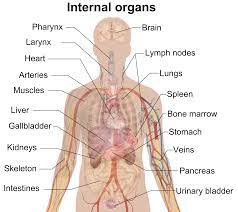
This paper will focus attention on aspects of the functions of the human body, which impact more on care delivered by health care settings along with social care settings. Therefore, the paper will critically analyze how the whole body functions. The case study is, however, intended to give a holistic general idea of the composition and performance of the body of human beings. Moreover, the case study aims at educating individuals working in the field of health or social care.

Markedly, along with major vital organs of the body of human beings, the anatomical features of the human body also consist of various biological systems. The first system is the circulatory system, which is responsible for transporting blood, hormones, different nutrients, and gasses such as oxygen and carbon dioxide all over the human body. The circulatory system consists of veins, blood vessels, the heart, the heart, and blood (“Respiratory Structure and Function”, 2012).

The second system is the digestive system, which is made up of interconnected organs, which coordinate in enabling the human body to effectively break down food, absorb then remove the waste. The digestive system comprises of the esophagus, the rectum, the mouth the stomach, the small and large intestines along with the anus. However, the liver together with the pancreas are also influential of activities carried out by the digestive system since they generate juices used in digestion.

The third system is the endocrine system, which comprises of eight main glands responsible for secreting hormones to the blood. The hormones, consecutively, travel through different tissues to regulate different functions of the body, among them, being metabolism, sexual function and also growth. The fourth system is the immune system, which acts as a defense of the body against all bacteria, harmful pathogens and also viruses.

The immune system consists of lymph nodes, the lymphocytes, which include B-cells plus T-cells, the spleen, the bone marrow, the leukocytes and thymus that constitute the white cells of the blood (Kelly, & Ramanan, 2011).  The fifth system is the lymphatic system, which comprises of lymph nodes, the lymph ducts, and the lymph vessels. The lymphatic system is responsible for the body’s defense, however, its greatest task is making lymph and moving it. Lymph is a fluid containing white cells of blood, which fight infection in the body.

The sixth system is the nervous system, which is responsible for controlling actions within the body that are both voluntary and involuntary. In addition, the nervous system also sends signals across to diverse body parts. The nervous system comprises of nerves, the brain plus then spinal cord (Hammond-Browning, 2011). The seventh system is the muscular system, which is made up of approximately 650 muscles which facilitate movement, the flow of blood, along with other functions in the body.

The eighth system is the reproductive system, which enables human beings to reproduce. The male system of reproduction consists of the penis, testes, and sperms. The female system of reproduction consists of vagina, ovaries, uterus and eggs. The ninth system is the urinary system, which is used in the elimination of waste from the human body after food ingested by an individual is broken down. The urinary system is made of two kidneys and urethras, a bladder, urethra and sphincter muscles.

The tenth system is the integumentary system, which actually is the largest organ in a human being’s body. The integumentary system consists of skin, hair and also nails. The integumentary system acts the body’s protection against pathogens, different viruses, and bacteria. Moreover, the skin also regulates temperatures of the body and also helps in elimination of waste from the body by the process of perspiration.

AC 1.2: How systems of the human body interact as a way of ensuring growth and proper functioning of the human body.

Systems of the body interact through metabolism. Metabolism is a process that involves all chemical processes taking place in the body of human beings (Berge, 2011). Notably, metabolism is involved in influencing growth in a human being through anabolism. Moreover, metabolism helps the body of human beings to perform efficiently through catabolism. Thus, metabolism in the body of human beings involves building up the body, repairing the body and ensuring that storage takes place within the body of human beings.

Consequently, metabolism is effective in the generation of energy for the body of human beings. For instance, when an individual takes carbohydrates, it is usually in form of starch or in form of sugars. Through metabolism, the carbohydrates taken by an individual are broken to form glucose. The glucose is later broken down through further metabolic processes to form pyruvate which is a compound. Hence, supplementary metabolic processes result in the breaking down of pyruvate to form a molecule known as acetyl-CoA, which is responsible for the production of energy.

The acetyl-CoA molecule rotates around the tricarboxylic acid cycle (Gluckman, Low, Buklijas, Hanson, & Beedle, 2011). Consequently, energy carriers in the body of human beings transport energy through a chain for electron transport, thus generating a chemical known as ATP, which is the energy for human beings. During the breakdown, process water is also given off. Moreover, for the cycle to be complete oxygen along with carbon dioxide is required thus necessitating the breathing process for human beings.

Relevance of the information to a care home

Knowing the anatomy of human beings is relevant to all health care givers. Notably, with information on the anatomy of human beings, one is able to know how the human body is expected to function when in a healthy state (Mansfield, 2012). A health caregiver cannot effectively detect health problems in a patient if he/she does not know how the body functions when normal first. In addition, some of the treatment plan administered to patients relies on the organs of the body which are affected, along with bodily functions which are interfered with.

Notably, the bodies of human beings function just like a machine. Like a machine, the human body has special parts that perform specific functions. Moreover, just like a machine, all parts have to operate in an optimal state collectively for the body to function well. In a machine when one part breaks down, the machine works ineffectively (Burns, 2011). Equally, human beings also operate the same. If a body part is functioning ineffectively then the individual is said to be sick.

Thus, for a health care provider to be able to know what a patient is suffering from, it is mandatory to know how different organs are expected to function first. Furthermore, to know how organs function, it is also important to know their structure. One cannot be able to have reliable knowledge of disease processes along with the effects they have on human beings, without knowing about human structure plus different functions of the human body in advance (Roberts, Lightfoot, & Porter, 2011).

For one to solve a problem, it is recommended to know the root of the problem and the best methods of handling the problem. Notably, a person cannot solve a problem of an organ if they have no knowledge of how the organ works. Just like a car engine, one cannot fix the car engine when it breaks down yet one is not aware of how the engine functions when at its best.

Notably, in a setting of health care, patients, and their family are accustomed to asking about the diseases affecting the patients. Therefore, if a caregiver is not able to answer the questions, then patients and their family lose trust in the caregiver. However, when a caregiver has sufficient knowledge about parts of the human body and the way they function, then it will be easy for the caregiver to explain to patients and their families in understandable words. A person cannot be able to explain a concept they have knowledge about, as it leads to confusion and development of mistrust if one doubts their words.

The human body uses glucose stored from foods taken by individuals to generate energy to be used in contraction of muscles to facilitate movement.

When performing heavy activities such as exercising the human body takes in more oxygen by up to 15 times, this makes a person breathe heavily and fast. The rate at which a person is breathing increases to the point where muscles which surround his/her lungs, have no ability to move any faster.

The muscle tissue is responsible for maintaining uprightness of the human body, facilitating movement, pumping blood and moving food via the digestive area. Muscle cells are usually referred as muscle fibers. Notably, muscle cells comprise of the protein actins, and the protein myosin, which are responsible for the contraction of muscle cells.

AC 2.3: How internal activities within the human body are coordinated by the body

Mostly, internal activities within the human body are coordinated by the body through the nervous system in coordination with the endocrine system. The endocrine system has eight main glands, which emit hormones into the blood (Turney, Lee, & Mehta, 2011). The hormones, in turn, control different bodily functions like growth, sexual function along with metabolism. Conversely, the nervous system regulates actions that are voluntary like movement and also involuntary actions such as breathing.

Reference

Alimova, K. & Shadmanov, T. (2011). Principles of organization, diagnostics, and treatment of children with associated trauma. Medical And Health Science Journal, 5, 68-72. http://dx.doi.org/10.15208/mhsj.2011.84

Berge, L. (2011). Health Care Emergency Management: Principles and Practice. JAMA, 305(2), 200. http://dx.doi.org/10.1001/jama.2010.1982

Burns, D. (2011). Imaging Atlas of Human Anatomy. JAMA, 306(18), 2034. http://dx.doi.org/10.1001/jama.2011.1634

Czepczyńska-Krężel, H. & Krop-Wątorek, A. (2012). Human carcinoembryonic antigen family proteins, structure, and function. Postępy Higieny I Medycyny Doświadczalnej66, 521-533. http://dx.doi.org/10.5604/17322693.1004113

Douglas, M. (2011). Health Impact Assessment: Principles and Practice. Journal Of Public Health, 33(4), 635-635. http://dx.doi.org/10.1093/pubmed/fdr073

Electronic medical records aid clinical studies. (2011). New Scientist210(2810), 5. http://dx.doi.org/10.1016/s0262-4079(11)60949-4

Gluckman, P., Low, F., Buklijas, T., Hanson, M., & Beedle, A. (2011). How evolutionary principles improve the understanding of human health and disease. Evolutionary Applications, 4(2), 249-263. http://dx.doi.org/10.1111/j.1752-4571.2010.00164.x

Guiding principles developed for global health strengthening. (2011). Leadership In Health Services, 24(2). http://dx.doi.org/10.1108/lhs.2011.21124bab.006

Hammond-Browning, N. (2011). Principles of Medical Law. European Journal Of Health Law, 18(4), 466-468. http://dx.doi.org/10.1163/157180911×585324

Kawashima, T. & Sasaki, H. (2011). Gross anatomy of the human cardiac conduction system with comparative morphological and developmental implications for human application. Annals Of Anatomy – Anatomischer Anzeiger, 193(1), 1-12. http://dx.doi.org/10.1016/j.aanat.2010.11.002

Kelly, A. & Ramanan, A. (2011). The principles of pharmacological treatment of juvenile idiopathic arthritis. Paediatrics And Child Health, 21(12), 563-568. http://dx.doi.org/10.1016/j.paed.2011.07.010

Kilham, H. (2011). Expressing ethical principles of treatment and care in a charter: What value?. Journal Of Paediatrics And Child Health, 47(9), 590-593. http://dx.doi.org/10.1111/j.1440-1754.2011.02158.x

Malumbres, M. (2011). Physiological Relevance of Cell Cycle Kinases. Physiological Reviews, 91(3), 973-1007. http://dx.doi.org/10.1152/physrev.00025.2010

Mansfield, S. (2012). Understanding Health and Social Care – Second editionUnderstanding Health and Social Care – Second edition. Nursing Standard, 26(44), 31-31. http://dx.doi.org/10.7748/ns2012.07.26.44.31.b1380

Montgomery, K., Kim, J., & Franklin, C. (2011). Acceptance and Commitment Therapy for Psychological and Physiological Illnesses: A Systematic Review for Social Workers. Health & Social Work36(3), 169-181. http://dx.doi.org/10.1093/hsw/36.3.169

Respiratory Structure and Function. (2012). Respirology, 17, 121-124. http://dx.doi.org/10.1111/j.1440-1843.2012.02300.x

Roberts, M., Lightfoot, E., & Porter, W. (2011). Basal Metabolic Rate of Endotherms Can Be Modeled Using Heat-Transfer Principles and Physiological Concepts: Reply to “Can the Basal Metabolic Rate of Endotherms Be Explained by Biophysical Modeling?”. Physiological And Biochemical Zoology, 84(1), 111-114. http://dx.doi.org/10.1086/658084

Shamsiev, J. (2011). Principles of diagnostic and treatment of echinococcosis in children. Medical And Health Science Journal, 5, 88-90. http://dx.doi.org/10.15208/mhsj.2011.89

Turney, K., Lee, H., & Mehta, N. (2011). Special issue call for papers: Social determinants of child health. Social Science & Medicine, 73(11), 1674. http://dx.doi.org/10.1016/j.socscimed.2011.09.002

WU, J., LIU, Z., WANG, L., LIU, L., ZhANG, Y., & FENG, D. et al. (2011). Age-related changes in expression of human leukocyte antigen-DR and levels of cytokines in peripheral blood mononuclear cells. Chinese Journal Of Multiple Organ Diseases In The Elderly, 10(4), 315-317. http://dx.doi.org/10.3724/sp.j.1264.2011.00007

Want help to write your Essay or Assignments? Click here
Hypertension

Hypertension
Hypertension

Evidence-Based Promotion Project: Hypertension

Introduction

Certain populations in the society are said to be more vulnerable than others based on certain conditions or situations in life.  The World Health Organization (WHO) defines high risk populations as individuals who cannot anticipate, resist, or cope and recover from the impacts of a disease or disaster. Elderly people, children, malnourished and immunocompromised individuals, and are all classified as high-risk population.

Some of the factors that have been attribute to expose people into vulnerability include poverty, poor housing, homelessness, ethnicity, race, genetic predisposition, as well as poor housing. Current economic indicators in the United States suggest that the most disadvantaged healthcare segments have been lagging behind despite overall increase in economic trends as well as that of racial, ethnic, and socioeconomic disparities.

For instance, the rates of infant mortality which have been falling for a number of years are now increasing among the African Americans; a trend that has been linked highly with poverty (Flynn et al., 2013). This has prompted the government to introduce some important health programs such as the Earned Income Tax Credit and the Social Security fund which have decreased poverty significantly induce major desirable health effects. 

Nichols, O’Connor & Dunn, (2014) point out that DNP nurses play a crucial role of addressing and providing solutions in the healthcare field whose complexity keeps increasing. DNPs can impact a healthcare policy by solving disparities that surround the access to quality health care. Mostly, DNPs are the solution to a number of conflicting healthcare issues. One of the major roles that has been adopted by DNPs is identification of high-risk populations.

Predictive analysis has stood out as an important technique for effective identification. This method employs the use of historical and current data as well as modeling so as to predict future events. In predictive analytics, the decision-making process is data driven. Therefore, DNPs use available patient records to identify individuals that need assistance, such as high risk populations.

The African Americans are one of the high risk populations in America. This because of their high likelihood to develop hypertension. Researchers propose that these individuals could be carrying a gene that makes them salt sensitive hence increasing their risk to hypertension. Additionally, African Americans are affected significantly by obesity.

Studies by (Diaz et al., 2014) report that among non-Hispanic Blacks who are 20 years and above 77 percent of women and 63 percent of men are obese. This population also has a high prevalence of diabetes. It is important to note that diabetes and obesity are among the leading risk factors for hypertension and this could therefore be the reason behind the high incidence of hypertension among African Americans.

Evidence-based interventions

Several evidence-based interventions have been put forward to aid in the management of hypertension among the African Americans. One such intervention is the use of advance health care technologies. Technology advances have proven to be an integral part for the management of high-risk populations (James et al., 2014). For instance, technology will be used to support robust communication with high-risk individuals.

Text messaging, emails, social media, and video conferencing will be used by physicians to follow up on hypertensive patients so that they can understand their progress upon medical intervention. The technology will be used to enhance patient accessibility to healthcare. Additionally, health care providers can use remote monitoring or smart phones to optimize the healthcare strategies hence improving patient outcomes.

Another important intervention will be to education the African Americans about the etiology, causes, risk factors, and management of hypertension (Ogedegbe et al., 2014). There is need for patients to be enlightened about the importance of lifestyle changes. For instance, the African Americans will be encouraged to eat healthy foods such as the Dietary Approaches to Stop Hypertension (DASH) diet which stress that patients should take vegetables, fruits, fish, poultry as well as foods that are rich in potassium.

High levels of potassium aid in preventing and controlling high blood pressure. They should also regulate their intake of fats especially the trans-fat which has been proven to be responsible for arteriosclerosis that narrows blood vessels hence worsening hypertension.

Research has proven that one of the reasons behind the high prevalence of hypertension among black Americans is their increased sensitivity to salt (Diaz et al., 2017). Therefore, they should be educated about their need to reduce the intake of salt in their diet. A salt level of about 1500 mgs per day is recommended for a hypertensive patient who is about 50 years and above.

For other healthy individuals, advised not to increase their intake above 2000 mg as this could result in hypertension development. Obesity, smoking, and diabetes are other major risk factors that all African Americans will be taught about their management. They will be encouraged to present themselves to the healthcare centers for diabetes testing. Similarly, they will be encouraged to watch on their weight and desist from cigarette smoking as well as alcohol intake which can predispose them or increase the severity of hypertension.

The other strategy for managing and reducing hypertension will be by helping patients to design their hypertension treatment plan. Through this plan, patients will be instructed on how to check their blood pressure regularly, follow their treatment plans consistently, and consult their physicians regularly whenever need a clarification about their condition.

Outcome measurements

One of the measurements that will be used to evaluate the outcomes of the hypertension management is the recording of the mean systolic and diastolic pressure of the hypertensive patients who have been taught hypertension management interventions. The recording will be done over a period of one month and plotted on a graph where the shape of the graph will be used to determine whether the patient complied with what he/she learned.

The proportion of patients who will visit to the clinic after the education program will also be determine. A high turnout will be indicate that the patients understood that follow up care is an important pillar in the management of hypertension. Additionally, the physicians will use clinical records to determine how many more individuals have been diagnosed with hypertension since the implementation of the various evidence-based interventions. The number is expected to be lower compared to that of other years.

Epidemiological terminology in the description of interventions and outcomes

 A systemic approach is required for effective management of hypertension. The approach entails identification of hypertensive patients, aggressive treatment of hypertension with antihypertensive drugs, proper patient education, and follow-up care. With this approach, modest reduction in the mortality and morbidity of cardiovascular agents will be realized.

However, it is important that note that all this strategies should be combined for clinically significant reductions in hypertension prevalence to be achieved. Supplemental interventions such as self-monitoring of hypertension and adoption of healthy behavior are other important indicators for use in assessing the effectiveness of the implemented strategies.  

Lessons learned from developing this interventional program

This project has help me learn that communication is one of the most effective clinical intervention for use during management of a disease. Proper communication helps the public to understand the causes, risk factors, and their role in the prevention and management of a condition. Individuals who are well-informed know what they ought to do and therefore avoid visiting hospitals for treatment or hospitalization which is very expensive.

Secondly, I learned that healthcare providers should accord high-risk population optimum attention and conduct proper research in order to meet their desired goals. This is because interventions used in other parts of the world may not work when dealing with high risk populations hence the need of evidence-based programs. Through this intervention, I believe I can easily take care of an African American patient and also be at the front line in identifying other high risk-populations in the society and the clinical programs that can be used to ensure they live quality lives.

References

Diaz, K. M., Booth, J. N., Seals, S. R., Abdalla, M., Dubbert, P. M., Sims, M., … & Shimbo, D. (2017). Physical Activity and Incident Hypertension in African Americans. Hypertension, HYPERTENSIONAHA-116.

Diaz, K. M., Veerabhadrappa, P., Brown, M. D., Whited, M. C., Dubbert, P. M., & Hickson, D. A. (2014). Prevalence, determinants, and clinical significance of masked hypertension in a population-based sample of African Americans: the Jackson Heart Study. American journal of hypertension, hpu241.

Flynn, S. J., Ameling, J. M., Hill-Briggs, F., Wolff, J. L., Bone, L. R., Levine, D. M., … & Ephraim, P. L. (2013). Facilitators and barriers to hypertension self-management in urban African Americans: perspectives of patients and family members. Patient Prefer Adherence.

James, P. A., Oparil, S., Carter, B. L., Cushman, W. C., Dennison-Himmelfarb, C., Handler, J., … & Smith, S. C. (2014). 2014 evidence-based guideline for the management of high blood pressure in adults: report from the panel members appointed to the Eighth Joint National Committee (JNC 8). Jama, 311(5), 507-520.

Nichols, C., O’Connor, N., & Dunn, D. (2014). Exploring early and future use of DNP prepared nurses within healthcare organizations. Journal of Nursing Administration, 44(2), 74-78.

Ogedegbe, G., Tobin, J. N., Fernandez, S., Cassells, A., Diaz-Gloster, M., Khalida, C., … & Schwartz, J. (2014). Counseling African Americans to Control Hypertension (CAATCH): cluster randomized clinical trial main effects. Circulation, CIRCULATIONAHA-113.

Want help to write your Essay or Assignments? Click here

CONSUMER BEHAVIOUR

CONSUMER BEHAVIOUR
CONSUMER BEHAVIOUR
CONSUMER BEHAVIOUR

Marketing activity in the modern day makes up a central aspect of social life with branding and advertising influencing consumption and shaping economic, cultural and political identifications of society. Understanding consumer behaviour is essential for marketers in targeting increased product sales as well as understanding the phenomenon of changing markets.

One of important hypothesis in economics and marketing is that economic decisions follow a rational process that enable consumers to maximize their utility given resource constraints of price and cost. Many people however make decisions based rather on their short-sighted judgment than on long-term plans for optimizing utility. Behavioural economics is founded on the claim that human decision process is driven more by emotions as opposed to only rational reasoning.

The recognition that emotions can manage our subconscious reactions to conscious perceptions has led to the need to adopt a more modernist understanding of consumer behaviour as it affects purchase decisions and marketing (Foxall, 2015). This report presents a critique of the traditional understanding of consumer behaviour and discusses how desire may be a more relevant way for marketers to understand contemporary consumer behaviour. Marketers require an understanding of consumer decision making in designing appropriate marketing strategies and promotional messages that would be more effective in influencing purchase decisions.

Background and Statement of the Problem

Customer behaviour is an integral concept in strategic marketing and planning, and is based in the context of consumer buying behaviour. In order to develop a framework for studying consumer behaviour, it is helpful to considering the evolution of the concept in research and marketing discipline. The concept of consumer behaviour emerged during the 1960s as a distinct field of study characterized by two broad paradigms, the positivist and non-positivist.

The positivist paradigm defines consumer behaviour using economic, behavioural, cognitive, motivational, trait or attitudinal and situational perspectives. These are referred to as the traditional perspectives of consumer behaviour and they pave the way for the development of the non-positivist paradigm. Positivism is typical of neoclassical economics that seek to describe and explain economic phenomena without referring to moral and ethical judgements.

The positivist paradigm is still the dominant paradigm explaining consumer behaviour. The traditional positivist perspective takes a utilitarian approach to consumption and emphasizes the supremacy of human reason and rationality in selecting the alternative with the highest utility value. The non-positivist paradigm represents an opposing view to positivist understanding of consumer behaviour.

Non-positivism encompasses the interpretive and postmodern perspectives of consumer behaviour that have emerged more recently after 1980. Non-positivist research into consumer behaviour seeks to arrive at a better understanding of human behaviour as it influences consumption processes and purchase decisions. The non-positivist perspective places greater emphasis on the symbolic dimensions of consumer choice rather than rational economic decision process (Deepa & Murugan, 2015).

Comparing the two perspectives yields a set of paradigms that frame the contrasting view of the postmodernist understanding of consumer behaviour as compared to the traditional understanding. Five dialectics of consumption can be identified in academic and research literature for understanding the contrasting ideas of consumer behaviour in the traditional and the modernist perspectives.

These are materialism versus symbolic consumer culture, the social versus the self, desire versus satisfaction, rationality versus irrationality, and creativity versus constraint (Brosekhan, Velayutham & Phil, 2013). This report will focus on understanding irrational desire in the modernist view as it compares to rational satisfaction in the traditional view of the consumer decision process. The report compares how the two perspectives influence purchasing behaviour and consequently effectiveness of marketing strategy.

Traditional Understanding of Consumer Purchase Behaviour

The traditional understanding of consumer behaviour views the customer as an economic man or rational consumer that is motivated into purchasing by facts, and reasonably considers the facts in making the purchase decision to possessively get the maximal benefit while expending the least work. As identified in classical economic writings, man is entirely rational and self-interested, and makes decisions based upon his ability to maximise utility whilst expending the minimum effort (Jemma, Zwick & Neville, 2016).

The rational consumer theory has become the basis of understanding the customer in the field of marketing and marketing communications. The rational consumer theory is not only applied in economics but is also used in other professional fields to interpret human decisions and actions that result from consumer behaviour following rational choice by the economically-minded man.

In order to make rational purchase decisions, a consumer would have to be aware of all available alternatives for purchase and consumption, and be able to rate each option correctly and select the most favourable alternative. This is however not the case in many decision situations and is no longer accepted as a realistic account of the human decision making process.

As put forward in such theories as the Satisficing Theory by Herbert Simons (1997, 1991), Prospect Theory by Kahneman and Tversky (1979) and other such theories that  embrace bounded rationality, individuals are further described as seeking satisfaction rather than pursuing optimum choices (Trandafilovic, Pasic & Perunovic, 2013).

Consumers rarely have adequate market information and lack the motivation and time to make the most perfect decision. As a result, the decision-making process of consumers is often affected by less rational influences such as personal attitudes and perceptions, and social relationships and values (Diglel & Yazdanifard, 2014).

Desire in Contemporary Consumer Behaviour

Recent research studies in consumer behaviour show quite different findings from those expected following a rational man or positivist perspective. Different academic and professional disciplines, primarily in psychology and more recently neurology, have attempted to offer and define the possibility of irrational man in decision situations that supposedly require rational thinking.

The combination of economics and psychology has given rise to “behavioural economics” a scientific field that gives a completely different perspective on consumer behaviour. The field of behavioural economics especially offers an explanation of the various irrational influences that can impact the decision-making process of humans (Cisek et al., 2014).

Although a person is naturally motivated to make effective and rational decisions, humans often confirm their limited willpower and inadequate or incomplete account of information relating to the decision. These necessitate taking into account the other irrational component of the human decision making process, which are composed of different emotions that influence human thought process.

These include the desire for money, fashion and vanity, fear, pride of possession, health and comfort, and love and affection (Kovac, Grubor & Maric, 2016). Irrational elements in many cases exceed the expected rationality as has been proven in many behavioural studies experiments and researches such as McDaniel, Lamb & Hair (2006), Gobe (2006), Dunne (2005), Hanna & Wozniak (2001) and Stewart (1994).

Such studies have shown that emotions are strong psychological processes that get involved in subjective decisions in interpreting experiences of pleasure and displeasure, physiological impression, motor symptoms, and changes in the availability and orientation (Olivera & Kustrak, 2013).

According to recent researches by behavioural science experts including Kotler& Arm-strong (2008), Du Plessis (2007, 1991) and Altman (2006),emotions play an important role in the perception of advertising messages (Trandafilovic, Pasic & Perunovic, 2013). Emotions are called upon and used to assess the facts, events, situations and results of the decision and experience based on the subjective state of mind, and are used to evaluate the relationship that would lead to taking a position on the given purchase decision or marketing situation (Hill & Fombelle, 2013).

They therefore cause and affect other psychological processes including purchasing decisions, and can even cause a paradigm change in a person following an encounter with an advertising message.

Implications for Marketing

Economics is regarded as a non-experimental science that cannot rely on laboratory experiments and utilizes only field observations to arrive at theoretical postulates. In contrast, behavioural economics advocates for controlled experiments as an important part of research for verifying economic theory (Wei & Lu, 2013).In understanding the consumer purchase decisions-process that should be rational following logical and predictable steps, behavioural economics offers a completely different perspective.

In many consumer purchase situations such as insurance, saving, health care, fashion, and employment relationships, some elements of irrational behaviour are evident. The consumer has certain preformed expectations for these products that rational reasoning marketing messages might find impossible to change if the marketing message does not address the emotions and feelings of the customer (Srikant, 2013).

Application of knowledge contained in the postmodern perception of human behaviour has been labelled as neuro-marketing, which offers an alternative way of presenting marketing communication to customers. Behavioural economics applied in marketing deals with incorporating symbolism and stories in a reconstruction of the world in which consumers live.

Irrational factors that influence customer purchase behaviour are derived from human feelings, emotions and other sources in the environment such as class, social image, fashion, heritage and concern for the environment amongst others. Innovative marketing companies are using methods such as environmental awareness and social responsibility to better communicate their brand value (Foxall, 2015; Walz, Hingston & Andehn, 2014).

Instead of focusing on only communicating the rational properties of the product, marketers can offer a story behind the brand that will arouse emotions in the consumer to associate with and purchase the brand. Such an approach offers the opportunity for the customer to become part of the new constructed world by consuming the brand (Lee, Gregg & Park, 2013).

Conclusion

In the contemporary world, consumption, advertising and branding constitute central aspects of social life that continue to shape the economic, cultural and even political identifications of organizations and the people relating with them. Certainly, social and behavioural theory is now focusing on consumption as playing a central role in the way the economic world is constructed. Studying consumer behaviour enables marketers and market researchers to understand and predict how consumers would react to promotional advertising messages, and by extension, why they would make purchase decisions.

Reference list

Brosekhan, Abdul A., Velayutham, Muthu C & Phil, M. (2013). Consumer buying behaviour – a literature review”, IOSR Journal of Business and Management, 08-16. Accessed from http://www.iosrjournals.org/iosr-jbm/papers/ncibppte-volume-1/1014.pdf

Cisek, Sylwia Z., Sedikides, C., Hart, Claire M., Godwin, Hayward J., Benson, V. & Liversedge, Simon P. (2014). “.Narcissism and consumer behaviour –are view and preliminary findings”, Frontiers in Psychology.5 (232). Hypothesis and Theory Article. Accessed from http://eprints.soton.ac.uk/363407/1/__filestore.soton.ac.uk_users_gg_mydocuments_constantine%20publications%20pdf’s_2014_Cisek%20Sedikides%20Hart%20et%20al%20%202014%20Frontiers.pdf

Deepa, N & Murugan, M. (2015). “A study on consumer behaviour towards international brand of home appliances at Vellore city”, CLEAR International Journal of Research in Commerce & Management”, 6(4), 9-11. Accessed from http://web.b.ebscohost.com/abstract?direct=true&profile=ehost&scope=site&authtype=crawler&jrnl=22494561&AN=119728097&h=Y201Vmgm%2f9ZMKnMIVPHBBN3eFJx0GkoMzEB9hDC4Q3AZqbGF9RqNWEBeWSWFcj149P1FTPEEAUlCz87Gom0Yhg%3d%3d&crl=c&resultNs=AdminWebAuth&resultLocal=ErrCrlNotAuth&crlhashurl=login.aspx%3fdirect%3dtrue%26profile%3dehost%26scope%3dsite%26authtype%3dcrawler%26jrnl%3d22494561%26AN%3d119728097

Diglel, Aman & Yazdanifard, Rashad (2014). “Green Marketing: It’s Influence on Buying Behavior and Attitudes of the Purchasers towards Eco-Friendly Products”, Global Journal of Management and Business Research: E Marketing, 14(7). Accessed from https://globaljournals.org/GJMBR_Volume14/2-Green-Marketing-Its-Influence-on-Buying-Behavior.pdf

Foxall, Gordon R. (2015). The Routledge Companion to Consumer Behavior Analysis.  Routledge Publishers. Accessed from https://books.google.co.ke/books?id=u8xmCgAAQBAJ&pg=PA19&lpg=PA19&dq=consumer+behaviour+in+marketing+2013+201*&source=bl&ots=p392f1yun-&sig=HUIfNR25OqrLLBikoJv7AuvA3nI&hl=en&sa=X&redir_esc=y#v=onepage&q&f=false

Hill, Krista M. & Fombelle, Paul W. (2013). “The role of curiosity in consumer behavior”, AMA Summer Educators’ Conference Proceedings, 24, 12-23. Accessed from http://connection.ebscohost.com/c/articles/90022196/role-curiosity-consumer-behavior

Jemma, Michal C., Zwick, D. & Neville, B. (2016). “The ideology of the ethical consumption gap”, Marketing Theory, 16(1), 21-38. UK: Sage Publications. Accessed from http://www.gla.ac.uk/media/media_451526_en.pdf

Kovac, Ruzica Z., Grubor, Aleksandar & Maric, Drazen (2016). “Impulsive consumer behavior”, International Journal of Multidisciplinarity in Business and Science, 2(2), 81-89. Accessed from http://hrcak.srce.hr/file/195744

Lee, S.Y., Gregg, A. P. & Park, S.H. (2013). “The person in the purchase: narcissistic consumers prefer products that positively distinguish them”, Journal of Personal and Social Psychology, 05, 335-352. Accessed from https://www.ncbi.nlm.nih.gov/pubmed/23773040

Meenakshi, Kukreja, R. (2016). “Consumer’s behaviour while purchasing apparels in sale period”, Management Dynamics, 16(1), 1-40. Accessed from http://web.b.ebscohost.com/abstract?direct=true&profile=ehost&scope=site&authtype=crawler&jrnl=09725067&AN=118351573&h=e%2fv0AAqK4mrauG2OMxKukfAAZHwsw0ySOFEktaHDWi%2fYu9rHbSIGW64bROUG7PCtedHdRDW4tJkNRnfwzgXFVQ%3d%3d&crl=c&resultNs=AdminWebAuth&resultLocal=ErrCrlNotAuth&crlhashurl=login.aspx%3fdirect%3dtrue%26profile%3dehost%26scope%3dsite%26authtype%3dcrawler%26jrnl%3d09725067%26AN%3d118351573

Olivera, Majic J. & Kustrak, A. (2013). “The influence of religion to consumer behaviour and further implications to international marketing”, International Journal of Management Cases, 15(4), 287-300. Accessed from http://web.b.ebscohost.com/abstract?direct=true&profile=ehost&scope=site&authtype=crawler&jrnl=17416264&AN=89544329&h=b6WPO0iDkHcMPhbyn%2bfxyK5mtMsDPaY%2faFn0q8Mt%2bEuN%2f6w23BY8JWr4bERNntYc3YxtpDgVUTvsi3hCJ1F8aQ%3d%3d&crl=c&resultNs=AdminWebAuth&resultLocal=ErrCrlNotAuth&crlhashurl=login.aspx%3fdirect%3dtrue%26profile%3dehost%26scope%3dsite%26authtype%3dcrawler%26jrnl%3d17416264%26AN%3d89544329

Srikant, Manchiraju (2013). “Materialism in consumer behavior and marketing – are view”, Management and Marketing Challenges for the Knowledge Society, 8(2), 329-352. Accessed from http://www.managementmarketing.ro/pdf/articole/315.pdf

Trandafilovic, I., Pasic, V. &Perunovic, S. (2013).  “The research of cognitive and affective behaviour during shopping”, Economics and Organization, 10(2), 147-164. Accessed from http://facta.junis.ni.ac.rs/eao/eao201302/eao201302-05.pdf

Walz, M., Hingston, S. &Andehn, M. (2014). “The magic of ethical brands: interpassivity and the thievish joy of delegated consumption”, Ephemera: Theory and Politics in Organization, 14(1), 57-80. Accessed from http://www.ephemerajournal.org/contribution/magic-ethical-brands-interpassivity-and-thievish-joy-delegated-consumption\

Wei, Pei-Shan & Lu, Hsi-Peng (2013). “An examination of the celebrity endorsements and online customer reviews influence female consumers’ shopping behavior”, Computers in Human Behavior, 29(1), 193-201. Accessed from https://pdfs.semanticscholar.org/bd6b/3ef8cab804823b4ede2c9ceb6118a5dd9f0f.pdf

Want help to write your Essay or Assignments? Click here

Ethical Marketing framework: Case Study of Land Rover

Ethical Marketing framework

Ethical Marketing framework

Case Study

An Analysis of Land Rover’s marketing activities using ethical framework

Land rover is a car company that is owned by Jaguar Land rover, which is a multinational car manufacturer.  The company specializes in four wheel drive, and is currently one of the largest car manufacture in the world, operating in more than 100 countries.uit is one of several auto manufactures that are owned by Tata industry. In 2013, Jaguar land rover was crowned the Responsible Business of the Year Award due to its investment in new technologies that reduce emissions.

This helped the company gain recognition worldwide; therefore increasing is sales and profit turn out. This is one of the key distinguishing factors of the company from other manufacturers. Another factor that makes the company stand out is its undertaking in corporate social responsibility, where it has empowered many young people globally through helping them learn engineering and other technical courses.

Despite its many achievements, the company faces many ethical issues especially regarding its usage of leather to manufacture interiors. Leather is a major cause of environment pollution due to the harmful chemicals used driving tanning.

Ethical issues at stake

Ethical standards are critical to the reputation and brand image of any firm that seeks to retain its market base. Contemporary ethical issues revolve around marketing behavior, such as false advertising, stereotyping, subliminal messages, post purchase dissonance, exploitation of workers and environmental pollution. However, practicing ethical standards will not only guide an organization through its daily operations but increase production and corporate reputation (Kelchne, 2015). Ethical issues relate to various problems that will require an organization to choose between many available alternatives. One of the main ethical issues facing Land River is its use of leather for interior designs.

An ethical challenge facing Land rover is that it advocates for protection of the environment, yet its usage of leather does the contrary. The company terms the products used in the manufacturing processes as ecofriendly, but its usage of leather results in harmful chemicals that are bad for the environment. Leather has been regarded by the US Environmental Protection Agency as the greatest form of pollution to waterways and the environment in general. Leather is a hide of dead animals, and it therefore decomposes naturally.

To prevent the decomposition, leather companies use very harmful chemicals which when released to the environment, can pose serious health problems as they are great pollutants. Due to this, the company fails to maintain ethical standards that advocate against usage of harmful chemicals and pollution of the environment.

Harmful chemicals used by Land Rover

Due to the use of leather in interior designs, land rover uses harmful chemicals to naturally decompose the leather, which are great environmental pollutants. However, leather is made from animals hide and is vulnerable to decomposition. To prevent this decomposition, the materials are treated using harmful chemicals like trivalent chromium suphide and other pollutants ranging from sodium sulfhydration and cyanide.

The leather is also subjected to procedures that involve large amounts of pollutants like hair, salt, lime sludge, and protein. The use of leather not only puts the lives of Land Rover consumers at risk but also endangers the surrounding community by polluting the air, water supplies, and the land. As a result, the company fails to achieve the good rating in pollution and toxic category and hence experiences a diminishing public image and lost support from animal rights advocates.

There has been a wide concern over the significant range of chemicals in the interior of vehicles by Land rover and sometimes the chemicals exceed the normal level. The drivers who drive these vehicles are exposed to these harmful chemicals mostly through inhalation. This could cause a range of health problems ranging from cancer, breathing problems and allergies. These harmful chemicals by the leather manufactures include:

Trivalent chromium sulphate

During leather tanning, the manufactures use trivalent chromium sulphate, which contains high levels of chromium. Chromium has been acknowledged as one of the most toxic chemicals used by leather manufactures. T5he interiors of land rover are manufactured using this toxic chemical, which poses serious threats to the wellbeing of all those involved in the company affairs. Usage of chromium has been prohibited in most countries due to its toxicity and the health hazard it causes.  The fact that Land Rover uses leather to make its interior decoration implies that the company does not practice ethical guidelines.

Arsenic

Arsenic is a toxic chemical used during leather tanning. The chemical has been associated with lung cancer for workers who are daily exposed to it. It is a harmful; chemical which when in contact with the skin, causes burning sensations and could have long term effects.

Animal rights

Another ethical issue facing land rover is failure to advocate for animal rights, especially since it uses leather which is a slaughter house by product. Animal Rights Organizations are against companies who manufacture their products using leather as doing so is killing innocent animals. The company does not engage in animal protection and this reflects negatively on it.

Leather comes from animals such as goat, buffalo, ostrich, lamb, and deer, among others. Other places also use kangaroos to manufacture bicycle tyres. These animals are endangered as they are subject to killing and slaughter by leather organizations. Land rover is subject to this ethical challenge since killing of innocent animals is a not ethical. The process of tanning entails using chemicals stabilizes the animal skins so they will not decompose.

Ethical principles

Ethical principles guide organizations to act in a professional manner so as to balance ethical considerations with the relevant professional values and to deal with consumers ethically. Businesses that behave ethically have been seen to have higher consumer loyalty than those who do not.

These businesses are concerned about the environmental issues surrounding them, and deal with day to day basis in the required ethical and professional standards. There are four major principles of ethics guiding organizations and these include the principle of autonomy, the beneficence principle, non-maleficience and the principle of justice.

The first principle is the principle of autonomy which states that organizations have a duty to respect the autonomy of other persons no matter the circumstances. It gives people a duty of not interfering with the decision of others but instead to empower and support those that they are responsible for. There should be honesty in their dealings and keeping promises made. Land Rover Motors, for instance,  has an obligation  to its consumers and all other stakeholders to provide quality designs from products that are safe and that conform to the laws of the environment.

The principle of justice states that everyone has an obligation to provide other people with whatever we owe them, or whatever they deserve accordingly. All people should be treated fairly and equally and no unfair burdens should be imposed on others. Organization wise, all organizations should treat all their stakeholders fairly by providing them with quality products, as they truly deserve. Doing so will foster good relationships with all those involved in the operations of the organization.

Beneficience principle states that we have a duty to bring about good in all our doings. People must take all necessary steps to prevent harm, by any means possible. The automotive industry has an obligation to use non toxic substances in their products, and provide commodities that are totally safe, to prevent any harm to the customers and workers handling them, and pollution of the environment by undertaking proper waste disposal . By using harmful substances in leather tanning, Land Rover goes against this ethical principle.

Principle of nonmaleficience states that people have an obligation to not harm others. If harm can be avoided, we are obligated to prevent or minimize the harm. We should not increase the risk of harm to others and should employ all necessary measures to prevent harm. For instance, organizations that pollute the environment go contrary to this principle. The company should therefore engage in other ecofriendly activities and do away with leather.

             Ethical theories

Egoism theory

Egoism model states that an act is morally right if the person making the decision decides to pursue short goals and long term interests (Crane, 2007). Ethical theory, according to Ardakanini and Sharraf (2014) is one the most significant theories in the study of normative ethics. The theory gives people a right to increase their benefits in any situation.

However, the provisions made by this theory seem to approve Jaguar Land Rover’s decision to replace the plastic interior material with a leather ones despite the negative effects it may have on the environment. The moral significance of any action is described based on the same goal and only applies to a man who can decide between valuable and invaluable goals.

The life of living things is the primary criterion for determining their moral value; living things must make choices which make possibility the achievement of the concept of value. Ethical egoism is founded on the idea that life is the criterion of value for all living things; therefore any action taken by man must be directed at preserving life (Hartenian and Lilly, 2009).

Any action that undermines living things and leads to one’s destruction is unacceptable.  This approach considers plants to be the simplest among all living things; they were created to keep themselves alive automatically and involuntary. This leads to the conclusion that any marketing activity that results to endangering of life, such as using leather interior with harmful chemicals, is unethical according to egoistic approach. Also, materials employed by Jaguar Land Rover have serious implications to living creatures in the air, land, and water.

Utilitarianism

According to the utilitarian theory of ethics, a state of affairs is the only thing that exhibits value. Utilitarian deny the claim that some actions have an inherent moral dimension, as deontologists believe. If an act has a wrong or right, then it can only be derivative, given by the right or bad states of affairs it produces. The core idea of utilitarian, according to Hinman (2014), is that an act should always be undertaken in a way that it will provide the greatest amount of good in the world.

Morality, which is about producing good consequences, exists to make sure the world is a better place.  People should strive to do whatever will bring the most benefit.  Utilitarianism is one of the consequentialism perspectives which state that people should seek the greatest happiness for the greatest number. The determinant of the value of an action is the amount of joy it brings, the number of people it gives happiness and the time that happiness lasts. This theory suggests that people find the meaning of ethics by considering the consequences of actions they take. Something is right if it brings goodness to the greatest number of individuals (Mil, 1993).

Ethical implications

Land Rover is a big multinational company that is composed of a variety of both internal and external employees, and these are the most affected by the ethical issues facing the company. The company has interactive relationship with all its stakeholders and the ethical challenges could affect these stakeholders negatively. These stakeholders include customers, suppliers, the government, employees, and the general public among others. Stakeholders are all the people directly or indirectly affected by the operations of n organizations, and these stand to be affected by the ethical issues facing the company.

The above woes facing Jaguar Land Rover have critical implications for not only then stakeholders, but for the company’s marketing activities, and can greatly influence how audiences respond to marketing messages. While the use of leather for the interior was justified as a reason to avoid giving consumers plastics, the alternative chosen is not only harmful but also pollutes the environment. This comes to the issue of marketing ethics, what is morally right and wrong, and what is ethical marketing and what is not (Smith and Murphy, 2015). It is important in marketing decorum, but also one of the most controversial concepts in marketing

Suppliers

The major ethical issue facing the company is its usage of leather, and the suppliers of these are perhaps the most affected by these ethical challenges. The chemicals used in turning skin into leather are very harmful and a combination of these results in the pollution of the environment. With these issues, the suppliers stand to lose. This is because these ethical issues could make the company result in recalling designs manufactured from leather and use other materials instead.

If this happens, the suppliers will count huge losses, as they will have lost potential customers. The supply of harmful chemicals poses a big ethical issue for the suppliers of these chemicals. With the company accused of using chemicals that pollute the environment, suppliers are faced with a problem on whether their products are really safe.

Customers

The customers are the most affected by the activities of the business. The usage of leather by the company to make interior designs implies that harmful chemicals are used in preventing natural decomposition. This reflects negatively to the consumers because nobody wants to purchase from a company that pollutes the environment.

Customers who advocate fro human rights will not purchase from the company due to the usage of leather, as this encourages the killing of animals. Pollution of the environment by the harmful chemicals used by Land rover will result in the damage of customer’s health, and this will lower the reputation of the company.

Employees

The employees who work in leather tanneries are at a risk of being in contact with the harmful chemicals, which could pose a challenge to their health and general well-being. These workers come in direct contact with the harmful chemicals, which could harm their health in the long run. In fact, many employees die of cancer that is possibly caused from exposure to these toxic chemicals. One major ingredient used in preventing decomposition of leather is Arsenic, which has been associated with lung cancer.

Course of action

Today’s business environment is at a constant state of change, and the consumers have the power to affect the future success of any given company. With these changes, organizations should aim at pleasing the consumers since they have the final say on whether to purchase the products offered by the company. The ethical issues facing Land Rover may reelect negatively to the consumers, who are more attracted to organizations that behave ethically.

Land Rover should thereafter implement measures and strategies that will reduce pollution of the environment, and that advocate for animal’s’ rights. More than ever before, consumers are concerned about ethics and will go fro the companies who care for the environment and the rights of animals. Environmental organizations should intervene in the company.

These should advise against or completely restrict the use of certain ingredients to manufacture their products. The competitors of Lush have come up with amazing products without the use of toxic ingredients, and Lush should also follow suit, so as to remain relevant in the highly competitive industry.

The company should go for more favorable means of tanning, such as vegetable tanned leather. This uses elements such as bark from trees and other natural plants, which pose less environmental risks. This will reduce the effects of harmful chemicals while at the same time protecting the environment. Land Rover should adhere to the rules and regulations that address the usage of harmful chemicals by the leather industries.

The company should also use other industry proven techniques such as recycling. Recycling reduces the levels of harmful chemicals in waste water by more than 21 percent. It involves reclaiming the harmful chemicals, such as chromium and this will capture the original chromium level by 25 percent. Advanced technologies should be used to reduce toxic chemical levels so as to reduce pollution and illnesses resulting from their use.

There are other designs for making interiors that do not involve the use of leather. New technologies and innovations have been implemented by other companies to manufacture parts, which are friendly to the environment. The company should invest in the latest technologies for manufacturing that will see it establish new designs that have no leather in them. Doing so will reduce the usage of toxic chemicals used during leather tanning, and will protect the health of all employees.

Conclusion

Over the past twenty years, changes in technology and introduction of new innovations have led to change in preferences, and today, consumers are keener to purchase produces from ethically responsible company. Land Rover as a multinational company should embrace new methods of production, which are ethical and environmental friendly as this will woo consumers to their side.

It is clear that organizations that are keen on environmental conservation of animal rights have more customers than those who do not. The company should therefore implement new strategies to ensure that they are more ethical in future, and this will lead to an increase in sales.

References

Sophistication.European Journal of Marketing, 17(6), pp.16-33.

Beauchamp, T. L. (2001). Philosophical ethics: An introduction to moral philosophy.

Carrigan, M. and Attalla, A., 2001. The myth of the ethical consumer–do ethics matter in purchase behavior?.Journal of consumer marketing, 18(7), pp.560-578.

Carrigan, M. and Attalla, A., 2001. The myth of the ethical consumer–do ethics matter in purchase behavior?.Journal of consumer marketing, 18(7), pp.560-578.

Crane, A. and Matten, D., 2016. Business Ethics: Managing corporate citizenship and sustainability in the age of globalization. Oxford University Press.

Dorsey, D., 2013. Consequentialism, Cognitive Limitations, and Moral Theory.Oxford Studies in Normative Ethics, 3.

Ethical consumer (2015). Jaguar Land Rover: Pollution and Toxics. Available at: http://www.ethicalconsumer.org/companystories.aspx?CompanyId=1350992&CategoryId=288190

Grill, K., 2013. Normative and non-normative concepts: Paternalism and libertarian paternalism. In Ethics in Public Health and Health Policy (pp. 27-46).Springer Netherlands.

Hartenian, L.S. and Lilly, B., 2009. Egoism and commitment: a multidimensional approach to understanding sustained volunteering. Journal of Managerial Issues, pp.97-118.

Hinman, L., 2012. Ethics: A Pluralistic approach to moral theory. Nelson Education.

Hunt Shelby, D. and Vitell Scott, M., 1992. The comprehensive theory of marketing ethics: A retrospective and revision. Ethics in marketing.Irwin, Homewood, pp.775-784.

Ingram, R., Skinner, S.J. and Taylor, V.A., 2005. Consumers’ evaluation of unethical marketing behaviors: The role of customer commitment. Journal of Business Ethics, 62(3), pp.237-252.

Kelchne, Luanne. (2015). The Importance of Ethics in Organizations. Small Business. Available at: http://smallbusiness.chron.com/importance-ethics-organizations-20925.html

Laczniak, G.R 1993. “Marketing Ethics: onward toward greater expectations.”Journal of public policy and commercialization, Vol, 12, Spring.pp91-6.

Marinova, N. (2013). Marketing ethics and social responsibility.Trakia Journal of Sciences, 11(1), 535-538.

Martin, R., 2008. Two concepts of rule utilitarianism.Journal of Moral Philosophy, 5(2), pp.227-255.

Matten, D. and Moon, J., 2005. Corporate social responsibility.Journal of business Ethics, 54(4), pp.323-337.

MILL, J. S. (1993) Utilitarianism. Oxford: Oxford University Press.

Miloch, K.S. and Lambrecht, K.W., 2006. Consumer awareness of sponsorship at grassroots sport events.Sport Marketing Quarterly, 15(3), p.147.

Want help to write your Essay or Assignments? Click here
Active Duty Military and Alcohol

Active Duty Military and Alcohol

Active Duty Military and Alcohol

1.      Introduction

Active duty military is understood as the younger workforce serving the military workforce, where many of the enlisted force comes in between the age of 17 through 24 years old; while seniors of active duty comprises of 27 through 34 years (Wooten, 2015). They are those who are directly or indirectly involved in mobilized military operation including combat.  Alcohol abuse has always been common among these active duty military, making ubiquitous practice of heavy drinking as nothing new to the American military system (Larson et al., 2014).

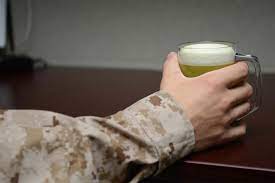
Considered as an accepted custom, drinking is simply considered by military army as a reward for their hard work, and as a commodity that ease their personal tensions since socializing with drinks promotes camaraderie (O’Brien, Oster, & Morden, 2013; Westermeyer & Kimbrel, 2013). There is no denying the fact that heavy drinking is conditioned by the easy availability of alcohol beverages which military personnel received at a reduced rate.

The essay looks into how alcohol consumption has become common among those in active duty military, and how there are risks involved in drinking like physical decline and mental and psychological comorbidities. The essay also provides a conceptual approach towards prevention and treatment of alcohol related issues in military department, by taking up certain structured measures taken up by the government to prevent the cause and spread of alcohol consumption.

  • Active Duty Military and Alcohol Related Matters in the United States

2.1. Identifying unique PROBLEMS IN Active Duty Military

Earlier, the combat at the Vietnam War caused many military men to become addicted to drugs in 1960 and 1970s, since many were serviced with drugs to make them tolerate the challenges of war environment (O’Brien et al., 2013). Reportedly there was misuse of drugs during this time, and this misuse has been attributed towards the military personnel using drugs for pain relieving and mental trauma issues.

Over the years, prescription of drugs has simply increased because of the availability of more drugs, and because of the wider prescription of medications, followed by intake of alcohol among the military department (O’Brien et al., 2013). This increase in intake of alcohol among military personnel has come to be associated with the recent military combats at Iraq and Afghanistan.

Such increase in the intake of alcohol emanates from many issues associated to their work, like the challenges of war, the stress involved with their work, and experiencing traumatic events that triggers off mental and psychological issues (Robert M. Bray, 2006; Cook, 2007; O’Brien et al., 2013). Many of those engaged in military operations at Iraq and

Afghanistan showed that they have been experiencing stress and strains over long deployments, extreme combat exposure, facing physical injuries, traumatic brain injuries, and post-traumatic stress disorder (PTSD), thereby making them to easily succumb to alcoholic abuse (NIDA, 2011).

Wide availability of prescribing drugs also culminates toward drug abuse. According to the report by NIDA (2011, p. 1), “soldiers screened 3 to 4 months after returning from deployment to Iraq showed that 27 percent met criteria for alcohol abuse and were at increased risk  for related harmful behaviors (e.g., drinking and driving, using illicit  drugs).” Alcohol usage has also been strongly identified with Post-Traumatic Stress Disorder (PTSD), which comes from the traumatic experiences that military members experienced during the war (Leskin, 2015).

Such suffering culminates towards the victim to fail in becoming good parents and good members of the society, owing to lack of communication and social skills. To quote (NIDA, 2011, p. 1) again, “Mental illness among military personnel is also a major concern. In another study of returning soldiers, clinicians identified 20 percent of active and 42 percent of reserve component soldiers as requiring mental health treatment.

Drug or alcohol use frequently accompanies mental health problems and was involved in 30 percent of the Army’s suicide deaths from 2003 to 2009 and in more than 45 percent of non-fatal suicide attempts from 2005 to 2009.”

Many of the military personnel also consume alcohol simply to experience pleasure. The pursuit of pleasure through alcohol makes them to forego pain, and feel normal or feel euphoric for some time. The reward in term of such sensations allows them to release neurotransmitters called endorphins, thereby experiencing psychological and physiological exhilaration (O’Brien et al., 2013). Such engagement does not lead to any constructive behaviors, but only makes the person to become nonproductive and harmful in nature. Excess of alcohol consumption makes them to suffer from hijacking or from the aberration of normal brain function, thereby making them to become active in their work or when they are deployed.

Excess of alcohol consumption among active duty military men are known to lose their productivity or contract alcohol related diseases that leads to premature death (O’Brien et al., 2013). The difficulty with this situation is that many of them are left untreated, or do not undergo treatment. Thus, the prevention and remedies for alcohol abuse is not only a matter of diagnosis, but it is also about treating the alcohol abusing patients among active duty service members, and also among those in post-deployment stage.  

2.2. Comparative Analysis of Active Duty Military with the OVERALL POPULATION of the United States

Although not in similar excess trend with the military personnel, American civilians often resorts to binge drinking occasionally (Cucciare et al., 2015). Access drinking as a problem of the society has simply become a part of American culture, which is slowly degrading the public health and safety system. Even among civilians, alcoholism has always been the problem and the disease, making the National Institute on Alcoholism and Alcohol Abuse (NIAAA) since 1970 to identify ‘alcohol abuse’ as the main national health priorities (Cook, 2007).

Alcoholism related issues such as drunk driving, domestic violence, and other alcohol related abuse is nothing new to the American citizens. Thus, taking social context into perspective, the Americans suffer from innate propensity towards alcoholism, making alcohol consumption a part of their innate culture.

The abuse of alcohol among military and civilians has been acknowledged by the United States military department as having adverse effects on the user’s health and behavior, as well as to their civilian families. It is true that alcohol usage is considered illegal for those who are under the age of 21 in the country, but rampant availability of liquor continue to have negative impact on the functioning of the society as a whole.

This excess of alcohol consumptionhas always been fairly consistent and studies by Westermeyer & Kimbrel (2013) that heavy drinking among military men are always twice as much as military men, and military men also consumes four times higher than military women, while military women consumes twice as more than civilian women. Thus, civilians are as likely to develop alcohol consumption disorders as any military personnel.

Research by Bray et al., (1991) shows that while military people are more likely to consume more alcohol than the civilians, drugs and tobacco are consumed more by the civilians. Drinking within the military group is again higher with the younger military men and women, and even among civilians, intake of alcohol is higher among the younger men and women.

Civilians as well as military efforts to deal with alcohol and drug issues are also directed towards solving the issues of the younger people, so that alcoholic and addiction do not grow on them. Again, many of the military men who suffer from alcohol addiction are higher among unmarried men, which is similar to civilians (Bray et al., 1991). In fact, when demographic comparisons among the unmarried alcoholic men are taken up, addiction and alcohol rate consumption remains the same.

2.3. Treatments and Other Practical Remedies for the issues relevant to the Active Duty Military population

Given the alcohol availability, any military personnel become vulnerable to addiction and are put to risk. To solve the issues of alcohol related issues, several researchers, public health entities, host of government agencies, and laws are working together in the country. Prevention policies in terms of detecting drinking problem at an early stage, and holding specific intervention remains as the best remedy to cure alcoholism.

Treatment and practical remedies in regard to alcohol consumption should initially start with educating the population on how alcohol consumption can lead to risky behavior and how it is harmful to their health (O’Brien et al., 2013). In military department, such policies are enforced during the training process, although effective acknowledgement among the military unit remains inapplicable.

Standard drinking level, like the requirement of not exceeding 14 standard drinks per week for men and 7 drinks per week for women can be imposed or made known to the people, in order to avoid excess consumption (O’Brien et al., 2013). Among military personnel as well as the civilians, environmental strategies prevent alcohol problems remain effective.

These include, raising minimum legal drinking age (21); enforcing the legal minimum purchasing age; increasing taxes on alcoholic drinks; offering no discount to any alcohol beverages; and holding the liquor retailer to be responsible for any issues that comes out of alcoholic drinks (O’Brien et al., 2013). In the words of Cook (2007, p. 1), excess of alcohol consumption can be maneuvered by “both public and private, to reduce excess drinking directly – education, persuasion, counselling, treatment, sanctions of various sorts, [and by ] restricting availability or raising the price – licensing, product and sales regulation, liability rules, taxes, partial or complete bans”.

Owing to many alcohol related cases in military department, the department itself in the United States has also been undertaking comprehensive steps over the past many years to solve these complex issues. Certain legal measures have been taken up by the United States Government to control excess of alcohol consumption among US military personnel from 1980s onward.

This initially started with the Supreme Court of the country declaring in 1988 that the ‘Department of Veterans Affairs’ as not responsible towards paying benefits of alcoholic drinks for the military veterans, since such benefits always results into willful misconduct (O’Brien et al., 2013). In regard to the Department of Defense’s (DoD’s) specifically, they offered series of policies that could help in controlling and preventing the use of alcohol.

The DoD’s effort started in 1970s, when the department passed “The Controlled Substances Act of 1970”, targeting to reduce the usage of drugs at the outset, and later towards smoking and tobacco consumption (Robert M. Bray, 2006). Later, the act also targeted the consumption of alcohol by detection at an early stage and undergoing intervention through law enforced testing (like the urinalysis testing program).

Since legal court disbanded this testing program, DoD later came up with a new measurement that stated that alcohol consumption does not live up to military performance standards (Bray, 2006; Harbertson et al., 2016). Vietnam War and it subsequent result like the prevention of the atrocious war memories that led to high substance abuse among war veterans led to the department to again re-enforced drug and alcohol testing, and emphasizing zero tolerance policies on alcohol and drugs while on duty (Robert M. Bray, 2006; Cook, 2007).

The turn of the millennium saw the DoD and its policies continuing to condemn alcohol abuse (binge or heavy), and other drugs usage, since such abuse brings down the health and the military readiness (active participation) of the military personnel, and since the country needs to maintain high standards of performance and discipline. All such measures are expected deployment military department to decrease their alcohol intake, and perform better as a unit.

3.      Finding and Conclusion

It is seen that alcohol abuse remains substantially common among the military personnel that requires stringent efforts on the part of the government (laws and acts), the DoD, medical institutions, and other individual and public efforts to solve and mitigate the issues. Since the Americans involvement in world politics has become popular and regular, military deployment and combat is expected to continue for the American military department.

Contextualizing such issues, the institutions and laws trying to prevent the abuse should use structured approach that will target the entire military populations of the country, and try to mitigate the issue. In this way, the risk to develop alcohol abuse and disorder emanating from such abuse becomes less relevant and less probable in nature. Taking a comprehensive approach to decrease alcohol abuse will allow the fostering of opportunities for military personnel during and after deployment in the field.

It also means that there will be more positive role models for the younger and older citizens to look up to, and also for their own military peer. These efforts to curb alcohol abuse are expected to make military personnel to appreciate and become culturally responsive to military lifestyles and structures.

References

Bray, R. M. (2006). Department of Defense survey of health related behaviors among active duty military personnel: A Component of the Defense Lifestyle Assessment Program. RTI International, (December), 1–307.

Bray, R. M., Marsden, M. E., & Peterson, M. R. (1991). Standardized comparisons of the use of alcohol, drugs, and cigarettes among military personnel and civilians. American Journal of Public Health, 81(7), 865–869. http://doi.org/10.2105/AJPH.2014.301901

Cook, P. J. (2007). Paying the Tab: The Costs and Benefits of Alcohol Control. Princeton: Princeton University Press. Retrieved from https://books.google.co.in/books?id=pMpThh2C6ccC&dq=THE+COST+AND+BENEFITS+OF+ALCOHOL+CONTROL…AUTHOR+PHILLIP+J.+COOK.&source=gbs_navlinks_s

Harbertson, BR, H., EY, A., NL, M., & PT, S. (2016). Pre-deployment Alcohol Misuse Among Shipboard Active-Duty U.S. Military Personnel. American Journal of Preventive Medicine, 51(2), 185–194.

Larson, M. J., Mohr, B. A., Adams, R. S., Wooten, N. R., & Williams, T. V. (2014). Missed Opportunity for Alcohol Problem Prevention Among Army Active Duty Service Members Postdeployment. American Journal of Public Health, 104(8), 1402–1412. http://doi.org/10.2105/AJPH.2014.301901

Leskin, G. (2015). Preventing Substance Abuse in Military Members and Their Families. Prevention Tactics, 9(14), 1–10.

M.A., C., A.G., S., M.A., M., J.C., T., G.M., C., X, H., & B.M., B. (2015). Associations between deployment, military rank, and binge drinking in active duty and Reserve/National Guard US servicewomen. Drug and Alcohol Dependence, 153, 37–42.

NIDA. (2011). Substance Abuse among the Military , Veterans , and their Families. National Institute on Drug Abuse, (April), 1–2.

O’Brien, C. P., Oster, M., & Morden, E. (2013). Substance Use Disorders in the U.S. Armed Forces. Washington DC: National Academy of Sciences.

Westermeyer, J., & Kimbrel, N. A. (2013). Substance Use Disorders Among Military Personnel. In B. A. Moore & J. E. Barnett (Eds.), Military Psychologists’ Desk Reference. New York: OUP USA.

Wooten, N. R. (2015). Military Social Work: Opportunities and Challenges for Social Work Education. Journal of Social Work Education, 51(1), S6–S25. http://doi.org/10.1007/s11121-011-0234-5

Want help to write your Essay or Assignments? Click here

Beavers System Model: Movie Review

Beavers System Model

Beavers System Model

Introduction

 Similar to writing, film uses techniques with the aim of eliciting different response from their audiences. The movie is designed such that they produce specific effect on as intended on their audiences. “Remember the Titans (2000)” is a great film directed by Boaz Yakin. The movie is not only entertaining but also helps one to understand the characteristics and behaviors of a family, as well as its dynamics.  This paper conducts a family assessment on Coach Boone family.

Movie setting and story

This is a movie based on real life events racial discrimination that prevailed in the early 1970’s. The settings take place in a small town in Virginia. During the desegregation of high school in 1971 saw an African American head coach – Herman Boone be hired at the T.C. Williams High School as the lead coach of the School’s football team. He is assigned to work under Bill Yoast- the current coach nominated for Virginia School Hall of Fame (IMDb, 2000).

During the training camp, the football players (black and white) would clash frequently in racially motivated conflicts. However, forceful coaching and rigorous training by Coach Boone including a run early in the morning to the Gettysburg cemetery and motivational talk; the team learns to understand one another. Throughout the training season, Boone and Yoast mixed race football players learns to accept one another and to work together because football knows no race. 

Their coaches learn from them and in turn the whole team understands the importance of family. Consequently, the team prepares adequately to pursue the State Championship and to deal with all unthinkable tragedy that would threaten their capacity to perfect their team (IMDb, 2000).

 After returning from football camp, the school board informs Coach Boone that if he loses even one game, he would be dismissed with immediate effect. Fortunately, the Titans go throughout the season as champions and succeed in fighting racial prejudice simultaneously. However, the chairman of the school board informs Coach Yoast that he would be inducted in hall of fame if he helps titan’s loose one game. 

This implied that school board wanted to dismiss Boone because of his race.  During the game, the referees are shown to be biased towards the Titans. The satisfaction on the school board faces makes Yoast to threaten them that he will expose their scandal unless the referees would officiate the game fairly. The teams win, which makes Yoast loose his candidacy for induction.

When celebrating the victory, Bertier becomes injured severely in a car accident. He remains paralyzed the rest of his life but still continues to support the Titans. He goes ahead and wins a gold medal in shot put in Paralympics games. A decade later, Bertier dies in another automobile accident. His family, teammates and coaches reunites and attend his funeral as one big family (IMDb, 2000).

 Assessment of movie family

The movie assessed from this movie is Coach Herman Boone. She has a wife (Carol Boone and two daughters (Nicky and Karen). In reference to socio-cultural process, there is increased desegregation of the society based on racial differences. However, Coach Boone tries to unite his family so that they can be culturally competent enough to fight racial prejudice that prevailed in the 1970s. He even gives a motivational talk to empower his children to make them understand the importance of remaining united and as a family even during challenges (IMDb, 2000).

Initially, the movie setting or environment is not peaceful. There are increased incidences of racial prejudice to an extent that the school board wants to dismiss Coach Boone due to his race. Later, the Titans help in uniting his family and the entire community by developing friendship and teamwork beyond their racial identities, and in overcoming the obstacles (IMDb, 2000).

 There is effective communication within his family. They listen to Coach Boone motivational talk, and his instructions about understanding one another irrespective of their values and beliefs differences. 

Decisions regarding the family are made by Coach Boone. However, occasionally he gets advice from his wife, friends and coach Yoast.

Coach Boone takes his father role seriously throughout the movie and tries to remain an influential leader as much as possible. For instance, he pushes his family to work as hard as possible thereby making them a champion.  His wife Carol embraces her   role effectively by supporting his husband battle racial prejudice (IMDb, 2000).

Coach Boone and his wife are able to unite their family members. They are able to make their daughters to develop love and respect as their core family value.

The family dynamics of socialization revolves around the racial segregated community, desegregated community and the love between the neighbors and friends. For instance, the community shows empathy, respect and love when they congregate to bid the final farewell to one of the Titans member (IMDb, 2000).

Although Coach Boone struggled to make the family to be as normal as other family, he helped them to adapt into their new environments and learn to respect each other’s opinions. Although it was challenging at first, Coach Boone motivational talks with his daughters made them to adapt and co-exist with ease, which was spread across the community (IMDb, 2000).

 Comparison to Beavers System Model

 Beavers system Model is used to assess family competence based on the following concepts (Beavers and Hampson, 2000);

  1. Family structure: Coach Boone is perceived by his commitment to his team and the indistinct boundaries with each of the team members irrespective of their socio-cultural background.
  2. Mythology of the family varies from congruent to incongruent. They had conflicting communication but always reached for an understanding.
  3. Goal –directed negotiations are witnessed when the family re-strategizes their values and loyalty to accommodate their differences so that they could support their father to help the Titans to take the States Championship.
  4. Autonomy is not well witnessed in the movie, but each member of the family members accepted their responsibility.
  5. Family affect is witnessed by the expression of love, respect and care for one another.

 Summary and conclusion

 This is one of the most influential tasks. It is important to take time and assess family structure and styles so as to effectively develop and appropriate care plan. Getting to understand the family and the role they play in treatment manage helps the healthcare provider to develop patient centered care and to effectively assess the strengths and barriers that determines the family’s health status.

References

Beavers, R., and Hampson, R. (2000). The Beavers systems model of family functioning. Journal of family therapy 22(2), 128-143

IMDb. (2000). Remember the Titans. Retrieved from http://www.imdb.com/character/ch0010206/

Want help to write your Essay or Assignments? Click here

Solar Heating Engineering Project Dissertation

Solar Heating
Solar Heating

Solar Heating

Design and development of low cost solar thermal systems for domestic use

Background Information

Current trends in energy supply and use are patently unsustainable – economically, environmentally and socially. Without decisive action, energy-related emissions of carbon dioxide (CO2) will more than double by 2050 and increased oil demand will heighten concerns over the security of supplies. We can and must change our current path, but this will take an energy revolution and low-carbon energy technologies will have a crucial role to play.

Energy efficiency, many types of renewable energy, carbon capture and storage (CCS), nuclear power and new transport technologies will all require widespread deployment if we are to reach our greenhouse gas (GHG) emission goals. Every major country and sector of the economy must be involved. The task is also urgent if we are to make sure that investment decisions taken now do not saddle us with sub-optimal technologies in the long term.

Awareness is growing of the urgent need to turn political statements and analytical work into concrete action. To spark this movement, at the request of the G8, the International Energy Agency (IEA) is leading the development of a series of roadmaps for some of the most important technologies. By identifying the steps needed to accelerate the implementation of radical technology changes, these roadmaps will enable governments, industry and financial partners to make the right choices. This will in turn help societies make the right decisions.

The global energy need for heat is significant in both OECD and non-OECD countries: in 2009 the IEA reported that global energy demand for heat represented 47% of final energy use. Solar heat thus can make a substantial contribution in meeting climate change and security objectives.

Solar heating is a straightforward application of renewable energy; solar domestic hot water heating is already widely used in a number of countries but on a global level contributes to 0.4% only of energy demand for domestic hot water. Moreover, solar heating also includes technologies for other purposes such as space heating and space cooling, and hot water for industrial processes. As different solar heating technologies are at widely differing stages of development and use, policy support must offer custom-made solutions.

Aims and objectives

Project aims

  • Investigate and analysis of current available low cost solutions, its materials, cost, design and manufacturing methods.
  • Design and develop a low cost solar water heating system for domestic use through appropriate thermal management.

Project Objectives

  • Carry out research of the opportunities in low cost solar water heating systems and analyse its uses for domestic application.  
  • Research and analysis suitable materials existent in todays market and compare their design and methods of manufacturing.  
  • Analyse and compare price of other suitable materials in order to produce cost effective alternative.
  • Design and build solar thermal system using Creo Parametric.
  • Examine the performance of proposed low cost solar water heating systems for domestic purposes.

Literature Review

A solar water heating system for domestic use that is both affordable and effective in actualizing its intended purpose will be designed in this project. The system works by not only harnessing solar power and subsequently using this renewable source of energy to heat water depending on the environmental condition or intended use of the water rather than using electricity; but also by ensuring that domestic utility bills are significantly reduced as well as making sure that there is optimization of the effectiveness and efficiency of the system.

The Creo software will be outsourced for the designing of the solar water heating system, particularly for the purpose of domestic use. As a result, in the attempts to achieve the aims and objectives of the research project it will highly possible to ensure that solar water heating systems are not only made affordable, but also considerably efficient and effective.  

Solar Hot Water Systems, abbreviated as SHWS are widely used in domestic as well as industrial applications. SHWS of 200 liter capacity are most suited for a family with two adults and two children. The performance of SHWS is a widely researched area. A briefly reviewed summary of studies on SHWS is presented and discussed in the literature review chapter.

A review of 50 years of research work on solar energy has been discussed by Hoogwijk and Graus (2008). The history of MIT, USA Solar House-I, MIT Solar House-II, MIT Solar House-III and MIT Solar House-IV are enumerated in detail. Useful heat gains ranging from 20 to 40% of the total incident solar radiation are reported. The relative performance of gray absorber, selective absorber and low-reflecting glasses are reported.

Heller (2000) has reported 15 years of research and development on solar heating in Denmark. As a result, I would like to ensure that I undertake a review of the possible low cost alternative materials as well as appropriate and effective models with potential to perform optimally. This goes a long way in ensuring that households are saved a significant proportion of their utility bills as well as improvement of the performance of the solar water heating systems.

In the recent decades, attempts have been made to design and fabricate low cost solar water heaters. Henning and Wiemken (2007) studied the effects of storage tank volume and configuration on efficiency of thermosyphon solar water heaters. Whereas Shariah and Shalabi (1997) presented the effects of auxiliary heater on annual performance of thermosyphon solar water heater simulated under variable operating conditions.

The effects of system configuration and load pattern on the performance of thermosyphon solar heaters were analyzed by Henning and Wiemken (2007); whereas, plastic film liquid layer solar water heaters have also been designed and developed. Thus, I will personally embark on the attempts to consider the effects of a wide array of factors that are likely to influence the performance of a solar water heating system.

Kalogirou and Papamarcou (2000) have modeled the thermosyphon solar water heating system and validated the model with experimental data. An analytical approach has been employed by Belessiotis and Mathioulakis (2002) to analyze the performance of thermosyphon solar domestic hot water system. An alternative approach to thermosyphon solar energy water heater performance analysis and characterization has been put forth by Norton et al (2001).

Modeling the performance of a large area plastic solar collector has been carried out by Janjai et al (2000). Artificial neural networks have been used by Kalogirou et al (1999) for the performance prediction of a thermosyphon solar water heater. Four types of system data are used to train the network. Prediction accuracy within 2.2 C is obtained. These studies have demonstrated that Domestic Solar Hot Water System (DSHWS) performance can be modeled with good accuracy.  

Henning and Wiemken (2007) has reported the measurements of SHWS in residential houses’ performance over a period of 22 years and proposed methods for simulation. Upto 63% reductions in glass cover transmissivity were reported over the years due to fogging. As a result, I consider this as one of the ways of increasing the longevity of these solar water heating systems mainly because I have previously been a victim of cold showers due to breakdown of solar water heating system or electricity failures.

Various system configurations were investigated by Abd-al Zahra and Joudi (1984) to improve the performance of solar heaters. Lee and Sharma (2007) attempted to improve the solar absorption efficiency by an affordable solar selection coating and observed the tank water temperature to increase by 5 °C when compared to commercial black paint coating.

A 15 °C increase in tank water temperature over conventional ones was observed by Ardente et al (2005) using thermoplastic natural rubber tubing as absorber plate. This is highly likely to be an important strategy to me, especially during the winters when the temperatures are very low because it will ensure that the relevant water temperatures are maintained by the solar water heating system.

In recent times, considerable efforts have been made towards optimization of the system performance of SHWS while also ensuring that the prices of these systems do not go beyond the purchasing power of many households. I can personally articulate the inconvenience caused by poorly performing solar water heating systems, especially when there are numerous domestic chores mainly because at our elementary school I had to undergo this experience first-hand.

Duffie and Beckman (1991) have analyzed the performance optimization of solar water heater flat plate collector based on the impact of the number and type of cover plate. Therefore, it would be my pleasure and delight to embark on this noble and worthy project to make sure that I can contribute to the well-being of the living standards of the humanity.

Collector surface coating (black paint, black chrome painting), PU form density (high, low) of the collector insulation and tank (with and without) insulation are used as control parameters. It is undoubtedly evident that through these measures the insulation forms used on a day-to-day basis are going to be utilized in this project to ensure an appropriate model is designed and developed.     

According to Ambrosini et al (2010), it is worthwhile to make significant attempts in ensuring that economic optimization of low-flow solar domestic heating water plants has been attained. The flow has been provided by solar PV panels. Life cycle cost analysis has been carried out and the PV powered system is found to be economic when compared to direct electricity use. This implies that even the households that are off-grid can enjoy the privileges enjoyed by those connected to electricity.

I can vividly connect with this because once in a while there are times during my travelling expeditions when I have been forced to bath with cold water or take longer time to warm the bathing water using other forms of water heating methods.  Sharia and Shalabi (1997) have carried out experiments on rotor wind turbine with the help of wind tunnel towards optimization of the configuration of the wind turbine. Ardente et al (2005) has done the optimization of a natural circulation two phase closed thermosyphon flat plate solar water heater.

Mugnier and Jakob (2012) have optimized the minimum backup required for the SHWS under varying load conditions. Optimization of tilt angles for the solar collectors is attempted by Crawford et al (2003) and that for the low latitude countries. Optimal design for a thermosyphon solar water heater is carried out by Shariah and Shalabi (1997). Hoogwijk and Graus (2008) have attempted towards the optimization of tank-volume-to-collector-area ratio for a thermosyphon solar water heater.

Capital cost as well as economic viability of thermosyphon solar water heaters made from alternate materials is also essential in the attempts of improving the feasibility of such a project. This is because development and production of low cost materials without compromising the performance of the solar water heating systems intended for domestic use will make them more affordable, and this will go along way in promoting the adoption of these systems by a wider population. Considering the financial constraints facing many people globally, I am very sure that through increased affordability many people will have access to these solar water heating systems.

Wara and Abe (2013) have designed and developed a one dimensional transient numerical model for flat plate solar thermal devices and gave a description of the fundamentals of a model for the design as well as optimization of flat plate collectors. Dalenbäck (2010) has presented a detailed techno-economic appraisal of integrated collector in addition to the storage water heating systems. I consider the adoption of these new technologies to be really important since they play a crucial role promoting efficiency and effectiveness.

Lee and Sharma (2007) have made a performance evaluation of an integrated solar water heater as an option for building energy conservation. Daytime collection efficiencies of about 60% and overall efficiencies of about 40% are reported. Kalogirou (2009) has conducted a study on optimization of size and structure for solar energy collection system by considering three solar energy applications and economical indices like net present value and internal return rate. The author has suggested that best performance is obtained with the use of unglazed, single and double glazed collectors. 

Duffie and Beckman (2012) have discussed the design of solar thermal systems utilized for storage of pressurized hot water for applications in the industries, in which the authors developed a design space methodology procedure for component sizing of concentrating collectors, pressurized hot water storage and load heat exchanger by considering the design variables as collector area, storage volume, solar fraction, storage mass flow rate and heat exchanger size.

I am highly optimistic that through these measures, it will be possible to ensure that low cost solar water heating systems are designed and developed that are effective and optimally functioning, which subsequently improves their performance. Liu et al (2012) have optimized the system parameters of solar hot water system of with the help of f-chart and models. In addition, Liu et al (2012) have emphasized that discharge from different levels in solar storage tanks will improve the performance of the system.  

Methodology

The research design to be adopted in this project is a mixed research design, because it will involve a review of both primary and secondary information concerning the research topic while at the same time enabling experimentation of the low cost solar system that shall be designed and developed in course of this project to determine its performance. As a result, the principal method that will be used in this project is experimentation, which shall involve conducting experimental trials on various low cost solar water heating systems in order to determine the optimal design in terms of performance efficiency and effectiveness. 

Creo Parametric software is used to design and develop the proposed low cost solar water heating system intended for domestic use. The choice for the Creo Parametric software is because it is undoubtedly one of the most flexible and powerful 3D modeling software in the market today. This is because Creo Parametric has the core modeling strengths you’d expect from the industry leader, along with breakthrough capabilities in additive manufacturing, model based definition (MBD) and smart connected design. Streamlined workflows and an intuitive user interface complete the picture.

References

Abd-Al Zahra, H.A.A. and Joudi, H.A. (1983). An experimental investigation into the performance of a domestic thermosyphon solar water heater under varying operating conditions. Energy Conversion and Management, Vol. 24 Issue 3, pp. 205-214. Doi: https://doi.org/10.1016/0196-8904(84)90037-2

Ambrosini, A., Lambert, T. N., Staiger, C. L., Hall, A. C., Bencomo, M. and Stechel, E. B. (2010). Improved High Temperature Solar Absorbers for use in Concentrating Solar Power Central Receiver Applications’ SANDIA REPORT SAND2010-7080.

Ardente, F., et al. (2005) “Life cycle assessment of a solar thermal collector”, in: Renewable Energy 30, pp 1031-1054.

Arvizu, D., et al., “Direct Solar Energy”, in: IPCC Special Report on Renewable Energy Sources and Climate Change Mitigation [O. Edenhofer, O. et al. (eds)], Cambridge University Press, Cambridge, United Kingdom and New York, NY, USA.

Belessiotis, V. and  Mathioulakis, E. (2002). Analytical approach of thermosyphon solar domestic hot water system performance. Sol. Energy, Vol. 72, Issue 2, pp. 307–315.

Crawford; R., et al., (2003) “Comparative greenhouse emissions analysis of domestic solar hot water systems”, in: Building Research & Information, Volume 31, pp 34-47.

Dalenbäck, J-O (2010). “Success factors in Solar District Heating”. WP2 – Micro Analyses Report. European Commission, IEE-project “SDH-takeoff”. CIT Energy Management AB, Gothenburg.

Duffie, J. A. and Beckman, W.A. (1991). Solar Engineering of Thermal Processes. Hoboken, NJ: John Wiley and Sons.

Duffie, J.A. and Beckman, W.A. (2012). Solar Engineering of Thermal Processes. Hoboken, NJ: John Wiley Sons.

Dupeyrat, P., S. Fortuin, G. Stryi-Hipp (2011). Photovoltaic/Solar Thermal hybrid collectors: overview and perspective, ESTEC 2011. ESTIF (2011), Solar Thermal Markets in Europe, trends and market statistics 2010, ESTIF, Brussels.

European Solar Thermal Technology Platform (ESTTP) (2007) Solar Heating and Cooling for a Sustainable Energy Future in Europe, ESTTP Brussels.

Henning, H-M. and Wiemken, E. (2007). Solar Cooling, ISES Solar World Congress 2007, Beijing, China.

Hoogwijk, M. and Graus, W. (2008). Global potential of renewable energy sources: a literature assessment. Background report prepared by order of REN21. Ecofys, Utrecht.

IEA (2009), Renewable Energy Essentials: Solar Heating and Cooling, OECD/IEA, Paris, http://www.iea.org/papers/2009/Solar_heating_cooling.pdf

IEA (2010a), World Energy Outlook 2010, OECD/IEA, Paris. IEA (2010b), Technology Roadmap, Concentrating Solar Power, OECD/IEA, Paris.

IEA (2011a), Solar Energy Technology Perspectives, OECD/IEA, Paris.

IEA (2011b), Co-Generation and Renewables, OECD/ IEA, Paris.

IEA (2011c), Technology Roadmap, Energy-efficient Buildings: Heating and Cooling Equipment, OECD/ IEA, Paris.

IEA (2011d), Energy Balances of non-OECD countries, OECD/IEA, Paris. IEA (2012), Energy Technology Perspectives 2012, OECD/IEA, Paris.

IEA-RETD (2007). Renewables for Heating and Cooling – untapped potential, http://www.iea.org/textbase/nppdf/free/2007/Renewable_Heating_Cooling_Final_WEB.pdf

Kalogirou, S. (2009). Solar Energy Engineering: Processes and Systems. London, UK: Elsevier Publications.

Lee, D.W and Sharma, A (2007). Thermal Performance of the Active and Passive Heating Systems Based on Annual Operation. Solar Energy, Vol. 81 Issue 2, pp. 207-215.

Liu, Y.-M., Chung, K.-M., Chang, K.-C. and Lee, T.-S. (2012). Performance of Thermosyphon Solar Water Heaters in Series’ Energies, Vol. 5, Issue 12, pp. 3266-3278.

Mugnier,  D. and Jakob, U. (2012), “Keeping cool with the Sun” in: International Sustainable Energy Review, Vol. 6, Issue 1, pp. 28-30.

REN21 (2009), Background paper: Chinese Renewables Status Report, REN21, Paris. Singhal, A.K., presentation “Status & Prospects of Solar Heating & Cooling Technologies in India”, 1st IEA Solar Heating and Cooling workshop, 28-29 April 2011, Paris.

Shariah, A. and  Shalabi, B.(1997). Optimal design for a thermosyphon solar water heater. Renewable Energy, Vol. 11, Issue 3, pp. 351-361.

UNIDO (2011), Renewable Energy in Industrial Applications. An assessment of the 2050 potential, UNIDO, Geneva.

Wara, S. T. and Abe, S. E. (2013). Mitigating Climate Change by the Development and Deployment of Solar Water Heating Systems. Journal of Energy Hindawi Publishing Corporation, Volume 2013, Article ID 679035, pp. 9-15.

Want help to write your Essay or Assignments? Click here
TERRACOTTA ARMY OF QIN

Terracotta Army of Qin

Terracotta Army of Qin

Introduction

The Terracotta Army is a funerary art which portrays the armies of the first Chinese Emperor, Qin Shi Huang. In 1974, some Chinese peasants discovered an old pit that contained the clay warriors in Shaanxi Province, northwest of China 1. They alerted the authority and excavation begun immediately. It is argued that the clay soldiers were modeled to protect the emperor in his afterlife 2.

The more than 2200 years old models are considered by many historians to be a splendid archeological site in the world and have been defined as one of the greatest discoveries of the 20th century. The warriors were both beneficial and detrimental to the ancient Chinese social-political life, and it is easy to compare the cultural values of the Terracotta Army to other Chinese historical sites such as the Great Wall.

The figures depict the nature of the old Chinese government, people’s way of life, religion, their values and a true depiction of the real army of Chinese emperors of the third century BC. The statues were created under the supervision of the emperor who imposed harsh measures and suffering to the ordinary citizens.  Despite the oppression faced by the Chinese of the time, the artists managed to create splendid sculptures that explain the creativity, skillful and effectiveness of common citizens of ancient China 3.

The Terracotta Army is neither an admiration of real soldiers that it tries so much to reflect, nor the authoritative nature of the tyrant who commissioned the creation of the clay soldiers, but rather a celebration of the poor artists who have managed to preserve ancient Chinese culture through the models.

Depiction of the Political Structure

The position of the clay soldiers explains the military organization of ancient Chinese army. Arguably, Emperor Qin organized his army in a manner illustrated by the clay soldier’s formation. Each of the clay soldiers has a unique facial expression and they are positioned according to rank 4. The soldiers have varying height conferring to their role in the army, with the tallest ones being the generals.

They were initially painted and armed, but with time most of these artistic depictions have been lost. Not only do they have varying heights and facial expressions, but also have different roles in the Qin’s army.  The commanders are also distinct from the normal infantry, with unique uniforms and hairstyles 5. These soldiers are seen to be organized into three separate pits, with the largest being the main battle army.

This pit contains foot soldiers and horses, and it can be deducted that the ancient Chinese military at the time of Qin was structured in a similar way. The second pit is smaller from the first one, and is considered a flanking army; this is a military tactic where soldiers move around a flank to gain a better position against an enemy and presents an offensive power that can be concentrated in the army’s front 6. The Chinese flank army composed of archers and chariots, while the third pit represented the headquarters.

The Chinese people at the time appear to have possessed some of the best military technology of their time. The figures not only depict warriors but also chariots and horses; it is estimated that the sculptures contain 130 chariots, 150 cavalries and about 520 horses 7. The excavation of the pits has brought to light the presence of 40 000 bronze weapons, ranging from crossbows, spears, arrowheads and axes.

These weapons have remained intact after more than 2 000 yeas of potential vandalism 8.  The designers used chrome plating technology to protect the weapons, a technique first used by the Germans in 1937 and Americans in 1950 .This indicates that the Chinese had access to complex military technology unparalleled at that time, and reveals their mastery of ancient Chinese metallurgy.

The swords and crossbows found at the tomb are believed to have been new when they were buried. The blades signpost evidence of sharpening on a spinning whetstone. An analysis of the heads of arrows and crossbows further indicate use of bronze alloy and tin 9.

Social Structures

There is currently no written primary source that talks directly about the Terracotta Army structures. While excavation has not been fully done to establish any writings, inscriptions or eyewitness accounts of the warrior sculptures, historians are still looking for better technology to examine the tomb of Qin. The only existing information about Emperor Qin, although not directly related to the clay statues artifacts, comes from one of the advisors of the emperor, known as Wei Lao.

He was one of his closest advisors and offers description that can help tourists viewing the soldier figures develop a clear visual illustration of the first ruler of a united China. Lao states that “his chest is like that of a bird of prey and his voice like that of a jackal. He is merciless, with the heart of a tiger or a wolf.” 10. It is perhaps the fear of death that not only made him a staunch believer in life after death, but also coerced him to oppress common Chinese into building the clay structures.

The funerary statues have gained a wide range of social-economical applications, and continue to serve as a fundamental Chinese heritage 11. Their usage in advertising campaigns endorsing a wide range of goods and services elaborate their social cultural places in the Asian hemisphere. Companies dealing with alcohol, computer accessories and museum quality reproduction of the soldiers in different positions and poses are common in the global marketing world. 

The Warriors appear in covers of tourist’s media channels to tell the world about the social-political life of ancient china people of the second century BC. However, the Terracotta Army of Qin fails to provide sufficient information about the Chinese past that they seem to depict. There is no mention of the buried Qin’s army in ancient Chinese recordings, despite that fact that China boasts of thousands of years of written history. The only thing that links the statues to Emperor Qin is their proximity to his tomb, and historians like Chen Jingyuan have stated that the figures may not be related to the first emperor 12.

Given that the soldiers in the funerary tomb have no known history; their social meanings in the Chinese culture have been defined via narratives of memories and practices 13. This does not imply a person’s actual recall of the meanings of the soldiers, but rather the collective expression of significant representations of the ancient China was felt as a personal encounter. Images of the soldiers ready to guard Qin in the afterlife portrays the ruling class of the 2nd century China as revolutionaries and progressive people, lively and with high spirit of that time.

The most spectacular thing is not with the soldiers themselves, but the artists of the time who crafted the figures, and the normal soldiers that each model takes after. The collection of the figures is a real representation of the artists skills during Qin Dynasty. Therefore, the clay soldiers have a fundamental value- they are aesthetic objects. Their connection with the real armies of the past and their responsibility towards the emperor is partly misplaced 14.

The models do not just serve to tell visitors of the ancient political ways of Qin Dynasty, but are a creation of the Chinese artisans. People should therefore look at the soldiers with a multi-dimensional perspective when trying to understand the social-political life of ancient China. This is because the figures have little connection with politics of Qin, but are a true cultural delineation of the skills and innovative nature of common Chinese men and women of the time. It’s not the emperor or the ruling members that made the clay models we have today, but Chinese of humble backgrounds.

The figures symbolize dissatisfaction with the government of Qin, and are a reflection of the social contradictions of the empire. The exploitative character of the Emperor towards the normal Chinese is a lesson visitors can decipher from the statues. These were models designed to sacrifice their lives protecting the emperor in the afterlife. Even though the emperor did not use living soldiers to take care of him during the afterlife, the thought of having model warriors after his death is a concise reflection of his disregard for other people’s lives.

Furthermore, the look on the soldier models is clear illustration of unhappiness, dissatisfaction and anger of the common Chinese citizens 15. The director of the Terracotta Army Museum, Yuan Zhongyi, describes the value of the soldier’s figures and their impact. He talks about the humble and oppressed people in the lower social classes during the Qin Dynasty, who were the creators of the warrior figures.

He notes that “It was said that severe and hard labor, including forced military service, had been imposed on the people during the first emperor’s reign. The severe punishment meted out to those who disobeyed brought untold suffering to the people” 16

On the contrary, some historians argue that the soldier models portray people’s willingness to serve and protect strong leaders and policies that result to development. One such is who believe that Qin Shihuan was a mighty military strategist who united China during the ancient feudal society 17. He established social political measures that eventually made the Dynasty prosperous. His actions led to the establishment of united China, and Qing is described as a reformer who put much emphasis on agriculture.

The emperor implemented policies that ensured smooth farming and demarcation of counties. He unified six large Chinese states into one nation, and introduced joint laws in his empire. He further standardized measurements, currency, and weight while putting emphasis on a single way of writing. He succeeded in joining together older defenses in the northern and western borders, leading to the formation of the initial Great Wall of China.

But this view has been challenged by the fact that Qin Shihuang was a tyrant despite his contributions to china’s economy and politics. Li Si, an official for the Kingdom of Qin, presents a primary source of the life at the courts of the empire. He was a prime minister to the emperor and was one of the leading proponents of a legalist political structure that resulted to oppression of citizens.  In support of burning of books and execution of scholars against his policies, Li Si wrote to the emperor urging to take action.

…Your servant suggests that all books in the imperial archives, save the memoirs of Qin, be burned. All persons in the empire, except members of the Academy of Learned Scholars, in possession of the Classic of Odes, the Classic of Documents, and discourses of the hundred philosophers should take them to the local governors and have them indiscriminately burned. Those who dare to talk to each other about the Odes and Documents should be executed and their bodies exposed in the marketplace 18

He therefore burnt many scholarly books to prevent people from thinking freely, fearing opposition and rebellion. He torched 460 scholars alive after they learnt of his arrogance. Subsequently, he commissioned building of luxurious structures through hard labor, heavy tax and unbearable military supervision. It was these harsh measures that resulted to rebellion after the emperor’s death in 210 BCE.

The army sculptures suggest that ancient China of Qin dynasty had established foreign relations with Western people. There is a theory that claims the artists responsible for designing Terracotta Army were under the stewardship of European foreigners 19. Writing for National Geographic, William states that the Terracotta acrobats and the bronze statues of ducks, cranes and swans at the tomb of Emperor Qin exhibit Greek influence.

The skeletons have been examined and scientists have confirmed European presence through  DNA tests. These Greek artists could have traveled long before Marco Polo from the Hellenistic areas of Western Asia and arrived in China where they trained the local population. Mitochondrial DNA indicates that Europeans intermarried with Chinese during the reign of Emperor Qin, who possibly brought the skills of life-size sculpture making. 

The Chinese did not have life-size sculpture making skills before the unification of China, and that they only begun the technology  at the time of Qin. This is enough reason to make some scholars purchase the idea of western influence in the funerary tomb making. To supports this theory, some people claim that the reign of Alexander the Great, whose empire stretched to the present day India, made it possible for Chinese artists to encounter Greek arts.  The DNA test this confirms that Chinese and Europeans encountered each other at an earlier date.

The Chinese were religious people who put much emphasis on life after death. This can be deducted from one of the emperor’s main reasons for commissioning the construction of the soldier models- to protect him in the afterlife. The Chinese did not only try to experience life after death, but also sought ways of achieving immortality. They made bronze objects representing immortals, in the hope that these objects would attract the immortals to visit the people.

These religious beliefs were in part influenced by the advancement of legalism philosophy 20. This view holds that people are inclined to do more wrong than right given that they are motivated by self -interest desires.  It can be argued that this philosophy was a contributing factor to the harsh treatment of citizens by the Qin rulers. Immediately after rising to power, the emperor made legalism the official philosophy of Qin Dynasty and banned all other religions 21. Confucianism was highly condemned due to its insistence that human beings are basically good and that people need to be channeled to right to live a good life.

Like many ancient societies of the time, Qin Dynasty was a male dominated society where women’s role in government was highly limited. 10 bones of young were buried with precious jewelry of Gold and Pearl has been discovered at the site 22. It is argued that these women were the emperor’s concubines, who were murdered and mutilated as part of his funerary protocol. They were to accompany him after death.

The role of women in Qin dynasty was to stay at home, take care of men and children and perform household chores. There are no female soldier in the Terracotta Army figures, suggesting that women had no place for politics and other sensitive matters. Male dominance at this time ensures that women had no voice in decision making process.

Conclusion

The Terracotta Army of Qin not only depicts the ancient Chinese culture in a register of history, but also illustrates the past society in a manner that people can create memories related to the past from a social experience. The sight at the museum can be remembered as real-life experiences with the ancient warriors and the past Chinese culture. The museum lets tourists experience and understands the daily life of the past Chinese society, and how political and social structures influenced people’s lives.

Largely a legalist society, the government had total control over the lives of its subjects. This can seen by the suffering of creators of the statues who were normal citizens committed to the will of their master. While the reason for making the pottery figures has always been believed to protect the emperor, the real purpose has remained a mystery.

Qin was a tyrant, and even if he united China and reformed many sectors of the society, his obsession with power and misplaced desires to continue ruling China after his death resulted to  suffering of millions of people.  He managed to establish the Terracotta Army and the Great Wall through brutality and execution of opposition. In pursuit of power after death, Emperor Huangshi embraced legalism and forced Chinese artist to prepare way for his afterlife command center.

Endnotes

1. Bonaduce, Ilaria, Catharina Blaensdorf, Patrick Dietemann, and Maria Perla Colombini. “The binding media of the polychromy of Qin Shihuang’s Terracotta Army.” Journal of Cultural Heritage, (2008): 103-108.

2. ibid

3. Davies, David J. “Qin Shihuang’s terracotta warriors and commemorating the cultural state.” Places of Memory in Modern China (2011): 17-49.

4. Liu, Z., A. Mehta, N. Tamura, D. Pickard, B. Rong, T. Zhou, and P. Pianetta. “Influence of Taoism on the invention of the purple pigment used on the Qin terracotta warriors.” Journal of Archaeological Science, (2007): 1878-1883.

5. Ibid

6. Davies, David J. “Qin Shihuang terracotta warriors and commemorating the cultural state.” Places of Memory in Modern China (2011): 17-49

7. Pruitt, Sarah. “5 Things You May Not Know About the Terra Cotta Army”(2014), http://www.history.com/news/5-things-you-may-not-know-about-the-terra-cotta-army

8. Pruitt, Sarah. “5 Things You May Not Know About the Terra Cotta Army”(2014). History. Retrieved from http://www.history.com/news/5-things-you-may-not-know-about-the-terra-cotta-army

9. Ibid

10. Portal, Jane. “The first emperor: China’s terracotta army”. (Harvard University Press, 2007).

11. Davies, David J. “Qin Shihuang terracotta warriors and commemorating the cultural state.” Places of Memory in Modern China (2011): 17-49.

12 Matten M. “Places of memory in modern China, history, politics, and identity”(2011)

13 Davies, David J. “Qin Shihuang terracotta warriors and commemorating the cultural state.” Places of Memory in Modern China (2011): 17-49.

14. Ibid

15. Bevan, Andrew, Xiuzhen Li, Marcos Martinón-Torres, Susan Green, Yin Xia, Kun Zhao, Zhen Zhao, Shengtao Ma, Wei Cao, and Thilo Rehren. “Computer vision, archaeological classification and China’s terracotta warriors.”  (2014): 249-254.

16. Yuan Zhongyi ,. “The Funerary Statues of Emperor Qin’s Mausoleum”. (1983).

17. Wang, Chongren. ” Gudu Xi’an The Ancient Capital of Xian” (1981).

18. Theodore, W. and  Bloom, Irene. “Sources of Chinese Tradition” (New York: Columbia University Press, Columbia University Press; 1999).

19. Williams, R. “Discoveries May Rewrite History of China’s Terra-Cotta Warriors”.(National Geographic, 2016).

http://news.nationalgeographic.com/2016/10/china-first-emperor-terra-cotta-warriors-tomb/

20. “Leadership and Management in China: Philosophies, Theories & Practices” (Cambridge University Press, 2008).

21. ibid

22. Carelli, Francesco. “The terracotta army, London journal of primary care” (2007): 56-57.

Bibliographies

Bevan, Andrew, Xiuzhen Li, Marcos Martinón-Torres, Susan Green, Yin Xia, Kun Zhao, Zhen Zhao, Shengtao Ma, Wei Cao, and Thilo Rehren. “Computer vision, archaeological classification and China’s terracotta warriors.” Journal of Archaeological Science 49 (2014): 249-254.

Carelli, Francesco. “The terracotta army.” London journal of primary care 1, no. 1 (2007): 56-57.

Davies, David J. “Qin Shihuang’s terracotta warriors and commemorating the cultural state.” Places of Memory in Modern China (2011): 17-49.

Ilaria, Bonaduce, , Catharina Blaensdorf, Patrick Dietemann, and Maria Perla Colombini. “The binding media of the polychromy of Qin Shihuang’s Terracotta Army.” Journal of Cultural Heritage 9, no. 1 (2008): 103-108.

Leadership and Management in China: Philosophies, Theories & Practices. (Cambridge University Press, 2008).

Liu, Z., A. Mehta, N. Tamura, D. Pickard, B. Rong, T. Zhou, and P. Pianetta. “Influence of Taoism on the invention of the purple pigment used on the Qin terracotta warriors.” Journal of Archaeological Science 34, no. 11 (2007): 1878-1883.

Matten M,. “Places of memory in modern China, history, politics, and identity”(2011). Vol. 5

Portal, Jane. The first emperor: China’s terracotta army. Harvard University Press, 2007.

Pruitt, Sarah. “5 Things You May Not Know About the Terra Cotta Army”(2014). History. Retrieved from http://www.history.com/news/5-things-you-may-not-know-about-the-terra-cotta-army

Theodore, W. and  Bloom, Irene. “Sources of Chinese Tradition“,(1999).  2nd ed., vol. 1 (New York: Columbia University Press, Columbia University Press).

Wang,.  Chongren. ” Gudu Xi’an The Ancient Capital of Xian” (1981).

Williams, R. “Discoveries May Rewrite History of China’s Terra-Cotta Warriors”.(National Geographic, 2016). Retrieved from http://news.nationalgeographic.com/2016/10/china-first-emperor-terra-cotta-warriors-tomb/

Yuan Zhongyi ,. ” The Funerary Statues of Emperor Qin’s Mausoleum”. (1983). Beijing

Want help to write your Essay or Assignments? Click here

Financial Resources

Financial Resources
Financial Resources

Financial Resources

Introduction

Financial resources are critical to the success of organizations because, with sound financial backgrounds, the institution can achieve efficiencies in some areas. However, a robust financial background implies having effective and relevant financial management strategies. This is even more essential when it comes to the health or social care sector where there are diverse departments and many personnel. This essay explains some of the aspects related to financial management in the health or social care sectors.

1.1The Principles of Costing and Business Control Systems

In the health or social care organizations, costing applies to the financial process of estimating the amount of money spent while generating services to patients or clients (Field & Brown 2007).

The main principles of costing in the institution are based on the cost-benefit analysis (CBA) in health care. Understanding the concept of costing and business control system in health and social care organization, it gives a comparison to the expected monetary benefit that is derived from several varied health care interventions with the anticipated cost of providing each intervention to establish what is the best or the most profitable option. Underpinning the different internal and external cost that includes institution maintenance, clinical workers or health care workers, and health care treatment to the residents of the institution; which may involve supplies and labor.

In order for the institution to take control of its business, it is also highly important for the company to include basic needs for a health care institution to succeed; such as preventive controls for both patients and health care workers, defective, and security controls.

Preventive controls are the most basic but vital in business. It provides protection that separates staff to the patient. For instance, home care workers often deal with stress and pressure; thus, to prevent health care worker errors, it is imperative for the institution to provide assurance of job safety and security. Moreover, it allows the institution to identify and monitor inaccuracy of information data.

1.2Information needed to manage financial resources

Management defines the process of controlling things while financial resources are the money the organization has at its disposal to spend and is available in different formats such as credit lines, liquid securities, and cash (Field & Brown 2007). The management of financial resources does not occur in a vacuum but instead require certain critical information.

The institution’s responsibility for managing financial resources is gathering and pay respect to the past performance, availability and or shortage of funds that may also occur in the present operational process.

Finance and health care personnel must have great collaboration during financial difficulties and how to maintain financial flow and solvency. Thus, during financial difficulties, the management are able to recover costs, cash flow forecasting possibilities of inaccuracy in cash flow and assets, and other working capital.

On another aspect, it is also imperative to provide accuracy in consumable items such as food, bed sheets, towels, and soaps to mention but a few. The information that arises from the use of consumables is significant in the management of financial resources because failing to establish the pattern may mean not having an appropriate control system.

Administration refers to the process of management, and because there are equipment, technology, and personnel tasked with the administration purposes, the information from the administration is also key to the management of financial resources. Lastly, income streams apply to the organization’s sources of income, and this information is crucial for the management of financial resources because it helps to determine the balance between income and expenditure (HFMA 2015).

 1.3The Regulatory Requirements for Managing Financial Resources

Regulatory requirements are the policies and legislations that control the financial operations of the organization. It is the regulatory requirements that function to align the financial operations of the organization with the statutory provisions standards expected. For instance, in the UK, the Health and Social Care Act of 2012, governs all the financial operations in the health sector (HFMA 2015). In healthcare, there are external influences to business costs from a regulatory requirement perspective.

One of the external influences to business costs revolves around changes in policies. When there is a change in healthcare policy, the organization has to embrace changes that will reflect the adaptation to the new policy and the integrations of the new requirements means expenditure (Lindsay et al. 2014). Competitive factors such as the pricing of health care services or diagnostic costs also represent another external influence to business costs in the healthcare sector.

With the competitive factors, the healthcare organization is forced to introduce new technologies or professionals, and this means additional costs (Field & Brown 2007). Legal requirements are the other external influences that add costs in the healthcare sector. The legal requirements imply that the organization has to be regulated by certain bodies and this implies subscription fees and other necessities to be fulfilled.

The financial legislation and codes of practice also have their associated implementation costs, and when the healthcare institution implements them, there are costs incurred. Another source of regulatory cost to the business is an audit. Although internal auditors can undertake auditing activities, sometimes it is a requirement that external auditors have to be used.

In such case, external auditing firms have to be given the job on a fee or contract, and this means additional costs to the business. Lastly, accountability is another external factor that influences business costs. Accountability generates costs in the sense that the organization has to implement systems and establish external associations to oversee accountability (Monitor 2016).

1.4 System Evaluation for Management of Financial Resources

            Collectively, the institution shall utilize Financial Management System (FMS) to manage the institute’s finances. Financial Management System (FMS) according to Anderson (2007), FMS is an efficient software and methodology that enables the management to control its allocation on expenses, income, and assets. Additionally, as its goal to maximize profits and ensure the institution’s sustainability, it allows the health care facilitator to monitor the institution’s total expenditures freely.

Thus, by adopting this process in managing the financial resources, the management will be able to timely record all the budget line items such as salaries, utilities, equipment, and other expenses needed in the health care institution. Furthermore, by practicing the financial management system, it shall assist the management to produce financial records on time.

                        The institution is able to produce reliable analysis on budgets and costs with the data produced through the utilization of Financial Management System. For instance, the institution is able to decide on budget allocation on products and services through the financial reports produced by FMS.

2.0 Planning and Management on Social and Health Care Budgets

2.1 Diverse Source of Income in Health and Social Care

            Understanding budget and planning have its internal and external sources of income. Like other health care institutions, the institution utilizes resources such as customers, government institutions, private sectors, and corporation. The institution may encounter income non-stabilization due to funding mechanisms that influence the institution’s profit, which is similar to other health care homes. However, through the utilization of a diverse source of income, the institution is capable of sustaining its needs. For instance, contributions to tax, loans, social insurance, grants from different government and private sectors.

            Charity donations from private sectors individuals, who are interested in aiding elderlies and disables, are another diverse source of income that helps sustain the institution. Additionally, these types of the collection do not negatively influence the institution’s finances since the latter are not generated from the main financial source unlike insurance, tax for payments and health and patients’ payments.

2.2The Factors That May Influence the Availability of Financial Resources in Health And Social Organizations

Despite the presence of various sources of income in the health and social care, there are factors that determine the availability of the financial resources. One such factor is the availability of resources. In some cases, only a few sources of income may be available while in other cases, the health or social organizations may be swarmed by the various sources (Ball et al. 2013). Therefore, the more the financial sources are available, the more the financial resources are likely to be available.

The institution is mainly influenced by varied risks on financial resources and the payments from service providers, service seekers, and business corporations. Under availability of resources, the funding priorities also determine the availability of financial resources in the sense that where health or social care are not given priority, then financial resources will be limited and vice versa.

Moreover, similar to other home care institutions, the operating system of the institution faces similar challenges when raising funds because of the level of income and due to the institution and limited administrative capacity (Erxton & Marel, 2011). Thus, the availability of financial resources depends on the capacity of the state to pay for the service.

The second factor that may influence the availability of financial resources in health and social organizations relates to agency objectives and policies regarding financing. If the potential contributors of income establish that the objectives and policies related to finance are sound or advancing health or social, they are likely to channel their contributions to the organization (Field& Brown 2007).

2.3The Different Types of Budget Expenditure in Health and Social Care Organizations

In health and social care, budget refers to the estimated financial data relating to the different departmental and operational activities in the organizations based on the trends. On the hand, expenditure applies to the actual finance spent on different aspects while the organizations deliver care (Broadbent & Cullen 2003).

The institution is mainly concerned with its budget expenditures including operating budgets, personal budgets, and sales budget. Operating budget are the expenses with significant influence to the incurred expenses within a financial year; this includes labor costs. Personal budget, on the other hand, receives a major impact due to the growing competition and the level of the financial resources dependency caused by demand on technology and other human resources utilization.

Lastly, when it comes to sales budget the actual estimation of the sales and services provided by the current financial year and reported. Mainly, the focus of the budget is to provide estimation in the sales expenses, the estimated amount of services and products during the budget year, and the estimated on the accrued revenue by selling the institutes services and products.

2.4How the Decisions about Expenditure Are Made Within a Health or Social Care Organization

There are various reasons to make decisions in health and social care. The institution’s decisions are based on understanding the needs of residents, altogether with its detailed analysis. Thus, ensuring the financial resources are well managed is one of the utmost priorities in making decision within the health care institution. Moreover, with the help of internal and external financial analysis, the institution is capable of deciding on the estimated accrued expenses for monitoring of current and future expenditure (Herman, 2008).

The expenses and value added services expenses incurred are taken into a strategic, operational planning to ensure financial resources sustainability. Moreover, the institution assures that decision making shall include varied project management capabilities, estimations on financial risks, and calculations of the cost benefits and more. The advantage of this factor is that it enables the organization to distribute its financial resources in the right ways. Its disadvantage is that it can confuse the long and short-term objectives and create financial shortfalls.

3.0 Importance of Monitoring the Budget Expenditure

3.1How Financial Shortfalls Can Be Managed

            Financial shortfall refers to a situation whereby the amount of finance available is lower than the amount that is needed to fulfill a given organizational function (Armit & Oldham 2015). In other words, it means having fewer amounts than what is required. One of the obvious reasons for financial shortfalls in health or social care concerns embezzlement or misappropriations. This can take place when those charged with financing and budgeting divert the financial resources for their personal or other uses (Iacobuci 2013).

Second, financial shortfalls can be caused by poor forecasting and budgeting techniques that may engender discrepancies between what is budgeted and what takes place in reality (Field & Brown 2007). The lack of costs controls can also be a source of financial shortfall because not all departments may observe the projections guidelines. Lastly, changes in the external environment such as currency value as well as changes in technology and employee aspects can also lead to financial shortfalls (Broadbent & Cullen 2003).

            In this case, the institution does not consider cost-cutting nor inappropriate decision making without strategic, operational analysis; while, the institution focuses on the generated wastage during operations. In this stance, wastage reduction within the operational process shall enable the institution to gain performance improvement charted by covering the shortage. Additionally, to reduce shortage, the institution anticipates the future financial requirements; thus, all planning are based on strategic analysis. Strategic planning and analysis includes assessment of satiation of the market and tends to gauge the level of future shortage in resources.

3.2The Actions to be Taken In The Event of Suspected Fraud

            Fraud is defined as an intentional act to gain financial rewards unfairly. This can be done by hiding the identity and manipulating the financial spreadsheets that contain financial information of the healthcare organization (Field & Brown 2007). So to speak, to handle fraud and other related frauds within the institution, the management has considered a separate department that will be responsible for the investigation and evaluating the situation.

The institution understands that most of the frauds are brought about by misinformation and miscommunication on the rules and process of the operation. Therefore, a good investigation and justification of evidence when analyzing improper behavior will lead to an immediate solution.

            Since the institution had instilled a group that will handle fraud cases, they are also responsible for providing accurate data analysis on the fraud cases. This analysis may include the incident inquiry, determining the culprits, the development and how the fraud incident was handled, a detailed incident report, and recommendations on preventing similar fraudulent activity.

3.3Evaluations of Budget Monitoring Arrangements in Health or Social Care Organization

Budget monitoring according to Scheiber et al. (2001), is a process of evaluating the organization’s ability in fulfilling the financial goals and objectives in accordance to the institutes’ budget preparation. 

Example of the organization budget for the year 2016

Sources of incomeAmountExpenditureAmount
Public$10000000Employees’ salaries$1200000
Private$6000,000Equipment$3000000
Local$3000000Consumable goods$2000000
National$5000000Maintenances/regulatory requirements$1000000
Total$24000000Total$7200,000

To monitor the budget, the organization has adopted different strategies. One of the strategies is the establishment of cost centers which are departments created specifically to evaluate the budgets and financial practices of the organization (Armit & Oldham 2015). Through the cost centers, the organization is able to discern the wasteful practices and the spending trends and consequently adopts the relevant practices.

Accountabilities represent another approach used to monitor the budgets, and this means the integrations of systems that facilitate transparencies and responsibility on financial matters (Broadbent & Cullen 2003). The organization also uses regular audits to identify variances in budgets and promote compliances with the established standards.

4.0 Systems and Process for Managing Financial Resources

4.1The Information Required To Make Financial Decision Related To Health and Social Care Service

When making financial decisions related to health and social care service, there is certain information that is of significance. Information on expenditure which is the amount spent on different areas is important because it shows the organization what it needs to spend to realize its objectives or obligations (Lingg et al. 2016). Budget information is also important because it provides the estimations of the income and expenditures as well as their trends.

Capital information is another component that is important because it gives the picture of the assets that the company has and how such assets can be used. The health or social care organization must also understand its sources of income so that financial decisions reflect the available income to the institution (Pflueger 2015).

Cost-benefit-analysis information is also essential in the making of financial decisions in the sense that it facilitates the adoption of the best decisions with the greatest impacts. It is also imperative that the financial information is analyzed for reliability and validity before making the financial decision so that issues of malpractices are avoided (CIMA 2016a).

4.2The Relationship between a Health and Social Service Delivered, Costs and Expenditure

The institution focuses on the development of health care services to its clients; this includes issuing provisions in providing utmost satisfaction and quality to its clients. Service delivery refers to the health or social care component that describes the interaction between the organization and the patients/clients whereby the organization provides services, and the clients/patients derive value from the services.

Expenditure talk about to the amount of money that has been spent while the cost is the amount to be disbursed in order to obtain something (Mccan et al. 2015). From a cost –benefit analysis perspective, the service delivered is usually connected to the cost and expenditure in direct ways. Where the quality is of service delivered is high, the costs and expenditure are also the same and vice versa.

Concerning pricing policies, service deliveries of premium prices are often linked to high costs and expenditure. Additionally the expenditures within the health and social care sector, according to OECD (2001) have been spent on elderlies, patients with terminal and complicated diseases.

Therefore, the health and social care point of collaboration and connection should be improved for the purpose of achieving a suitable saving arrangement for the organization’s resources. For instance, the institute can save the cost wastage if the primary focus and objective are primarily based on improving the quality health care services even accompanied with issues.

Unnecessary hospital admissions can be undermining to the institute’s operational revenue; thus, it is reasonable to avoid such tendencies for the purpose of reducing cost expenditures. Modification and technological enhancement can be considered as significant barriers to cost reduction. Ideally, to provide quality service to its clients, the Institute is obliged to keep all the institutes’ structure in order; however, this requires funding and expenditures.

For this matter, the institute must consider reviewing the needed enhancement and technological upgrades that will is capable of withholding on a long-term basis. Furthermore, the institute must have purchasing arrangements to determine the efficiencies of the services delivered and eliminate unnecessary costs and expenses (Lingg et al. 2016).

4.3How Financial Considerations Impact Upon an Individual Using Health and Social Service

 Financial considerations impact upon an individual using health and social services in two primary ways. For starters, financial consideration affects the quality of care given because where there are budget constraints, some services, technologies, or expertise have to be overlooked, and this lowers quality (Mann et al. 2016). In this stance, the institute must have strategies in obtaining an improved and modified health care and social service since it is undeniable that the industry is facing an upsurge of cost and expenditures.

Critically, the since the industry demands technological advance to provide quality service to its clients, there are significant changes in the growth of public health care institutes even with the declining quality service. Correspondingly, private sectors are more focused on improving the quality service; thus, this includes high expenditures that lead to a costly service for its clients. Then, with the high cost of service, this does not only impact the revenue but the customers who may consciously consider that the term quality service is based on the price they need to pay.

4.4Ways to Improve the Health and Social Care Service through Changes to Financial Systems and Resources

Health and social care services such as the National Health Service (NHS) are facing various problems such as huge and unsustainable budget deficits on a yearly basis (Iacobucci 2013). The reason for the persistence of this problem is that the organization uses irrelevant resources and systems in some areas yet such resources or systems are expensive. To overcome this challenge, it is worth considering certain recommendations.

The financial decision makers should shift huge parts of the budgets to preventive strategies as opposed to treatment strategies. Another recommendation is that such organizations should adopt evidence-based practices in services delivery. Studies have shown that where preventive measures are stressed, health and social services considerably reduce their budgets (Turner-Stokes et al. 2011). The benefits of these recommendations are that they eliminate the need for treatments, which increase costs and encourage the use of true and tested approaches to service deliveries that eliminate wastes. 

In conclusion, the benefits of effective financial management are varied and evident. Nonetheless, management of financial resources in health and social care organizations continues to be a problem. At the heart of the problem are ineffective financial systems, lack of compliance with the code of ethics, and financial malpractices. Health and social care organizations should thus develop approaches that address these factors. 

References

Anderson GF.,2007, In search of value: An international comparison of costs, access, and outcomes. Health Affairs, 116:163-171

Armit, K. and Oldham, M., 2015.    The Ethics of Managing and Leading Health Services: a view from the United Kingdom. . Asia Pacific Journal of Health Management, 10(3), pp.118–121. Retrieved, 2016 from Ebscohot.com

Ball, R., Eiser, D. and King, D., 2013. Assessing Relative Spending Needs of Devolved Government: The Case of Healthcare Spending in the UK. Regional Studies, 49(2), pp.323–336. Retrieved, 2016 from Ebscohot.com

Broadbent, M. and Cullen, J., 2003. Managing financial resources. Oxford: Butterworth-Heinemann.

CIMA, 2016a. [online] CIMA Financial Management Magazine | Chartered Institute of Management Accountants. Available at: <http://www.fm-magazine.com/> [Accessed 15 Nov. 2016].

CIMA, 2016b. HELPING PEOPLE AND BUSINESSES TO SUCCEED. [online] CIMA. Available at: <http://www.cimaglobal.com/> [Accessed 15 Nov. 2016].

Erxtin,F. and Marel, E. V., 2011. “What is driving the rise in health care expenditures? An Inquiry into the Nature and Causes of the cost Disease.” SciencePO ECIPE

Field, R. and Brown , K., 2007. Managing with plans and budgets in health and social care. Exeter: Learning Matters.

Herman, L., 2008, What Do We Really Know About International Trade in Health Care Services? Brussels: European Centre for International Political Economy (ECIPE)

Iacobucci, G., 2013. NHS cash props up private health sector as recession cuts private patients’ spending. Bmj, 346(may22 16). 24(1)-p13-18. Retrieved, 2016 from Ebscohot.com

Lindsay, C., Commander, J., Findlay, P., Bennie, M., Corcoran, E.D. and Meer, R.V.D., 2014. ‘Lean’, new technologies and employment in public health services: employees’ experiences in the National Health Service. The International Journal of Human Resource Management, 25(21), pp.2941–2956. Retrieved, 2016 from Ebscohot.com

Lingg, M., Wyss, K. and Durán-Arenas, L., 2016. Effects of procurement practices on quality of medical device or service received: a qualitative study comparing countries. BMC Health Services Research, 16(1). Retrieved, 2016 from Ebscohot.com

Mann, R., Beresford, B., Parker, G., Rabiee, P., Weatherly, H., Faria, R., Kanaan, M., Laver-Fawcett, A., Pilkington, G. and Aspinal, F., 2016. Models of reablement evaluation (MoRE): a study protocol of a quasi-experimental mixed methods evaluation of reablement services in England. BMC Health Services Research, 16(1), pp.2–9. Retrieved, 2016 from Ebscohot.com

Monitor , 2016. Monitor. [online] About – Monitor – GOV.UK. Available at: <https://www.gov.uk/government/organisations/monitor/about> [Accessed 15 Nov. 2016].

Pflueger, D., 2015. Accounting for quality: on the relationship between accounting and quality improvement in healthcare. BMC Health Services Research, 15(1).pp1-10. Retrieved, 2016 from Ebscohot.com

Scheiber GJ., Poullier J-P., and Greenwald, L., 2001, Health care system in twenty-four countries. Health Affairs. 10:22-38

Turner-Stokes, L., Sutch, S. and Dredge, R., 2011. Healthcare tariffs for specialist inpatient neurorehabilitation services: rationale and development of a UK casemix and costing methodology. Clinical Rehabilitation, 26(3), pp.264–279. Retrieved, 2016 from Ebscohot.com

Want help to write your Essay or Assignments? Click here