This is author biographical info, that can be used to tell more about you, your iterests, background and experience. You can change it on Admin > Users > Your Profile > Biographical Info page."
Want help to write your Essay or Assignments? Click here
Health assessment
Whereas adequate pain control is every patient’s fundamental rights, it is important to ensure that pain management medications are not abused. The health care providers ae challenged in dealing with these ethical scenarios of deciding the way to go in pain control versus the risk of abuse and misuse of prescribed medication.
In this context, the healthcare providers must perform health assessment adequately in order to identify the root cause of the chronic pain. Managing the causes of the chronic pain will simultaneously address the pain and consequently, reduce the incidences of potential abuse of narcotics (Wand, O’Connell, Di Pietro & Bulsara, 2011).
In this context, initial evaluation includes physical examination and patient history. The health assessment will help the healthcare provider identify red flags and warning signs of prescription abuse/ narcotics addiction. These include signs such as anxiety, depression, as well as the pain syndromes. Other signs include manipulative attitude and aberrant behaviour such as requesting refills frequently or experiencing withdrawal syndrome (Manchikanti, 2010).
Want help to write your Essay or Assignments? Click here
This helps in categorization of the chronic back pain as a) non-specific back pain; b) back pain associated with spinal stenosis of radiculopathy; c) back pain originating from the non-spinal source and d) back pain due to specific spinal source. For patients whose back pain is categorised as due to radiculopathy, specific spinal source or spinal stenosis; they should undergo Magnetic resonance imaging (MRI) as well as the Computed tomography (CT) to establish the exact diagnosis or the exact cause of the disease; which will facilitate in guiding the specific care plan (Wand, O’Connell, Di Pietro & Bulsara, 2011).
Other evaluations include laboratory assessment which should include complete blood count (CBC), erythrocyte sedimentation rates, and the level of C-reactive protein level. Urinalysis can also be performed to identify suspected infections as well other macronutrients levels such as alkaline phosphatase and the calcium levels. The laboratory findings can help diagnose the root cause of the infection.
For acute low back pain, they should be treated with nonsteroidal anti-inflammatory drugs (NSAIDs) and muscle relaxants. I will also encourage non therapeutic interventions such as healthy diets, exercising, behavioural therapy and psychiatry sessions. This will help managing the chronic pain holistically (Manchikanti, 2010).
References
Manchikanti, L. (2010). Evaluation of Lumbar Facet Joint Nerve Blocks in Managing Chronic Low Back Pain: A Randomized, Double-Blind, Controlled Trial with a 2-Year Follow-Up. International Journal Of Medical Sciences, 124. http://dx.doi.org/10.7150/ijms.7.124
Wand, B., O’Connell, N., Di Pietro, F., & Bulsara, M. (2011). Managing Chronic Nonspecific Low Back Pain With a Sensorimotor Retraining Approach: Exploratory Multiple-Baseline Study of 3 Participants. Physical Therapy, 91(4), 535-546. http://dx.doi.org/10.2522/ptj.20100150
Want help to write your Essay or Assignments? Click here
Want help to write your Essay or Assignments? Click here
Gender Frustration
Culture is a fundamental aspect of conflict and its determination. It impacts how people formulate and interpret perceptions, about themselves, others and events. It is also necessary to recall that cultures are dynamic and relate to the figurative element of life. The metaphorical dimension is the place where we are constantly making meaning and enhancing our distinctiveness.
While cultures are powerful, they are usually unconscious, influencing conflict and attempting to resolve it in ways that are not visible. In short, cultures impact the ways we label and castigate others and how we solve social impasses. A person with a Confucius upbringing, for instance, looks at life through the lenses of peace and harmony.
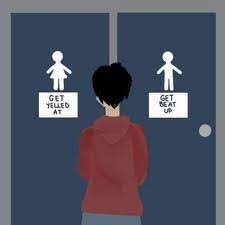
Consequently, someone that grew up in a Jihadist background and fundamentalism holds the view that violent killing is the shortest route to heaven. All these extreme perceptions are the byproduct of culture. However, the slanted view that men are required to fix everything as opposed to crying is not a reflection of the reality by whatever standards. This paper will discuss frustrations that come with expectations imposed by society on the men.
Gender Frustration
Want help to write your Essay or Assignments? Click here
There’s this warped notion that the corporation demands of men are that aspect of being physically strong. While being physically strong seems absurd to comment, it remains the commonest of anticipation of men to be strong, muscular, perhaps more powerful than the engine and one that can leap all tall structures in a single bound. The reality is that much of these expectations are anchored on competitiveness.
Furthermore, the society looks at men based on the depth of their wallet. Currently, women income is increasing while men are required to be rich and sole providers of their families. Failure to meet such standards makes them girly. In the society, women must be beautiful, and men should be wealthy. The society requires that a man should have money as well as material possession. The amount of money a man earns should be higher that his girlfriend or wife. Whether men are wealthy company managers or middle-level managers, earning less than their wives, makes the society question their masculinity.
Another misconception that is intense is the pressure on male to be winners. For acceptable masculine, the male should be passionate about their position. Also, men that are not interested in sports are regularly seen as derision. The society looks at men based on hierarchy, those at top stronger and better among others. Nevertheless, men ego is accountable for roughly 90% of the conflicts in human history. In fact, men have limited prospects. Being the winner and at the top is a definitive issue of men culture.
Again, the society does not recognize all male who dominate and the small alpha-male subcategory. As a matter of fact, 99% of women and 95% men are primarily subservient to about 2-3% of the population. Unless one is an autonomous professional or CEO in a firm, he can spend much of his career taking orders from somebody that can quickly end his career while forcing your family into bankruptcy at any time without justification.
Gender Frustration
Want help to write your Essay or Assignments? Click here
The society requires that men should know how to fix a flat tire, computer or broken door. Culturally, men are expected to have some innate ability to fix any broken physical object. Some men learn from a tender age that for them to be considered as men, means being able to fix things, particularly mechanical ones. This brings into perspective fascinating self-satisfying prophecies.
From a tender age, boys are required to think about mechanical things- in fact, they are taught the way of doing it by their fathers or elder brothers, or other males who are good at fixing and tinkers. Because they are taught how to fix objects, they have a higher chance to learn how to perform it. Since they know the fixing, they are the one women turn to for help.
These highlights the belief that males are better than females while reinforcing the expectations of men that they are better and do not want others to think that they are sissies. Even gay men, who on the whole seem to feel a lot more free of these gender expectations than straight men, have a pre-determined tendency to buy into the strong man myth, for self and their objects of desire.
In the end, while it is largely beneath the surface, cultures are ever-changing points of departure that situate us in certain ways and away from other directions. We all belong to diverse cultures that give us messages concerning what is standard, appropriate, and anticipated. Our cultural differences tend to surface when we become unable to meet our expectations. Moreover, the disparities between others can be faulted for bad faith or lack of judgment on the part of others, not indicating that common sense is cultural. In this respect, whatever is shared in one group might look weird, or unethical to another.
Gender Frustration
Works cited
Hampden-Turner, Charles M., and Fons Trompenaars. Building cross-cultural competence: How to create wealth from conflicting values. Yale University Press, 2008.
Want help to write your Essay or Assignments? Click here
Want help to write your Essay or Assignments? Click here
Contingent Exclusionary Rule
In real world, Donald Dripps model would work as a constitutional remedy that integrates exclusionary regulation with financial damages conventionally related to tort allegations. Courts should begin to test suppression orders contingent based on police failure to pay for damages as determined by courts (Dripps, 2001).
In addition, compulsory use of the contingent exclusionary rule can be used to not only prevent but also punish deliberate breach of constitutional restrictions. However, a number of seizure and search breaches fail to meet deliberate violations, may be due to police obliviousness or unusual instances, as such contingent exclusionary rule applies to many criminal cases.
To some extent, the Contingent Suppression is compatible with restorative justice. To start with, it acts for the best interest of the judicial system since truth is well fostered. This due to the fact that police and judges would not hide evidence to get a criminal sentence when there is practical Fourth Amendment breach that can result in a suppression order, particularly, exclusionary rule in certain conditions fail to cost convictions the Fourth Amendment never forbid. The cost is simply decreased or even eliminated (Dripps, 2001).
Want help to write your Essay or Assignments? Click here
Moreover, the tort remedy protects the innocent as well the guilty from unconstitutional seizure and searches. This means tort remedy serves as a deterrent from illegal search and seizure. Both local and state administrations are liable to Forth Amendment breaches, can demand while enforcing training programs for law enforcement bodies in their jurisdiction. The constitutional remedy is important in encouraging ethical police officers and judicial process to be effective.
On the other hand, the courts may set damages and thus eliminate legal aspects from politics, especially; contingent exclusionary rule addresses political issues since the federal courts would set damages. By and large, using exclusionary rule as legal remedy will be mooted in way that protects the Constitution for Fourth Amendment breaches following the growing need to ban exclusionary rule.
Want help to write your Essay or Assignments? Click here
Employment-At-Will doctrine
The at-will doctrine is rooted in American employment practice. It is worth mentioning that amongst the world’s developed countries, America is the one that is still using it. This paper provides a summary of the employment-at-will doctrine and evaluates three scenarios out of those described by specifying whether I can sack the worker legally, and the actions that I should take in order to limit liability and impact on business operations. Furthermore, California’s policy on employment-at-will is examined.
The employment-at-will doctrine is essentially the supposition that employment is for an indefinite time period and might be ended at any time either by the worker or the employer. Courts have taken this historical approach in their interpretation of employment relationships (Stone, 2011). This implies that an employer could sack a worker for no reason or for whichever reason.
Unless the employee has an employment contract which particularly spells out that he or she would be employed by the employer and work in that organization for a specific time period, or that the employee might only be sacked for good reason, then that worker is regarded an at-will employee (Stone, 2011).
Want help to write your Essay or Assignments? Click here
Based on the employment-at-will doctrine and after evaluating 3 of the 6 scenarios, I have determined that I can legally fire John, Ellen and Bill. John would be sacked for posting a rant on a social media website where he criticized the most significant client for the company.
Ellen would be dismissed for starting a blog to protest the bonus of the company’s Chief Executive Officer, claiming that nobody below the director has been given a pay raise in 2 years and depicted her superiors as being out-of-touch and know-nothings. Bill would be fired because he used the BlackBerry issued to him by the company to run his own business on the side. I will fire them because the employment-at-will doctrine allows me to fire the at-will employees at any time, for no reason at all or for any reason.
To limit liability as well as impact on operations that are brought about by adverse employment decisions, the employer has to take a number of actions for instance making use of disclaimers when the company hires new workers. The contract for employment has to include the employment terms and length. Furthermore, an effective grievance procedure and discipline policy should be established in the firm. Prior to making major decisions with regard to workers, the employer should first review the issue in a careful manner and obtain legal guidance (McCulloch, 2014).
A company can be sued if it fires a worker who is protected by the exceptions of the at-will doctrine. The ethical theory which applies to this course of actions is the deontological ethics: people, including employees of a company, have to be treated as ends themselves but not as means to an end.
Want help to write your Essay or Assignments? Click here
My state is California. This state is an at-will employment state and abides by the Doctrine of Employment At-Will. The doctrine describes the most widespread employment relationship in which either party might mutually end the relationship with no fear of liability. As per this doctrine in California, any hiring by employers is assumed as being at will employment, and employers are free to dismiss the worker for no reason, for a bad reason, or for a good reason. The worker is also equally free to quit working at the company without any notice or with notice (Nassiri Law Group, 2014).
However, there are 3 main exceptions to this doctrine in California. These exceptions address terminations which, even though are theoretically compliant with this doctrine, the courts and legislature of California have concluded that they are intrinsically unfair.
These exceptions are as follows:
Implied contract exception – the courts in California would not apply the employment-at-will doctrine when the employee handbook requires good reason for job termination or guarantees the worker job tenure or when the employers make written or oral representations to their workers with regard to job security (McCulloch, 2014).
Therefore, a court in this state made a ruling that oral statements which say that the worker would remain on the job provided that her job performance is satisfactory could be interpreted as creating an implied contract that prevents at-will employment terminations.
Want help to write your Essay or Assignments? Click here
Against public policy – according to this exception, it is an illegal termination of employment if that termination is in violation of a well-established and explicit policy of California State. As such, an employer cannot discharge a worker when that employee files a worker’s compensation claim or when the worker refuses to violate the law at the employer’s instruction (McCulloch, 2014). For example, a secretary cannot be dismissed because of refusing to prepare falsified expenditure reports for her boss.
Covenant of good faith exception – in the state of California, certain circumstances for instance adequate service and long years of employment could create an implied covenant of fair dealing and good faith that may prevent a worker from being terminated at will by his or her employer (Simas & Associates Ltd, 2015). In addition, at-will workers have rights and their employers cannot discharge them for unlawful reasons like in retaliation for exercising employee rights or due to job discrimination.
Want help to write your Essay or Assignments? Click here
The following is a real-world example of a worker in California who used California’s employment-at-will doctrine in the year 2013. A previous power line employee won a wrongful termination court case and was granted in excess of one million dollars in the lawsuit. This worker had worked for the electric firm for roughly 8 years when the company asked him and his crew members to replace an electricity pole which was damaged.
The supervisor of this worker told the crew to conduct the repairs without shutting off the power to the line. Even though the employee and his crew finished the repair works satisfactorily, it was very dangerous. If the high-voltage wires had touched one another, a huge explosion would have occurred (Nassiri Law Group, 2014). About 30 days later, another electric crew was sent to perform repairs on the same power line but the company allowed them to shut the power off leaving roughly 107 of the firm’s clients with not electricity.
The worker who had carried out the task with the live wires filed a safety complaint. In the claim, he stated that he felt unsafe in the place of work and that he suffered panic attacks, anxiety and even depression. He took a medical leave of absence and his supervisor sacked him through a voicemail message. The employee filed a wrongful termination lawsuit and the court ordered $1 million in damages.
The employer was also ordered to pay for the attorney fees of the worker (Nassiri Law Group, 2014). In California State, it is unlawful to fire a worker if the termination is in violation of the public policy of this state. Therefore, it was against the law for the employer to sack the power line worker for the wrong reasons.
Want help to write your Essay or Assignments? Click here
Conclusion
To sum up, based upon the employment-at-will doctrine and after examining three of the 6 scenarios, I have concluded that I could lawfully dismiss John, Ellen and Bill. The employment-at-will doctrine permits the company to discharge at-will employees at any time, for no reason at all or for any reason. In my state of California, the exceptions to this doctrine include against public policy exception, covenant of good faith exception, and implied contract exception.
Stone, K.V. (2011). Revisiting the at-will employment doctrine: Imposed terms, implied terms, and the normative world of the workplace. Industrial Law Journal, 36(1), 84-101.
Want help to write your Essay or Assignments? Click here
Want help to write your Essay or Assignments? Click here
ECJ and ICJ Roles Compared
Introduction
The International Court of Justice (ICJ) is the legal structure of the United Nations (UN) and the leading international court with jurisdiction over global legal differences. On the other hand, the European Court of Justice (ECJ) is the legal establishment of the European Union (EU)[1]. The ECJ is mandated with resolving member states differences. The International Court of Justice (ICJ) and the European court of justice (ECJ) were set up by interstate treaties to perform various roles[2]. The will evaluates the different roles of ICJ and ECJ.
Settlement of Disputes
Both ECJ and ICJ play a significant function of settling disputes. To start with the ICJ’s role is two-fold; resolve disputes based on the international law and legal conflicts submitted to the court and provide advisory guidance on legal issues provided by duly international legal agencies. All UN member countries are ipso facto parties to the ICJ Statute, an aspect that is relevant to the UN Charter, and currently, almost all countries are UN member states. Every disputing nation has recognized the court’s jurisdiction as mandatory.
On advisory, UN specialized agencies and organs have the power to request the views of ICJ. The consultative process highlights on contentious proceedings and the basis of applicable law. Particular rules can, nevertheless, stipulate that advisory law is binding. This means that such laws cannot be invoked after the states have consented while the court has made a ruling.Nonetheless, a country’s failure to adhere to the tribunal’s decision breaches Article 94(2) of the UN Charter.
Noncompliance may be invoked to UN Security Council that can either make suggestions or authorize the use other strategies to enforce the ruling. The UN Security Council’s decision to implement compliance based on the court’s ruling is subjected to veto power and therefore mainly relies on the willingness of the members to resort to enforcement strategies while supporting the preliminary ruling.
Want help to write your Essay or Assignments? Click here
Article 36 (2) of the ICJ statute or Optional Clause, gives states the authority to make a unilateral declaration, whereby they recognize “a mandatory ipso acto and with no particular agreement, based on any country accepting similar obligations, the prerogative of ICJ in settling legal conflicts. Under the Optional Clause, some states have accepted ICJ’s jurisdiction with particular restrictions, for example, the US has appealed the Connally Reservation.
Such a reservation allows nations to avert ICJ’s prerogative initially recognized under the Optional Clause if they choose not to respond to a given suit. In most instances, it is practiced if a nation confirms that a conflict is domestic in nature and not international, and, therefore, domestic jurisdiction is applicable. If a government appeals the Connally Reservation, another one can also appeal to that nation, and hence a suit against the second country will be revoked.
This is commonly known as the rule of reciprocity and demonstrates that a nation has the responsibility of responding to the suit filed against it before the ICJ provided that the country is submitting the suit also recognizes the court’s jurisdiction. Much as ICJ has the mandate to hear any given case suitably provided, access laws evidently require that many conflicts will encompass enforcement or challenges to the actions.[3]
Settlements of Disputes in such agencies are minimized to contract conflicts with international bodies. For that reason, what may be viewed as a paradigmatic function of ICJ? Also, in the mandatory jurisdiction, ICJ’s role of settling disputes can be the foundation of enforcing the agreement and hence it can morph into enforcement function.
Moreover, ICJ is in charge of excising appellate jurisdiction, for example, this can be a result of provisions in the treaties including 1944 Convention on International Civil Aviation that envisages appeals to ICJ from rulings of ICAOCouncil.
Like ICJ, ECJ has the power of resolving interstate conflicts regarding the interpretation and use of agreements. Besides jurisdiction of inter-member states conflicts based on Article 344 Treaty on the Functioning of the European Union (TFEU), the ECJ interpret treaties through original judgments regarding the legitimacy and construal of agencies of EU and, institutions’ act.
As such, ECJ has the power of ensuring that law is not only observed but also interpreted and used in EU treaties[4]. To settle legal disputes, ECJ has a broad jurisdiction to hearing some actions. Additionally, it has the ability besides other things to regulate the applications of actions due to failure to act submitted by member states or against members as a result of failing to meet the obligations of the original judgments and appeals.[5]
Want help to write your Essay or Assignments? Click here
ECJ dispute resolution
The European Court of Justice (ECJ) is the legal establishment of the European Union. The court’s primary obligation is to resolve disputes between member states. Moreover, the ECJ has an important duty of ensuring that European law is understood and employed the same way across the board. While based in Luxembourg, the court consists of 28 judges, taken from each member state.
For instance, to preclude disparities of interpretation of the European Union (EU) law by national courts, the initial verdict processes enhances the co-operation between national courts and the ECJ[6]. Furthermore, if a case is presented before a domestic jurisdiction that entails a clarification of the EU bylaws, if faced with ambiguity, the national courts will indeed refer the issue to the ECJ for interpretation. The ECJ will then pronounce a decision with regards to how the law should be interpreted.
The ECJ has the mandate to enhance proceedings, particularly if initiated by The Commission for purposes of compelling a member state to abide by the EU statute. In cases where the member state is in the wrong, it has to rectify the anomaly promptly. Whenever there is a dispute emanating from laws enacted by EU institutions at the expense of EU Agreements, the ECJ may request for the cancelation of such laws.
However, the ECJ has to determine that such laws are in conflict with the EU treaties before obliterating them. In addition, invalidation proceedings can also be advanced by private individuals provided they can substantiate that the statute in question has a direct effective on them individually.[7]
Want help to write your Essay or Assignments? Click here
In Nold v. Commission case of 1974, the ECJ made a pronouncement guided by the legal practices common to the member states, and that it was not in any way ready to support measures that are not in tandem with fundamental rights accepted and protected by the components of member states. The pronouncement led to an understanding between member states and the ECJ.
This permitted state courts to make recommendations when the ECJ law and member states are in conflict. By and large, ICJ an ECJ resolves disagreements based on the interpretation and use of terms in trials that are created between two or more nations. Other cases may include the presence of the military in a foreign country, water boundary conflicts among others.
Court of Appeal and Compliance
ICJ serves as the court of appeal while ECJ is the foundation of ensuring that European laws are adhered to. ICJ can serve as the court of appeal of International Labor Organization (ILO) Administrative Tribunal. After 1955, the decisions of United Nations Administrative Tribunal can be appealed to ICJ; however the association was severed by United Nations General Assembly.[8]
On the other hand, the ECJ acts as a platform for making sure that European law is adhered to uniformly when it comes to interpretation of legal actions. While European laws are statutes stipulated by legislative organs, they regularly amend them based on the case law of ECJ. For that reason, the ECJ plays the function of EU integration through clarification of ambiguous legal stipulations, implemented regarding fulfilling the agreement by policy makers with different interests.[9]
Want help to write your Essay or Assignments? Click here
International Law Enforcement
ECJ and ICJ are in charge of enforcing international law. To start with, the ICJ is mandated to oversee countries compliance with international law. In addition, this entails reviewing countries actions, public agencies and in some instances individuals to determine if they adhere to the provisions of international rules. ICJ can consider the practices of a nation in international law as either lawful or unlawful while secondarily authorizing measures to reward victims and create expenses related to criminal actions. According to International Court of Justice Statute,
ICJ decides cases with regards to international law. This is to say, that the court should apply; a) international conventions and agreements; b) international customs; c) general codes accepted as law; and d) judicial decisions.[10] With the goal that nations can enforce legal rulings, there is an assumption of forcing legitimate national decisions. Apparently, such an assumption is not recognized globally.
The inadequate international administrative tool to enforce ICJ judgments against nations, however, some have alleged that the case of ICJ is similar to public law as well as constitutional functions of local courts.
The International Court is also tasked with the obligation to formulate the private international law. While the international court has played a comparatively modest and significant role in the creation of the international law, looking ahead, this obligation is expected to increase.
The porousness of national boundaries as an outcome of globalization, leads horizontally, to the snowballing interaction between domestic legal structures, culminating in more private global legal issues happening. However, it equally shrinks, vertically, the conventional distance between the spheres of public and private universal law. At some point, the ordering of the diversity of private law orders and arrangements the central obligation of the private international law- is slowly but surely also an issue of interest for public international law[11].
For instance, this has been made probable through the concession and wider acceptance of The Hague Conventions and other international, regional and two-pronged instruments on the transnational private law. However, standards of transnational public law are gradually cooperating with, influencing and reporting to norms of private international law, especially where they are exemplified in transnational instruments.
Want help to write your Essay or Assignments? Click here
With international law enforcement, the ECJ makes ruling on the actions submitted by 1) member nations, institution or legal individual; 2) making preliminary judgments upon requests of tribunals of members, on the interpretation of Union Laws; and 3) make decisions in other cases as stipulated in treaties. In addition, the ECJ reviews the legitimacy of legislative acts and the Council of Commission.
In this case, the ECJ provides uniform and precise interpretation of law while ensuring that all members adhere to it. Besides the predisposition of governments interpreting the law based on their interests, it a new regulation as such not widely recognized.
Review international administration and legitimacy
Both courts are involved in the reviews, on one hand; ICJ considers foreign policy, and on the other ECJ reviews the legitimacy of European acts. ICJ listens to challenges to the judgment of administrators in cases submitted by individuals affected by such decision.[12] Based on the standard of assessment, the court checks to ensure that administrative decision complies with the law, and the administrators have a valid basis for their understanding.
In addition, the ICJ has the power to assess the rulings of national managers responsible for enforcing international regulations. In developing and developed nations, the ICJ authorizes a local action as lawful. On the other hand, ECJ regularly reviews widespread applications for common regulatory laws. Nevertheless, in cases where nations creatively deduce international law for fostering national agenda, foreign administrators can act as a type of global enforcement structure for decision formulation.
Want help to write your Essay or Assignments? Click here
These administrative reviews allow nations to construe uniformly transactional, regulatory laws, providing a platform for domestic courts and administrators concerning new and complex legal problems. They also offer legal preparation especially for private individuals that do not succeed, therefore, help states protect their actions from criminal allegations. On the contrary, ECJ reviews the legitimacy of European acts, and agencies to provide legal impacts. Annulment proceedings can be submitted to decision formulation institutions, members or under certain conditions by a person.
The objective of such actions is annulling acts of institutions that are not related to stipulations of treaties, exceeding their rights or fail to adhere to the laid down procedure. If the action turns out to be adequately funded, ECJ pronounces the issue as void. Thus, annulment proceedings are the basis for evaluating compliance of European legislator acts to treaties and legitimacy of Commission judgments and resolving inter-institutional conflicts influencing power decentralizingon every institution from treaties. The controlling legitimacy of the institutions’ actions connects ECJ to constitutional jurisdiction.[13]
Want help to write your Essay or Assignments? Click here
Reinforcing legal process
The ECJ plays the role of strengthening legal structure by developing various institutional frameworks, amending inter-institutional as well as member states uniformly. The court solely is dedicated on these provisions while widening the catalog to protect the rule of law and supporting the prevailing conditions of the institutional uniformity. ECJ’s fundamental rights jurisprudencepresents a recognized role in the constitutional process.
Also, though the treaties did not contain anything on legal structure, the court progressively fleshed out a bill of rights in various cases including Staunder (1969) and Omega (2004) that is waiting to be integrated into law. Apart from reinforcing constitutional framework, the ECJ mandated to ensure there is a legal basis for the European law as well application duty of loyal cohesion.[14]
The universal values of European law have for several years been replacing due to EU lack of fundamental rights process. Without a doubt, the general values are important in guaranteeing that constitutional courts at national level recognize the influence of European law. The duty of loyal co-operation is vital in the creation of legal rules. However, its significance is fundamental in the legal process like EU, where laws are used in similar institutions.
Similarly, ICJ is in charge of strengthening the constitutional process by enforcing international laws and nullifies unlawful international actions.[15] Also, ICJ is regarded as a constitutional organ since it has the capability to make laws of constitutional significance.
Basically, in reinforcing legal process, the ICJ promotes the culture of constitutional compliance when the acts of a nation are regarded as ipso facto invalid. To effective foster legal agreement, the ICJ depends on the public views to pressure political leaders to respect rulings.
Want help to write your Essay or Assignments? Click here
Promote integration and global community
While ECJ promotes integration, ICJ fosters global community. According to Article 7 European Court has empowered ECJ to perform duties entrustedto Community, demonstrating that without a doubt it has a remitto not only protect but also promote the rule of law. The European legal principles foster this step proving that ECJ is lawfully in charge of developing pro-integration process and required to provide rulings to reinforce and enhance the Community or Union legal structure. In the global community, the ICJ hears cases regarding maritime boundary, trade law, human rights, international criminal law and different tribunals formed to listen to a given case.
Interface and judicial dialogue
ICJ and ECJ are in charge of ensuring there is an interface in the trends of legal discussion. For instance, the ever-growing jurisprudence demonstrates that ECJ uses ICJ case-law as a tool for interpreting international practices relevant to its duties[16].
In the recent past, ECJ used the North Sea Continental Shelf ruling to show that member states have independent rights regarding the nearby continental shelf, hence acts done on the continental shelf be considered as attempts of applying the European Union law. In the continental shelf, the ICJ made a ruling that coastal nations have the rights to extend their territory under the sea to exploit water resources.
In a bid to promote judicial discussion, both ICJ and ECJ are involved treaty of law. It is significant to note that treaty of law is important to EU because it is not a party to the law of treaties of Vienna Conventions[17]. Moreover, in the 2015 Evans Case, both courts used case law as the basis for guaranteeing that the rule depicts customary law.
By and large, in ensuring an interface in the judicial dialogue, ECJ, and ICJ when making a ruling involving public international law, in particular, ECJ instead of using on its interpretation of international law, it refers to ICJ decisions. Therefore, ECJ has comprehensively used ICJ as a platform for interpreting international law necessary in performing its roles.[18]
Want help to write your Essay or Assignments? Click here
Conclusion
In this paper, it became clear that the ECJ plays a critical role in resolving disputes between member states. The ECJ is also mandated with interpreting the European law and ensuring it is followed to the latter. On the other hand, the ICJ ensures the order is observed among the UN member states. Still the court has jurisdiction within the EU members. The ICJ offers checks on the exercise of transnational authority in their administrative and constitutional review functions.
The managerial analysis is a safeguard mechanism against prejudice or political interference in the application of the law. The ECJ, for instance, is dubbed as the court of justice in the EU. In the event of a conflict of interest, the ECJ institutes annulment proceedings. Indeed, both the ICJ and ECJ play a critical function[19].
Want help to write your Essay or Assignments? Click here
References
Klabbers, J. The validity of EU norms conflicting with international obligations. International law as law of the European Union. Martinus Nijhoff Publishers, Leiden and Boston, 2012.
Eckes, C. The Court of Justice’s Participation in the Judicial Discourse: Theory and Practice. The European Court of Justice and External Relations-Constitutional Challenges Hart Publishing, Oxford, 2014.
Rachovitsa, A, ‘Fragmentation or unity of public international law’revisited: analyzing the European Convention on Human Rights when the European Court takes cognizance of public international law norms (Doctoral dissertation, University of Nottingham), 2013.
Dolzer, R. and Schreuer, C. Principles of international investment law. Oxford University Press, 2008.
Want help to write your Essay or Assignments? Click here
De Búrca, G. The European court of Justice and the International Legal order after Kadi’(2010). Harvard International Law Journal, 51, p.1.
Rosas, ‘The European Court of Justice and Public International Law’, in J. Wouters, A. Nollkaemper and E. de Wet (Eds.), The Europeanization of International Law – The Status of International Law in the EU and its Member States, The Hague: T.M.C. Asser Press, 2008, pp. 71 2011.
Mendez, M. ‘The Legal Effect of Community Agreements: Maximalist Treaty Enforcement and Judicial Avoidance Techniques’, European Journal of International Law, 2010, pp. 83-104
Bickerton, C. European Union Foreign Policy: From Effectiveness to Functionality, Palgrave, 2011 (forthcoming), Chapter 4.
Martin Shapiro, „The European Court of Justice‟, in Paul Craig & Gráinne de Búrca (eds.), The Evolution of EU Law, Oxford: OUP, pp. 321-347, at 332.
Neville Brown L, Tom Kennedy, Brown & Jacobs. The Court of Justice of the European Communities, London: Sweet & Maxwell 2000, p. 344
David Anderson & Marie Demetriou, References to the European Court (Second Edition), London: Sweet & Maxwell 2002, pp. 177-180.
Damian Chalmers, Christos Hadjiemannuil, Giorgio Monti, Adam Tomkins, EU Law: Text and Materials, Cambridge: Cambridge University Press 2006, p. 301.
Kokott & Cheryl Saunders (eds.), The Future of the European Judicial System in a Comparative Perspective, Baden-Baden: Nomos 2006, pp. 83-90.
Buergenthal, T “Proliferation of International Courts and Tribunals: Is It Good or Bad?” Leiden Journal of International Law (2001), 14: 267-275.
Hafner, G. “Pros and Cons Ensuing from Fragmentation of International Law”, Michigan Journal of International Law Vol. 25(2004), pp. 849- 863.
Martinez, S “Towards an International Judicial System”, Stan.L Rev. Vol. 56(2) (2003), pp. 429-529.
Stephens, T. “Multiple International Courts and the ‘Fragmentation’ of International Environmental law”, Sydney Law School Legal Studies Research Paper No.07/14 (2007), pp. 227-271, at 23
Want help to write your Essay or Assignments? Click here
[1] C Eckes, The Court of Justice’s Participation in the Judicial Discourse: Theory and Practice. The European Court of Justice and External Relations-Constitutional Challenges Hart Publishing, Oxford, 2014.
[2] S. Cheryl (eds). The Future of the European Judicial System in a Comparative Perspective,
Baden-Baden: Nomos 2006, pp. 83-90.
[3] S Martinez, “Towards an International Judicial System”, Stan.L Rev. Vol. 56(2) (2003), pp. 429-529.
[4] T Stephens, “Multiple International Courts and the ‘Fragmentation’ of International Environmental law”, Sydney Law School Legal Studies Research Paper No.07/14 (2007), pp. 227-271.
[5] A. Rosas, ‘The European Court of Justice and Public International Law’, in J. Wouters, A. Nollkaemper and E. de Wet (Eds.), The Europeanisation of International Law – The Status of International Law in the EU and its Member States, The Hague: T.M.C. Asser Press, 2008, pp. 71 2011.
[6] J Klabbers, The validity of EU norms conflicting with international obligations. International law as law of the European Union. Martinus Nijhoff Publishers, Leiden and Boston, 2012, pp.111-132.
[7] G. Hafner, “Pros and Cons Ensuing from Fragmentation of International Law”, Michigan Journal of International Law Vol. 25(2004), pp. 849- 863.
[8] T. Buergenthal “Proliferation of International Courts and Tribunals: Is It Good or Bad?”, Leiden Journal of International Law (2001), 14: 267-275.
[9]F.G Jacobs, Judicial dialogue and the cross-fertilization of legal systems: The European Court of Justice. Tex. Int’l LJ, 38, 2003, p.547.
[10] L. Neville Brown, Tom Kennedy, Brown & Jacobs. The Court of Justice of the European Communities, London: Sweet & Maxwell 2000, p. 344
[11]A Rachovitsa, Fragmentation or unity of public international law’revisited: analysing the European Convention on Human Rights when the European Court takes cognisance of public international law norms (Doctoral dissertation, University of Nottingham), 2013.
[12]G De Burca, The European court of Justice and the International Legal order after Kadi’. Harvard International Law Journal, 2010.
[13] M. Mendez, ‘The Legal Effect of Community Agreements: Maximalist Treaty Enforcement and Judicial Avoidance Techniques’, European Journal of International Law, 2010, pp. 83-104
[14] S. Martin, The European Court of Justice‟, in Paul Craig & Gráinne de Búrca (eds.), The Evolution of EU Law, Oxford: OUP, pp. 321-347.
[15]R, Dolzer and C, Schreuer. Principles of international investment law. Oxford University Press, 2008
[16] P. Schiff Berman, ‘A Pluralist Approach to International Law’, The Yale Journal of International Law2007, pp. 301-329.
[17] S Fathan, Vienna Convention on the Law of Treaties Between States and International Organizations or Between International Organizations. Indonesian Journal of International Law, 3 (1), 2005.
[18] D. Chalmers, C. Hadjiemannuil, G. Monti, and A. Tomkins, EU Law: Text and Materials, Cambridge: Cambridge University Press 2006, p. 301
[19] C. Bickerton, European Union Foreign Policy: From Effectiveness to Functionality, Palgrave,2011 (forthcoming), Chapter 4.
Want help to write your Essay or Assignments? Click here
Want help to write your Essay or Assignments? Click here
Negotiation: Gambits to Look Out For
The way one behaves during a negotiation can highly affect the outcome. Since negotiations are a voluntary agreement, there is no guarantee at the onset that an agreement will be reached upon (Edward and Roy 2015). It is through the use of proper negotiating skills and application of tactful behaviors that a consensus can be reached (Roger 2012).
A good negotiation approach entails both competitive and cooperative behaviors. Enhancing the deal during the negotiating process require both parties to be cooperative. When both parties are working towards a mutual goal, the process ends up in a win-win situation that usually leads to a future working relationship. Having a cooperative mindset establishes a relationship between the negotiators for value creation.
On the other hand, a competitive mindset is used for claiming of value. Though competitive strategies that claim value usually tend to undermine cooperation between the parties, a cooperative strategy also tends to make one vulnerable to the competitive bargaining techniques. It is, therefore, to apply both cooperative and competitive behaviors during the negotiations.
Want help to write your Essay or Assignments? Click here
One should be mindful of competitive and cooperative negotiating behaviors for some reasons. A competitive mindset gives one the power to control the negotiation process. Since the Navigation system under review had been used to the negotiating and proved to be effective, it will give more value to the company while striking the deal.
Prior information about the government representative can be used to bring cooperativeness in the negotiating process by talking about it and not stating the first quote for the deal. A better deal will be received by having a language and nonverbal behavior that convey confidence and power (Nick 2015).
Negotiation activities are either contractual or for personal purposes. Negotiation with the federal government is a contractual negotiating activity while one involving purchasing of a personal car is a personal purchasing negotiation. A contract exists as a voluntary agreement between parties that have made a promise in exchange for value and negotiating is the process that leads to making the mutual agreements (Edward and Roy 2015).
In negotiated contracts, both parties surrender some measure of power to each other, yet both end up gaining more that they previously had. In personal negotiation, there is no surrendering of freedom by either of the parties since each of them is after a personal gain. While in contractual negotiations there are preparations made, personal purchasing negotiations are random and at the convenience of the buyer.
Some skills are critical in negotiating contracts with the federal government. Preparation is important before entering into a bargaining contractual negotiation. History of the relationship between the two parties and past relationship are crucial in reaching a common goal. Some of the skills a powerful negotiator should possess include:
Want help to write your Essay or Assignments? Click here
Making sure that the other side commits first
According to Roger (2012), power negotiators give the other party the chance to commit first in a negotiation. When the other party commits first, one is in a position to bracket their proposal, gain more information about them and possibly get a better deal than expected.
Pretending to be dumb
A skilled negotiator is able to act stupid in order to get a better perspective of the other party. Acting dumb gives a negotiator an upper hand since the other party sees the negotiator as less intelligent and gives them a better deal in order to help them.
Ability to understand real value of a deal in a warm way.
Instead of giving the real value of the deal, it is wise to break the amount into bits so that the other party doesn’t feel the weight of the whole amount. When the price is broken into small amounts, it is easier for the other party to go ahead and accept it.
Committing to the core issues.
Skilled negotiators learn to focus on real issues in the negotiation rather than be distracted by the other party’s movements. One should be calm and remain in control during the negotiation process for a possible win.
Being complimentary
Even if the other party didn’t perform well in the negotiation, it is highly advisable to congratulate them. When the other party is complimented, chances are that they will raise price for the deal.
Negotiating with a federal government requires the use of skilled tactics to come to a compromise. Failing during a negotiating can hugely affect the growth of a business, and that’s why preparation is adamant for success. Since the government representative is known in advance, the negotiator is at an advantage. It is important to allow the agent name their price first as it will give room for a powerful negotiation.
Want help to write your Essay or Assignments? Click here
The Best Evidence Rule
What is the best evidence rule? Explain in detail.
The best evidence rule in the US Constitution is associated with Article X of the Federal Rules of Evidence (1001-1008). The statute identifies the guiding principles that may require either the plaintiff or defendant to table as evidence the contents of a document, footage or photograph at trial in the absence of original documents. However, secondary evidence can only be allowed, if either party can present tangible reasons for the missing original document.
The rule applies best in a circumstance where the party endeavors to substantiate contents of copy document presented as evidence at trial. Moreover, evidence to the original content can be adduced in the form of testimonies. Modern times have, however, necessitated the application of electronic, motionless and other copies as a substitute for the original (Miller, 2012). The general rule dictates that secondary evidence cannot be tabled at trial if the original document exists.
Why was the best evidence rule implemented into the U.S. court system? Explain.
In the US for instance, the court system held the view that any secondary evidence was inadequate. As such, the judicial system would prefer original content or recorded evident as opposed to photocopies because the substantiation in these documents was reliable and of great significance in a court of law(Miller, 2012).
Want help to write your Essay or Assignments? Click here
A case in point is where the Washington Post did a story based on a leakage which necessitated the fall of President Richard Nixon of the United States in 1972. Bob Woodward and Carl Bernstein wrote the editorial piece that carried grave allegations. The article highlighted a well-orchestrated ploy to rig President Nixon into the office for the second term.
Moreover, the information also led to the Watergate scandal. While the heated the article generated led to the President Nixon’s resignation from office, it also paved the way for the imprisonment of several top officers in the Nixon’s government (Amaya, 2008).The best evidence rule as enfolded in the Federal Rules of Evidence demands the application of original content, footage and photographic material or paintings. The precision of evidence it presents underscores the reason the statute was implemented in the United States court system.
What is the rationale behind its application?
The motivation for applying the best evidence rule can only be comprehended from the circumstances in which it emerges. The 18th Century, for instance, a situation arose where handmade evidence was tabled as evidence at trial. This set precedence for theassumption that in the absence of original content, there was every reason not to rely on the copy adduced as evidence (Miller, 2012).
Two viewpoints underlie the basis of the best evidence rule:
Fraud Deterrence:
The rule safeguards against false evidence. There is a presumption that an original document is less susceptible to falsified exploitation than a verbal testimony about the write-up. By admitting original content, the best evidence rule thwarts fraudulent orchestrations. Regardless of where the best evidence rule applies, it may be irrelevant to foil fraud in a bid to weaken the fraud rationale.
However, advents of photographic and scanning technology have made it probable to forge documents. While the best evidence rule may help to curtail fraud, it does not mean that all original documents tabled as evidence for trial are necessarily genuine (Allen and Stein, 2013).
Want help to write your Essay or Assignments? Click here
CurtailingMisconception of Writings
The justification presented is that the rule was formulated to curtail any likelihood of a deceitful imprint of the writings by demanding for the provision of original documents if they exist. Precluding misconceptions is a critical element; however, modern developments of the discovery weaken this to justify the best evidence rule model(Miller, 2012). The rationale that the judges can examine original documents implies that they can also determine the impreciseness before trial as opposed to unraveling the same problems using the best evidence rule.
Review the following cases concerning wiretapping:
Olmstead v. the United States
Olmstead’s office and the home area were tapped in a stealth mode by the federal agents. It is this evidence from that wiretaps that was used against him in court. The judgment was anchored on a wire-tapped discussion in which Olmstead insinuated a ploy to violate the National Prohibition Act through the importation and selling of illicit beer(Anderson, Schum and Twining, 2009).
The pronouncements to employ wiretapped discussions as implicating evidence did not violate their Fifth Amendment safety against self-incrimination as the conversationwas not illegitimately executed but were volunteered between the two parties. Independently, the party’s 4th Amendments rights were contravened because the whole issue of wiretapping does not entail a search and appropriation the sole impression of the 4th Amendment. Moreover, for ethical reasons, the jury ruled that wiretapping could be immoral, but no court can exclude such evidence.
Nardone v. the United States
In the case of Nardone v. the US, it’s challenging to understand the information used in the investigation the purpose as a result of security alert, a significant amount of data was recorded. In the identification of data that breaches privacy, lawmakers should be in a position to realize, hear and comprehend information, which is not relevant to the primary goal of the investigation. It is also intricate how a regime uses words spoken by an individual to convict them. In such a government, an individual can choose to speak or keep quiet while wiretapping fulfills the credentials for use in the court of law (Miller, 2012).
Want help to write your Essay or Assignments? Click here
Goldman v. the United States
In this case, the court ruled that dictaphones did not breach the Fourth Amendment. The dictaphone was placed on the office wall to record private discussion. Such a ruling the court reported that there was no physical violation of the intercepted discussion(Miller, 2012). It is evident that the Fourth Amendment protected the individuals in this case as well as areas from unwarranted search and seizure.
Berger v. New York
In the Berger v. New York case, Mr. Berger was charged with the crime of bribing the Chairman of Liquor Authority of New York State. It began when Ralph Pansini complained to the District Attorney regarding the state of New York agents raiding his bar and seizing accounting records. Pansini alleges that the raid was due to his refusal to pay the license fee. As such, he uses are cording device to interview and record the views of workers about the actual license fee.
Katz v. the United States
In this case, Katz purchased a public phone booth and used it in transferring illegal betting wagers. Unfortunately, the FBI was monitoring his conversations using electronic eavesdropping tool fixed on the booth. Katz appealed to the court but, the pleas were rejected since there was no physical violation to booth regardless of various constitutional issues that were brought into perspective.
Want help to write your Essay or Assignments? Click here
Summarize the current status of wiretapping restrictions according to the reviewed cases above.
Based on the above situations, they have different views regarding the legitimacy to use wiretapping in the court. In Goldman and Olmstead cases were diluted by their views. However, the main issue is that whether the seizures and searches are constitutional and meet the required standards as stipulated by law. The government’s decision to not only listen but also record electronic data of petitioners is against their right to use the phone booth.
Alleging that electronic tools used in recording information did not violate the booth is not constitutional(Anderson, Schum and Twining, 2009). The administration is adamant stating that the officers acted in that manner as defensive approach while the investigationwas initiated after the suspect was confirmed to be using the alleged phone booth to disseminate betting content to individuals in Boston, Miami, and Los Angeles, which is a breach of the federal laws. In these cases, wiretapping used by government officers is solely used for security reasons and also restricted to data that violates federal laws.
How must evidence derived from wiretapping be packaged and preserved? Explain.
Evidence collected from wiretapping is relevant in the above cases. As such, it should package and preserve in large containers. But for crime related cases such as stained clothes, the evidence should be stored in plastic bags to prevent proof from being interfered with because it is likely to compromise with original proof. With regards to ammunition cases, evidence must preserve in dry areas so avoid rusting such as plastic equipment. Another important fact to put into account is the use of safes and access should be done by certain individuals (Miller, 2012).
Want help to write your Essay or Assignments? Click here
How does wiretapping evidence relate to the “fruit of the poisonous tree” doctrine? Explain.
Wiretapping involves the use of electronic tools are secretly fixed to record theconversation of unsuspecting individuals, which is used later as proof in the court(Miller, 2012). On the other hand, “fruit of the poisonoustree” doctrine evidence is not employed if obtained in a way that calls for pervasive searches. The “fruit of the poisonoustree” doctrine was instigated to avoid law enforcers from breaching the rights of people through unnecessary searches as well as seizures.
What is the likely outcome of your case in court if the originals are not located? Explain.
This may lead to the dismissal of such a case sincethe judicial system allows for the recording of any case as adequate proof. Moreover, the parties may not agree on the data that its originality is not located. In the court of law, the accused attorney determine the proof against their clients and in instances where the evidenceis not validated, they (attorney) can easily win the case (Anderson, Schum and Twining, 2009).
References
Allen, R. and A. Stein, (2013). “Evidence, Probability and the Burden of Proof”, Arizona Law Review, 55: 557–602.
Want help to write your Essay or Assignments? Click here
Nonverbal communication in a situation comedy
Nonverbal communication involves the use of stimulus and not a speech to pass the message to the audience. It is non-linguistic, associated with intended symbolic actions and entails nonverbal conducts purposely sent and considered to have consequential significance.
In the Sit-Com comedy, it starts with a knock on the door, which is commonly recognized as an indication of the presence of someone. In addition, Sheldon states that “I should note I’m having some digestive distress” while touching his abdomen. This is to emphasize what he said orally- he has digestive pain.
Penny says “He wiped his mouth with it,” while her hands move around her mouth, showing the action of someone wiping his/her mouth. There is also a scene where Leonard knows that Sheldon was deceitful about his sickness; he shook the head to indicate defeat or to give up. Leonard gives up regarding Sheldon’s behavior. Sheldon also slaps his hands in his face to illustrate calmness while thinking about the solution to the present condition. These are instances of kinesics.
Want help to write your Essay or Assignments? Click here
Sheldon said “Oh!” when she saw the gift. The tone is heightened significantly to show that he was amazed, although since it does not sound real, it is clear to viewers that he was faking it. Penny yelled “Sheldon! What are you doing?”. Similarly, there is a change in the tone. Such changes indicate Penny’s feeling upon seeing the gifts. At the end of the comedy, Sheldon hugs Penny, thinking that his gifts were not of relevance to the napkin Penny gave him.
Apparently, Sheldon does like hugging people, as they are not only awkward but makes him uncomfortable. However, he hugged Penny. According to Haptics that involves the study of touch in communication, touch enhances the positive relationships, demonstrates intimacy and friendship, which is why he hugged Penny. The forms of nonverbal communication in Sit-Com reflects the usual roles as well as various forms of nonverbal communication
Want help to write your Essay or Assignments? Click here
Communication climates; culture and social communities
Communication climate involves the use of an emotional tone between individuals. The central communication environment includes defensive and supportive that provokes various reactions from people. In communication climate, there may be conflicts due to individuals’ reliance on others with different opinions, principles, interests, roles and understand differences as not related. Communication that promotes defensive and supportive climate is an essential factor that impacts the effective communication. Kinds of communication that promotes defensive and supportive climate include;
Evaluation and defensive; whereby one negative or positive views triggers one to react defensively, which can mean that an individual feel that he/she is authorized to judge others. Defensive and supportive communication aims at expressing personal feelings as well as views without necessarily making a judgment.
Want help to write your Essay or Assignments? Click here
Control and issue orientation involves the use of speech that controls listeners while evoking resistance. In most case, a person can try to do something to another person to change their behavior, activity of views. The level of control generates defensiveness relies on the transparency of attempts, where suspicion of exists it increases resistance. Therefore, efforts to refrain from imposing values on recipients are hampered by several obstacles.
Impartiality and Sympathy; neutrality in the speech to listeners showing inadequate concern for their wellbeing makes them defensive. Individuals desire to be treated with worth and affection. Communication that is associated with sympathy for listeners is, in particular, supportive and reduces defensiveness.
Reassurance emerges when the message shows that the speaker understands and identifies the listeners’ problems and their emotions. Attempts to reject the validity of listeners’’ emotions, can incite lack of understanding. Impartiality and sympathy with other people’ emotions without changing them is the highest degree of supportive climate.
Want help to write your Essay or Assignments? Click here
In general, provoking defensiveness interrupts communication, hence making it challenging for one to pass the message clearly and get the solution.
Works cited
Wood, Julia. Communication Mosaics: An Introduction to the field of communication. Cengage Learning, 2013.
Want help to write your Essay or Assignments? Click here