Want help to write your Essay or Assignments? Click here
Treating Addison’s Disease
Side effects of using corticosteroid to treat Addison’s disease
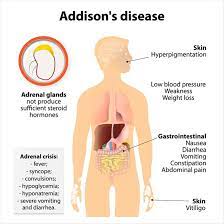
Patients diagnosed with Addison’s disease needs to take up their medication daily in order to replace the inadequate hormones. This normally helps the patients to live a normal life. Treatment mainly involves use of corticosteroids (steroid therapy) to replace hormones lost and those not produced by the aldosterone. Although these medications are effective, corticosteroids are associated with short term and long term side effects (Bentley, 2011)
The short-term side effects includes stomach upset, increased irritability, weight gain due to water retention, increased fat on the face, unusual hair growth , high blood pressure, and risk of other infections. The long-term side effects include muscle weakness, brittle bones, and stunted growth among the children. To minimize such side effects, people taking the drugs should be watched carefully and of necessary, their doses reduced as low doses can be effective and have minimal side effects (In Arieti, 2014).
Want help to write your Essay or Assignments? Click here
Factors that make it problematic for management Addison’s disease in adolescents
The process of diagnosing Adrenal insufficiency is usually a challenge. This is because most of clinical manifestation are nonspecific, and tend to vary according to the underlying causative agent and extent of disease progress. It is important to make early diagnosis as the disease can be life threatening if not diagnosed early enough. The signs and symptoms and management of the diseases are the main challenges faced by the adolescents diagnosed with Addison’s disease. These include issues such as fatigue, malaise, and general muscle weakness. This negatively impacts on quality of life and their daily activities (Helms, 2015).
Importance of inter-professional team for treatment of Addison disease
Team-work in management of Addison disease is important as it aids in improving patient quality of life, reduce mortality, improve communication, reduce errors, and increase patient satisfaction. In this case study, healthcare staff from the following disciplines should work together when delivering care to Addison’s patients. These include physicians, nurses, nutritionists, pharmacists, and physiotherapists. This will help in developing a detailed case related information, which facilitates the decision making processes (Bar, 2013).
Want help to write your Essay or Assignments? Click here
STIs Practicum Journal Entry
This practicum is one of the most fascinating experiences in my clinical practice. Dealing with patients diagnosed with sexually transmitted infections (STIs) is challenging as most of the patient are hesitant to talk openly to a nurse or doctor about their experiences, which makes it challenging during clinical decision making processes (American Congress of Obstetricians and Gynaecologists, 2011).
Mrs. Kate (pseudo name) a 21 year old college student presented to the clinic with complaints of itchiness around her genitalia, sharp burning sensation during sexual intercourse and had noted whitish discharge that had foul smell. From the clinical manifestation, I gathered that the patient is suffering from an infection, which could be either sexually transmitted infections (STIs) or urinary tract infections (UTIs). There is a thin line that separated the two, which indicated the need for further laboratory test.
According to Centre for disease control and prevention (CDC), UTIs and STIs clinical manifestations are non-specific and are a common to problem for females. This highlights the likelihood of misdiagnosis. The common clinical manifestation for the urogenital diseases includes a burning sensation during urination, vaginal discharges and pelvic pain. However, in UTIs infection, vaginal discharge with awful smell is normally absent. The patient with urinary tract infection tends to have fever. A pelvic exam, urine culture and vaginal culture results indicate that the patient had yeast vaginal infection (CDC, 2013).
Want help to write your Essay or Assignments? Click here
One of the challenges experienced during this practicum was during sexual history assessment. Initially, the patient was hesitant to disclose the information because it is a taboo and also she believed that disclosing this information would victimize her. After reinforcing the issue of confidentiality, the patient became relaxed and disclosed the sensitive information.
The sexual history assessment was done using the general guide of the ‘5 Ps.’ This included the number of sex partners, the type of sexual activity, the rates of use of protection, and use of contraceptives. This helped me understand the patient literacy and perspectives about UTI (Schuiling and Likis, 2013).
The patients seemed somewhat distressed when I gave her the diagnosis results. However, she was cooperative all through the care plan. The patient was advised to have regular check up with the gynaecologists. This is because sexually transmitted infections (STIs) have short and long term impacts that can be life threatening. The short term impacts include emotional disturbances due to physical changes.
The long term effects include genital sores, inflammation, infertility issues and pelvic inflammatory reactions. Fortunately, genital yeast infections like other sexually transmitted infections (STIs) is manageable if diagnosed early and proper medication regimen is provided (CDC, 2013).
The patient had tried to manage the itchiness and pain using Tylenol (OTC) and vaginal cream, which yielded little success. The patient was given fluconazole 150 mg and Terconazole 80 mg both orally administered one suppository/day for at least 3 days. The medication ensured that the patient did not get recurrent infection. The patient was encouraged to observe hygiene and practice abstinence during the medication regimen. Other hygiene measures such as mutual monogamy, abstinence and avoid of douching practices.
Want help to write your Essay or Assignments? Click here
This practicum was very enlightening, especially on ways to practice cultural competency. I noticed that sexually transmitted infections (STIs) education focuses in specific information on signs and symptoms which seems to be the worst case scenarios and a taboo to most of the community.
The only down to earth guidance is abstinence and use of condom. If not handled with care, the interaction with the patient could affect patient psychosocial status. I have learnt a lot from this practicum and will use the knowledge to help other patients to identify risk factors and practice preventive measures (Schuiling and Likis, 2013).
References
American Congress of Obstetricians and Gynecologists. (2011). Guideline for adolescent health care (2nd ed.). Retrieved from http://www.acog.org
Centers for Disease Control and Prevention (CDC). (2013). Incidence, prevalence, and cost of sexually transmitted infections in the United States. Retrieved from http://stacks.cdc.gov/view/cdc/13174
Schuiling, K. D., & Likis, F. E. (2013). Women’s gynecologic health (2nd ed.). Burlington, MA: Jones and Bartlett Publishers.
Want help to write your Essay or Assignments? Click here
Want help to write your Essay or Assignments? Click here
Patient Administration System
Question 27
Upon the implementation of KKUH’s Patient Administration System (eSIHI) in May 2015, it was subsequently integrated with King Abdulaziz University Hospital (KAUH). This means that if a medical file number of a patient exists at KKUH, the patient also has a file number at KAUH. Yes, there is a global UMRN because eSIHI interfaces with other systems such as Xcelera reports, Dictation (via fly), PACS (Radiology), 3M, employee Health Record as well as medical sick leave.
Apart from KKUH, a 950-bed capacity hospital which uses this UMRN, this UMRN is also used by KAUH a 200-bed capacity hospital. These two hospitals use a Patient Administration System (PAS) known as eSIHI, which is integrated between the two hospitals meaning that it is possible for the two hospitals to share records when necessary.
Question 28
The Patient Administration System (PAS) used by the King Khalid University Hospital (KKUH) is eSIHI, which was implemented in May the year 2005 and the hospital has no plans of replacing it even though any improvement plans may be considered. The hospital’s PAS, which is eSIHI is offered by the HIS company and will run on the software architectureof Cerner Millennium®, which is a highly unified and comprehensive information management architecture.
Hospital reports are generated whenever required or periodically for monitoring purposes. The existing system has various benefits, and hospitals adopting this system will recognize several imperative benefits, including:
Want help to write your Essay or Assignments? Click here
Increased quality of care for patients: This will be achieved through elimination of errors by electronic order entries, which were previously caused by improper transcriptions or illegible handwriting, while physicians are notified by evidence-based alerts of potential complications associated to similar situations and medication interactions.
Improved patient information access: The creation of electronic health record that is integrated for each patient, allows vital health information to be accessed in real-time, including updated radiology imagery and lab results.
Enhanced operational efficiency: As a result of the on-time reporting offered by this system, it enables hospitals to be able to have greater control over the day-to-day operations across all the departments, while at the same time increasing efficiency and reduction of costs.
However, compared to the old system that the hospital was using, the new system (eSIHI) has a major disadvantage, which according to the staff through the old system they were able to know whether a patient has died or not, but with the new system it is not possible for them to know.
In the new system, information flows from the patient to the health record department to physician consultations, then diagnosis (i.e. lab or radiology) to surgical/dressing/radiology departments, then pharmacy and finally the finance and discharge departments. The new system is easy to use compared to the old one, and the access of medical records or information is by scanning the barcode.
Want help to write your Essay or Assignments? Click here
Want help to write your Essay or Assignments? Click here
The Privacy Act
According to King Khalid University Hospital (KKUH) confidentiality and privacy policy, the procedure for an internal doctor’s request to view a health record follows a standard protocol and the Privacy Act. For instance, the internal doctor can request and gain access to health records providing that it is for the purposes of the specific patient’s specific treatment.
There are also provisions in KKUH policy allowing certain health records to be accessed by internal doctors for the purposes of research. However, external doctor’s request to view a health record is more controlled. For instance, if an external doctor, that is a physician not employed by KKUH, requests specific clinical information regarding a patient, this external doctor must fill in a form and stating why this information is required.
This form requires the external doctor to list his or her name, the type of information he wants, the date of request, and to validate the request with a signature. The important things there must be consent from the patient with his details and signature. The Freedom of Information Department (FOI), which is a KKUH only after they have received and are satisfied with the entire requirement, will send the requested information.
Want help to write your Essay or Assignments? Click here
In addition, third party request to view a health record vary. For instance, government agencies have the executive power to access specific patient medical records without the consent of the patient. However, insurance companies generally require the consent of the specific patient in order to access specific patient medical records. These companies must formally request the information include the date of the request, which should be relevant to a time period of less than six months.
The FOI monitors these requests very closely and will generally limit the data which sent to the insurance companies to exactly what the organizations requested and no more than that. Furthermore, when the record is in relation to criminal matter, the police have executive power to access clinical information. The police are required to send a valid request form. Although it is preferable that the police have the patient’s consent, the police are able to access data without specific consent in serious cases.
Want help to write your Essay or Assignments? Click here
Moreover, public hospitals generally require the consent from the patient as well as identification and verification of the person, that is, the employee of the public hospital, requesting the information. The general rule in relation to patient data is that the health care setting is to only use this information for the purposes of diagnosis and treatment. Furthermore, it is also generally accepted that patient data is not communicated to others without the patient’s consent.
The access of health record for patient is regulated by the Privacy Act, which establishes the basic principles of the Privacy Act and confidential communication. With regards to the private hospital sector, when private hospitals ask for clinical information, they are required to send patient request or doctor request with all details and are required to attach consent from the patient.
Furthermore, general public enquiries have the capacity to access broad statistical data about the hospital in different flow of area. However, these general public enquires, such as in the case of a newspaper contacting KKUH, are not granted access to any specific patient’s information. Finally, previous patients/clients have unlimited access to their health record.
Want help to write your Essay or Assignments? Click here
Want help to write your Essay or Assignments? Click here
The Department of Emergency
Question 24
The Department of Emergency has the role of providing emergency services that are comprehensive to all patients 24 hours in 7 days of a week throughout the year. In particular, it offers patient care services including:
Accepting every patient who comes with acute illness and provide treatment for them.
Accepting 5-level triage patients as stipulated in the Canadian Triage Acuity Scale System (CTAS); and ensure assessment and sorting of patients is done according to acuity.
Performing emergent resuscitation and medical intervention.
Planning for the assessing, diagnosis, treatment as well as referrals for specialized medical treatment for all patients when necessary.
Providing advanced Trauma Care for patients with trauma.
Liaising with all other departments in the hospital for admission of patients and follow-up.
Providing care when a disaster occurs within the community by operating an Urgent Care Centre in a manner that is almost continuous to ensure needs of patients’ presentations that are less acute are met as well as receiving and assessing the stability of direct admissions, which includes Medivac patients on their way to critical or specialized care units within the hospital.
Want help to write your Essay or Assignments? Click here
Emergency and admission procedures for both new and existing patients have been laid down for any medical, psychiatric and surgical emergency, for the initiation of life-saving care procedures in a timely manner. In particular, for all emergency situations the basic procedures for both new and existing patients begins with diagnosis, initiation of treatment, discharge in case of recovery, admission for treatment continuation or monitoring, appropriate referral for specialized care in case of complications, and then follow up services.
The department of emergency medicine uses an electronic information system for the purpose of recording patients’ details when available or await for them afterwards, and transfers them to the relevant intensive care units for surgical and acute medical emergencies since they these services are only offered for a short time in the department prior to the transfer of the patients to appropriate in-patient units.
The system’s main users are the emergency department personnel, and its easy access and security is guaranteed due to its location in the King Khalid University Hospital (KKUH) Building’s ground floor, near the building’s main entrance.
Want help to write your Essay or Assignments? Click here
Want help to write your Essay or Assignments? Click here
Geriatric Assessment
The main areas that need to be assessed in this patient are cognitive and functional needs. Therefore, a comprehensive geriatric assessment tool is the most appropriate tool for this case study, as it will help evaluate the overall impact of environment stressors on patient’s health status.
This assessment should be conducted at the clinic and at patient’s home. This will help identify possible aggravating factors that are associated with patient’s health condition; and if possible, the patient caregiver (the daughter) should be present to point out her concerns (Mattace Raso, Polidori & Pilotto, 2014).
Evidence based research indicates that age as the best morbidity indicator; which determines the increased use of healthcare services. Most elderly patients are associated with multiple health issues and medications. Therefore, their psychosocial problems cannot be addressed adequately with a single visit to the healthcare providers.
It is important to evaluate patients function ability in their environment. This comprehensive geriatric assessment requires involvement of multidisciplinary team including the geriatrician, social worker and geriatric nurse. Other disciplines such as psychiatrist, dieticians, and pharmacists are involved after the assessment (Slee-Valentijn & Maier, 2014).
Want help to write your Essay or Assignments? Click here
This tool comprehensively analyses patient cognitive, hearing abilities, vision, mobility, and patient function analysis. The tool measures patient’s cognitive impairment, which facilitates early detection of psychosocial disorders and appropriate pharmacologic treatment. Additionally, the patient basic activity of daily living (BADL) should be assessed. These include tasks such as toileting, dressing, and feeding.
The patient also has difficulty in performing instrumental activities such as grocery shopping, driving and in management of her finances. Therefore, Instrumental activities of daily living (IADLs) assessment are vital as it will help identify the exact need, and extent of disease progression. The advanced activities of daily living (AADLs) measurement is essential as it helps in early detection of patient’s functional changes; and in early detection to disease progression and onset of disability (Mattace Raso, Polidori & Pilotto, 2014).
This geriatric assessment tool is chosen due to its unique ability to focus in geriatric patients with complex health issues, increased emphasis on patient function ability and integration of interdisciplinary healthcare team; thereby improving the patient quality of life. This covers the medical and social aspects that are nearly missed by other assessment tools (Rosen & Reuben, 2011).
Want help to write your Essay or Assignments? Click here
References
Mattace Raso, F., Polidori, M., & Pilotto, A. (2014). SS6.02: Comprehensive geriatric assessment: the methodology of geriatric medicine. European Geriatric Medicine, 5, S34. http://dx.doi.org/10.1016/s1878-7649(14)70070-1
Rosen, S., & Reuben, D. (2011). Geriatric Assessment Tools. Mount Sinai Journal Of Medicine: A Journal Of Translational And Personalized Medicine, 78(4), 489-497. http://dx.doi.org/10.1002/msj.20277
Slee-Valentijn, M., & Maier, A. (2014). The impact of comprehensive geriatric assessment on final treatment decisions. Journal Of Geriatric Oncology, 5, S58. http://dx.doi.org/10.1016/j.jgo.2014.09.098
Want help to write your Essay or Assignments? Click here
Want help to write your Essay or Assignments? Click here
Interdisciplinary geriatric teams
At my current practicum site, which is the hospital setting, the interdisciplinary geriatric team used comprises doctors, nurses, and pharmacists. The hospital-based team provides the geriatric patient with acute care in the hospital setting. Nurses and doctors carry out a preliminary evaluation, monitor the health status of the patient by making rounds, and work together in formulating an effective treatment plan (Liken, 2011).
The interdisciplinary geriatric team used in home care settings includes a nurse practitioner, a geriatrician, a social worker and a doctor who regularly visit the elderly in his home to help the patient with his medical problems and to monitor the capability of the patient to live at home. Long-term care includes nursing home services, assisted living services and life care communities. The interdisciplinary team includes social workers, nurses, occupational therapist, geriatrician, pharmacists, an ethicist and physicians (Deschodt, 2016).
Want help to write your Essay or Assignments? Click here
Since the patient’s medical problems are usually complex, chronic, and at times typified by reduced cognitive ability, the elderly patient is not really able to keep living at his home. Whenever this happens, the long-term care facility provides an interdisciplinary geriatrics team with a setting for monitoring and treating the chronic diseases of the elderly patients on an ongoing basis (Wieland, 2013).
The role of advanced practiced nurse (APN) differs according to the site of care in that in the hospital setting, the APN takes medical histories of the frail patient and performs physical exams; prescribes treatments and medicines; and diagnoses and treats chronic and acute problems. In the long term/nursing home/assisted living care setting, the APN basically augments the role of the doctor.
In nursing homes, APNs provide consultative services to nursing homes and in collaboration with doctors, they provide primary care to individual residents (Bakerjian, 2011). In the home care setting, the APN provides high-touch, high-tech services to a patient with acute health care needs. The nurse is also responsible for family and patient teaching and for contacting community resources as well as coordinating the continuing care of the patient (Deschodt, 2016).
Want help to write your Essay or Assignments? Click here
Based on the model used for the interdisciplinary geriatric team at my practicum site, care should be facilitated for the patient in the case study in that the nurse practitioner, doctor and pharmacist need to provide integrated and coordinated care with shared resources and responsibilities and collectively set goals. Care should not be duplicated and the most qualified practitioner needs to provide care for each of the patient’s problem (Liken, 2011).
Deschodt, M., Claes, V., Grootven, B., Heede, V. K., Boland, B., & Milisen, K. (2016). Structure and processes of interdisciplinary geriatric consultation teams in acute care hospitals: A scoping review. Int J Nurs Stud, 55(9): 98-114
Liken, M. A. (2011). Interdisciplinary geriatric teams: experiences of Alzheimer’s family caregivers. National Academies of Practice Forum: Issues in Interdisciplinary Care, 1(7):123–130.
Wieland, D., Kramer, B. J., Waite, M., Rubenstein, L. Z. (2013). The interdisciplinary team in geriatric care. American Behavioural Scientist, 29(6): 655-664
Want help to write your Essay or Assignments? Click here
Want help to write your Essay or Assignments? Click here
Medical Malpractice – Wrong Medication
Introduction
Medical malpractice in nursing constitute professional negligence which maybe as a result of an act or omission intended, or unintended by a nurse or a care giver where the treatment received falls below the required or accepted standard of nursing practice in medical community and which may result in death or injury to the patient. The most common medical malpractice in nursing is medication errors.
Approximately 1.3 million patients are injured in the US every year as a result of wrong medication (Conrad & Marks, 2016). Medical Error occurs when preventable events that cause or may lead to wrong or inappropriate medication in the control of a patient’s medical condition.
Medication errors make it mandatory for nurses to follow a defined pattern of administering drugs to patients. Following several incidences of nurses administering wrong medication some hospitals allow nurses to administer certain medical procedures and treatment under the supervision of doctors only (Caron, 2011).
Want help to write your Essay or Assignments? Click here
The scrutiny of academic qualification documents and other professional qualification that are required for nursing practice in the US take a longer period to ensure thorough scrutiny of nurses papers and their backgrounds including the institution of training number of years and the experience gained and the hospitals worked in.
The high rate of medication errors has made it very difficult for nurses to serve patients on their own except under supervision in large hospitals.
The website source from Conrad and Marks (2016) outlines the most common medication errors that are prevalent in the medical spheres. The website defines a wide range of medical malpractices some that originate from the drugs manufacturing companies while others from negligent medical practitioners and care givers including nurses. The source also provides preventive measures that can be applied to reduce medication errors.
The article provides the details of medical malpractice concerning a nurse who mistakenly administered a drug to a patient who later died as a result of the drugs complications from and which later turned out to be that are related to other conditions that
Croke et al (2003) Nurses, Negligence and Malpractice, Uppincott Nursing Center eNews, American Journal of Nursing, AJN, September, Volume: 103, Number (Page 54 -57) retrieved March 21, 2016 from http://www.nursingcenter.com/journalarticle?article_id=423284
The article that first appeared on the American Journal of Nursing details and tracks malpractice in Healthcare Organizations. The article defines malpractice as unethical or improper conduct or unexplained lack of skill among professionals which border on negligence or gross incompetency. The article outlines the different kinds of malpractices that nurses experiences in the normal cause of duty.
Aiken, L.H., Clarke, S.P., Sloane, D.M., Sochalski, D.M. and Silber, J.H. (2002)Hospital nurse staffing and patient mortality, nurse burn out, and job dissatisfaction. Journal of the American Medical Association 288(16):1987–93.
The article suggests that the high mortality rates that have been recorded in US health Institution are mostly related to understaffing among the nurses, burnouts and job dissatisfaction.
American Association of Critical-Care Nurses (2005) AACN Standards for Establishing and sustaining healthy work environments.www.aacn.org. American Nurses Association Code of Ethics Project Task Force .A New Code of Ethics for Nurses. American Journal of Nursing 100 (7):69–72.
Want help to write your Essay or Assignments? Click here
This article that was published by AACN outlines the ethics that guide nurses in their stations of work. The malpractices are having a negative effect on Americans.
Treadwell, H.M., and M.R. O. (2003) Poverty, race, and the invisible men, American Journal of Public Health 93:705–7.Veatch, R.M.2003. The Basics of Bioethics, Seconded. Upper Saddle River, NJ: Prentice Hall.
The journal describes the challenges faced by the poor and their quests for treatment and the basis for Bioethnics which refers to the treatment of such issues like abortion and euthanasia.
Volbrecht, R.M. (2002) Nursing Ethics: Communities in Dialogue. Upper Saddle River, NJ: Prentice Hall. Weston,
The book outlines the new nursing standards in the year and compares them to the current changes in medical fraternity including in such areas as bioethical isssues,
Weston, A. (2002) A Practical Companion to Ethics, 2nded. New York: Oxford University Press.
Weston (2002) describes the various practical ways of ensuring that all interdisciplinary ethical standards are all followed and put into practice to the letter.
Mercy, J.A., Krug, E.G. Dahlberg, L.L. and Zwi. A.B. (2003) Violence and health: The United States in a global perspective, American Journal of Public Health 92:256–61.
The Public health journal traces the sources of violence in health care industry and relates the rate of violence in hospitals as associated with inadequate training, lack of dedication and discipline.
Milio, N. (2002) Where policy hits the pavement: Contemporary issues in Communities, In Policy and Politics in Nursing and Health Care, 4th ed., pp. 659–68.St.Louis, MO: Saunders.
The article describes the difficult situations that the nursing industry has been exposed to and the current challenges facing the situation.
Want help to write your Essay or Assignments? Click here
Want help to write your Essay or Assignments? Click here
Case Study: Banner Health care
Banner Health organization is among the biggest non-profit organization in the USA. Its headquarters is at Phoenix, Arizona. It oversees about twenty nine healthcare facilities including home care programs, family health clinics, and long-term healthcare facilities. Banner Health care delivers its services to nine States in the Western and Mid-Western States (Banner Health, 2015).
This organization was established in 1999 through the merging of Samaritan Health Systems and Lutheran Health systems. Currently, the organization has employed about 47,000 people who deliver services to about 300,000 service users (Berlyl Institute, n.d.). This healthcare organization caters for patient’s basic medical costs and emergency healthcare costs.
Additionally, the organization covers for specialized healthcare services such as heart transplants, bone marrow transplants, and psychosocial rehabilitative services. This non-profit organization also covers for life threatening healthcare complications such as spinal injuries and Alzheimer disease. It is approximated that the total worth of the organization as 3.1 billion dollars, with an annual return of 2.6 billion dollar (Kuhn and Chuck, 2015).
Want help to write your Essay or Assignments? Click here
Banner healthcare has focused its resources into delivery of safety and quality of care. This entails establishing stringent measures that detect mistakes such as patient identification errors, which impede delivery of quality services. The coordinated service improves the organization performance and maintains organization’s integrity as well as improving patient satisfaction (Banner Health, 2015).
This has enabled the organization to identify functional areas, which require improvement in order to sustain its performance. This has led to the creation of cross-facility employees, whose role is to deliberate on ideas that ensure new knowledge on organization is gathered and integrated within the organization standards (Armbrister, 2012).
For example, for a very long time Banner health institution overlooked the relationship between organization cultures and its leadership, and ways they influenced the organization performances. The Banner Health organizations works together with other multiple healthcare facilities across the Nation, which makes it challenging to identify a standard policy that would ensure effective delivery of services in each of the healthcare facilities across the miles (Armbrister, 2012).
This is attributable to the fact that each of the healthcare facility are in different geographical location, thus, the sociocultural factors differs from one healthcare facility to another. Thus, applying a common method would lead into more challenges. For this reason, the organization has adopted the integration of culture driven policies that would help sustain the organizations success. The organization culture plays an integral role in shaping the organizations performances (Berlyl Institute, n.d.). This includes identification of management themes that put the interests of the service users as the priority.
The above diagram illustrates the model used at this organization to run its day –to- day practices. The model comprises of four main themes;
a) effective communication of the organization vision,
b) measurable accountability,
c) developing effective leadership and
d) sustaining the success.
The first theme addresses the role of effective communication, which is one of the main hindrances of success in most of the institution. This model ensures that there is effective communication between the employees and their leaders; thus, the employees work to achieve the organization vision, mission and goals (Kuhn and Chuck, 2015).
Want help to write your Essay or Assignments? Click here
The second theme discusses the issue of employee’s responsibility and accountability. The leader’s roles are to ensure that the employee’s accountability is aligned within the organization’s framework. This implies that the leaders acts as role models, and are expected to exemplify the true measure of accountability within their organizations (Armbrister, 2012).
Banner Health has established solid metrics (patient’s satisfaction and experiences) systems, which evaluates the accountability and success each healthcare facility. The applications of score cards ensure that each employee is held accountable of their services. The leaders are expected to guide and provide all the resources needed, and to motivate the employees. This is to ensure that Bander’s health mission and vision are articulated effectively (Berlyl Institute, n.d.).
The third theme involves recruitment process and staffing ratios. The banner health has adopted the habit of recruiting leaders who are proactive and are likely to steer success. This is because active leaders ensure that their employee’s skills are improved through refresher courses and internal programs.
This ensures that employees’ specific skills and talents are improved, and new skills are developed through continuous learning. The organization promotes teamwork. It is through the teamwork that cultural competencies are developed which ensures that the employees respect each other’s values and beliefs which reduces the incidences of office bickering (Kuhn and Chuck, 2015).
Want help to write your Essay or Assignments? Click here
The last strategies used by the organization are by establishing measures that ensures that there are sustainable developments. This ischallenging as the healthcare industry is dynamic. Therefore, the organization has recruited research employees whose work is to identify the changes in market demands so that the organization can change its strategies to align with the market demands.
This increases their competitive advantages as the organization manages to make changes according to the market demands. This ensures that the organization explores new areas and discovers other opportunities that have not been realized by their competitors. These processes sustain its development effectively (Berlyl Institute, n.d.).
From this discussion, it is evident that these strategic measures are only effective if articulated simultaneously. For example, integrating effective communication within the organization ensures that each employee understands the organization’s visions and missions. This also ensures that the employees understand their responsibilities within the organization (Armbrister, 2012).
Working with competent leaders ensures that the team members are committed to achieving the organizations goals. The motivation is transmitted from the top management to employees. The clarity of the organizations directives establishes a foundation that ensures that the employees are held accountable of their actions (Banner Health, 2015).
Want help to write your Essay or Assignments? Click here
In summation, Banner Health has sustained their successes by improving the delivery of services. The Banner Health performances have exceeded the internal targets and are reported in the past years to have achieved stretch targets. The organizations financial capacity has been improved such that it can survive any healthcare dynamic trend. Thus, Banner Health is an established and efficient network concerned with improving the community wellbeing (Armbrister, 2012).
References
Armbrister, M. (2012). Just what is Banner Health planning? Northern Colorado Business Report 18(4) p2B-8B
Banner Health (2015). Banner Health Medtrack company profile. Database Business complete. Retrieved from https://www.medtrack.com