This is author biographical info, that can be used to tell more about you, your iterests, background and experience. You can change it on Admin > Users > Your Profile > Biographical Info page."
Health care is a necessity for everyone and the expenses are inevitable. Everyone deserves the health care they need from the right provider at the right time (Quincy, 2016). Another difference is the cost of drugs compared to other nations and a lot of people consider it to be unreasonable. In majority of the countries, there is negotiation done by the government to control drug prices with the manufacturers, but the existence of Medicare Part D denies Medicare to negotiate prices. This is why a branded drug costs higher when bought in the U.S.A. compared to other countries. However, this is beneficial to the doctors because of the higher earning they get if they do this compared to other countries. Additionally, a lot of drug suppliers charge more in the U.S. for medical equipment.
The top drivers of health care are chosen lifestyle, utilization, price inflation and mandated benefits. The society today is a culture that favors diagnosis and treatment rather than living healthily and preventing disease. It is still a necessity for consumers to have a healthy mindset and practice a better lifestyle for disease prevention. Due to the increase in utilization, there has been a rise in health care costs and the forms are not all the same (Smart Business, 2009). There is a total of 70% health care costs that come from employee behavior linked to cancers, diabetes, cardiovascular disease, and obesity. Moreover, advertising deceives consumers and make them think prescriptions and procedures could cure their conditions. This is why consumers end up getting unnecessary treatment and the rise of new technology is also a factor why health care costs increase.
Supply and demand seems to be an automatic reason why health care costs more in the USA. There are two answers for this because there can be an increase in prices due to demand and the other reason is because of limited supply, prices are higher (Theory and Applications of Microeconomics, 2012). However, price is not the only thing that matters in supply and demand in health care because it is a fundamental commodity that is relevant to a person’s well-being. A lot of people want health improvement and this is why they demand for health care. Although, the health’s relationship to health care is not direct because even if health care impacts health, a lot of other things can be a factor. Health is considered as a good, but other goods are more tangible compared to it due to its characteristics. People cannot pass on or trade their health with others, except for certain diseases.
Quality health care had always been a main focus and the medical professionals attempted to improve their practice and give the best care in the world, but the results are not equal. The number of medical practitioners in an area is linked with the type of health care they can provide. Therefore, if there is a shortage in workforce, the quality of health care in the area with fewer medical practitioners are going to suffer. There is a health care reimbursement model to pay-for-performance that provides incentives or penalties from patient outcomes and frequency of readmission (Anderson DNP, RN, CNE 2014). If the workforce is weak, pay-for-performance will suffer in some areas. This will lead to a higher demand for services, but limits the access of patients to health care.
Technology and computers could increase health costs of today since majority of medical equipment needs digital platforms to function properly that makes medical facilities dependent on software. This increases health care costs so it becomes inaccessible to those who cannot afford it. Furthermore, there are a lot of elements that cause an increase in health care costs. And to an average patient, technology gives them helplessness and vulnerability.
One example is echocardiography which has the immense capability to detect ailments and it is safe for everyone. In order to interpret the images, an expert is called to do this. Unfortunately, not all companies have this machine and there is no way to make it inexpensive so any patient can have access to its services (Kumar, 2011). Therefore, technology and computers improve the quality of healthcare, but it contributes to the increase in costs.
Since resources are scarce, organizations have disease management. Those suffering from chronic illnesses need more healthcare attention like hospitalization, physician visits, and prescription drugs. The objective of disease management is to improve the condition of those with chronic illnesses and lessen the use and cost of health care services that are linked to preventing complications (Georgetown University, 2017).
Before the organization implements disease management, they first have to know the population and how patients will enroll. They use demographics to find out which patients are going to need disease management program the most. The chronic diseases such as diabetes, asthma, and hypertension are included.
Furthermore, this increases public awareness which has a significant impact in the way decisions are made on the medical care received by the patient.
This essay sets out to evaluate the character of Luke Skywalker in episode 8 of the Star Wars movie, using some of the leadership concepts in Deep Change. According to Quinn, (2010) transformational change starts from within. A leader is only able to create far-reaching societal impact if they are willing to acknowledge the pain of individual change (Quinn, 2010).
Essentially, Deep Change is a radical change that has to start with the redefinition of individual values and perceptions. The paper will examine how Luke Skywalker re-invented himself into a successful character in the Star Wars movie. On the flip side, the paper will also look at some of the miscalculation that Luke Skywalker did that would paint his downside.
Overview of the Movie
In Star Wars movie, Luke is a young man that lives in a far off desert, as such, he is not aware that his father is a celebrated Jedi Knight. On the other hand, his foster parents are afraid of Luke because his characteristics resemble that of his biological father. This fear instills self-doubt in Luke. In addition, his foster parents discourage him from learning things from the renowned hermit commonly known as Ben Kenobi that lives in their neighborhood.
Ben Kenobi’s droid R2D2 lands in the desert, an aspect that forces him to encounter the hermit face to face. This encounter reveals a number of mysteries about his past. In addition, Ben acknowledges that he is Obi Wan Kenobi, the Jedi Knight wanted by R2D2.
At the time when R2D2 convey the message from the Rebellion seeking Obi Wan to assist them once again, he requests Luke to come with him. Obi Wan also reveals to Luke that his foster parents have kept his true identity a secret, which makes him unaware of being Jedi’s son.
Moreover, Obi Wan undertakes on training him to become a Jedi and in particular, being in the Force. Luke turns down the offer but later learns that the galactic empire was looking for his droid and his foster parents had been killed in the process (Galipeau, 2015). Much as he becomes sad of their demise, he thinks that their restrictions increased their death.
All of sudden, he joins his Jedi teacher Obi Wan. To start off, Obi Wan teaches Luke about trusting in the Force, he illustrates this through the games on the trip to Alderan. During this trip, Obi Wan purposes to deliver R2D2 secret plans. Nonetheless, the trip is disrupted, when Obi and Luke are captured in the new conflict base, known as the Death Star (Fullan, 2014).
Strong Willed
Despite being inexperienced, Luke Skywalker had not just the strong will but also the tenacity to achieve his ambitions (Fullan, 2014). For instance, his stubborn curiosity in wanting to become the Jedi Knight demonstrates not just his strong will but also resolve is realizing his prospects.
At this point, Luke Skywalker dreams of the expedition and escape from the middle of nowhere only to find his true self. This is also evident in the typical image from A New Hope, where Luke stands gazing out at the skyline at the sundowner of his world. This exemplifies the envisaging aspect of his character.
On the other hand, Luke’s thirst for vision in the Star Wars movie is attributable to slow death as also depicted in A New Hope, when he is almost executed for spying on the Sand people (Fullan, 2014). The recklessness aspect of Luke and violation of trust is also evident when he pursues the R2D2 without notifying his uncle. Nonetheless, Luke’s Deep Change is advanced by his motivation to become something larger than himself (Quinn, 2010). This becomes a reality in the character of Ben Kenobi; particularly when Ben decides to assist Luke to assume the responsibilities of the Jedi Knight.
It is through his purposeful living and strong will that Luke gets the chance to embark on a space voyage to assist the Rebel Alliance in defeating the wicked Empire, so he can also have a glimpse of a father he had no idea existed (Fullan, 2014). Apart from the proximity with a Jedi, Luke was able to enhance his personal development by virtue of coming in contact with the Force. Luke is not only indecisive but also poor in judgment.
Great leaders exercise the power of the sixth sense which was lacking in Luke. This is why he never realizes the hidden truth about his real father. In the Stars Wars movie for instance, Luke refuses to be a real man by walking in the shadows of a series of father figures. Nevertheless, his willingness to learn is a plus because he is able to control not just his own emotions but also by gaining a deeper insight into the other people’s feelings (Quinn, 2010).
Determination
Luke is continuously determined to test his abilities, as a wannabe Jedi, a courageous doer, a gunman and ultimately a pilot. As a doer, Luke is always acting fast and comes to regret later (Galipeau, 2015). He runs after R2D2 in the dangerous regions of Tatooine where he is captured by the Sand; tries to rescue the princess with no exit plan; he strands the princess and himself on a ledge without a plan.
In essence, Luke’s Deep change is advanced by continuously testing himself; he gets in events that he would have prevented if only he was confident in himself. For instance, Luke was aware that going alone in the territory of Sand people; the fight at the bar would have been prevented; the chaotic breakout of the princess was partially inspired by his desire to test his limits.
Moreover, he is unsuccessful as a result of his persistence concern with the manner in which events turn out, for example, he laments how he may not get off the rock. Again, he is not only impatient but also never contented with the development of things (Quinn, 2010).
From Tatooine, he is interested in the time he will take to become a Jedi- his training progress. The period Obi is sliced by Darth Vader; Luke is bummed since his training lessons at the Rebel Center are over. Moreover, Luke is concerned about the rate at which preparations are conducted and in the long-run, the progress of Rebels attack the Death star.
Fantasy and Fact
Additionally, Luke has a constant problem with balancing between fantasy and fact, which adversely affects his success. Uncle Owen believes that Luke’s father was a pilot; however, Obi alleges that he was Jedi Knight. Additionally, Owen states that Ben Kenobi was not just a crazy man but also Obi-Wan Kenobi did not exist, nevertheless Ben “Ob-Wan” existed (Fullan, 2014).
The counterpoint to his interests in fantasy is the fact Luke fantasizes. Based on the C3PO, facts involved in collaborating with Rebellion are unexciting: they include; the facts of adventure that demonstrate Luke’s limitations with respect to fantasies, for example, the astoundingly significant costs of recruiting Han Solo; the unanticipated issues of hyperspace flying; fighting in the force with no eyesight among others.
Conversely, there are facts that support Luke’s constant interest in fantasies such as his father being a Jedi. Recognizing a number of these facts is important for the success of Luke in the Star Wars movie, especially when it comes to knowing what he exactly wants to become. By and large, facts are beneficial to the success of Luke.
Trust
Luke should learn to trust in himself to be successful. Testing his skills can greatly keep him from scuffles as a result of testing his skills. Furthermore, his backstory demonstrates the reason why he did not develop trust and instead focused on testing his skills (Quinn, 2010). In essence, the confrontation between the Empire and the Rebellion requires skills and experience. The Empire is very skilled in quashing upstart parties, though the skills are extremely rusty.
On the other hand, the Rebellion is inexperienced and composed of many people with inadequate skills like Luke, which is juxtaposed by the dispute between Darth Varder and Obi. In spite of the lack of skills, Luke is the Rebellion’s hope. In particular, he uses the computer to locate the target. Though Obi is dead, his spirit encourages Luke to have faith in the Force.
At that point, he turns off the computer and allows his actions to act as the basis of trusting in the Force and himself too. The trust helps him to achieve the objective in destroying Death Star, which makes him a hero in the Rebellion and the voice of Obi Wan continues to remind him about the Force will always be there for him.
In any case, Luke has a unique character that makes him accomplish the objectives-naturally, by becoming a Jedi Knight (Galipeau, 2015). Because the father was a Jedi, there is highly likely that he can inherit it. It is Luke’s natural liking with the Force that guarantees his safety.
Pessimism
Another problem with Luke is pessimism that affects him when it comes to succeeding in his missions in the Star Wars movie. Regardless of where he is, Luke constantly thinks that his problems are never-ending. When he was in Tatooine, he thought that he will work on the farm throughout his lifetime.
Immediately, he begins Jedi classes, he also thinks that training is endless and will certainly not be a Jedi Knight; at Rebecca’s, he believes that Han will always be a self-interested mercenary who preferred his hide (Fullan, 2014). He thinks that addressing his unending problems is to end things. He will be on the farm for a given time frame or season; he will train to be a Jedi and stops once he joins the revolution.
Low self-esteem
Much as Luke’s low self-esteem undermines his worth, others assessments of his inadequate worth also affects him. As a wimpy, whiny and farm individual, he remains uninterested in increasing his worth. But when adequately assessed, he moves on and uses his Jedi skills. Furthermore, Luke has been unsuccessful since he has spent many years listening to the advice of other individuals. Though, he eventually ignores his superior’s directives to remain focused. His inner conviction turns out to make him a successful person not just in the Force but also in the Star Wars movie (Medved, 2011).
Nonetheless, his conscious thought is a hindrance in trusting the Force, the less he thinks, the closer he comes to the very Force. As a matter of fact, the Force makes Luke move on while allowing the Force to act in him. In turn, this enables the Force to act as the basis of unthinking views as well as reflexes to become an indomitable individual for wickedness or good.
As the main cause of commotion at Catalina’s, he forces Obi Wan to use the lightsaver that attracts the attention of Stormtroopers. He is the reason that alerts the troops on Death Star that hampers not just the escape but also makes Obi Wan attack Darth Vader (Medved, 2011). These attempts are done to show Luke the impacts of Force on individuals as well as objects. Eventually, he is drawn to the Force that makes him an eager learner.
Ability and Desire
The elements of ability and desire make Luke successful in the Star Wars movie. For example, much as he inexperienced in certain areas, he is young and strong. Furthermore, he has beaming and driving desires, particularly for Princess Leia. The association between Luke and the princess involves the exchange of two currencies till he drives his target to Death Star while increasing his abilities using the computer.
The voice of Obi Wan encourages him to have faith in his feelings, that is, desires. The major thing regarding Luke’s and the princes’ association contributes to the destruction of Death Star making him a hero (Medved, 2011). By and large, in this association, desire takes the center stage.
Again, in his association with Obi Wan, desire is the main thing. Nevertheless, their relationship is rather problematic in the beginning since Luke does not give himself a chance to get whatever he wants. On the other hand, Obi Wan talks to him while teaching him ways of becoming successful as a galactic hero (Medved, 2011).
Owing to the fact that Obi Wan is a hero in the past decades; the desire in this relationship is not practical. They are, however, ridiculed by Chewie and Han, especially when discussing exploring the Force and assisting the Rebellion. Simultaneously, though, this association can achieve any success with no shared desires, it remains paramount.
Conclusion
Undeniably, deep change is radical and starts by redefining individual values and perceptions. In the Star Wars movie, Luke Skywalker re-invented his character by acknowledging his strengths; weakness and pain, which not only fulfilled his purpose but also positively impacted the society. Increasingly, to become an effective leader in this society requires one to view the world through two lenses using the telescope that examines current issues that must be addressed and potential future issues.
From this analysis, it is evident that transformational change us holistic and derives its power from individual’s heart, minds, and societal structures and system they exist. Embracing Gandhi quote “we must be the change we want to see happen in the world,” it is important for one to honor the past lessons, and while appreciating its impact on our lives, establish one’s future life goals. Like Luke Skywalker, dealing holistically with every element of human systems results into a transformational change that is enduring and irreversible.
Galipeau, S. A. (2015). The Journey of Luke Skywalker: An Analysis of Modern Myth and Symbol. Open Court.
Medved, M. (2011). Hollywood vs. America: Popular Culture And The War on Tradition. Harper Collins. Quinn, R. E. (2010). Deep change: Discovering the leader within (Vol. 378). John Wiley & Sons.
Want help to write your Essay or Assignments? Click here
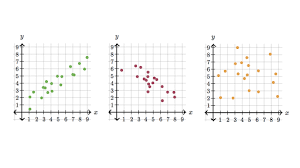
Scatterplots have been ranked as one of the oldest and most common techniques for projecting high dimensional data to 2-dimensional form. Generally, these projections are arranged in a grid structure to aid the user in remembering the dimensions linked with each projection. Scatterplots have proven to be quite useful in determining the relationship between two variables.
Scatterplots have been linked with a number of benefits. For instance, the plots have been cited as one of the most important technique for studying non-linear pattern. Krzywinski & Altman (2014) state that it is easy to plot the diagram. It is also useful in indicating the range of data flow, that is, the minimum and maximum value. Observation and reading of data in scatterplots is also straightforward.
Scatterplots are also important in studying large data quantities and make it easier to see the relationship between variables and their clustering effects. The use of scatterplots is an invaluable which is also useful in analyzing continuous data. However, this technique has a number of shortcomings such as being restricted generally to orthogonal views as well as challenges in projecting the relationship that exists in more two dimensions.
Question 2
When determining the appropriateness of the inferential statistical techniques, the researcher should first know if his/her data is arranged in a nested or crossed manner. If data is in a crossed manner, all study groups should have all intervention aspects. However, in a nested arrangement each study group will be subjected to a different variable. The correlation of variables can also be used in determining the appropriateness of a technique.
If the two variables have a linear or closely related association, the technique is said to be suitable. The number of assumptions that are employed when using a technique are also useful indicators. For instance, some techniques such as the t-test have several assumptions compared to the ANOVA technique, this implies that t-test has a large room for study errors unlike the ANOVA test.
Question 3
The Pearson product-moment correlation coefficient (PPMCC) is an analytical technique that is applied in indicating the strength of a linear association between two variables. This technique indicates a line of best fit through the data of two variables. It takes values ranging from +1 to -1 whereby a value of zero indicates that two variables of study do not have any association.
Values that are less than zero indicate that the two study variables have a negative association such that when one value increases the other one decreases. On the other hand, values that are greater than zero indicate that they have a positive association between them, that is, when there is an increase in one value, the other value increases as well. To determine whether the two variables have a linear relationship, they are fist plotted on a graph followed by a visual inspection of the shape of the graph.
A section of some scholars used to argue that PMCC can be used to indicate the gradient of a line. However, recent studies have dismissed this claim. For instance, Puth, Neuhäuser & Ruxton (2014) illustrate clearly that a coefficient of +1 does not mean that when one variable increases by one unit the other one increases by the same margin. A coefficient of +1 means that no variation exists between the plots and the line of best fit.
A number of assumptions must be put into consideration by analysts when they use the PPMCC. For instance, it is assumed that the outliers are either maintain at a minimum or removed completely. However, this is not the case in majority of studies. Another assumption is that the variables used should be distributed approximately normally and they must either be ratio or interval measurements.
Federal Constitution and international treaties or agreements: Case Analysis
Reid V. Covert
I. Facts of the case
Mrs. Covert was a civilian dependent on her husband, Mr. Covert, a sergeant in the United States air force who was stationed in the United Kingdom. Mrs. Covert murdered her husband in an airbase in the United Kingdom. Pursuant to an agreement between US and UK, which granted permission to martial court to take action against criminals for any offence committed in the United Kingdom by any American armed force serviceman or any of their dependent, Mrs. Covert was convicted by martial court as per article 2(11) of the Uniform State Code of Military Justice without any protection of indictment by the grand jury or right to jury trial.
Initially, the US court confirmed her conviction. She filed for a writ of habeas corpus and alleged that she was denied her constitutional right to have her charge presented to a grand jury or a right to jury trial as provided under the fifth and sixth amendments. She was sent to the US to await rehearing on her case. On rehearing, her petition was accepted (Haljan, 2013).
II. The issue
The main issue of the case is to solve the conflicting provisions of the Federal Constitution and international treaties or agreements and to know whether an American employed in the armed forces or their dependents living abroad found guilty of capital offence retain their right to jury trial as conferred under the Federal Constitution, thus rendering the trial by martial court as per article 2(11) of Uniform Code of Military Justice unenforceable.
III. Rules
The case involves two decisions so we have different set of rules which are given as below.
(a) Rule applicable during first decision
The first hearing on the case was based on Article 2(11) of Uniform Code of Military Justice (UCMJ) provides that all Americans serving with the armed forces or their dependents living in the UK are subject to provisions of this Code. Section 118 of Uniform Code of Military Justice provide for trial by the court martial for any capital case.
(b) Rules applicable during second Decision
Civilians found guilty of any crime are entitled to their constitutional right of protection on indictment by the grand jury as provided under the Fifth Amendment and right to jury trial as provided under the Sixth Amendment. The supremacy of the Constitution provides all rights to American citizens even if they are residing abroad.
Any legislation, treaty or foreign agreement must comply with provisions of the Constitution. The supremacy clause does not provide that any treaty or foreign agreement or any legislation passed does not have to comply with provisions of the Constitution. If the US government enters into any agreement or treaty with the foreign government and implement any legislation which is in conflict with provisions of the Constitution, then such agreements or legislation will be invalid.
The US government can act against its citizens residing abroad only if the specified limitations are imposed under the Constitution including Article III, section 2, 5th and 6th amendments.
IV. Analysis
First hearing on case
The Federal Constitution provides the right to jury trial to any American before his conviction. During the hearing of the case for the first time, the interpretation given by the US government was that the Constitutional right to the jury trial is available to Americans residing within the US territorial limits and is not available for American servicemen or their dependents living abroad.
Mrs. Covert, an American citizen, was tried by the martial court for the murder of her husband in the United Kingdom. She was denied to her constitutional right because she was living outside the United States and her conviction was affirmed by the US court. The court also provided for the provision of the jury trial if Congress finds it to be reasonable.
Second hearing of case
Second time, the decision was based on Article 2(11) which empowers the military courts to act against offences committed by American servicemen or their dependents in the UK territory without any jury trial cannot supersede Article III, Section 2 and the sixth amendment of the Federal Constitution which grant the right to jury trial to civilians abroad. The constitutional rights extend even beyond the boundaries of the US to Americans overseas. When the US government approaches out to punish a criminal, the constitutional rights of American citizens in abroad to protect own life does not go away on the ground of being in another land. So civilians cannot be tried by the court martial.
The supremacy clause given in Article VI of the Federal Constitution does not provide about non-compliance of provisions of the Constitution after enactment of any agreement or treaty with the foreign government.
There was no such intention of the law makers to set up a rivalry system between civil courts and military courts, where they compete with each other to exercise their jurisdiction over the civil criminals who are dependent on someone employed in the armed force. It seems incredible if the civil criminals are tried by the martial court and denied their right to jury trial.
The founders of the law used to accept the trial of soldiers by martial court for any offence during peace time with grudges. It will be again an annoying fact if Mrs. Covert is tried by martial court for the capital case committed during peace time.
Moreover, whatever jurisdiction the military court acquires as a result of the application of article 2(11) of UCMJ is lost when the convicted is handed over to the custody of the United States authorities. The article 2(11) of Uniform Code of Military Justice (UCMJ) became inoperative when Mrs. Covert was sent to the US and handed over to US authorities. On the basis of above rules, the petition of Mrs. Covert for the writ of habeas corpus was accepted.
V. Conclusion
The decision on this case was given twice in the US Supreme Court. The decision given during the second time was reversed by the court itself which happened for the first time in the US history.
Mrs. Covert who was convicted by martial court for the murder of her husband on the basis of Article 2(11) of Uniform Code of Military Justice (UCMJ) and was denied her constitutional right but was ultimately granted this right on the basis of the Supremacy clause of the sixth amendment which provides for compliance of all provisions of the Constitution by all treaties and foreign agreements. The Federal Constitution is a supreme source of law and no other state law, treaties or foreign agreements or legislation can supersede it.
1) Rights and advantages belonging to shareholders
Shareholders of a company enjoy following rights and advantages
Ownership right: Shareholders being owners of the company enjoy the right to share residual profits left after paying preference dividend. Their rate of dividend is not fixed. It depends upon the amount of profits. Sometimes they get high dividend in case of high profits.
Control over management: Shareholders can exercise their control over management through the election of their representatives in the board of directors.
The voting right: Shareholders have the right to attend annual general meetings of the company and cast their vote in person or through proxy on various resolutions passed in such meetings. This enables them to participate in corporate and managerial affairs without having to regularly manage affairs directly.
Pre-emptive right: At the time of further issue of shares, an offer is made to shareholders first. If shares are left, they are offered to outsiders. It enables them to maintain their proportionate shareholding intact in the company ( H.Sherman, 2011).
Transfer of the ownership: Shareholders enjoy the right to transfer the ownership of their securities to others by trading their stock on the stock exchange.
2) (a)Differences between the S&P 500 Index and the Dow Jones Industrial Average
Both Dow Jones Industrial Average (DJIA) and the S&P 500 are the best known index of American stocks but differentiate from each other in the following manner.
Criterion
Dow Jones Industrial Average
S&P 500
Introduction
It is an oldest stock market index which was introduced in 1896 by Charles Dow (Johnson, 2015).
S&P 500 was introduced by S&P Global in 1923 and in its current form, it was published in 1957 ( S&P Dow Jones Indices LLC, 2016).
Index Constituents
DJIA is composed of thirty publicly traded American companies listed in NYSE and NASDAQ. These stocks are picked by an editor of The Wall Street Journal. It covers a large range of industries in the US except transport and utilities ( S&P Dow Jones Indices LLC, 2016).
It is based on market capitalization of 500 large companies listed in NYSE and NASDAQ. It covers a wide range of industries.
Weighting Method
It is a price-weighted index which is calculated by taking the aggregate of prices of stocks in an index and divided by a common divisor (Johnson, 2015). The stocks having high prices have more weightage in this index.
It is a free float capitalization weighted index where in components are weighted on the basis of their market capitalization ( S&P Dow Jones Indices LLC, 2016). The stocks with higher market capitalization have more weightage in this index.
(b)Better measure of stock market performance
The S&P 500 is considered to be the better measure of stock market performance than DJIA because it covers approximately 80% of the stock market capitalization and is considered as a true representative of happenings in the US stock market ( S&P Dow Jones Indices LLC, 2016). DJIA covers 30 securities only and its popularity is because of being an oldest index.
3) Differences between common stock and preferred stock
The main two types of stock issued by companies are common stock and preferred stock which have some similarities as well as dissimilarities. The main dissimilarities between both are given as below:
Criterion
Preferred Stock
Common Stock
Meaning
Preferred stock is a hybrid security which combines features of common stocks as well as debt securities (H.Sherman, 2011). The preference dividend is paid at a fixed rate just like payment of interest at fixed rate, but it is paid out of post-tax profits. It is not termed as ownership security.
Common stock is termed as ownership security. Its rate of dividend is not fixed. It depends upon the amount of profits. The amount of dividend may be high in case of high profits and it may be low or even nil in case of low or no profits.
Preferences
Preferred stock carries two preferences over common stock which are (i) Preferred stockholders are paid dividend first before the dividend is declared for common stockholders. (ii) At the time of liquidation of company, preferred stock is redeemed first before any amount is paid to common stockholders (Weaver & Weston, 2001).
Common stock holders are paid their periodic dividend as well as redemption value after satisfying claims of preferred stockholders
Rights
Preferred stocks do not carry any voting right. But holders get entitled to vote when (i) The dividend has remained unpaid for a specified number of years (H.Sherman, 2011). (ii) The resolution to be passed at the meeting has any impact on their interest.
Common stock provides many rights to stock holders which includes voting rights on corporate and managerial issues and preemptive right. Pre-emptive right is the right given to stockholders to maintain their proportionate ownership in the company at the time of further issue of share (Broadridge Advisor Solutions, 2017).
H.Sherman, E. (2011). The Equity in the Business. In E. H.Sherman, Finance and accounting for nonfinancial managers (pp. 204-205). New York: NY: American Management Association.
Weaver, S., & Weston, J. F. (2001). Financial Statements and Cash flows. In S. Weaver, & J. F. Weston, Finance and Accounting for Non-financial Managers (pp. 26-28). New York: NY: Mc Graw Hill.
Want help to write your Essay or Assignments? Click here
Being the CEO of the organization named Drugs and Co., I find myself competent enough to lead the organization diligently. There are many traits of the leader which need to be inculcated in one’s personality so that one can hold this position confidently. The leadership quality is based on various types of leadership theories. These theories depict the importance of behavior, nature and demeanor which play significant role in shaping the overall personality of a leader. The point of argument is that as far as my personality is concerned, I feel that my leadership abilities are the combination of charisma, democratic spirit and motivational leadership.
My organization demands that I provide sufficient moral and physical support to the employees so that they may feel comfortable at the workplace. In order to ensure that the employees feel relaxed, I would employ the use of motivational leadership at the first place. For this purpose, I would arrange regular informal meetings to get the point of view of the employees.
This type of leadership is called the participatory type of leadership. It is the useful technique which helps the employees to find the way and solution regarding the problem at hand. It also keeps the employees involved in the organization so that they intend to own the organization. This would enable me to get any idea about their feelings, apprehensions and issues. The reason is that, the organization which I own is based on the very tough routine and it requires the rigorous research and exploration.
The laboratory technicians are the experts who need peaceful environment to find out the chemical formulas of new drugs. These drugs are then required to be transferred to the medical stores. In order to enable the employees to make the good quality drugs I would invite their expertise (Müller, Geraldi & Turner, 2012). In addition to that, I would also make the use of my physical charisma and the authoritative decision making. I have the great quality of eloquence with the help of which I can motivate them to take risky decisions.
I conducted the interview of the CEO of an international company who has an experience of working for two years in that organization. While answering the question related to the most challenging issue he faced during his leadership tenure, he said that the most difficult task was to carry out the conflict resolution among the employees. There are many instances in which the compromise seems not to be reached among the team due to the difference of opinion.
He told that he used to manage this situation by taking the individual opinion of the contesting parties. After getting the views, he used to decide the case in the light of the best possible options. After giving the final verdict, the CEO used to arrange the joint meeting of the employees to tell them about his decision.
While replying to the question regarding the best possible solution to the problem of leadership, the CEO said that it is best to observe patience and tolerance in the conflicting situation. Instead of getting into the head on collision with the employees and harassing them, it is rational that the employees are asked to calm down and leave the place. They must be given the relaxed environment to ponder over the situation more critically. It is the possibility that they would realize their mistake and become able to take rational decision.
He also told that in majority of the cases, this strategy worked for him. However, as an alternative he used to use his authoritative approach in those cases in which the employees exhibited the egoistic behavior. In those situation, it was necessary to bring their steadfastness under control. Had he not employed this tactics, the situation would have gone out of controls.
The analysis of this interview shows that there is not a single leadership type or skill which can be employed in the practical life. The best approach is to use multiple types of leaderships to tackle the employees. The reason is that the employees vary from one another as far as their nature and temperament is concerned. Moreover, the leaders are required to make a rational decision about the type of leadership.
Had I been involved in the similar situation, I would have also gone for the same strategy of using the combination of different types of leadership. The reason is that the position of a leader is very dynamic and he needs to be very receptive to this fact (Zhu, Kraut & Kittur, 2012). In addition to that, I would have tried to keep my emotions under control so that my weaknesses were not evident in front of the employees.
I would have also gone for the option of getting the grip on the rules and regulations of the organization. This would help me in making the decisions according to the rules of law. As a result, there would be the rare chances of any objections raised on my credibility. I would also try to win the confidence of the employees through my friendly behavior with them. Risk taking strategy should also be used to keep the employees attentive and ready to take new initiatives (Miner, 2015).
I would also use my charisma and eloquence so that the employees may focus the attention on my views. This type of leadership is called charismatic leadership. It is the sort of leadership which helps a lot in those situations in which no other strategy works and the employees are not ready to work unanimously. Sometimes, the conflict needs to be mediated through the presence of some compromising personalities who may lead the team through their holistic approach.
In order to ensure that, I would keep a committee of some of the competent people who can accompany me during the conduction of the meetings (Goleman, Boyatzis & McKee, 2013). The decision making needs to be very much tactical to avoid the unfair situations.
Keeping in view the critical analysis and summary of the interview, it is concluded that the leadership modalities need to be employed through the deliberation. The competent leaders are those who keep the team bound together in the hour of both distress and happiness. They are the people with exemplary capabilities and have high level of self-esteem.
As far as their role in the organization is concerned, it is pertinent to mention that the leaders are not required to stay stubborn and rigid. Instead of that, the leaders need to be very much tolerant and accommodating so that they can control the situation and turn the tide of events. Keeping in view all these comments, I find myself to be in a better position to lead the team in a better way.
Miner, J. B. (2015). Organizational behavior 1: Essential theories of motivation and leadership. Routledge.
Müller, R., Geraldi, J., & Turner, J. R. (2012). Relationships between leadership and success in different types of project complexities. IEEE Transactions on Engineering Management, 59(1), 77-90.
Zhu, H., Kraut, R., & Kittur, A. (2012, February). Effectiveness of shared leadership in online communities. In Proceedings of the ACM 2012 conference on Computer Supported Cooperative Work (pp. 407-416). ACM.
Want help to write your Essay or Assignments? Click here
The organization of a successful mission demands proper planning and operation, and placing objectivity as key in the final triumph. The mission towards rescuing prisoners of war (POW) by the 6th Ranger Battalion will require movements and strategies that will reduce detection and provide faster accomplishment of the strategies. Therefore, having substantial estimates and technical strategies into the military action to take will result in successful mission.
Planning and Preparation
The POW camp is exactly 75 miles from Calasiao base camp where the rescued will be taken to. The mission will require a victory mentality that will utilize a surprise strategy to catch the enemy off guard and achieve a successful rescue (Goztepe & Kahraman, 2015). The problem faced by the 6th Ranger Battalion is the rescue of the POWs before they are executed or transported by the Japanese forces.
Any delay in time will aggravate the situation and make the mission more difficult. The mission will require rescuing the POWs and taking them to Guimba where they will link up with the 6th Army forward line that will provide extra security in their transportation to Calasiao base camp. The mission has to take place in less than two days to avoid more delays.
The Japanese might move or murder the POWs in less than three days time so the mission must take place in two days time. The set date to execution of the mission will be on the dawn of 30th January 1945, leaving less than 48 hours for planning. The planning process will require reconnaissance and surveillance of the prison, and linking up with local militia to provide adequate information.
The paramedics will need to prepare medical equipments, food, and water for the rescued and the wounded during the mission (Jaiswal, 2012). The planning process will require 12 hours and additional 4 hours for reconnaissance. The rescue mission should last for less than 2 hours.
In order to circumvent detection, the 6th Battalion will have to arrive at the POW camp at night and carry the rescue mission at dawn to catch the enemy by surprise. Since the prison is 29 miles from Guimba, the soldiers will require 15 hours to reach Pangatian by foot, which will require travelling at night, early mornings, and late evenings to avoid detection.
Therefore, in order to avoid fatigue and save time, the force shall leave Guimba on the night of 29th January 1945 at 2000hrs and take a half an hour journey by trucks to Cabanatuan where they will approach the prison at Pangatian by foot 3 miles from the prison. This will provide enough time to set up points for ambush, assembly of the rescued and coordination with the Filipino guerilla forces.
The Filipino guerillas will be important in provision of navigation routes and utilization of vantage points that will make infiltrating into the enemy camp easier; a beneficial factor in collaborating with local citizens (Jaiswal, 2012)). However, their next involvement will come after the rescue operation.
Executing the Mission
Since negotiation and diplomacy is not an option, carrying out military strategy in rescuing hostages requires staging a move that will result in higher success rate (Goztepe & Kahraman, 2015). In this mission, understanding of the POW compound in order to identify the first targets to annihilate, how to outdo the guards, reaching the cells where the POWs are and deterring any communication or escape of enemy soldiers to seek for reinforcement.
The objective of the mission apart from rescuing the POW will be to exert a surprising attack on the enemy that will result in the highest success rate and little casualties (Dougherty, 2013). This will depend on the surveillance received that informs the structure of the enemy territory and information to use in managing the mission. The force will need to site the target containing communication media and secure it before handling the enemy soldiers.
The Rangers will require vigilance and quick response to ensure the enemy does not kill the POWs as a form of defense, therefore capturing and securing the POW cells will be the first key strategy in the mission. The mission will also require use of snipers among the Rangers incase the enemy decides to use POW as human shields.
During the night, the task force should arrive at the prison before 0300 hours on 30th January 1945 and take vantage points around the camp. The US Army Air Corps helicopters can aid in expediting the mission by providing the first moment of surprise through destruction of any enemy vehicles and buildings used as resident by the guards at the top command.
This will allow the task force to infiltrate into POW cells and engage the enemy forces while leading the rescued away from the camps. The US Army Air Corps will be important in maintaining patrol and deterring any plans of the enemy to launch a counter attack to recapture the POWs. This will also allow the task force to gain ground faster as they repeal the enemy forces (Zsambok, 2014).
The Filipino guerillas will be important in helping to protect and secure routes used by enemy forces that may come to provide reinforcement. This will impede the enemy movement as the task force and rescued soldier match towards Cabanatuan for transportation to Guimba.
The task force and rescued soldiers will avoid using open roads that may increase their vulnerability to enemy forces but utilize the help of civilians in making their way by foot beyond Cabanatuan. The team will travel at 2 miles per hour for 4 hours and have 30 minutes of rest to allow the former POWs to take water and food. However, travelling to Guimba by foot will take the Rangers and rescued soldiers up to 15 hours, and may require more security and resources.
Another strategy will be the use of carts, which can be useful since it will increase the movement of the rescued soldiers. Carts move at 9 miles an hour, which will take just 3 hours to transport the rescued soldiers to Guimba from Cabanatuan, where they will link up with the 6th Army. Another alternative is picking up the rescued soldiers and Rangers at Cabanatuan by army trucks to Guimba, which is a faster alternative.
Collaborating with the Filipino civilians to provide this service will enable the task force acquire more time in repealing any remaining resistance from the enemy, assisted by the US Army Air Corps as a way of suppressing the enemy advancement and counterattack strategies.
Monitoring and Evaluation of the Decision
The movement of the Rangers from a drop point in Cabanatuan to Pangatian will require 1 hour. From there the Rangers will take positions outside the camp until 0430hrs on 30th January 1945, where the US Army Air Corps planes will provide the dawn ambush that will enable the Rangers to penetrate the camp and rescue the POW. Surprise attacks are effective in destabilizing the enemy and giving the advancing forces an upper hand (Dougherty, 2012).
The Mission should last for less than 2 hours. The former POWs and Rangers will have to advance to Cabanatuan and board army trucks by 1000hrs for their transportation to Guimba. Two US Army Air Corps helicopters will offer assistance to repeal enemy forces, exert destruction, and impede the enemy’s will to fight, while also providing humanitarian assistance. However, in case of overwhelming forces, more backup will have to come from Guimba.
This report will enable the Commander reach a decision on the possible choices to make in reaching a conclusion about the mission. It is imperative to consider time and speed since they are important in achieving the objectives of the mission.
Goztepe, K., & Kahraman, C. (2015, March). A new approach to military decision making process: suggestions from MCDM point of view. InInternational Conference on Military and Security Studies, İstanbul, Turkey(pp. 118-122).
Jaiswal, N. K. (2012). Military operations research: Quantitative decision making (Vol. 5). Springer Science & Business Media.
Zsambok, C. E., & Klein, G. (2014). Naturalistic decision making. Psychology Press.
Want help to write your Essay or Assignments? Click here
Defending the spirit of the web: Conflicts in the internet standards process
Introduction
The adaption and creation of principles is frequently replica of a game. In other words, the standards process is the replica of the activities of a formulated actor in the networks. The paper focuses on the development of web services choreography standards. It details the history and explains the technological arguments surrounding the standards. It entails a model of standardization, and look at a previous case from three perspectives. The first perspective is social- it follows the people involved in the standard process, an approximation of more complex approaches. The second is cultural- it looks at the ideas of the participants, particular ideas about technology (Edrei, 2016). The third is economic.
These three approaches are intertwined. Economic theories are important in explaining how individuals with a given set of utilities will interact. On the other hand, Economic theories are insignificant at determining where the utility comes from, but social theories are better for understanding how individual’s utility gets formed. The social research allows building and calibrating a better decision model.
Literature Review
The social Perspective: Following the People
The standard process of constructing the web service composition consists of two decision process, development, and adoption. In the development process, the participants in a standards body create and debate the standard. A normal document is created when the official report goes well, which is frequently improved until it is introduced to a wider community for acceptance (Nickerson, & Zur Muehlen, 2013,).
Web services choreography describes the coordination of long-running transaction between business partners using usual internet protocols. It can be used in a diversity of domains, extending from supply chain management to media content solicitation. The foundations of web services choreography can be located in workflow management technology, which has been available since the middle of the 1980s.
In early 1990s large workflow users became aware of the possibility that they would be approved for the existence of several workflow solutions from different vendors. Standards were first created within the scope of workflow management coalition, but are increasing being defined by competing for uniformity groups, such as Business Process Management Initiative (BPMI), Organization for the Advancement of Structured Information Standard (OASIS), and World Wide Web Consortium (W3C).
In parallel to this growth, the use of Internet technology for application combination became feasible through the introduction of value-added models on top of the inevitable Hypertext Transport Protocol (HTTP) protocol used for the World Wide Web. These standards allow application designers to open their request for access to the internet. However, some applications give help for simple request-response message exchanges. More robust mechanisms are needed for the coordination of long-running transactions, such as the following exchange of Quotes, Orders, and Delivery Notes.
The web service compositions are not moving by themselves it is the participants in the choreography process who are packing up, leaving, and reassembling with a different standards organization. There are a finite number of people active in the composition process, and as a group loses momentum, some of the members will move to a livelier group.
Participants in the standards process are looking for a venue in which they could offer a standard that is technically excellent. When they are not comfortable in the group they are foundering, they jump to another group. From this perspective of the movement pattern of people leaving a group to another, it is essential to look the ideas.
The cultural perspective: Following the ideas
From the movements of the standards participants, the main reason for shifting group is disenchantment with the development of the business in the group. And this can be described as a growing sense that the actual standard is becoming too involved. For anyone quitting a conventional process because of the complexity of the conventional process does not appear to fit into a game-theoretic model, where the players are described as seeking to dominate each other for the fulfillment of the interests of their sponsoring corporation. Instead, they are engaged in something that looks like a process of aesthetic evaluation of the standard.
An aesthetic judgment can contribute to a strong value system. For instance, graphic designers of the modern school are taught to avoid that which does not contribute to the meaning of a page. And also programmers are also taught about clean versus kludgy code. The standard is explicitly disapproving of a potential use of Simple Object Access Protocol (SOAP) because it is counter to the spirit of the web.
It violates the design aesthetic of those who have built the web protocols. The phrase “the spirit of the web” is interesting from two perspectives. It is closer to an aesthetic than a rule; this is because there are myriad different ways to define a protocol and a myriad. Secondly, it suggests that the web has a spirit and this spirit is to be defended.
Most of standards have grown through Request for Comment (RFC) process, and it is described as follows: easily understood documentation, technical excellence; prior implementation and testing; clear, concise, and openness and fairness; and timeliness.
The participants in the development of web services are influenced by both the norms of the corporations they serve and the beliefs of the technical community they consider themselves part of it. For example, open source develops source while working on the job, sometimes without the employer knowing (Fielding, Roy Thomas, 2013). They define their identity in the hacker community. This may be the case that regular participants are similar.
The economic perspective: Following the Money
It is clear that a lot about standards can be learned by evaluating the potential benefits to the players involved in decision making. The vendors want to make money on standards, and by making the standard more complex, they increase the chance of selling products (Swenson, 2013). A programmer’s utility can be evaluated when a different criterion is looked than money. The development stage can be described as a stage of the collective invention, and as a part of this invention, new ideas are continually evaluated.
The dialogues captured in standard group’s discussions often concern the weighing of different attributes. It can be predicted that different groups would have different weights in mind for a similar set of attributes. In standard groups labor is voluntary, and switching costs are low, so quitting one standards body and reforming in another is a viable option.
In modeling, the standards creation process, one possible result of an impasse might be the migration to a different standards committee. And in methodological –the social perspective helps inform the economic perspective. The bylaws of the groups might determine the allowable jumps so that the movement between groups might be less random than it appears.
Vendors would want to serve on multiple standards committees so that they don’t report late if one takes off. Also, users might have little motivation to adopt one of these standards if the head does not move.
In conditions of high uncertainty, waiting might be the best strategy. It can be seen in web services choreography that there is an absence of user adoption and participation by vendors on multiple committees. Observation of different standards and their participants’ standards can be categorized as being driven by three different groups. The first two groups are self-evident.
Some standards are clearly driven by vendors, and some standards are clearly driven by users, for instance, Rosetta Nett is driven by a set of companies in the manufacturing industry. But there is a third set of specification such as HTTP where representatives of corporations are involved, but the standards do not drive by corporations. Those are referred as research-driven. Often, those engaged in the creation are financed by government research funding organizations (Kaman et al., 2014).
The representatives of corporations involved in these standards are often individuals who maintain a strong link with the research community. And the standards are sometimes created in standards groups that are strongly identified with the research community. In the understanding of the economies of standards development, It is essential to look at the funding sources and furthermore the sympathies of those on the committees.
Most software vendors are pushing for SOAP-based coordination standards in contrast. In contrast, the dispute between different standards for railroad track widths was resolved through the wishes of an important customer, the federal government. In rare cases, customers can overcome the wishes of vendors. Vendors often use the standardization process toward their ends and, in game-theoretic terms. The most accusation against vendors for conspiring to sabotage standards might be correct. There is always tension between the proposals of research-oriented participants and those who conscientiously represent the interest of their sponsoring firms.
The standard process is complex, and multiple perspectives, applying both social and economic techniques are more likely to yield insights than unique techniques. Future research might suggest ways of preserving or improving the overall functional landscape of official bodies.
References
Edrei, A. (2016). Divine spirit and physical power: Rabbi Shlomo Goren and the military ethic of the Israel defense forces. Theoretical Inquiries in Law, 7(1), 255-297.
Fielding, Roy Thomas (2013). Architectural Styles and the Design of Network-based Software Architectures. Department of Computer Science. Irvine, CA, University of California, Irvine, CA: 180.
Kazman, Rick, Jai Asundi and Mark Klein (2014). Quantifying the Costs and Benefits of Architectural Decisions. ICSE 2001.
Nickerson, J. V., & Zur Muehlen, M. (2013, December). Defending the spirit of the web: Conflicts in the internet standards process. In Proceedings of the Workshop on Standard Making (pp. 56-69).
Swenson, Keith D. (2013). Personal Communication. M. zur Muehlen. Hoboken, NJ. West, Joel (2013). How open is open enough? Melding proprietary and open source platform strategies. Research Policy 32: 1259-1285.
Want help to write your Essay or Assignments? Click here
Ques1. Explain what a call provision enables bond issuers to do? Why would bond issuers exercise a call provision?
Answer: A call provision is a clause, mentioned in the bond certificate, which enables the bond issuer to repay or redeem bonds before its maturity date at a specified value (Sherman, 2011). Conditions related to time of redemption or buy back of bonds like amount to be repaid and manner in which payment is to be made are mentioned in advance. This call provision is exercised by the bond issuer at the time when the interest rates have fallen and debts are available at cheaper rate in the market. The issuer redeems the bond carrying high rate of interest and issues new bonds with low rate of interest.
Ques.2 Define a discount bond and premium bond. Provide example of each.
The bond issued by the company for the first time is a standard bond. It becomes discount bond or premium bond depending upon the price at which it is being traded in the market.
Discount bond: If the bond is being traded in the market at a price which is less than the face value, it will be termed as discount bond (Weaver & Weston, 2001). A bond becomes discount bond when it gives interest at a rate which is less than the market rate of interest. The investor will be ready to invest in bonds with lower interest rate if the purchase price of such bond is fixed in such a manner that it compensates the investor for less payment of interest in future. For example: A 5% bond is being issued at $1000. The market interest rate is 4%. The investor will be ready to invest in such bonds if the issue price is less than $1000.
Premium bond: If the bond is being traded in the market at a price which is higher than the face value, it will be termed as premium bond. A bond becomes premium bond, it its coupon rate of interest is more than the prevailing interest rate in the market. The issuer will be ready to issue such bonds if the price is fixed in such a manner that it compensates the issuer for higher payment of interest in future. For example: A 5% bond is being issued at $1000. The market interest rate is 6%. The issuer will be ready to issue such bonds if the price is more than $1000.
Ques3. What is the relationship between interest rates and bond prices?
Answer: The fundamental principle of investment in bond market is that there is inverse relationship between interest rates prevailing in the market and bond prices (SEC, 2013).
In market interest rate in bond price
In market interest rate in bond price
If the market interest rate goes up, the investor will be ready to buy bonds with low coupon rate if they are being offered at discount or low price. The investor want compensation for low interest payments to be received in future so he will be ready to buy such debentures if they are being offered at low prices. Similarly if the market interest rate goes down, the investor will be ready to buy the bonds with high coupon rate even at high prices. Thus prices of bond increase.
Ques 4: Describe the difference between coupon bond and zero coupon bond
Answer: The coupon bond is a bond which has coupon rate at which the interest is paid to the bondholder throughout the life of bonds (Sherman, 2011). The bonds are issued with interest coupons and interest is paid to the person who has the possession of coupon. The payment of interest is made at coupon rate and it may be paid quarterly, semi-annually or annually.
Zero coupon bond is a bond which does not carry any coupon of interest as no interest is payable on such bonds. These bonds are issued at deep discount and redeemed at face value on the maturity period. The difference between the issue price and the redemption value is the appreciation value and return for the investor (Weaver & Weston, 2001).
The return for the coupon bondholders is regular in nature whereas the return in case of zero coupon bonds is in the nature of capital appreciation.