
PANDORA Consumer Behavior

PANDORA Consumer Behavior

PANDORA Consumer Behavior

Introduction

PANDORA is global fashion jewelry from Denmark. It has at least ten thousand retailers in the international market. It reflects in its stable brand loyalty from its customers. The PANDORA brand is unique and of high quality. It has made PANDORA get the brand awareness regarding marketing. In the year 2015, as it was disclosed on 2012 financial reports, three hundred and seventy-five PANDORA concepts stores were opened. Opening more stores aimed to create PANDORA brand image.

Hence, they were keen to visual effects of showcase so as to attract the target customers in sensitivity manner and motivate them to minimize the decision-making steps and purchase it as soon as possible, (Bucuta, and Balgaradean, 2016).  Due to their lower pricing, fast fashion trends, friendly and relaxed customer services in their stores make customer’s decision making simple and improve the trust for the management.

PANDORA have benefited from fast fashion, flexible strategies, renewal of goods which make it simple for the customers to believe their perceived risk so as to have product involvement highly when making informed decisions, (Howeidi, and Nguyen, 2016). PANDORA has more than a thousand products that satisfy the individual expression. Their brand does express personality.

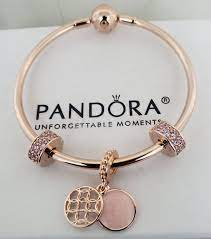
For example; their essence bracelet is assumed to bring different inspiration or wishes. On every festive season or holiday, PANDORA will come up with new products that are related to the gift giving, holiday and cultural value in ritual ways to cover on grooming, (Anca, and Cristina-Maria, 2016). It makes people relate to reality and loves the brand of PANDORA.

In Europe, PANDORA recorded a twenty-eight percent revenue growth. The primary market that contributed in large part to this was the United Kingdom. The revenue of Pandora in the United Kingdom rose by seven percent through the second quarter of this fiscal year.  The income was heightened by an opening of seven subsidiaries concepts stores which brought the number of the PANDORA concept stores to two hundred and nine.

Andersen stated that “these are another set of fantastic which we are all incredibly proud of- to be a presence in every major UK town and city is a phenomenal achievement.” Additionally, he proceeded by saying that “After eight years at Pandora, it has been both challenging and immensely rewarding, watching the brand grow and resonate so well with women of all ages.”I am delighted with the progress the brand has made in the UK, in particular in such a competitive industry and on what is widely considered a tough high street to crack.”

The company had a steady momentum in Europe where they recorded a 28% increase in sales revenue. Among the 28%, the United Kingdom contributed a half of the growth of income. The high momentum was fostered by three factors that influence consumer behavior, and they are Motivation, Perception, and Identity, (http%3A%2F%2Fwww.retailgazette.co.uk%2Fblog%2F2016%2F08%2Fpandoras-uk-sales-account-for-a-quarter-of-companys-emea-region-growth&usg)

Motivation

Consumer motivation is the force to satisfy wants and both psychological and physiological during the acquisition of products and services. PANDORA recognized motivation as a compelling and impelling force that is required in its concepts stores. To understand how motivation applies it’s important to comprehend three behavioral models and foresee on how customers will act to them, (Grunert, Hieke, and Wills, 2014)

First is the Maslow’s Hierarchy of Needs. Abraham Maslow describes personal development through satisfaction and identification of the hierarchy of needs from basic needs to complex psychological needs, (Anderson, 2014). Maslow suggested that these motivating drives work more or less one after the other. If one level is entirely or partially met, there is always hunger to next level and the feeling is more intensely. PANDORA used the Maslow’s hierarchy comprehensively to comprehend what motivates their target customers and how the motivation can be utilized in a broader variety of ways to clients and individuals across the globe.

Secondly is the Dichter’s Major Consumption Motives. It was established in 1950 where Dichter on behalf of Procter and Gamble conducted research on customers’ demands that motivates the buying of the Ivory Soap, (Ahn, Duan, and Mela, 2013). He deduced that “bathing as a cleansing ritual has a symbolic appeal among consumers, signifying purification from the taints of the world.”

From the research, Dichter steered the growth of a tremendously winning advertising campaign. According to Dichter, the consumption of goods is determined by twelve vital motives which are security, eroticism, power-masculinity virility, individuality, social acceptance, moral purity, magic mastery, and social connectedness, mastery over the environment, femininity, and status.

Lastly is the Sheth’s Consumer Motives. The incentives were developed to foresee customer’s decisions. Although it was meant for traveling decisions, Sheth’s model also applies to other goods and services. Sheth secluded five dimensions of motivation, each leaning to an attainment of particular goals, (Wind, Thomas, and Sheth, 2014). Also, the functional motive entails the utility of goods or services or the work it performs.

Besides, the emotional motive is attained by the attractiveness or appearance of a good or service. Furthermore, the social motive is revealed in the esteem or status value of a good or service. Additionally, the situational motive is activated by unforeseen advantages of a good or services and lastly the curiosity motive which is simply the concern aroused by a good or a service.

PANDORA has used the Sheth’s models to foresee the brand choices by customers. Various brands, for example, the ones with charms are associated with the emotional motives. It gives the customer the power to decide what kind of a meaning their jewelry possesses and they make them buy or not to buy. The choice of PANDORA brand whether golden or silver or silk is associated with functional and social motives.

By comprehending the customer’s motivation, PANDORA can better target products and services to attain the demands of particular market segments such as the United Kingdom. For example, PANDORA can advertise about the charm jewelry that has meaning of given personalities and incidences, pleasing the demand of the traditional or older customers who used to purchase jewelry with no meaning at all.

Perception

Consumer perception measures the growth of perception through various variables and recognizes those factors that influence the buying decision of the customer. Customer usage and purchasing of any good depend on with their perception towards the goods, (Font, and Guerrero, 2014). Perception is widely developed regarding how effectively and efficiently a product has been marketed or advertised.

PANDORA has employed all its hard work in marketing so that to acquire or attain the consumer’s attention and the positive feeling on the consumer’s thoughts. The customer perception can be well recognized by the taste and preference of the good, color, and shape, (Tieman, Ghazali, and Van Der Vorst, 2013)

There are several physical factors that affect perception. Those are a mode of payment, availability, regular supply of product, accessibility, durability and quality, (Fall Diallo, Chandon, Cliquet, and Philippe, 2013). Product quality is categorized into two. First is the perfect quality and second is the expected quality. The special quality contains the real benefits attained from the buying of the product. On the contrary, the apparent quality contains the customer expectations from the goods.

At first, the perception qualities of the good of PANDORA were weighed as customer’s perception of the quality of good offered by Denmark. Researchers and scholars argue that expectations, country of origin and perception fosters to cognitions. It also puts importance on specific goods and marketing characteristics. These were regarded as the factors that drove customers to marketplace or the concept store where the jewelry was marketed or sold.

Price determines the purchasing power of the customer. Normally, a price is regarded as the primary determinant of the customer’s brand choice when selecting a good or service. It is comprehended that when a customer is experiencing a purchasing decision for good buying, then the consumer is more concerned about the prices of the goods and scrutinize prices keenly, (Jin, He, and Zhang, 2014).

The pricing strategy assists the consumers to maximize direct utility that they possess from the buying. On the contrary, when the customer come into contact with PANDORA brand that has fluctuating prices and apparent quality levels, the consumer will have to make the informed decision about the favorite they make on the ground of characteristics of the goods.

Customer favorite of good features differs according to the nature of the product as well as its economic and social nature of consumer. Goods characteristics are frequently eye-catching in nature. The characteristics model that was proposed by the Gwin and Gwin in two thousand and three posits that customer preference of good is based on maximizing their utility from the goods attributes subject to the financial shortage.

Some scholars argued that customer services and store images stimulated the consumer store choices and at the same time, location and parking facilities always have a negative effect on the consumer choice. On the case of PANDORA, the two hundred and nine concepts stores are strategically relocated, and they offer incredible customer services like free delivery of the jewelry. The consumer perception of store pictures and the characteristics pressured by types of goods, formats, shopping need and cultural value explains the store nature, parking facilities, place, kindliness of staffs are among the factors that pressure the customer’s choice of stores, (Claiborne, and Sirgy, 2015).

From the record, PANDORA added seven concept stores in the United Kingdom bringing the number to two hundred and nine. It means that PANDORA has offered or provided their customers will all basic needs that affect the choice of stores. The effect of store setting such as the eye-catching shelf, incredible services activities and facilities attract more customers to purchase more.

Store images are an important factor in store loyalty and store alternative. The perception towards stores is established significantly by visual attributes of a store such as a distance of store from home, size, and intangible factors such as the atmosphere of the store.

Although the store picture has been comprehensively analyzed all over the globe, there is a lot to be analyzed for the developing retail nature where consumers, as well as the store owners, are in solid phase and different and large retail formats by the prearranged retailers being moved out. What might build the high image and what forces the choice of a store in the long-term is the myth. The PANDORA new stores have the capacity to attract more customers into the stores because of their notions.

Identity

Identity construction is a significant improving sector in consumption theory. Description of how the customer makes choices among goods and services assist in describing the connection between the consumption and identity. The demand concept proposes that customers should select the goods which offer them maximum utility for their disposable income they possess where their utility is the pleasure of consuming the product, (McAlexander, Dufault, Martin, and Schouten, 2014).

An option to this perspective is that customers select goods which are closely equivalent to their aspired or popular personalities. The post-modern theorists like the Sartre would recommend that possession is significant to identifying who we are and offering a sense of being, (Hatch, and Cunliffe, 2013). Customers might select goods based upon their valued but offered multiple choices in the concepts stores; they may still choose the same product since it fits their personality.

For example, if a customer is to choose a PANDORA charm bracelet over A PANDORA jewelry with no charm, given another chance will still choose the PANDORA bracelet with charm since it warms his or her personality. Scholars argue that selecting goods is relatively simple since one thing is likely to strike us “symbolically more harmonious with our goals, feelings, and self-definitions than other.” The choice of goods and services offers the customers a chance to express their originality and act a way of communicating with others.

In the United Kingdom, there is so much relative wealth and choice. It makes it almost not surprising that consumption and shopping are the major leisure acts. Researchers suggest that culture and society are very significance to identity and consumption of products and services.

The detection of consumers’ identity building is significant for the retailers. It enables them to advertise to the right individuals at the right time while targeting their market group. It can only be achieved through close monitoring of the retail shopping behaviors, (Thompson, 2014).  Inducements such as the loyalty cards can be used to gather data on consumption habit and attempt to recognize potentially loyal customers and profitable customers.

Additional processed data entailing the demographic, socio-economic and geographical data such as marital status, income bracket, postcode, age, and gender can be used to analyze the customers. For example, PANDORA target customers are women of all ages. They have products that suit the taste and preference of each woman no matter their age.

Identity is transformed through consumption. It is argued that the significance of the b body image to the self-theory regarding an evaluation of size and attractiveness and perception is mostly drastic and symbolic, (Tuškej, Golob, and Podnar, 2013). PANDORA focuses mainly on young population. It is because young people are more into consumption and identity. The goods they buy frequently have stable and strong representation as well as the social work.

The information about the PANDORA brand is used to build an identity based on the understanding of the “consumption ideals prevalent in popular culture.” It is believed that with time and culture changes, the identity is expected to adjust.

The connection between identity and consumption activities are described through the consumption the significance of possession, various selves, group identities and consumption concepts. Consumption choices assist in describing the identities of both the group and people either at unconscious or conscious level, (Ekinci, Sirakaya-Turk, and Preciado, 2013).Equally, an identity by itself may pressure the consumption behaviors. 

Even if the relationship between identity and consumption might be controversial, it is motivating to consider the reason as to why we purchase goods and services over the others. The frequent asked questions whether they provide greater utility or not or are they cheaper or do they imitate our personalities? With the question above, PANDORA has been able to provide answers to their customers making them want to purchase more and more product from their concepts stores.

Conclusion

Conclusively, the three factors which are motivation, perception and identity have helped PANDORA to increase its sale revenue in the second quarter by 28%. PANDORA marketing strategy has been comprehensively effective because after analyzing their target market and population, they established a structure and mechanism which they could use to attract more customers. For example, establishing the jewelry with charms led to many people purchasing the products because they believed that the message possessed by the jewelry reflects their personalities.

It motivated a lot of its customers to purchase the jewelry even though the sense of being never changed, (Solomon, Russell-Bennett, and Previte, 2013). Their marketing strategies changed customer’s perception on how they viewed the concepts stores. When customers recognized the jewelry with charms, they would purchase the product with different images or visual effects to portray a meaning. For example, since they targeted the young population, they introduced love jewelry.

If friends or couples purchase the love jewelry, it changed their perception of how they are affected by each other. Their personalities drove them to purchase more and more products. Lastly, the store images bring the sense of what goes inside the store. It creates the identity that every customer wants to be associated with. PANDORA concepts store are modernized, and most of them are of glass. It makes it clear for every person to view from outside what is sold inside.

Since identity is majored on group personalities and peers have different opinion about the PANDORA jewelry brand, it attracts the potential customers to purchase the products so that to be identified as part of the PANDORA loyalty customers. Due to these consumer behavior tactics by the PANDORA, it was able to record a sales revenue increase of twenty-eight percent as compared to other quarters in the year 2015.

Bibliography

Ahn, D.Y., Duan, J.A. and Mela, C.F., 2013. A Rational Expectations Model of User Content Generation and Consumption. University of Chicago.

Anca, B.U.C.U.Ţ.Ă. and Cristina-Maria, B.Ă.L.G.Ă.R.Ă.D.E.A.N., 2016. Affordable Luxury. The Newest Trend in the Fashion Industry? Case Study: Pandora Jewelry. Marketing From Information to Decision, 1(9), pp.61-62.

Anderson, A., 2014. Maslow’s Hierarchy of Needs. The Prairie Light Review, 36(2), p.7.

Bucuta, A. and Balgaradean, C.M., 2016, January. Affordable Luxury. The Newest Trend in the Fashion Industry? Case Study: Pandora Jewelry. In The Proceedings of the International Conference” Marketing-from Information to Decision” (p. 61). Babes Bolyai University.

Claiborne, C.B. and Sirgy, M.J., 2015. Self-image congruence as a model of consumer attitude formation and behavior: A conceptual review and guide for future research. In Proceedings of the 1990 Academy of Marketing Science (AMS) Annual Conference (pp. 1-7). Springer International Publishing.

Ekinci, Y., Sirakaya-Turk, E. and Preciado, S., 2013. Symbolic consumption of tourism destination brands. Journal of Business Research, 66(6), pp.711-718.

Fall Diallo, M., Chandon, J.L., Cliquet, G. and Philippe, J., 2013. Factors influencing consumer behaviour towards store brands: evidence from the French market. International Journal of Retail & Distribution Management, 41(6), pp.422-441.

Font-i-Furnols, M. and Guerrero, L., 2014. Consumer preference, behavior and perception about meat and meat products: An overview. Meat Science, 98(3), pp.361-371.

Grunert, K.G., Hieke, S. and Wills, J., 2014. Sustainability labels on food products: Consumer motivation, understanding and use. Food Policy, 44, pp.177-189.

Hatch, M.J. and Cunliffe, A.L., 2013. Organization theory: modern, symbolic and postmodern perspectives. Oxford university press.

Howeidi, M. and Nguyen, D., 2016. VIRAL MARKETING (Doctoral dissertation).

Jin, L., He, Y. and Zhang, Y., 2014. How power states influence consumers’ perceptions of price unfairness. Journal of Consumer Research, 40(5), pp.818-833.

McAlexander, J.H., Dufault, B.L., Martin, D.M. and Schouten, J.W., 2014. The marketization of religion: Field, capital, and consumer identity. Journal of Consumer Research, 41(3), pp.858-875.

Solomon, M.R., Russell-Bennett, R. and Previte, J., 2013. Consumer behaviour: Buying, having, being. Pearson Australia.

Thompson, C.J., 2014. The politics of consumer identity work. Journal of Consumer Research, 40(5).

Tieman, M., Ghazali, M.C. and Van Der Vorst, J.G., 2013. Consumer perception on halal meat logistics. British Food Journal.

Tuškej, U., Golob, U. and Podnar, K., 2013. The role of consumer–brand identification in building brand relationships. Journal of business research, 66(1), pp.53-59.

Wind, Y., Thomas, R.J. and Sheth, J.N., 2014. Organizational buying behavior. SAGE Publications.

https://www.google.com/url?sa=t&rct=j&q=&esrc=s&source=web&cd=5&cad=rja&uact=8&ved=0ahUKEwik6_fS56bRAhVJAcAKHT-YC_UQFgg4MAQ&url=http%3A%2F%2Fwww.retailgazette.co.uk%2Fblog%2F2016%2F08%2Fpandoras-uk-sales-account-for-a-quarter-of-companys-emea-region-growth&usg=AFQjCNEvrKRM2BRhx6bXf5oc-eBSNw1jGg&sig2=ULcUyvZpFul3k0qK_4c8Xw

Want help to write your Essay or Assignments? Click here

DNP Essentials

DNP Essentials
DNP Essentials

DNP Essentials Pertinent To Health Care Leadership and Inter-Professional Collaboration

 Introduction

            The push for one to acquire a doctoral level before practicing nursing is a matter of contention. Some people argue that there are simply inadequate reasons amounting to forced matriculation of the present and future nurse practitioners to attain a doctoral-grade. On the contrary, some health care experts consider DNP as an essential tool in developing an efficient system of administering health care services (Chism, 2013).

The introduction of DNP Essentials (AACN, 2006) recommended several measures geared towards developing clinically skilled and competent educators with the ability to administer skills and evidence-based practice knowledge using innovative methods. In this reflective essay, I will focus on the learning practices, which are designed to meet the DNP Essentials (AACN, 2006) pertinent to healthcare leadership and inter-professional collaboration.

Reflection on DNP Essentials for enhancing Health Care Leadership and Interprofessional Collaborations
DNP essentials associated with enhancing inter-professional collaboration and health care leadership include,

  1. Essential II: Organizational and Systems Leadership for Quality Improvement and Systems Thinking
  2. Essential VI- Interprofessional Collaboration for Improving Patient and Population Health Outcomes (DeCapua, 2016).

Essential II consists of a description of procedures of organizational and system leadership, which subsequently affects healthcare service delivery and the outcomes of patients’ care. According to AACN, (2012) preparation facilitates DNP graduates with the necessary expertise in evaluating organizational structure, identification of system challenges and enhancing organization-wide changes in discharging their service. Under this essential, the graduate is prepared to take leadership roles at different levels. This involves advancement from informal leadership at a clinical stage to formal leadership at an executive level (Chism, 2013).

On the other hand, Essential VI helps the graduates to understand the significance of inter-professional collaboration in the health care environment. Since nurses collaborate with other health practitioners in carrying out their duties, Essential VI focuses on enhancing the collaboration by equipping the graduates with leadership skills necessary to enhance cohesion amongst themselves and other team members. In some cases, graduates assume the roles of consultants.

In an attempt to evaluate the relevance of DNP essentials, the following are reflection examples demonstrating how we can relate our active learning to achieving competencies of DNP essentials. The main courses in this study provide an understanding of practice management principles, strategies of productivity assessment and quality care. For instance, the ability to evaluate current procedures and practice policies is facilitated by the development and implementation of an algorithm, which describes the protocols in health care personnel management.

This is in consistency with the procedures provided by the US Public Health Services (2013). According to Thompson and Alexandroy (2013), DNP courses promote one’s ability in strategies of improving quality both at the organizational and policy stages. Some of the main courses that enhance proficiency in quality improvement include, Application of Best Practises, where assignments are protocol and accompanied by a citation of levels of evidence. Another course is in healthy policy and politics, which involves assignments on healthy policy analysis and field project in an organization. Attending conferences are also significant in attaining the requirements of an independent study.

Similarly, Advanced Practice Registered Nurses (APRN) must adjust to collaborate with other health care practitioners to assess the impact of nursing on the health of the individuals and populations. For instance, American Association of Colleges of Nursing, (2012)  states that the restructuring of the current health system in America promotes collaboration among different teams to provide a comprehensive, cost-effective and risk-free health care for persons with chronic conditions.

Similarly, attending the UAB DNP conferences creates a wider awareness on inter-professional collaboration. In addition, Thompson and Alexandroy, (2013) states that there exists a working gratitude amongst physicians, assistants and the nursing practitioners within her work environment.                 

Complex health situations are resolved by sharing abilities, skills, and knowledge among team members. This was facilitated Population Health in Advanced Practice course accompanied by a project assignment in Community of Interest. In addition, Interdisciplinary Leadership and Role Development for Practice is another course promotes leadership and inter-personal   According to DeCapua (2016), students at the University of South Florida were provided with a direct care cognate option for ARNPs in direct clinical care or indirect cognate care for education and leadership. For a person who has practiced teaching, it easier to take indirect cognate care in nursing education.

Conclusion

In conclusion, DNP Essentials are significant implementing effective health care policy. In accordance with the Essential II and VI of the DNP Essentials, health care leadership and inter-professional collaboration can be achieved by developing courses, which will promote a better understanding of management practice principles, productivity evaluation techniques and quality health care delivery (DeCapu, 2016).

According to Thompson and Alexandrov (2013), DNP courses develop one’s ability in developing strategies for improving quality care both at the organizational and policy stages. Essential II involves a description of procedures of organizational and system leadership, which affects healthcare service delivery and the outcomes of patient care. On the other hand, Essential VI equips graduates with knowledge on the significance of inter-professional collaboration in the health care environment (Chism, 2013). 

References

American Association of Colleges of Nursing, (2012). The Essentials of Doctoral Education         for Advanced Nursing Practice. Retrieved on January 3RD, 2017 from    https://www.nursing.virginia.edu/media/essentials.pdf

Chism A, (2013).   Essentials of the Doctor of Nursing Practice: A Philosophical Perspective. Jones & Bartlett Learning,

DeCapua. M, (2016). The Essentials of the DNP Program. Retrieved on January 3rd, 2017 from http://www.dnpnursingsolutions.com/dnp-nursing-program-overview/dnp-program-essentials/

Thompson, J., & Alexandrov, A., (2013). Reflective Summary Retrieved on January 3rd, 2017 from    https://thompsondnp.wikispaces.com/file/view/ThompsonReflectiveSummary.pdf

Want help to write your Essay or Assignments? Click here

Advanced Practice Leadership Paper from an Ethic of Care

Advanced Practice Leadership Paper from an Ethic of Care

Advanced Practice Leadership Paper from an Ethic of Care

Background Information

In the US, there are about 2.9 million nurses, making the nursing field the biggest workforce in healthcare. Nurses practice in several environments such as nursing homes, health facilities among others. This is an advanced practice leadership paper that looks and mobbing and nurse turnover from an ethic of care. Mobbing refers to psychological attacks that contribute to unethical strategies and systematic oppression of individuals so as to reduce performance, coping skills while forcing them to leave their profession (Wang, Cheney & Roper, 2016).

Healthcare is a stressful sector in comparison to a reduced number of nurses, increased nursing duties, inadequate continuing education opportunities, insufficient support from management and mobbing among nursing experts. Historically, respect was at the foundation of nursing, nonetheless, trends of incivility interfere with the environment with cases of horizontal and vertical aggression continues to rise.

Moreover, compounding the rise in mobbing is the difference in age among the nursing personnel. Peterlin, Pearse & Dimovski, (2015) demonstrate that less young graduates are joining nursing practice while more than a half of the practicing nurses are almost retiring in the near future.                                                                                                        

This paper also presents a discussion of leadership elements to a nurse practitioner with about ten years of advanced experience in the ambulatory unit and the relationship with nurse executive in a large health facility. The nurse practitioner has applied for full-time work for diabetic foot management. The nurse practitioner has the necessary information for the need or more nurse practitioners to create awareness on diabetic foot exams to patient’s complaints.

The nurse practitioner presents this proposal to the nurse executive who is aware of this incidence as it was already verified and endorsed by the Ambulatory Care Director, however, the nurse executive does not the need to recruit more nurse practitioners. This is because the nurse executive believes that education is part of the nurse practitioner’s role, as such, she has to integrate foot exam in her current work. The nurse executive validates this by alleging that there are inadequate resources.

Additionally, the nurse executive has other priorities while the nurse practitioner is aware that she will be in charge of diabetic foot patients without more staff (Thomas & Rowland, 2014). Patients are already scheduled and the nurse practitioner is not provided time to see new diabetic patients, which makes it intricate for a nurse practitioner to provide an adequate education. Furthermore, a patient develops a severe foot infection that contributes to lengthy hospitalization and leg amputation. The nurse practitioner issued by the patient, and in turn, feels unappreciated and leaves the institution.

Ethic of Care versus Ethic of Justice Perspectives

Ethics refers to right or wrong action in accordance with a person’s responsibility, outcomes, and commitment to the wellbeing of other individuals (Peterlin, Pearse & Dimovski, 2015).  The advanced practice leadership between nurse practitioner and nurse executive is a type of mobbing and is illustrated in the perspective of ethics of care and justice. According to Morrow, (2012), ethics of justice is the fairness and mutual agreement of individuals in fair circumstances.

In addition, Morrow presents sections of nursing practice and ethical elements such as bullying, lack of commitment and perceived arrogance. Much as the nurse executive has to distribute resources, the aspect of fairness of ethics of justice can be utilized to justify resource allocation. Conversely, ethics of justice is the fair, verifiable and equal treatment of individuals (Langlois et al. 2014).

In this advanced practice, the nurse practitioner is not given the necessary resources to effectively carry out further duties contributing in harm to patients. Perceived arrogance from nurse executive and inadequate commitment to new programs are major aspects of advanced practice dynamics. To ensure ethics in nursing practice, nurse leaders should promote not only honesty but also integrity and transparency.                                                                       

Thomas & Rowland, (2014) states that ethics of care involves nurturing and developing harmonious associations from a holistic and need-based perspective while taking into account the requirements of others. The delivery o holistic care has been linked to nursing practice. So as to effectively understand the needs o patients, it is important to care and be sensitive and see patients as whole individuals. Additionally, it is necessary to offer care to nursing experts and considering them as whole people. Delivery of care brings into perspective a variety of activities beyond individuals as well as biological scope (Langlois et al. 2014).                                      

For instance, Thomas & Rowland, (2014) presents cases of horizontal and lateral hostility including humiliating actions among nurses, aggressive and disparaging characters, downgrading other nurses through actions, depression confidence in duties and diminishing self-worth. Nurse practitioner not given the required support may experience mobbing and lateral aggression.

Therefore, mobbing must not be tolerated in advanced practice leadership or even perpetuated among nursing leaders. As nurses are cared for they develop qualities o their mentors while embodying them in their practice. This cycle o mobbing in nursing should be prevented and it is in the nursing leadership that it should first occur. Leaders should train new leaders with care, empathy and holistic management of staff and patient can result in stable nursing force while stopping nurse turnover. This is likely to lead to a culture based on ethics of care.                            

The application from an ethic of care dynamic Scholars has widely discussed humiliating actions among nurses, aggressive and disparaging characters, downgrading other nurses through actions, depression confidence in duties and diminishing self-worth. Other mobbing strategies include withholding promotion, isolating nurses from team activities.

The ethics of care is used to describe these factors in the present healthcare environment. Demeaning behaviors involves criticizing a nurse in front of others.  Verbal disrespect of a nurse is a common type of mobbing. For instance, while this is evident in the interaction between experienced nurses and new RNs entering nursing practice, the new RNs need not only support but also guidance.                                         

Instead, they are subjected to criticism nurses that disagree with these actions and do nothing to prevent it are also committing demeaning actions. A person committed to fostering ethics o care aims at fulfilling other individuals’ needs to ensure harmonious associations (Wang, Cheney & Roper, 2016). The executive nurse belittled the needs of nurse practitioner that contributed in harm to the patient as well as lost o experienced nurse practitioner. Aggressive and disparaging acts lead to physical harm and psychological bullying.

Gossiping is the prevalent type of mobbing leading to psychological distress among nurses. Much are nurses are ready to embrace change, negative words drain their energy (Turkel, 2014). Nurse to patient ratio is another element used to mob nursing experts by distributing a disproportionate number of patients or each nurse. For instance, the executive nurse undermined the need or diabetic foot assessment and awareness, which created workplace setting or nurse practitioners that in turn undermined the executive nurse’s confidence and self-esteem.

Conclusion

In nursing practice mobbing is common. As a psychological attack, it is not only unethical but also one that affects nurse performance and retention. Nurse leaders and staff should comprehend the perspective of ethics of care and ethics of justice to acknowledge and combat mobbing among nursing staff. Additionally, nurse leaders must not condone mobbing instead they should adopt robust and ethical nursing principles.

Some of the tactics of mobbing discussed include demeaning behaviors, humiliating actions among nurses, aggressive and disparaging characters, downgrading other nurses through actions, depression confidence in duties, withholding promotion, and isolating nurses from team activities. Nurse leaders’ should utilize ethics of care as the basis or deal with issues associated with patients and nursing staff. Nurse leaders should also regular training for all nursing staff to be able to identify mobbing and ensure a supportive, equal and holistic workplace setting.

References

Langlois, L., Lapointe, C., Valois, P., & de Leeuw, A. (2014). Development and validity of the    ethical leadership questionnaire. Journal of Educational Administration, 52(3), 310-331. doi: http://dx.doi.org/10.1108/JEA-10-2012-0110

Morrow, M. R. (2012). Fairness and justice in leading-following: Opportunities to foster integrity in the first 100 days. Nursing Science Quarterly, 252, 188-193.

Peterlin, J., Pearse, N. J., & Dimovski, V. (2015). STRATEGIC DECISION MAKING FOR     ORGANIZATIONAL SUSTAINABILITY: THE IMPLICATIONS OF SERVANT LEADERSHIP AND SUSTAINABLE LEADERSHIP APPROACHES. Economic and Business Review for Central and South – Eastern Europe, 17(3), 273-290. doi:http://dx.doi.org/10.15458/85451.4

Thomas, M., & Rowland, C. (2014). Leadership, pragmatism, and grace: A review. Journal of Business Ethics, 123(1), 99-111. doi:http://dx.doi.org/10.1007/s10551-013-1802-3

Turkel, M. C. (2014). Leading from the heart: caring, love, peace and values guiding leadership. Nursing Science Quarterly, 272

Wang, Y., Cheney, G., & Roper, J. (2016). Virtue ethics and the practice-institution schema: An  ethical case of excellent business practices. Journal of Business Ethics, 138(1), 67-77. doi: http://dx.doi.org/10.1007/s10551-015-2579-3

Want help to write your Essay or Assignments? Click here

Ethical Dilemmas faced by Senior Management

Ethical Dilemmas Faced by Senior Managers in Manufacturing Companies

Ethical Dilemmas Faced by Senior Managers in Manufacturing Companies

Introduction

In a perfect and ethical world, business organisations and their employees are envisaged to always be engaged in doing the right things. However, it is unfortunate that in the real world of business ventures, ethical dilemmas have become a common occurrence in determining many decisions taken by these organisations (Frisch and Huppenbauer, 2014 p. 24). According to Brown and Corder (2011), dilemmas are problems or situations where an individual or an organisation has to make a difficult or challenging choice between diverse options either, and ethical dilemmas are problems or situations where a choice has to be made between an immoral and a moral act.

Senior managers must often deal with pressures to deliver and help the companies they work for succeed irregardless of their decision choices and personal temptations to uphold business ethics by ensuring that they only decide to choose moral actions whenever faced by an ethical dilemma (Schwartz, 2016 p. 757). As a result, senior managers working in manufacturing companies are likely to often face numerous issues that conflict between the business interests, professional ethics and ethical business practices, and this makes it important for them to rely on ethical theory in order to arrive at the best ethical solutions to such issues (Marques, 2012 p. 5). 

Part 1: Breaking Down the Case Study Problem to Expose the Ethical Conflict   

As a senior manager in the company, it is important to breakdown the problem caused by the business practice provided in the case study for the purpose of exposing the challenge faced in making an ethical decision, which is necessary to enable a moral action to be taken in order to solve the issue.

A consideration of the business practice presented in this case study; it is undoubtedly evident that this is scenario of scandalous dumping of hazardous children’s sleepwear garments which have been treated with TRIS, a potentially carcinogenic agent. This is an unethical business practice that has been common in corporate circles without the knowledge of consumers, and only occasionally attracting the attention of conscientious citizens.

This is because most cases of dumping, especially to underdeveloped countries are performed quietly, in which the products move unnoticed from the countries they are manufactured and not authorised for sale to underdeveloped countries where such bans do not exist.

For instance, after it was found that TRIS used as a fire retardant in clothes could possibly cause cancer and sleeping clothes for children that had been made from clothing materials treated with TRIS were not allowed for sale in the UK, the manufacturing company decided to dump its huge stock to countries that are less developed in Asia, Latin America and Africa.

Although the bottom-line motive of dumping is always profit, products that are hazardous are usually dumped to solve varied problems. For non-manufacturers including the brokers, wholesalers, retailers, exporters and importers, the problem is generally just a matter of inventory. However, for the manufacturers who have invested capital in tools, machines, personnel, dies, assembly plants and land; the problem is not that simple.

Thus, they often embark on dumping millions of manufactured units to underdeveloped countries because they have been banned from sale in countries where they have been manufactured either because they are substandard or hazardous; through a process which often involves voluntary withdrawal of the product and closing up shop.          

According to Edwards and Kirkham (2014), there is need to always comply with these principles of ethics which clearly demonstrates ethical dilemmas faced by senior managers of business organisations that often involve complex situations that commonly lead to an apparent mental conflict about making choices between moral imperatives. Often, a decision to obey one option commonly results in the transgression of another (Elm and Radin, 2012 p. 315). As a result, ethical dilemmas sometimes referred to as ethical paradoxes from a philosophical perspective are mostly invoked in an attempt of improving a moral code or an ethical system to solve the paradox, or refuting it (Dion, 2012 p. 6; Shah and Amjad, 2016 p. 58).

For instance, the principle of beneficence which is also closely related to the concept on universal love provides guidance to the decision maker in order to ensure that he/she makes the decision to do what is good or right guided by the principle of loving neighbours as oneself (Perle, 2014). This prioritisation of doing what is good which is anchored on ethical theory allows a possible solution that is acceptable from an ethical perspective to be developed and implemented for an ethical dilemma (Eisenbeis et al., 2015 p. 637).

This principle of beneficence stipulates that, it is essential in any action to strive to achieve the greatest amount of good through ethical theories because the most good is always beneficial to the people; hence, the principle of beneficence is associated with the utilitarianism (Hollingworth and Valentine, 2015 p. 458).

Similarly, the principle of least harm which is also associated with utilitarianism deals with problems or situations in which no particular choice among the possible options appears beneficial; this forces the decision maker to embark on seeking to make a choice likely to cause the least harm and the fewest number of people (Huhtala et al., 2013 p. 255).

Snellman (2015) reiterated that justice ethical principle or respect for basic human rights requires a decision maker to be focused on ensuring that their actions are fair to the people involved. As a result, there should be consistency between ethical decisions and the ethical theory unless justifiable extenuating circumstances exist in the case (Susong et al., 2013). A consideration of the problem presented in our case study from the perspective of the principles of beneficence, least harm and justice; it is undoubtedly clear that, there is an ethical dilemma between either destroying the TRIS treated textiles leading to loss of revenue or exporting the huge stock of these hazardous garments to underdeveloped countries where they were not banned (Shin, 2012 p. 301).

Based on the background set in the principles of ethics discussed above, it is possible to use ethical theories in order to make sure that the best and ethical action is taken to solve the problem or situation observed in the business practice under consideration. For instance, the Kantian ethics which is a form of deontological ethical theories is closely related by the rights ethical theory and it states that, for any action to be good it must be based on goodwill and a duty of the moral law. Thus, through the Kant ethical theory one believes that other people should be free or even forced to take similar actions that are good in similar situations (Marques, 2012 p. 5).

This means that this ethical theory can be used to make sure that obligations and duties of employees are followed to without violating the basic rights of other people such as liberty, life and the pursuit of happiness. As a result, the course of action should cause the least harm and to the fewest number of people (Huhtala et al., 2013 p. 255). In addition, the utilitarian ethical theory which is closely related to the Aristotle Virtue ethics requires that the action taken, to be the one that brings the highest level of benefits and this can help to enable an ethical decision is made to take the best and morally correct action by demonstrating wisdom, integrity, courage and compassion.

Therefore, based on these ethical theories the best action to be taken and that is correct in terms of ethics and morals would be to destroy the remaining garments and also recall all the exported garments manufactured using the clothing materials that had been treated with TRIS, a flame retardant that had been found to cause cancer. Therefore, since these garments have been banned for sale in the domestic market because of their potential hazardous human health impacts; destroying the remaining stocks and also recalling the exported stocks for destruction would achieve the greatest good to customers while causing the least harm and to the fewest number of people as stipulated in both utilitarian and rights ethical theories (Shin et al., 2015 p. 45).

Additionally, the Kantianism ethics which is a form of deontological ethical theories can also be used to ensure appropriate policies and frameworks to prevent this scenario occurring in future are formulated based on the stipulated obligations and duties of a senior manager; and ensure that they are strictly followed without violating the basic rights of other people (Martinov-Bennie and Mladenovic, 2015 p. 191).   

Part 2:  Implementation of the Best and Ethical Action to Solve the Discussed Issue  

As a senior manager in the company, it is important to make sure that the best action in terms of correct ethics and morals is taken to address the problem or challenge caused the business practice that has been carried out by the company. This is because the company which manufacturers sleeping garments for children had sold huge stocks of its hazardous clothes made from clothing material treated with TRIS, which can cause cancer countries that are less developed in Asia, Latin America and Africa because they were already prohibited for sale in the UK.

As a result, it is not known the number of children likely to develop cancer in underdeveloped countries considering that several millions of sleepwear garments treated with the flame retardant agent had already been exported to these countries after they were banned from sale in the domestic market. Thus, there is need to systemise, defend and recommend concepts outlining right and wrong business practices that are unethical in order to determine the best moral standards through implementation of the best action in terms of ethics and morals in order to solve the problem (Weiss, 2013).

When a company employees at all levels are faced with ethical dilemmas, ethical theories are important in providing a foundation for decision-making, especially when ethics are at play since they inform or guide the viewpoints from which business organisations or individuals make decisions to take moral or immoral actions (Albert, Reynolds and Turan, 2015; Annas, 2015; Crews, 2015).

The ultimate goals of using these ethical theories as guidance in making business decisions include least harm, beneficence, justice, and respect for autonomy (Bedi, Alpaslan and Green, 2016 p. 518). The need to ensure that a quick resolution of the discussed problem or challenge is achieved by implementing the best action in terms of ethics and morals in order to solve the problem is threefold because it involves the following:

1) this is a form of dumping because the stocks sold to underdeveloped have already been banned from sale in domestic market for reasons well known to the manufacturer;

2) the children’s sleepwear garments are made from textiles treated with TRIS which is likely to cause cancer; and 3) the hazardous garments are specifically manufactured for children who cannot decide what is good or bad for them.    

Thus, the appropriate ethical theories should be employed in order to make decisions emphasising on the aspects of an ethical dilemma imperative to them, which is critical in ensuring that a correct resolution or course of action that is most ethical is implemented according to the guidelines stipulated in the ethical theories used (Shaikh and Reich, 2011 p. 745).

In particular, the ethical theories likely to be used in determining the best action in terms of ethics and morals to ensure that the issue under consideration is addressed all levels such as individual level, organisational level, industry or sector level and institutional level include Kantianism ethics which is a form of deontological ethical theories, utilitarianism, Aristotle Virtue ethics and respect for basic human rights (Shah and Amjad, 2016 p. 57).

As a result, a consideration should be taken in order to decide the most appropriate approach of implementing the best action to solve the problem, and which is correct both ethically and morally. However, the best actions chosen to solve the issue should be implemented at different levels such as individual level, company level, industry or sector level and also the level of institutions.

At individual level and my role as a senior manager in the company, I would ensure that the action taken to solve the problem is the best one in terms of ethics and morals; which I would push for its quick implementation in order to achieve the highest level of benefits are delivered to customers while causing the least harm and to the fewest number of people as stipulated in the Kantianism ethics in deontological ethical theories, utilitarian ethical theory, Aristotle Virtue ethics and respect for basic human rights.

For instance, I will recommend a recall and destruction of all the garments made from the textiles treated with TRIS which is carcinogenic that had already been sold to underdeveloped countries to ensure that the hazardous garments the least possible number of children which would subsequently lead to a significant reduction of the number of children who could have developed cancers as a result of this scandalous and unethical business practice.

As a senior manager working at the company’s top management level, I would always adhere to what is ethical as stipulated in my obligations and duties in order to promote protection of innocent people by convincing decision-makers and the company board to avoid these unethical business practices, which are a threat to health and well-being of people living in countries that are less developed.

Therefore, as a senior manager with passion for ethical business practices, my personality involves making very consistent decisions based on the obligations and duties set for my position. I will make a reference of my previous workplace and make substantial examples with reliable referees for the decision makers to confirm; then plead with them to adopt my proposal by encouraging them to weigh between the money to be made from the sales of the hazardous stocks and the far reaching health implications likely to be caused by those garments to innocent children in underdeveloped countries.

As they ponder on which option makes sense to them, I will also make them aware of the fact that, those children never chose to be born in their respective countries and it is our responsibility not to harm due to our greediness for money by deliberately selling to them things we know are harmful.  

At organisational level, I will develop more systemic changes in organisation culture in addition to proposing a collaboration framework between the company and other stakeholders. For instance, I will formulate and facilitate implementation of the company guidelines and standard operating procedures that would prohibit dumping of potentially hazardous products to the underdeveloped countries in future.

This will help to ensure that, a ban on a particular harmful or substandard product in developed countries is universally applied even in the underdeveloped countries which may have not enacted a policy to ban such products due to the potential human health risk they pose. In order to achieve compliance with this course of action, I will push for a framework for collecting overseas data and highlighting findings of the negative human health impacts directly associated to the TRIS treated garments, and subsequently provide an opportunity for the affected people to seek reparations or compensation in confirmed cases.

Furthermore, I will strive to establish a corporate social responsibility (CSR) for the company in collaboration with other stakeholders including non-governmental organisations and other companies in the sector in order begin development projects as well as creation of awareness and empowerment in affected communities.

At industry or sector level, I will strive to ensure that I provide my recommendations on the appropriate policy changes that would be applied in the general oversight of the usage of chemicals in the sector through proper examination of their classes rather than considering them individually, conducting sufficient health safety research, proper product labelling, assessment of alternative materials and methods, as well as ensuring formulation of stronger and stringent regulations. This is an imperative and ethical course of action because it will provide a harmonised platform to address the challenges facing the sector presently and in future.

At institutional level, which includes engagement with national and global non-governmental and governmental organisations I will liaise with stakeholders and donors to organise a conference among scientists, policy makers, as well as manufacturers with interests in flame retardant chemicals and apparel sectors in order to give them a chance to evaluate the challenges they face and learn from past adverse or difficult experiences so that they can be enabled with ability to take more swift actions to control or limit use of chemicals that may be potentially hazardous. 

Conclusion

In conclusion, it can be clearly observed that through the arguments and discussions developed throughout the essay that ethical theories can play an important role to ensure that ethical business decisions are made followed by moral action, especially when a problem caused by a conflict between business interests and ethics arises. Implementation of the actions to solve the problem has been considered at individual level, organisational level, industry or sector level, as well as institutional level.                              

References

ALBERT, L.S., REYNOLDS, S.J. and TURAN, B., 2015. Turning Inward or Focusing Out? Navigating Theories of Interpersonal and Ethical Cognitions to Understand Ethical Decision-Making. Journal of Business Ethics, 130(2), pp. 467-484. DOI: http://dx.doi.org/10.1007/s10551-014-2236-2

ANNAS, J., 2015. Virtue and Duty: Negotiating Between Different Ethical Traditions. Journal of Value Inquiry, 49(4), pp. 605-618. DOI: http://dx.doi.org/10.1007/s10790-015-9520-y

BEDI, A., ALPASLAN, C.M. and GREEN, S., 2016. A Meta-analytic Review of Ethical Leadership Outcomes and Moderators. Journal of Business Ethics, 139(3), pp. 517-536. DOI: http://dx.doi.org/10.1007/s10551-015-2625-1

BROWN, P., and CORDNER, A., 2011. Lessons Learned From Flame Retardant Use and Regulation Could Enhance Future Control of Potentially Hazardous Chemicals. Health Affairs, 30(5), pp. 906-914. DOI: 10.1377/hlthaff.2010.1228

CREWS, J., 2015. What is an Ethical Leader?: The Characteristics of Ethical Leadership from the Perceptions Held by Australian Senior Executives. Journal of Business and Management, 21(1), pp. 29-58. Document URL: http://search.proquest.com/docview/1777749208?accountid=45049

DION, M., 2012. Are ethical theories relevant for ethical leadership? Leadership & Organization Development Journal, 33(1), pp. 4-24. DOI: http://dx.doi.org/10.1108/01437731211193098

EDWARDS, M.G. and KIRKHAM, N., 2014. Situating ‘Giving Voice to Values’: A Metatheoretical Evaluation of a New Approach to Business Ethics. Journal of Business Ethics, 121(3), pp. 477-495. DOI: http://dx.doi.org/10.1007/s10551-013-1738-7

EHRICH, L.C., HARRIS, J., KLENOWSKI, V., SMEED, J. and SPINA, N., 2015. The centrality of ethical leadership. Journal of Educational Administration, 53(2), pp. 197. Document URL: http://search.proquest.com/docview/1664464572?accountid=45049

EISENBEISS, S.A., VAN KNIPPENBERG, D. and FAHRBACH, C.M., 2015. Doing Well by Doing Good? Analyzing the Relationship Between CEO Ethical Leadership and Firm Performance. Journal of Business Ethics, 128(3), pp. 635-651. DOI: http://dx.doi.org/10.1007/s10551-014-2124-9

ELM, D.R. and RADIN, T.J., 2012. Ethical Decision Making: Special or No Different? Journal of Business Ethics, 107(3), pp. 313-329. DOI: http://dx.doi.org/10.1007/s10551-011-1041-4

FRISCH, C. and HUPPENBAUER, M., 2014. New Insights into Ethical Leadership: A Qualitative Investigation of the Experiences of Executive Ethical Leaders. Journal of Business Ethics, 123(1), pp. 23-43. DOI: http://dx.doi.org/10.1007/s10551-013-1797-9

HOLLINGWORTH, D. and VALENTINE, S., 2015. The Moderating Effect of Perceived Organizational Ethical Context on Employees’ Ethical Issue Recognition and Ethical Judgments. Journal of Business Ethics, 128(2), pp. 457-466. DOI: http://dx.doi.org/10.1007/s10551-014-2088-9

HUHTALA, M., KANGAS, M., ANNA-MAIJA LÄMSÄ and FELDT, T., 2013. Ethical managers in ethical organisations? The leadership-culture connection among Finnish managers. Leadership & Organization Development Journal, 34(3), pp. 250-270. DOI: http://dx.doi.org/10.1108/01437731311326684

LIU, H. and BAKER, C., 2016. Ordinary Aristocrats: The Discursive Construction of Philanthropists as Ethical Leaders. Journal of Business Ethics, 133(2), pp. 261-277. DOI:
http://dx.doi.org/10.1007/s10551-014-2394-2

LOPEZ, B. and FORNES, G., 2015. Corporate social responsibility in emerging markets: case studies of Spanish MNCs in Latin America. European Business Review, 27(2), pp. 214-230. Document URL: http://search.proquest.com/docview/1662575993?accountid=45049

MARQUES, J., 2012. Ethics: Walking the Talk. The Journal for Quality and Participation, 35(2), pp. 4-7. Document URL: http://search.proquest.com/docview/1033210817?accountid=45049

MARTIN, A., 2011. Chemical Suspected in Cancer Is in Baby Products. The New York Times, Business Day. Available at: http://www.nytimes.com/2011/05/18/business/18chemical.html (Accessed on 6th January 2017).

MARTINOV-BENNIE, N. and MLADENOVIC, R., 2015. Investigation of the Impact of an Ethical Framework and an Integrated Ethics Education on Accounting Students’ Ethical Sensitivity and Judgment. Journal of Business Ethics, 127(1), pp. 189-203. DOI:
http://dx.doi.org/10.1007/s10551-013-2007-5

MEGONE, C. 2012. Two Aristotelian approaches to business ethics”. In MEGONE, C., and ROBINSON, S.J. (eds). Case Studies in Business Ethics.London, UK: Routledge Publishing Company.

PERLE, S., 2014. Morality and Ethics: An Introduction. New York, NY: McGraw-Hill Book Company.

SCHWARTZ, M.S., 2016. Ethical Decision-Making Theory: An Integrated Approach. Journal of Business Ethics, 139(4), pp. 755-776. DOI: http://dx.doi.org/10.1007/s10551-015-2886-8

SHAH, S.A.M. and AMJAD, S., 2016. Ethical decision making in businesses: Linking rational and non-rational theories. International Journal of Information, Business and Management, 8(3), pp. 56-80. Document URL: http://search.proquest.com/docview/1809941615?accountid=45049

SHAIKH, R., and REICH, M., 2011. Haphazard Policy on Hazardous Exports. The Lancet, 318(8249), pp. 740-742. DOI: 10.1016/S0140-6736(81)91060-6

SHIN, Y., 2012. CEO Ethical Leadership, Ethical Climate, Climate Strength, and Collective Organizational Citizenship Behaviour. Journal of Business Ethics, 108(3), pp. 299-312. DOI: http://dx.doi.org/10.1007/s10551-011-1091-7 SHIN, Y., SUNG, S.Y., CHOI, J.N. and KIM, M.S., 2015. Top Management Ethical Leadership and Firm Performance: Mediating Role of Ethical and Procedural Justice

Want help to write your Essay or Assignments? Click here
THE USE OF POLYSEMY, INTERTEXTUALITY, AND SYMBOLISM IN ADVERTISING

The use of polysemy, intertextuality, and symbolism in advertising

The use of polysemy, intertextuality, and symbolism in advertising

Introduction

Advertising has become the most powerful tool in marketing for business and organizations. It’s an essential factor in the creation of brand awareness and enhancing trust among the consumers of advertising products.  It is the process of communicating with current customers and potential buyers about goods and services (Linda Carlson, 2007). Given that the primary objective of advertising is to make people aware of certain products within the market, different companies have various approaches to ensuring they make more profits through advertising and keep off competition (Skorupa and Dubovičienė, 2015; Hackley, 2010). 

These firms, for instance, Coca-Cola, Snickers, and Heinz -use sophisticated strategies and theories of advertising to accomplish their goals. Looking at some of the multinational companies ads, it’s easy to discern the creativity used by directors in making the commercials. Some of the concepts used by these companies include polysemy, intertextuality, and symbolism. The three concepts – as seen in some of Coca-Cola, Heinz, and Snickers advertisements and they offer strategic ways for the firms to ensure people relate well to the message put across in a simple way.

Advertising and polysemy

Advertisers and media practitioners have expressed difficulty in the interpretation of advertisement messages (Mark Ritson,Stepano, & Jonathan, 2010). More so, the current trends in advertising have focused on the ever-growing role of metaphors and its complexity. While the creators of advertisements have one or two messages to all the audiences, different people perceive the information differently (Hackley, 2010).

The perception of the adverts is associated with people’s beliefs, ideas, indoctrination, and attitudes.  Polysemy refers to the presence of varying interpretations of the same advertisement message by the recipients. While advertising meaning refers to the decoding of a commercial that is influenced by the consumer’s culture, polysemy here implies the existence of more than two interpretations in the same advertisement by different audiences over time.

It simply means that two people can consume the same advert and get varying understanding of the message put across. It is, therefore, paramount that companies understand the concept of polysemy in advertising to ensure their advertising objectives have been well understood.

The Coca-Cola “Taste the feeling” commercial is a good example of advertisements that may bring both synchronic and diachronic polysemy’s in interpretation of the meaning. The advert begins with a bottle of Coke which is already full of the product and more coke is being poured until it overfills. There is no narration but a smooth, relaxing song by Swedish musician Avicii.  We are then shown a scene of a lady with the bicycle helmet and eyeglasses.

She looks happy and gives her viewers a smile while sipping coke using a straw. After the drink, she looks even more energetic and starts playing with snowflakes. The interpretation here is that drinking coke makes one happy and lively.  Other scenes from the advertisement follow, and one can see visuals of two young ladies sharing a coke, and immediately after they start smiling. One can also see happy- looking girls taking a ‘selfie’ after drinking coke.

The advert takes the viewers to a beach where a man and a woman are carrying a basket full of Coke filled bottles. Additionally, there is a scene of two people, a lady and a gentleman, who are seen taking a product from the same bottle using straws.  Shortly after sharing the drink, they look directly at each other in an intimate manner. It appears they are going to kiss but the video changes to a different a scene.

Towards the end, viewers can see a well-dressed man using a mobile phone and holding a bottle of Coke in his left hand-likely waiting for someone. It’s then that a lady comes, and the scene again changes to a love-making part. This time the woman making love to the man is holding a bottle of coke.  The last scenes are filed with happy looking people; the lady on the beach and another scene where people are dancing after taking the coke drink. 

The Coca-Cola Anthem advertisement, used with the “Taste the Feeling Slogan,” has multiple interpretations, both synchronic and diachronic. At, first, one would believe that Coca-Cola product makes the consumer energetic, lively and happy. In another form of understanding, one would believe taking the drink makes the consumer active in love making. 

Also, the two interpretations can occur between two different individuals, resulting to a synchronic polysemy. One can also interpret that the benefit of drinking coke is enhancing a lively and happy mood, but after watching the commercial several times, one might infer that the drink enhances love making, resulting to a diachronic polysemy.

Advertisers can intentionally use polysemy commercials to appeal to different audiences.  Due to the fact that levels of understanding are influenced by variables such as beliefs, geographical location, social, and economic aspects, viewers will tend to interpret adverts differently. 

The Snicker advertisements “You are not you when Hungry” is set in the ancient Chinese context, but with characters who look modern like Mr. Bean. The story in the advert is that of Mr. Bean in the company of Chinese Martial artists who appears to be intruding a highly guarded compound at night. Mr. Beans give the impression that he is a foreigner, and the skills of martial arts do not go well with him. While running on rooftops, he regularly falls and almost makes the team get caught.

After a failed jump from one roof top to the other, he accidentally lands down on the enemy’s chamber. Its then that he gets a snicker to eat. The advert ends by saying that “you lose focus when you are hungry.” So it seems that eating snickers makes one to be more focused. This is the basic and the most common interpretation of the Snicker commercial, but other interpretation can be seen.  For a Chinese brought up into the culture of martial arts, the interpretation is that Snickers makes one an accomplished martial artists. 

According to Punton (2006), consumers of advertisement usually read things that never existed and that were not intended by the creators of the commercials. However, there is a standard interpretation in the market shared by all people, although modern day commercials will always possess difficult rhetorical devices. Also, all forms of commercials encompass polysemy concept. Polysemy can either be synchronic or diachronic. The former refers to advertising that happens to two audiences at a certain point in time. 

As such, the intended meaning is interpreted differently by different consumers. This is usually the case when the audiences have varying cultural backgrounds and beliefs. The latter, on the other hand refers to polysemy that occurs within an individual. The audience may have varying interpretations of the same commercial. The consumer sees the advert firsthand and then tries to decode the meaning, but with time and after watching the advert several times, other interpretations begin to emerge. Both synchronic and diachronic polysemy’s are critical in determining the success of an advert. 

The HEINZ Ketchup, “Game Day 2016” hot dog commercial is extremely difficult to decipher. Dogs are seen running towards a team of men and women. The animals have loads of sack, and they seem to be in a competition. The individuals who stand to wait for the dogs in a finish line, have clothes labeled Heinz. 

It’s not possible to tell whether the dogs are running to the people who have Heinz labels, or they are just competing in a race.  One meaning is that Heinz Ketchup motivates people do compete favorably. Another possible interpretation is that the HEINZ product makes collaboration much easier by triggering a good feeling. The dogs are running together, and people are waiting to embrace them.

Use of Intertextuality

Advertisers have a way of engaging consumers through the application of intertextuality. Intertextuality is an important and very useful technique in advertising that involves a combination of quotations, parody and sometimes allusion. According to Liu and Thao (2013), intertextuality “is a network of textual relation.” Jinxia (2014) defines this concept in advertising as the relations that exist between texts. It refers to how one text depends on each other.

In other words, it explains how different texts in a piece of art refer relate with each other in deciphering a message. To make advertisements effective and for the readers to grasp the meaning, Jinxia notes that “Intertextuality connection in advertising language is important to make an advertisement easy-accepted and understood by the consumers.” The three aspects of intertextuality advertising, parody, allusion, and quotations, are traditional elements of intertextuality.

Citation, parody, and allusion make the consumers relate the texts given with previous ones (Withalm, 2003). Not only do they impress the viewers, but also grab the attention of the audience. The purpose of any advertisement is to persuade the consumers of the commercials into buying the product. This cannot be achieved without relating the advert and the audience in a good manner.

More so, the advertisers always seek to arouse people’s desire for the product promoting attention.  This concentration value is made possible through intertextuality, where the consumers can relate certain aspects of the advertisements to their daily environmental conditions (Karlsson, 2007). This, in the long run, ensures that the audience remembers the advertisements. Most advertisements usually contain memes such as idioms, phrases, songs and other works that the consumers can relate to.

In the Snicker advertisement that features Mr. Bean’s, the characters seem to possess martial artistry. For an Asian audience, the advertisement uses the culture of Chinese martial arts to impress Asian audience. For a person outside China who does know of martial arts, the advert may look impossible to relate with. However, any Chinese person will always remember the commercial as it appeals to their way of living.

 “Brotherly love business”- part of Coca-Cola global ‘Taste the Feeling’ campaign uses a version of Avicii song “Hey Brother.” To people who love Avicii songs, they will more likely relate with the advertisement and end up remembering the commercial. The theme of the initial Avicii “Hey Brother” is about love among family members, and especially the one between two brothers.

The song is calling for brothers to believe in their families, as “blood is thicker than water.” Likewise, the commercial by Coca-Cola depicts a brother who is being protected from bullies by his brother. The lyrics of the song used in the advertisement are also inter-texts of Avicii “Hey Brother Song.” The concept of using two related works in ads makes it easier for the advertisers to achieve their intended objectives; creation of a memorable and easy to remember advert.

Symbolism usage in ad commercials

Advertisers convey complex meanings by the use of symbols (Homes, 2008).  Most of these symbols are visuals and they are usually are polysemy in nature. They therefore have the potential of inferring different messages to the consumers. While some are easy to interpret, others will require a comprehensive analysis (Percyand Elliott, 2009). Companies and organizations use logos as a way of branding. Symbols are things used to represent other things. They are signs and fall under the broad topic of semiotics (Holmes 2008).

In his book, “Fallibilism, Continuity, and Evolution” Pierce referred to semiotics as the analysis of the structures of meaning in verbal and non-verbal forms (Akpan, 2013). One of the most fundamental components of semiotics, according to Holmes (2008), is a sign. While a sign stands for something else, it is usually connected to an idea that it represents. This concept of the sign is interpreted by the person consuming the artwork and the sign, the object it represents, and the interpreter.

Some symbols are just simple logo-types like Coca-Cola and Siemens while others are complex like Subaru car manufacturers. The Subaru logo seen in most of the firm’s adverts contains six stars, with one bigger than the rest. The meaning of the stars requires an understanding of Japanese culture, and it’s difficult just to look at the logo for the first time and decrypt the meaning. 

The stars are also symbolic. In astronomy and Japanese belief systems, there is a cluster of seven stars in the sky that is made up of seven sister stars. They are the nearest to the earth, and one of the seven stars is invisible. The Subaru logo, therefore, has seven stars, but visually there are six since one is invisible.

There are three categories of signs, icons, index and symbols. An icon represents an object by virtue of the features it has to the object. This includes a curved a drawing of stones falling to warn people that the area has stones that fall. An index sign, on the other hand, shows the connection that exists between the object and the sign. An example of index sign is smoke that is used to represent fire.

Finally, symbolism sign represents an object with the acceptance that the individual’s beliefs portrayed in the object (Elliott, and Wattanasuwan, 1998.). One good example is the use of color to represent different ideas and agendas of the advertisers. Black represents darkness and evil, while red represents blood and danger. One of the most important types of symbols used in advertising is use of color to.

For a good advertisement, the symbols used must relate to the company’s brand (Meenaghan, 1995; Jenkins, 2008). The Coca-Cola’s “A Coke for Christmas” commercial uses a character dressed like Father Christmas to symbolize the period and event of Christian’s 25th celebrations of Jesus Christ. To the Christian audience, the colors, and dressing of the character relates to Christmas.

There are also Christmas trees, and people are seen preparing in a similar version for Christmas season. The meaning of these symbols used in advertising will transfer to a brand, and the consumers will therefore desire to purchase the goods and services hoping to experience some of the emotions communicated in the advertisements.

“The brotherly love advertisement” by Coca-Cola where an older brother always bullies the younger one is full of symbols. However, the signs are not easy to relate and interpret. The story is a conflict between two brothers, where one is using his physical attributes to harass the smaller one. In most of the scenes, the older brother is dressed in blue whereas the smaller one is in red outfits.

While the choice of the color of cloth may look unimportant when interpreting the advertisements, it’s good to understand that the branding color of coca cola is red. Consumers of the product are always aware that red is the brand color for Coca-Cola. On the other hand, a rival company, Pepsi, uses blue as its brand color. As such, the colors symbolizes lack of formality in society (Leigh, and Gabel, 1992)

It therefore seems that the creators of the advertisement had the unintended message by giving the older brother blue colors and letting the younger one have a red color. In reality, both Coca-Cola and Pepsi have been for years been in a conflict which is also similar to the one depicted in the advertisements. If this statement is the true, the colors used imply that Coca-Cola is a “well behaved” company, younger brother, while Pepsi is the bully.

Interestingly, towards the end, the older brother saves the boy from other bullies yet he had been harassing in the beginning of the advert. In this last scene, the color of the older brother’s cloths changes to red, while the three boys harassing the smaller one are dressed in blue. While the roles have changed and there is harmony, the idea of the conflict between Coca-Cola and Pepsi is still intact.

The antagonist in the advertisement is in blue which symbolizes Pepsi while the protagonist is in the red symbolizing Coca-Cola. Finally, the opponents are trying their best to steal the drink from the young boy. This expresses the concept that Coca-Cola rivals are always trying to steal the firm’s ideas and intelligence. The fact that the bottle of coke is worth fighting for, the young boy feels bad when it’s taken away from him, signifies the idea and belief that coca-cola is something worthy possessing.

Conclusion

The purpose of any advertisement commercial is to create more awareness about a product and therefore increase sales revenue. However, the messages being portrayed in the advertisements are subject to varying interpretation and consumers are likely to react differently. There are key variables that are determinants of how people perceive meaning, ranging from education, age, beliefs, location, and attitudes.

For this reason, advertisers are forced to use a combination of different strategic concepts to drive their point home and subsequently achieve their objectives (Jenkins, 2008). These strategies include polysemy, intertextuality, and symbolism.  The three strategies are meant to give the audience an effective advert that is memorable, engaging and relates to their way of living. They are used with powerful audios, a visual and technical device to sell the commodities and relate with consumer’s cultural settings. How well companies make use of these advertising concepts serves as a critical determinant of how far the advertisement will go in winning people’s loyalty to a firm’s brands.

References

Akpan, I. 2013. A Semiotic Deconstruction of Symbols in Print Advertising Contents: Implications for Consumers Purchase Decisions. Research on Humanities and Social Sciences, 3(13). http://citeseerx.ist.p su.edu/viewdoc/download?doi=10.1.1.458.8913&rep=rep1&type=pdf

.Elliott, R. and Wattanasuwan, K., 1998. Brands as symbolic resources for the construction of      identity. International Journal of Advertising, 17(2), pp.131-144.Jingxia, l. and painting, c., intertextual analysis of rhetorical devices in advertising.

Holmes, G.R., 2008. Symbolic Visuals In Advertising: The Role of Relevance. ProQuest

Hackley, C. and Hackley, R.A. (2015) .Advertising and Promotion 3rd Edn, London, https://study.sagepub.com/hackley

Hackley, C. (2010) “Theorizing Advertising: Managerial, Scientific and Cultural Approaches”, Chapter 6

Jenkins, H. (2008) Convergence Culture- where old and new media collide. NYU.Cook, G. (2001) The Discourse of Advertising, London, Routledge.

Karlsson, L., 2007. Advertising Theories and Models-How well can these be transferred from text into reality?

Liu, J. and Thao, L., 2013. Intertextual techniques in advertisements. International Journal, 21, pp. 11-19.

Logica, Dialogica, Ideologica. I Segni Tra Funzionalitá ed Eccedenza. Mimesis, pp.425-36.

Leigh, J.H. and Gabel, T.G., 1992. Symbolic interactionism: Its effects on consumer behavior and implications for marketing strategy. Journal of Consumer Marketing, 9(1), pp.27-38.

Ritson., M, Jonathan,.S, and Stefano, P. 2010. Meaning Matters: Polysemy in advertising. Journal of Advertising, 39(2): 51-64. https://www.researchgate.net/publication/255602160_Meaning_Matters_Polysemy_in_Advertising

Meenaghan, T., 1995. The role of advertising in brand image development. Journal of Product      & Brand Management, 4(4), pp.23-34.

Pauline MacLaran, Michael Saren, Barbara Stern and Mark Tadajewski (Eds) The Sage Handbook of Marketing Theory, London, Sage, pp. 89-107 ISBN 9781847875051

Percy, L., and R. Elliott (2009) Strategic Advertising Management, 3rd ed, Oxford, Oxford University Press

Puntoni, S., Schroeder, J.E. and Ritson, M., 2006. Polysemy in Advertising. ERIM Report Series Reference No. ERS-2006-043-MKT Withalm, G., 2003. Commercial intertextuality.

Skorupa, P. and Dubovičienė, T., 2015. Linguistic Characteristics of Commercial

Social Advertising Slogans. Santalka: Filologija, Edukologija, 23(2), pp.108-118.

Want help to write your Essay or Assignments? Click here

Politicians Make Policies

Politicians Make Policies

Politicians Make Policies

Introduction

This paper intends to discuss the making of policies by politicians. A politician is a term used to refer to individuals engaged in the long-term political practice (Arendt, & Marquart, 2015). Notably, most politicians are endowed with a certain political vision and have various political skills. Furthermore, as a politician, one is expected to be a member of a specific political party within a particular country.

Markedly, politicians often have a great impact on the development of social history (Arendt, & Marquart, 2015). To efficiently discuss the making of policies by Politicians, this paper considers politics in the United States. The politicians in consideration are Donald Trump, Hillary Clinton, and Barrack Hussein Obama.

Generally, politicians are engaged in politics with the aim of upholding different ideas, for the country and the people (Arendt, & Marquart, 2015). Mostly, the motivation of politicians in politics is focused on the well-being of the world, upholding of peace and increasing economic development. Notably, many politicians have considerable achievements in politics.

The achievements by politicians can be termed as pillars of the country, or influential models for future generations (Arendt, & Marquart, 2015). Most successful politicians are usually highly skilled in government management matters. Furthermore, highly skilled politicians have a significant influence in promoting national well-being and overall interests of their citizens.

Accordingly, all politicians represent different classes or political forces. Furthermore, politicians are the political subjects that hold the core power (Arendt, & Marquart, 2015). Thus, politicians are engaged in social activities along with political activities as the dominant personalities. Dominance in social activities places politicians at the center of political activity. Hence, every move of a politician becomes news (Arendt, & Marquart, 2015).

For instance, the state of health of the head of state will attract the world’s attention. Notably, since politicians hold the core of power, their decisions mostly lead to a major impact on the nation. This implies to both political leaders and chief executives and legislative leaders. As the core of political power, politicians must deal with all aspects of people in order to achieve their goals and policies. The main interest of politicians is how to achieve their goals and policies. Since politicians are coordinators to how activities are done, exercise their own political interests.

To competently illustrate the role of politicians in making of policies, this paper will major its discussion on public policies. Public policies play a major role in determining the distribution and use of public resources in diverse parts of the world (Maclennan, 1980). Consequently, the process of policy formulation involves the interaction of numerous political forces. Notably, policy formulation develops from a combination of primary factors such as economic status of a country, cultural values held by the society within a specific country and known facts about the existence of a problem in a given country.

Outstandingly, the combination of economic status, cultural values and knowledge of facts regarding the existence of a problem leads to political interplay, which gives politicians a central role in the process of policy formulation. As the process of policy formulation takes shape many areas that require the attention of political players emerge. These areas include legal framework requirement, allocation of funds and participation of the general public.

Ultimately, political players find themselves at the center of policy formulation. Consequently, the central argument in the paper will be that policy formulation is not only done by fact and rationality alone, but also involves the interplay of political intrudes.

This paper will therefore, analyze the influence of politics from three perspectives. The first perspective is Political personality. The second perspective is the political role, while the third perspective is the difference of the role of political individuality in different systems. The first perspective, which is political personality, deals with psychological analysis.

Psychological analysis makes an analysis from the perspective of individual personality, political personality, and the basic political personality type. The second perspective, which is political role, discusses the meaning of three terms, political role, political personality and political role of interaction. The third perspective, which is the difference of the role of political individuality in different systems, analyzes the politician’s personality psychological characteristics and political behavior and the politician’s personality tendencies and political behavior.

DEFINITION OF TERMS

Politics; Politics refers to an activity by which people make, amend and preserve various governing rules which administer how they live. Additionally, politics is an art of the government to control public affairs and oversee distribution of resources (Maita, 2009).

Political system; Political refers to system a system via which interactions and values are authoritatively apportioned to society. Political systems exist by continually allocating orders and enforcing them. Moreover, a political system is a persistent pattern governing human relationships that involve rules, power, and authority (Maitah, 2009).

Policy; Policy refers to a course of action that a government follows with the goal of dealing with problems and issues in a country or state. A policy is based on laws and regulations.

Legislature; Legislature refers to a body of the government that makes policies through a particular set of guidelines.

Factors and parties influencing policy formulation

When talking about democratic politics, the term refers to an open, fair, transparent, free and equal citizenship politics. Therefore, democratic politics requires extensive and active participation of citizens. Additionally, democratic politics also acknowledges the need for political personality from traditional to modern changes (Jensen, & Wu, 2016).

Based on the theory of individuality and governance, this paper analyzes the influence of political leaders, on the political behavior and political system within a country. Moreover, the paper analyzes the role of different political systems in promotion of the process of political democratization, through providing a theoretical reference.

Notably, due to the attention accorded to politicians by the media, people miss interpret politicians to be the government. However, it is important to note that, agendas which are politically articulated get transformation to reality, through bureaucratic systems. In many countries, bureaucracies form the main systems of exercising government control over peoples’ daily lives.

Apart from politicians and bureaucracies, interest groups are also involved in policy formulation (Zeng, 2015). For instance, in the United States of America, interests groups play an influential role in making of policies. Interest groups gather American citizens, who demonstrate similar concerns, as the ones presented by the specific interest group. When gathered, interest groups and American citizens match to the offices of the concerned officials to present their concerns.

Therefore, interest groups are efficient mechanisms used by citizens of the United States of America in presenting their views, current needs or ideas to the elected officials. Additionally, different interest groups specialize on different concerns (Thompson, & Cook, 2014). The existence and ease of performance of activities of interest groups is encouraged by the decentralization of power in the politics of the United States.

Notably, in the United States, political power is allocated to states and different localities. The decentralization of political power in the United States, explains why the political system of United States is referred as a federal system. Generally, politicians are involved in formulating policies, which are short-term while interest groups focus on long-term policies.

Another party which is interested in policy formulation is the scientists. Scientists influence the formulation of policies based on a mutual understanding, recognition of nature and uncertainty magnitude. Therefore, scientists tend to exercise cautiousness and be conservative. Moreover, scientists are always doubtful of results and the conclusions they make. Hence, scientists use evidence and in-depth analysis in advocating for policy formulation. Consequently, policies are aimed at guiding actions that are directed to achieving any desired outcome.

Outstandingly, mass media also plays an influential role in the formulation of policies. Notably, mass media affects the social context of any policies developed (Zeng, 2015). The media is involved in making citizens aware of how proposed or made policies will impact their lives. Moreover, the government is also able to gain feedback from its citizens, regarding proposed or made policies. Thus, mass media presents a link between policy makers and potential policy making process influencers (Tombs, 2016). 

Notably, in any liberal democracy, the media is mandated the role of critically scrutinizing the government in its affairs. Thus, the public is able to hold the government accountable for its actions. However, in democratic processes if the media acts politically powerful, the close link they maintain with corporate economies leads to questioning of the credibility of the media in investigating government activities. Just as the mass media, other parties involved in the formulation of policies are the Non Government Organizations.

Mostly, Non Government Organizations conduct humanitarian activities. Thus, Non Government Organizations are interested in suggestion of policies, drafting of policies and implementation of policies. Notably, recently, Non Government Organizations have recently ventured into the political life, through acting as pressure groups. For instance, the famous anti-slavery movement gave birth to the convention for anti-slavery.

However, Non Government Organizations, mostly operate in a specific country since their actions are purely motivated by situations and conditions that the locals go through. Therefore, interests of Non Government Organizations are narrowly defined (Jensen, & Wu, 2016). Consequently, Non Government Organizations will focus on advocating for implementation of policies that favor their interests.

However, the difference between politicians and Non Government Organizations, in advocating for policies that favor their interests is that, politicians have short-term interests, which favor the period between two elections (Thompson, & Cook, 2014). Conversely, Non Government Organizations have long-term interests, which favor easy running of their activities in a country.

References

Cannan, J. (2013). A Legislative History of the Affordable Care Act: How Legislative Procedure Shapes Legislative History. Law Library Journal, 105 (2), 2013-7.

E-health Insurance.com (2016). History and Timeline: Affordable Care Act History and Timeline of the Affordable Care Act (ACA). Retrieved from https://resources.ehealthinsurance.com/affordable-care-act/history-timeline-affordable-care-act-aca

Henrey, J. (2013). President–Elect Barack Obama’s Health Care Reform Proposal. The Kaiser Family Foundation. Retrieved from https://kaiserfamilyfoundation.files.wordpress.com/2013/01/obama_health_care_reform_proposal.pdf

Want help to write your Essay or Assignments? Click here

Health systems Fraudulent Billing

Health systems Fraudulent Billing

Health systems Fraudulent Billing

Health systems Fraudulent Billing refers to the inappropriate payments that occur between healthcare providers, service users and other healthcare stakeholders such as the insurance companies. In the USA, this issue has gained popularity and has become major priority issue for health systems. Healthcare fraud can be classified into consumer fraud, provider fraud and insurer/payer fraud.

The most common type of fraud is provider healthcare fraud, and could be committed by dentists, physicians or provider organizations. The fraudulent behaviors can be diagnostic services, pharmaceutical services or manufacturers of medical device. Other fraudulent behaviors can involve other groups such as insurer representatives or patients (Rashidian, Joudaki, and Vian, 2012).

The healthcare systems are vulnerable to corruption and fraud. This is because many factors  exacerbates the problem including inelastic demand  for healthcare services, asymmetry of information between service users and service providers and the huge budget on healthcare (Joudaki et al., 2016).  Despite the attentions paid to healthcare fraud by the political, administrative and legislative, combating it remains a huge struggle to the healthcare systems. The interventions to combat healthcare fraud aim at detecting, preventing and responding to fraudulent actions. Traditional methods of fraud detection rely mainly on auditing procedures which are not only time consuming but also ineffective (Rashidian, Joudaki, and Vian, 2012).

 The article chosen for this topic is; Rashidian, .A, Joudaki,  H., and Vian T. (2012). No Evidence of the Effect of the Interventions to Combat Health Care Fraud and Abuse: A Systematic Review of Literature. PLoS ONE 7(8): e41988. doi:10.1371/journal.pone.0041988

Rashidian and Joudaki conducted a systematic review on effectiveness of interventions to combat health systems fraudulent billing in US and Taiwan. The analysis of the available literature indicated some knowledge gap on effective strategies to eradicate healthcare fraud. The paper recommended for robust research in healthcare fraud in order to assess an effective intervention that will help to prevent, detect and react to fraudulent billing.

References

Joudaki, H., Rashidian, A., Minaei-Bidgoli, B., Mahmoodi, M., Geraili, B., Nasiri, M., & Arab, M. (2016). Improving Fraud and Abuse Detection in General Physician Claims: A Data Mining Study. International Journal of Health Policy and Management, 5(3), 165–172. http://doi.org/10.15171/ijhpm.2015.196

Rashidian, .A, Joudaki,  H., and Vian T. (2012). No Evidence of the Effect of the Interventions to Combat Health Care Fraud and Abuse: A Systematic Review of Literature. PLoS ONE 7(8): e41988. doi:10.1371/journal.pone.0041988

Want help to write your Essay or Assignments? Click here

Process Design Matrix and Summary

Process Design Matrix and Summary

Process Design Matrix and Summary

Executive Summary

According to Chase and Jacobs (2011), the design of process is an essential part when it comes to incorporating the supply chain and operation strategy. The product design deals with analyzing the connection between the product and technological life cycle while service design presents the association between services offered and quality client experience. Generally, design matrix is a vital framework that helps a company to make decisions and establish a direction for products and services (see figure 1).

Process Design AspectPrepaid food (Service)car (Product)
Design focal pointCustomerEnd user
Strategyfaster delivery of goods to clients 
Process design approachDesign to facilitate easy ordering  Agree with producer, access various markets, hard to copy
Process mapFlowchartService design
Process Performance MeasurementCustomer feedback,Production phase,  time to market, quality
Factory location Transportation, sources of human capital, concentrate production    
Facility layout concentrate productivity
Process designthe design will directly influence clients   
Scheduling Adequate products
Production planning Production flow may not contribute to reduction in profitability  
WorkforceEffective interaction with clientsShould be competent to perform duties    
QualityEnhance client experience by decreasing lead timeenhance quality control while reducing weaknesses
CapacityUse of location, demand volatility, routine interactionEnsure system balance, forecasting  techniques equipment
InventoryAdoption of a push  inventory structureAdoption of a push  inventory structure

Figure 1. Design matrix

The prepaid food is selected for service while the car is a product for identifying appropriate process design matrix.  To effectively manage service and deliver on-site services, three forms of contrasting techniques such as product line, self-service and personal attention approach (Chase and Jacobs, 2011). Product line: the product line approach concentrates on the efficient production outcomes, which are services.                                                                                     

Based on this approach, the organization is in charge of controlling the implementation of every unity so as to ascertain not only speedy delivery but also a quality combination of prepaid foods in a clean environment. When it comes to the provision of prepaid food services, the product line approach is useful for the firm. In particular, it allows the organization to deliver quality services to clients.                                                                                                                              

Self-service: with this approach, customers are involved in the service production, which contributes to the improvement of service efficiency. Some of the techniques that transfer the burden to customers include electronic tickets, the firm websites and automatic teller machines (ATM).

In essence, the self-service approach will be valuable as it will help the food organization with respect to delivering high-quality products to the client and minimize time or service provision (Chase and Jacobs, 2011). As such, the self-service approach will help the firm to concentrate on delivering effective services in the shortest time possible.                

Personal attention approach; this technique highlights the need for ensuring a linkage between a sales person and clients to ensure good customer service. Together with other approaches, the personal approach will assist the food company to develop mutual association and ensure client loyalty. Conversely, to manage the production of items, there are a number of design techniques such as job shop, batch, assembly line, or continuous flow. 

The job shop process involves how duties are done by one employee or a team of employees. Again, under this process, there are several products as well as services like hairdressers, tailoring, and shipbuilding among others. However, with respect to a car, this is not applicable.                                   

In the batch production process, the design is categorized into numerous parts. In other words, products are manufactured in groups rather than individually, however products pass various stages and products have to be completed prior to moving to the subsequent phase (Chase and Jacobs, 2011). The batch production process is also appropriate in manufacturing which involves small to moderate volumes for a wide-range of products. When it comes to manufacturing a car, the batch production process is not appropriate.                                     

The assembly line is the most appropriate production process for cars. This is because it uses automated manufacturing sequence to produce same products along with a conveyor. For manufacturers, an assembly line process helps in the flow of materials along with several workstations (Chase and Jacobs, 2011). For efficacy purposes, an equal lead-time is required to accomplish tasks in every unit.

Explain how this can be applied to processes within your work or personal life and provide examples.

Service and production process can be applied in my work in different ways. For instance, product process like batch production can be used in my line of work when it comes to the manufacture of products with similar content. This process requires a lower capital investment that is efficient and also suitable for seasonal goods. Nonetheless, it is involving hence requires sophisticated technology to make the process faster. Service design process like job shop can be useful in work in terms of helping in performing duties with my colleagues.

References

Chase, R. B. & Jacobs, F. R. (2011). Operations and supply chain management (13th ed.). Retrieved from the University of Phoenix eBook Collection database

Want help to write your Essay or Assignments? Click here

Differential Reinforcement of Alternate behavior

differential reinforcement of alternate behavior
Differential reinforcement of alternate behavior

BEHAVIORAL CHANGE PROJECT: Differential reinforcement of alternate behavior

1. Author: Felicia Omotosho

2. Title: a) An investigation of differential reinforcement of alternate behavior on adults with autism who exhibit self-injurious behavior.

            b) An investigation of differential reinforcement of alternate behavior on individuals with Developmental Disabilities Who Engage in Inappropriate Sexual Behavior

3. Participant(s) and setting: a) 4 adults with autism at a community day program setting

                                               b) 2-4 adults with developmental disabilities

4. Behavioral definition (only): a) Self-injurious Behavior (SIB)

                                                   b) Inappropriate sexual behavior

5. Social significance of the target behavior:

 Some people with developmental disabilities often develop inappropriate behaviors such as self injury, risky sexual behaviors or aggressiveness. These behaviors are taboo in most communities and are associated with negative consequences. In this context, it is important to equip the care givers with appropriate best reinforcement strategies in order to reduce the incidences of this inappropriate behavior in people with developmental disabilities. The aim of this study is to evaluate the strengths and weakness of Differential Reinforcement of Alternate behavior (DRA) in managing inappropriate behavior in people with developmental disabilities (Bloom and Lambert, 2015).

6. Measurement system (include session length):

 The selected participants are individuals with developmental disorders who have engaged in inappropriate behavior that need to be rectified. The data measurements that will be gathered include participant’s age, gender, diagnosis, inappropriate behavior, and expected outcome after integrating the proposed intervention.

The session for each participant will be 5-15 minutes per day, per week (5 days). The sessions will be 10 min in duration, with 5-minn break between each session. The Multi-element design will be used during functional analysis, and the subsequent analysis will apply the reversal designs (Athens & Vollmer, 2010).

7. Reliability (include IOA procedures, formula, computations)

  Reliability will be determined using interobserver agreement (IOA). This will be calculated as follows; two independent observers will collect data of the inappropriate behavior. The observations will be divided into 10-s bins and the number of the responses will be scored in each bin.  The smaller number of responses observed in each bin will be divided by larger of the observed responses and converted into percentages.

The interobserver agreement (IOA) scores is >90%.  The generalized matching equations (GME) provide robust, reliable and precise information about the best alternative between 2 or more available reinforcement and a response allocation. The logarithmic GME version is as follows (Athens & Vollmer, 2010);

Log (B1/B2) = a log (R1/R2) + log b

Where B1 and B2 are frequency of responding to the reinforcement method,

 R1 and R2 are the relative response rates from obtained reinforcement from the alternative

Y intercept (b) is the bias of independent relative reinforcement rates and slope (a) is the function reflecting sensitivity reinforcement rates,

8. Procedures

 The sessions will be conducted by trained clinicians who will serve as experimenters. The observers will be clinicians (will receive in-vivo training on behavioral observation). The observers will seat behind a one-way mirror. The data will be collected on laptop and desktop, which will provide real time and scoring events in terms of frequency (disruption, aggression, SIB or screaming) and duration (escape from instructions or response time etc). The sessions will be conducted 4-16 times daily for five days in a week.

 Before performing the experimental analyses with the participants, a reinforce assessment will be done using procedures described by Piazza et al. (1999). The reinforcing efficacy will be achieved using appropriate activities such as use of praising words, toys, musical instruments or physical contact.

Baseline:

 The functional analysis of baseline will be performed as identical as the reinforcement assessment, but only that is associated with problem behavior. To obtain a baseline data, each instance of inappropriate behavior will result in delivery of reinforcement from the instructor. During this assessment, no programmed consequences will be put in place to ensure appropriate behavior so as to collect the baseline data that will be used for comparison purposes.

In addition, equal concurrent schedules of reinforcement will be put in place for both the problem and appropriate behavior. The intervals will be selected based and described and will consist of 30s during the delivery of a reinforcer and 30 s after reinforcing.

Intervention (complete and precise):

 Equal concurrent reinforcement schedules will be put in place for both inappropriate behavior and expected appropriate behavior after intervention. The intervals will be timed and the data will be collected in the same manner as in baseline analysis. For all participants, after the interval reinforcer access is complete, it will be removed and timer will be reset for another response.

9. Experimental design:

 The experiment design used in this study is phenomenological qualitative research design. This is because the study explores on how humans experience certain phenomena. The design sampling strategy is the purposive sampling which provides samples that are highly representatives of the targeted population. The research method also saves time, effort and money (Bloom and Lambert, 2015).

10. Graph (simply describe the scales of the horizontal and vertical axes and conditions):

The vertical axis will consists of responses (both for appropriate and inappropriate behavior) per time intervals versus the number of sessions attended. This will help in identifying the impact of differential reinforcement of alternate behavior on individuals with Developmental Disabilities in generating appropriate behavior (Bloom and Lambert, 2015).

References

Athens, E. S., & Vollmer, T. R. (2010). An investigation of differential reinforcement of alternative behavior without extinction. Journal of Applied Behavior Analysis, 43(4), 569–589. http://doi.org/10.1901/jaba.2010.43-569

 Bloom, S.E., and  Lambert, J.M. (2015). Implications for practice; Resurgence and differential reinforcement of alternative responding: Journal of applied behavioral analysis 48(4):781-784 doi: 10.1002/jaba.266. Epub 2015 Oct 19.

Want help to write your Essay or Assignments? Click here