1. Introduction: Huawei and the Business case for Innovation
Huawei, a company that initially started as a private start-up in China is rapidly becoming a competent innovative and encompassing company. Through competitive advantage, the company has found its way inside countries where competent companies exist, like the United States, Europe, and Japan. With staffs spread worldwide, the company allows employees to hold stocks, thereby becoming an employee-owned company, allowing the company to quickly spread across the world (Tao & Chunbo, 2014).
Historically founded in 1987 by Ren Zhengfei, Huawei has undergone extraordinary transformation since its foundation (Cremer & Tao, 2015a). Zhengfei started the company selling Private Branch Exchange (PBX) in 1987. By 1993, he had built research and development (R &D) team, and the company was developing its own digital PBX (Zhu & Jones, 2014). Rapid expansion through innovation and leadership made the company to enter overseas market by 1995, and since millennium, the company has its presence across 170 countries.
Transforming from one man sales to international telecommunication giant, speaks about the innovative business management undertaking that Huawei embodies. The company mainly deals with selling optical transmission equipment that generates voice data and video services (Cremer & Tao, 2015a; Zhu & Jones, 2014). Some innovative products such as the Softswitch products, which is a used in VoIP network and Public Stitched Telephone Networks (PSTN) and VoIP networks are made available through this company.
Other products of Huawei that provides edge over other company includes the Next Generation Network (NGN) that give solutions to multimedia networks in cell phone (GSM and CDMA), land lines, and television (Abbott Foster & Reinsch, 2010). Collaboration and partnership with strong company like IBM and Neuf Telecom has also allowed the company to quickly build on their business set-up (Bell, 2008; Cremer & Tao, 2015b).
All these factors put together is making Huawei to offer good price-value-offer in the market, and allow cheaper and better technologies of China to compete and match with the Occidental ones. In short, Huawei is the upcoming company to watch and compete in terms of business innovation.
2. Prioritising Innovation in Huawei
Through transparent media desensitization, the company is able to show that company based in China is worthy of respect, and that it is ready to play their part in international field (Tian et al., 2016). Huawei has unique management and business systems, different culture and systems, different approach towards innovation and reform, and rapid adaptation to evolving strategies and leadership systems that allow the company to climb towards innovative leadership board. Given such advancement, Huawei has become one of the most cited companies in terms of their business programs across the world (Tian et al., 2016).
During the 90s, R&D was all about internationalization, corporate entrepreneurship, and information-integration, but the turn of millennium is taking R&D towards becoming a technological maverick, which the Chinese company like Huawei is emphasizing. Huawei has simply become the classic example of technological prowess from emerging power country that is China (Boutellier et al., 2008). In China, Huawei is known as the B2B-brand, and the Chinese consider it as the largest manufacturer of telecommunication equipment (Bell, 2008).
Within China and beyond, the success of the Huawei is attributed towards its excellent R&D, where they engage in investing 10% of its revenue every year, holding thousands of patents, and cooperating with global players like IBM, Intel, Motorola, Oracle, and TI (Bell, 2008; Tian et al., 2016). With research centers in information technology centers of the world like India, Russia, Sweden, and the United States, the Company works toward garnering customer’s requirements, thereby becoming a leader and innovator in technology world.
Their business innovation comes in terms of creating several digital technologies that will help link PCs, TVs, stereos, and other devices to the internet, thereby making the company to get easy access to the competitive platform, and in establishing itself as one of the leader in innovation (Bell, 2008). Again, since there are many fourth generation networks operating commercially across contemporary world, the relatively new system is suddenly becoming obsolete again.
Huawei’s R&D is therefore working to develop fifth generation or 5G network system that will give innovative and leadership edge in the telecom world. With hundreds of engineers working on 5G networks, excellent airwaves or spectrum is expected to be released by Huawei by 2010 (Hu, 2013). This network will allow Huawei to introduce 5G network, which will accelerate the speed to 10 Gigabytes, which is 100 times faster that 4G network.
The company also believes in diversity as part of its business innovative skills, and such emphasis has been able to garner revenue sales for the company. Diversity has been able to build the company’s sales and revenue, allowing employees and stockholders to build their own business and interest. Study by Cremer and Tao (HBR) shows that in the initial period, when Zhengfei designed the Employee Stock Ownership Plan (ESOP), he came to realize that not owning the company’s total share capital will not harm his company.
He therefore makes employees to have their own share, and he himself holds only 1.4% of the company’s total share capital. Such profit allowance to employees and stockholders is an innovative step of the Company, yet unapplied in other competing companies. Confucian values of equality and harmony, and the idea of building the company on equity are making Huawei to rapidly expand their businesses. Bridging wealth gap, but getting paid for what people contribute balanced out the business growth and entrepreneurial set-up of the company.
3. Leadership and Innovative challenges
3.1. Theoretical Framework
Smith, Fressoli and Thomas (2014) in “Grassroots Innovation Movements: Challenges and Contributions” shows that innovative challenges in technological world mainly encompasses some grassroots issues like attending the needs of distinctive local requirement-specificities, and company like Huawei faces such challenges in penetrating local markets. For Edquist (2009), innovation challenges mainly takes the form of global innovative challenges where many competent markets are there in the market for consumers to affiliate themselves with. West and Gallagher (2006) present in “Challenges of Open Innovation:
The Paradox of Firm Investment in Open-Source Software” also present a theoretical framework that innovation challenges and becoming a leader in the market often involves finding creative ways to compete with other brand; understanding internal and external needs of the companies; and keeping up with the need for innovations that will fulfill customers across its market. Will R&D solve such issues? Since Huawei invest vehemently in R&D, this alone may not be the solution, but business strategies and management, innovative product development, and selling complements will also speed up the process.
3.2. Leadership and Innovative Challenges within Huawei Company
Huawei is no doubt a leading Information and Communications Technology (ICT) solutions provider, and the leadership of Huawei is demonstrated through its capacity to surpass Sweden’s Ericson in 2012, thereby proving that it is an upcoming world’s largest telecom equipment maker and provider (Zhu & Jones, 2014).
However, given the fast changing environment and relentless international competition, Huawei like any other company now face innovative and leadership challenges in the telecom market. Huawei strategy so far concerns developing proprietary standards, and making technologies available at a low cost that will help the company to become the number one telecom company in the world (Abbott Foster & Reinsch, 2010), but Chinese companies are always regarded as copier of technologies, and not a world leader in terms of innovative revolution, and Huawei comes under this category.
In terms of leadership challenges, the company continues to compete with other telecom companies like Cisco, Lucent, and Alcatel (Bell, 2008; Boutellier et al., 2008). Since they remain as the world leading equipment manufacturers, Huawei faces strong competitions to their leadership stand.
In China, Huawei faces strongest competition against their leadership and innovative spirit from UTStarcom, where the latter has branded Huawei as a ‘follower’ and not an ‘innovator’ (Bell, 2008). The work of Huawei is regarded as doing thing which others have already done and made.
This only manifests the company as imitating company, where research studies and building products are based on other companies’ working mechanisms and products. Thus, Huawei as a total B2B-brand is also not considered as consumer’s brands like Haier and Lenovo; instead, it is only regarded as a company that could or could not become a consumer brand someday.
Innovative challenges are seen even while creating equal access to stock opportunities by Huawei, since the company to not promote distribution outcomes. This equal access of ESOP however remains inaccessible to non-Chinese employees owing to legal constraints, thereby making the innovation business management and practices to possess its own limitations.
Attempt to solve the issue through long-term incentive plan known as Time-based Unit Plan (TUP) has not borne much success for the company (Tian et al., 2016). Huawei also basically remains as private company in terms of leadership and business management, and the fact that company has no plans to go public continues curtails innovation and growth of high value within the company.
According to Cremer and Tao (2015b), Huawei’s rotating CEO system that drives any profit organization also remains re-examination. The company should appoint competent strong CEO, since this position is the embodiment of the company in terms of promoting sales, profit and creating shareholder value in general.
Huawei aims to become the leader of smart phones and smart-device suppliers in the world in the coming four or five years, but such leadership target comes with all forms of internal and external challenges (Yu, 2016). Among technological giant countries, Huawei is only making rapid headway in China and Europe, but slower in the United States, Japan, and India. Penetrating rapidly in these countries will allow the company to grow in their leadership prowess, although breaking technological giants prominent in these countries remain challenging.
4. CONCLUSION: Practical Measures to Overcome Challenges
Huawei operates in a challenging environment, and although the company is regarded as an imitator, rather than a leader, the company can transform itself as a leader through the process of re-orientation, adaption, management strategies, and better business innovation through R&D.
The company can solve its leadership and innovation challenges mainly through R&D activities that will help design and transform the telecom and propel its position in becoming a global innovative ICT leader. To meet leadership and innovative challenges, Huawei should invest more time in R &D that meet the needs of customers and channel partners within and outside Chinese employee stockholders.
In recent years, Huawei has been launching products that encompass progressive technologies like cloud computing, ISP, IOT, and all other vertical solutions that will provide better business platform for the company (PTI, 2015). Such innovation will provide the company to leverage with global experience and expertise to become the leader in telecom and information technology world.
The company should also come up with distinctive products for all non-Chinese markets, depending on the needs of the consumers in different countries. The fact that the company has been expanding overseas since 1997, but remained little known outside China shows its weak business management strategies and weak innovative skills (Witzel & Goswami, 2012).
Globalized strategies along with its heavy R&D investment will help the company overcome innovation and leadership challenges. Consumers always want better product and the company that can come up with their requirements to succeed in the competitive market, and although success depends on the customers to decide their affiliation with the most advanced telecommunication capabilities that fulfill their needs company’s innovative and leadership prowess can make Huawei the leading ICT brand in the market.
References
Abbott Foster, W. & Reinsch, R.C. (2010). Huawei’s leadership role in IMS standards development and in its own proprietary Softswitch R. Tiong (ed.). Chinese Management Studies. [Online]. 4 (4). p.pp. 297–304. Available from: http://www.emeraldinsight.com/doi/10.1108/17506141011094109. [Accessed: 3 March 2017].
Bell, S. (2008). International brand management of Chinese companies : case studies on the Chinese household appliances and consumer electronics industry entering US and Western European markets. Physica-Verlag.
Boutellier, R., Gassmann, O. & Zedtwitz, M. von (2008). Managing Global Innovation: Uncovering the Secrets of Future Competitiveness. London: Springer.
Cremer, D. De & Tao, T. (2015a). Huawei: A Case Study of When Profit Sharing Works. Harvard Business Review. 24 (September). p.pp. 1–2.
Cremer, D. De & Tao, T. (2015b). Leadership Innovation: Huawei’s rotating CEO system. The European Review. 15 November.
Edquist, C. (2009). African Journal of Science, Technology, Innovation and Development. [Online]. Adonis & Abbey Publishers. Available from: https://journals.co.za/content/aa_ajstid/2/3/EJC10560. [Accessed: 5 March 2017].
Hu, K. (2013). Huawei’s CEO: The Innovation Journey To 5G And Beyond. Forbes. 26 August.
PTI (2015). Huawei launches innovation solution-demo centre in B’luru. Free Press Journal.
Smith, A., Fressoli, M. & Thomas, H. (2014). Grassroots Innovation Movements: Challenges and Contributions. Journal of Cleaner Production. [Online]. 63. p.pp. 114–124. Available from: http://linkinghub.elsevier.com/retrieve/pii/S0959652612006786. [Accessed: 5 March 2017].
Tao, T. & Chunbo, W. (2014). The Huawei Story. New Delhi: SAGE Publications India.
Tian, T., De Cremer, D. & Wu, C. (2016). Huawei: Leadership, Culture, and Connectivity. New Delhi: SAGE Publications India.
West, J. & Gallagher, S. (2006). Challenges of Open Innovation: The Paradox of Firm Investment in Open-Source Software. R and D Management. [Online]. 36 (3). p.pp. 319–331. Available from: http://doi.wiley.com/10.1111/j.1467-9310.2006.00436.x. [Accessed: 5 March 2017].
Witzel, M. & Goswami, T. (2012). The Case Study: Huawei’s Entry to India. Financial Times. 17 September.
Yu, R. (2016). Huawei’s Big Plan: No. 1 in Smartphones Globally – WSJ. Wall Street Journal. 8 July.
Zhu, H.D. & Jones, M. (2014). Huawei: An Exemplar for Organizational Change in a Modern Environment. Journal of Information Technology Education:Discussion Cases. 3 (1). pp. 1–13.
Want help to write your Essay or Assignments? Click here
Despite the fact that Federal law aims at protecting people from being discriminated based on their own genes, the Genetic Information Nondiscrimination Act (GINA) has a loophole in that it only apply to health insurance. It does not state anything regarding insurance companies that sell disability, life insurance and long term care insurance. In reality, insurance companies are designed to operate in such a way that people purchase policies but only few percentages of the people insured will use them.
This is to ensure that policies selling are sustainable. However, through genetic testing, people identified with potential risk of developing chronic health condition based on the genetic markers identified are likely to purchase life or disability insurance because they already know that they will develop the chronic disease down the road, making it unsustainable (Feldman, 2012).
The Early onset familial Alzheimer disease (Efad) is a dominant genetic disease, which is caused by single gene mutation. The disease is caused by mutant gene which is inherited from one generation to the other. APOE testing is important health care domain because it aids confirming the disease, or to predict who has the potential of developing the disease in the future.
However, the tests help people to ponder knotty ethical dilemma and life questions. For instance, of one is 25 years old and have a parent who have suffered with the disease, would it be advisable to understand your fate so as to plan and escape it ( Strobel, 2013).
The results of Genetic testing for Alzheimer disease can be devastating if a person carries they carry genes for Early Onset Familial Alzheimer disease. Some people can even decide to end their lives prematurely to avoid facing the health complication associated with the disease. In addition, there is little information on effective treatment options, predictive tests for APOE testing is important in preparing families and patients for decisions that needs to be made such as advance care planning.
It helps in confirming diagnosis, and in developing care plans. The testing informs patient’s family about the diagnosis of Alzheimer disease, and to prepare them financially or have them fill advance directives where necessary. The testing may also facilitate prevention whereby people to make behavior changes such as exercising so as to improve hypertension and other health issues that can negatively impact patient’s cognition (Sheffrin, Stijacic Cenzer, & Steinman, 2016).
Question 2
Most of chronic diseases today are treated using trial and error drug methods. However, pharmacogenomics technological advancement has ensured that physicians are able to match the drugs with right patients, and according to their genetic profile. This ensures that people get the appropriate therapy from the start, and without any complication. This is because healthcare providers are able to prescribe the best drug therapy, thereby speeding their recovery and eradicates potential side effects. Research evidence indicates that this approach can reduce mortality rates by 100,000 and more than 2 million hospitalization rates annually in the USA (Seyerle & Avery, 2013).
Alzheimer disease may occur at any age but its onset is usually at around 40 years. The rate of disease occurrence increases exponentially with age. Alzheimer treatment protocol begins with the diagnosing the patient with Alzheimer disease. The patient baseline functionally and psychiatric state is assessed. If patient condition is mild at diagnosis, the patient begins treatment with acetylcholinesterase inhibitor.
The patient is assessed after 2- 4 weeks, and a stable dosage is established, and the patient is advised to visit the clinic after every 3-6 weeks to continue the treatment. If the patient is not tolerating the medication, the healthcare provider changes to another type of acetylcholinesterase inhibitor until, patient are re-evaluated until the appropriate medication is achieved (Bradford et al., 2011). This protocol highlights that treatment of Alzheimer is basically trial and error as shown in Fig 1 below.
However, the pathogenesis of Alzheimer disease as well as drug metabolism is regulated genetically, and by numerous gene interactions. Alzheimer patients respond moderately to conventional medicine such as donepezil, galantamine, memantine and rivastigmine; with doubtful cost effectiveness. This implies that the healthcare provider must put the following factors into account when choosing the type of cholinesterase inhibitor include a) the dosage, frequency and availability of medication, and b) the number of drugs need to achieve the intended therapeutic dosage. This calls for further assessment of patient’s inherent factors and their ability to deal with medication’s side effects.
The previous pharmacogenomics studies indicated that therapeutic response for this disease is specific to genotype that contains apolipoprotein E. According to these studies, the pharmacogenomics factors may account for 60 to 90% of drug variability in disposition of drugs and in pharmacodynamics. Therefore, modifying the protocol to integrate genomics in management of Alzheimer disease in clinical practice will foster effective therapeutic optimization which will help to develop cost-effective pharmaceuticals, thereby improving drug safety and efficacy (Dua et al., 2011).
References
Bradford, T. W., Onysko, M.K., Stob, C., Hazlewood, K. (2011). Treatment of Alzheimer disease. American Family Physician 2011 retrieved from http://www.aafp.org/afp/2011/0615/p1403.html
Dua, J., Gupta, A., Pachuari, K., Dewangan, S. (2011). Pharmacogencomics- a boon for chronic disease. International journal of Pharma and Bio Sciences 2(2); B- 424
Feldman, E. A. (2012). The Genetic Information Nondiscrimination Act (GINA): Public Policy and Medical Practice in the Age of Personalized Medicine. Journal of General Internal Medicine, 27(6), 743–746. http://doi.org/10.1007/s11606-012-1988-6
Seyerle, A. A., & Avery, C. L. (2013). Understanding Genetic Epidemiology: The Potential Benefits and Challenges of Genetics for Improving Human Health. North Carolina Medical Journal, 74(6), 505–508.
Sheffrin, M., Stijacic Cenzer, I., & Steinman, M. A. (2016). Desire for predictive testing for Alzheimer’s disease and impact on advance care planning: a cross-sectional study. Alzheimer’s Research & Therapy, 8, 55. http://doi.org/10.1186/s13195-016-0223-9
The Terracotta Army is a funerary art which portrays the armies of the first Chinese Emperor, Qin Shi Huang. In 1974, some Chinese peasants discovered an old pit that contained the clay warriors in Shaanxi Province, northwest of China 1. They alerted the authority and excavation begun immediately. It is argued that the clay soldiers were modeled to protect the emperor in his afterlife 2.
The more than 2200 years old models are considered by many historians to be a splendid archeological site in the world and have been defined as one of the greatest discoveries of the 20th century. The warriors were both beneficial and detrimental to the ancient Chinese social-political life, and it is easy to compare the cultural values of the Terracotta Army to other Chinese historical sites such as the Great Wall.
The figures depict the nature of the old Chinese government, people’s way of life, religion, their values and a true depiction of the real army of Chinese emperors of the third century BC. The statues were created under the supervision of the emperor who imposed harsh measures and suffering to the ordinary citizens. Despite the oppression faced by the Chinese of the time, the artists managed to create splendid sculptures that explain the creativity, skillful and effectiveness of common citizens of ancient China 3.
The Terracotta Army is neither an admiration of real soldiers that it tries so much to reflect, nor the authoritative nature of the tyrant who commissioned the creation of the clay soldiers, but rather a celebration of the poor artists who have managed to preserve ancient Chinese culture through the models.
Depiction of the Political Structure
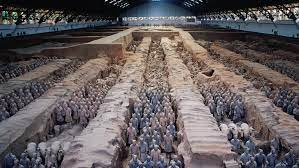
The position of the clay soldiers explains the military organization of ancient Chinese army. Arguably, Emperor Qin organized his army in a manner illustrated by the clay soldier’s formation. Each of the clay soldiers has a unique facial expression and they are positioned according to rank 4. The soldiers have varying height conferring to their role in the army, with the tallest ones being the generals.
They were initially painted and armed, but with time most of these artistic depictions have been lost. Not only do they have varying heights and facial expressions, but also have different roles in the Qin’s army. The commanders are also distinct from the normal infantry, with unique uniforms and hairstyles 5. These soldiers are seen to be organized into three separate pits, with the largest being the main battle army.
This pit contains foot soldiers and horses, and it can be deducted that the ancient Chinese military at the time of Qin was structured in a similar way. The second pit is smaller from the first one, and is considered a flanking army; this is a military tactic where soldiers move around a flank to gain a better position against an enemy and presents an offensive power that can be concentrated in the army’s front 6. The Chinese flank army composed of archers and chariots, while the third pit represented the headquarters.
The Chinese people at the time appear to have possessed some of the best military technology of their time. The figures not only depict warriors but also chariots and horses; it is estimated that the sculptures contain 130 chariots, 150 cavalries and about 520 horses 7. The excavation of the pits has brought to light the presence of 40 000 bronze weapons, ranging from crossbows, spears, arrowheads and axes.
These weapons have remained intact after more than 2 000 yeas of potential vandalism 8. The designers used chrome plating technology to protect the weapons, a technique first used by the Germans in 1937 and Americans in 1950 .This indicates that the Chinese had access to complex military technology unparalleled at that time, and reveals their mastery of ancient Chinese metallurgy.
The swords and crossbows found at the tomb are believed to have been new when they were buried. The blades signpost evidence of sharpening on a spinning whetstone. An analysis of the heads of arrows and crossbows further indicate use of bronze alloy and tin 9.
Social Structures
There is currently no written primary source that talks directly about the Terracotta Army structures. While excavation has not been fully done to establish any writings, inscriptions or eyewitness accounts of the warrior sculptures, historians are still looking for better technology to examine the tomb of Qin. The only existing information about Emperor Qin, although not directly related to the clay statues artifacts, comes from one of the advisors of the emperor, known as Wei Lao.
He was one of his closest advisors and offers description that can help tourists viewing the soldier figures develop a clear visual illustration of the first ruler of a united China. Lao states that “his chest is like that of a bird of prey and his voice like that of a jackal. He is merciless, with the heart of a tiger or a wolf.” 10. It is perhaps the fear of death that not only made him a staunch believer in life after death, but also coerced him to oppress common Chinese into building the clay structures.
The funerary statues have gained a wide range of social-economical applications, and continue to serve as a fundamental Chinese heritage 11. Their usage in advertising campaigns endorsing a wide range of goods and services elaborate their social cultural places in the Asian hemisphere. Companies dealing with alcohol, computer accessories and museum quality reproduction of the soldiers in different positions and poses are common in the global marketing world.
The Warriors appear in covers of tourist’s media channels to tell the world about the social-political life of ancient china people of the second century BC. However, the Terracotta Army of Qin fails to provide sufficient information about the Chinese past that they seem to depict. There is no mention of the buried Qin’s army in ancient Chinese recordings, despite that fact that China boasts of thousands of years of written history. The only thing that links the statues to Emperor Qin is their proximity to his tomb, and historians like Chen Jingyuan have stated that the figures may not be related to the first emperor 12.
Given that the soldiers in the funerary tomb have no known history; their social meanings in the Chinese culture have been defined via narratives of memories and practices 13. This does not imply a person’s actual recall of the meanings of the soldiers, but rather the collective expression of significant representations of the ancient China was felt as a personal encounter. Images of the soldiers ready to guard Qin in the afterlife portrays the ruling class of the 2nd century China as revolutionaries and progressive people, lively and with high spirit of that time.
The most spectacular thing is not with the soldiers themselves, but the artists of the time who crafted the figures, and the normal soldiers that each model takes after. The collection of the figures is a real representation of the artists skills during Qin Dynasty. Therefore, the clay soldiers have a fundamental value- they are aesthetic objects. Their connection with the real armies of the past and their responsibility towards the emperor is partly misplaced 14.
The models do not just serve to tell visitors of the ancient political ways of Qin Dynasty, but are a creation of the Chinese artisans. People should therefore look at the soldiers with a multi-dimensional perspective when trying to understand the social-political life of ancient China. This is because the figures have little connection with politics of Qin, but are a true cultural delineation of the skills and innovative nature of common Chinese men and women of the time. It’s not the emperor or the ruling members that made the clay models we have today, but Chinese of humble backgrounds.
The figures symbolize dissatisfaction with the government of Qin, and are a reflection of the social contradictions of the empire. The exploitative character of the Emperor towards the normal Chinese is a lesson visitors can decipher from the statues. These were models designed to sacrifice their lives protecting the emperor in the afterlife. Even though the emperor did not use living soldiers to take care of him during the afterlife, the thought of having model warriors after his death is a concise reflection of his disregard for other people’s lives.
Furthermore, the look on the soldier models is clear illustration of unhappiness, dissatisfaction and anger of the common Chinese citizens 15. The director of the Terracotta Army Museum, Yuan Zhongyi, describes the value of the soldier’s figures and their impact. He talks about the humble and oppressed people in the lower social classes during the Qin Dynasty, who were the creators of the warrior figures.
He notes that “It was said that severe and hard labor, including forced military service, had been imposed on the people during the first emperor’s reign. The severe punishment meted out to those who disobeyed brought untold suffering to the people” 16
On the contrary, some historians argue that the soldier models portray people’s willingness to serve and protect strong leaders and policies that result to development. One such is who believe that Qin Shihuan was a mighty military strategist who united China during the ancient feudal society 17. He established social political measures that eventually made the Dynasty prosperous. His actions led to the establishment of united China, and Qing is described as a reformer who put much emphasis on agriculture.
The emperor implemented policies that ensured smooth farming and demarcation of counties. He unified six large Chinese states into one nation, and introduced joint laws in his empire. He further standardized measurements, currency, and weight while putting emphasis on a single way of writing. He succeeded in joining together older defenses in the northern and western borders, leading to the formation of the initial Great Wall of China.
But this view has been challenged by the fact that Qin Shihuang was a tyrant despite his contributions to china’s economy and politics. Li Si, an official for the Kingdom of Qin, presents a primary source of the life at the courts of the empire. He was a prime minister to the emperor and was one of the leading proponents of a legalist political structure that resulted to oppression of citizens. In support of burning of books and execution of scholars against his policies, Li Si wrote to the emperor urging to take action.
…Your servant suggests that all books in the imperial archives, save the memoirs of Qin, be burned. All persons in the empire, except members of the Academy of Learned Scholars, in possession of the Classic of Odes, the Classic of Documents, and discourses of the hundred philosophers should take them to the local governors and have them indiscriminately burned. Those who dare to talk to each other about the Odes and Documents should be executed and their bodies exposed in the marketplace 18
He therefore burnt many scholarly books to prevent people from thinking freely, fearing opposition and rebellion. He torched 460 scholars alive after they learnt of his arrogance. Subsequently, he commissioned building of luxurious structures through hard labor, heavy tax and unbearable military supervision. It was these harsh measures that resulted to rebellion after the emperor’s death in 210 BCE.
The army sculptures suggest that ancient China of Qin dynasty had established foreign relations with Western people. There is a theory that claims the artists responsible for designing Terracotta Army were under the stewardship of European foreigners 19. Writing for National Geographic, William states that the Terracotta acrobats and the bronze statues of ducks, cranes and swans at the tomb of Emperor Qin exhibit Greek influence.
The skeletons have been examined and scientists have confirmed European presence through DNA tests. These Greek artists could have traveled long before Marco Polo from the Hellenistic areas of Western Asia and arrived in China where they trained the local population. Mitochondrial DNA indicates that Europeans intermarried with Chinese during the reign of Emperor Qin, who possibly brought the skills of life-size sculpture making.
The Chinese did not have life-size sculpture making skills before the unification of China, and that they only begun the technology at the time of Qin. This is enough reason to make some scholars purchase the idea of western influence in the funerary tomb making. To supports this theory, some people claim that the reign of Alexander the Great, whose empire stretched to the present day India, made it possible for Chinese artists to encounter Greek arts. The DNA test this confirms that Chinese and Europeans encountered each other at an earlier date.
The Chinese were religious people who put much emphasis on life after death. This can be deducted from one of the emperor’s main reasons for commissioning the construction of the soldier models- to protect him in the afterlife. The Chinese did not only try to experience life after death, but also sought ways of achieving immortality. They made bronze objects representing immortals, in the hope that these objects would attract the immortals to visit the people.
These religious beliefs were in part influenced by the advancement of legalism philosophy 20. This view holds that people are inclined to do more wrong than right given that they are motivated by self -interest desires. It can be argued that this philosophy was a contributing factor to the harsh treatment of citizens by the Qin rulers. Immediately after rising to power, the emperor made legalism the official philosophy of Qin Dynasty and banned all other religions 21. Confucianism was highly condemned due to its insistence that human beings are basically good and that people need to be channeled to right to live a good life.
Like many ancient societies of the time, Qin Dynasty was a male dominated society where women’s role in government was highly limited. 10 bones of young were buried with precious jewelry of Gold and Pearl has been discovered at the site 22. It is argued that these women were the emperor’s concubines, who were murdered and mutilated as part of his funerary protocol. They were to accompany him after death.
The role of women in Qin dynasty was to stay at home, take care of men and children and perform household chores. There are no female soldier in the Terracotta Army figures, suggesting that women had no place for politics and other sensitive matters. Male dominance at this time ensures that women had no voice in decision making process.
Conclusion
The Terracotta Army of Qin not only depicts the ancient Chinese culture in a register of history, but also illustrates the past society in a manner that people can create memories related to the past from a social experience. The sight at the museum can be remembered as real-life experiences with the ancient warriors and the past Chinese culture. The museum lets tourists experience and understands the daily life of the past Chinese society, and how political and social structures influenced people’s lives.
Largely a legalist society, the government had total control over the lives of its subjects. This can seen by the suffering of creators of the statues who were normal citizens committed to the will of their master. While the reason for making the pottery figures has always been believed to protect the emperor, the real purpose has remained a mystery.
Qin was a tyrant, and even if he united China and reformed many sectors of the society, his obsession with power and misplaced desires to continue ruling China after his death resulted to suffering of millions of people. He managed to establish the Terracotta Army and the Great Wall through brutality and execution of opposition. In pursuit of power after death, Emperor Huangshi embraced legalism and forced Chinese artist to prepare way for his afterlife command center.
Endnotes
1. Bonaduce, Ilaria, Catharina Blaensdorf, Patrick Dietemann, and Maria Perla Colombini. “The binding media of the polychromy of Qin Shihuang’s Terracotta Army.” Journal of Cultural Heritage, (2008): 103-108.
2. ibid
3. Davies, David J. “Qin Shihuang’s terracotta warriors and commemorating the cultural state.” Places of Memory in Modern China (2011): 17-49.
4. Liu, Z., A. Mehta, N. Tamura, D. Pickard, B. Rong, T. Zhou, and P. Pianetta. “Influence of Taoism on the invention of the purple pigment used on the Qin terracotta warriors.” Journal of Archaeological Science, (2007): 1878-1883.
5. Ibid
6. Davies, David J. “Qin Shihuang terracotta warriors and commemorating the cultural state.” Places of Memory in Modern China (2011): 17-49
20. “Leadership and Management in China: Philosophies, Theories & Practices” (Cambridge University Press, 2008).
21. ibid
22. Carelli, Francesco. “The terracotta army, London journal of primary care” (2007): 56-57.
Bibliographies
Bevan, Andrew, Xiuzhen Li, Marcos Martinón-Torres, Susan Green, Yin Xia, Kun Zhao, Zhen Zhao, Shengtao Ma, Wei Cao, and Thilo Rehren. “Computer vision, archaeological classification and China’s terracotta warriors.” Journal of Archaeological Science 49 (2014): 249-254.
Carelli, Francesco. “The terracotta army.” London journal of primary care 1, no. 1 (2007): 56-57.
Davies, David J. “Qin Shihuang’s terracotta warriors and commemorating the cultural state.” Places of Memory in Modern China (2011): 17-49.
Ilaria, Bonaduce, , Catharina Blaensdorf, Patrick Dietemann, and Maria Perla Colombini. “The binding media of the polychromy of Qin Shihuang’s Terracotta Army.” Journal of Cultural Heritage 9, no. 1 (2008): 103-108.
Leadership and Management in China: Philosophies, Theories & Practices. (Cambridge University Press, 2008).
Liu, Z., A. Mehta, N. Tamura, D. Pickard, B. Rong, T. Zhou, and P. Pianetta. “Influence of Taoism on the invention of the purple pigment used on the Qin terracotta warriors.” Journal of Archaeological Science 34, no. 11 (2007): 1878-1883.
Matten M,. “Places of memory in modern China, history, politics, and identity”(2011). Vol. 5
Portal, Jane. The first emperor: China’s terracotta army. Harvard University Press, 2007.
Theodore, W. and Bloom, Irene. “Sources of Chinese Tradition“,(1999). 2nd ed., vol. 1 (New York: Columbia University Press, Columbia University Press).
Wang,. Chongren. ” Gudu Xi’an The Ancient Capital of Xian” (1981).
There are two types of sampling; probability sampling and non-probability sampling. Of the two, probability sampling is the best, since there is a higher likelihood of obtaining a representative sample, and sampling error can be taken into account. In this report, we will discuss exclusively about quota sampling. This is a non-probability sampling. By definition, this is a sampling technique which aims at obtaining representative data from a sample.
Let start with the definition of some terms. Sample, is simple terms means a subsection, subgroup, or portion of the population. Sampling, is the process of acquiring a representative portion of population and population is the entire elements under investigation.
There are a number of reasons as to why investigators may opt to use a sample instead of the entire population, despite sampling error. First, it has an economical advantage since fewer resources are used than when a census is carried out (Levy & Lemeshow, 2013). The sampling has timelessness factor, where the information required can be obtained faster than when a complete enumeration of objects is carried out.
Further, the researcher sort to use sampling when the population has infinite and when some of the population units/objects are inaccessible. Lastly, but not least, when the assessment destructs the objects under investigation (Levy & Lemeshow, 2013). Not forgetting, that sometimes a carefully selected sample may represent the population well than a sloppy conducted census. That is, the sample will truly mirror the population from which it was drawn from (Hu et al., 2017).
Literature review
As stated earlier, quota sampling is a nonprobability sampling. A nonprobability sampling in accordance with (Trochim & Donnelly, 2014) is a technique that is based on the judgement of the researcher. The collected sample has the same proportion of the mother population with identical traits and the targeted phenomenon. More importantly, the final sample obtained should have the composition criteria of the quota set. Since this paper discusses one of the nonprobability sampling, it is imperative to highlight some principles of nonprobability sampling.
Principle of quota sampling
In this type of sampling, the quantity of each sampling is find out in advance, however investigators look to find in each quota. For each type, the quotas are of fixed numbers, which the investigators would like to add in the sample. Let consider an example in which an investigator would like to have a sample in which the proportion of each gender by different age levels are approximately the same and the sample size is 1000. Let the population proportion is given in Table 1 and the quota of individual type of sampling unit is the sample size multiplied by the population proportion and the results are shown in table 2. (Chang-Tai Chao)
Table 1 Population Proportion
Age
Gender
20-29
30-39
40-49
50-59
60-Above
Female
0.10
0.10
0.09
0.11
0.12
Male
0.10
0.08
0.1
0.11
0.09
Table 2 Quotas
Age
Gender
20-29
30-39
40-49
50-59
60-Above
Female
100
100
90
110
120
Male
100
80
100
110
90
Principles of nonprobability sampling.
Quota sampling falls under the class of non-probability sampling. Sampling involves the selection of a lot of the population being considered. In probability sampling each element in the population has a known nonzero chance of being selected through the utilization of an irregular determination system, for example, basic arbitrary testing. Non-probability examining does not include known nonzero probabilities of choice. (Paul J. Lavarakas) Or maybe, subjective techniques are utilized to choose which components ought to be incorporated into the specimen.
In non-likelihood inspecting the populace may not be very much characterized. Non-probability examining is frequently isolated into three classifications: purposive inspecting, comfort testing, and share examining. Share examining has a few similitudes to stratified inspecting. The essential thought of standard testing is to set an objective number of finished meetings with particular subgroups of the number of inhabitants in intrigue.
The testing strategy then continues utilizing a nonrandom choice component until the coveted number of finished meetings is acquired for every subgroup. A typical illustration is to set half of the meetings with guys and half with females in an irregular digit dialing phone talk with study. A specimen of phone numbers is discharged to the questioners for calling. Toward the begin of the overview, one grown-up is haphazardly chosen from a specimen family unit. It is by and large more hard to get interviews with guys.
So for instance, if the aggregate sought number of meetings is 1,000 (500 guys and 500 females), and meetings with 500 females are gotten before meetings with 500 guys, then no further meetings would be directed with females and just guys would be arbitrarily chosen and met until the objective of 500 guys is come to. Females in those specimen family units would have a zero likelihood of choice.
Additionally, on the grounds that the 500 female meetings were in all probability gotten at before call endeavors, before the example phone numbers were altogether worked by the questioners, females living in harder-to-achieve family units are more averse to be incorporated into the specimen of 500 females. Shares are frequently in light of more than one trademark. For instance, a standard specimen may have questioner appointed shares for age by sex by business status classes.
For a given example family unit the questioner may request the rarest gathering in the first place, and if an individual from that gathering is available in the family unit, that individual will be met. On the off chance that an individual from the rarest gathering is absent in the family, then a person in one of the other uncommon gatherings will be chosen. Once the quantities for the uncommon gatherings are filled, the questioner will move to filling the amounts for the more typical gatherings.
In that regard are both hypothetical and down to earth justification for using this kind of examining in research. In hypothetical reasons, this progress of information testing permits the utilization of subjective, blended research techniques and furthermore quantitative strategies. (Paul J. Lavarakas) By the time, when quantitative research is received, this inspecting procedure is oftentimes if not generally seen as sub-par compared to likelihood examining. This system helps in accomplishing objectivity of the specialist.
For instance, the analyst may utilize portion testing for intentionally protecting the incorporation of an uncommon segment of the populace. In any case, it ought to be specified that the fragment won’t not vary altogether contrast from the parent populace. The most common example of the limitation of this type of approach pre-election surveys to anticipate the consequences of the 1948 U.S. presidential decision. The field questioners were offered shares to fill in view of qualities, for example, age, sexual orientation, race, level of urban city, and financial status.
The questioners were sans then to fill the standards with no likelihood examining system set up. This subjective choice technique brought about an inclination for Republicans will probably be met inside the quantity bunches than Democrats. This brought about the example containing an excessive number of Republicans and bringing on the pre-race surveys to inaccurately foresee Thomas Dewey (the Republican applicant) as the victor.
Share inspecting is infrequently utilized as a part of conjunction with region likelihood testing of family units. Zone likelihood examining systems are utilized to choose essential testing units and fragments. For each specimen portion (e.g., city obstruct) the questioner is told to begin at a side of the section and continue around the fragment, reaching lodging units until a particular number of meetings are finished in the portion.
A noteworthy issue with quota sampling is the introduction of the unknown sampling biases estimates in survey. On account of the 1948 U.S. presidential decision, the testing inclination was related with an excessive number of Republicans being chosen. Another issue with quantity examining is that the inspecting technique regularly brings about a lower reaction rate than would be accomplished in a likelihood test.
Most amount tests quit endeavoring to finish interviews with dynamic example families once the standards have been met. In the event that a lot of test is dynamic at the time the amounts are shut, then the reaction rate will be low. (Paul J. Lavarakas)
However, some practical reasons of using quota sampling are that; this approach gives the investigator exploratory power to determine whether the problem exists when no theory exists that such problem exists. Therefore, the researcher may opt only to use sample that he/she thinks will portray the problem, which saves resources and time.
Ethical approach is important when deciding the sampling technique, as it may be unnecessary to subject fewer participants for an in-depth examination. Above all, it is imperative to determine whether quota sampling is a better sampling method to be used with the designed research strategy.
In accordance with (“Definition of ‘Quota Sampling’ – The Economic Times,” 2017) quota sampling is simple, yet effective approach a researcher can gather information in the initial phase of research. As earlier pointed out, quota sampling is ideal when the researcher wants to investigate whether a certain problem exists. As an example, there might be a notion that people in Iowa are against the death sentence.
A researcher may be interested in assessing the situation. However, the researcher may want to include people from Muslim religion. The researcher sets the minimum percentage of Muslims to be included in the sample, say 5%. Through this, the researcher is able to compare the views of people, including from the set quota.
Is quota sampling adequate method as an alternative to probability sampling?
A research was performed to assess whether quota sampling is an alternative to probability sampling (Yang & Banamah, 2014). Although probability sampling remains popular among many researchers and businesses. The research was driven by the fact that collecting data have become expensive and the response rate decreased.
Therefore, the researcher thought that quota sampling as a nonprobability sampling can be used as an alternative to probability sampling. The representativeness of quota sampling with probability sampling was compared as well as the assessment of the between the two sampling techniques using the survey topic and the response rate as factors (Yang, & Banamah, 2014).
It was established that the survey topic greatly influences the response rate, and response rate correlates with sample mean. Nonetheless, the researcher concluded these for that reason; quota sampling is not an alternative to probability sampling (Yang, & Banamah, 2014).
The researcher, in this case, first impose the restrictions or the limit number of subjects to include. That is the researcher set a quota of each category. This is done to ensure that the major population or characteristics are well represented (Sharan, 2009). For instance, it may be known that the number of female workers in a certain bank is 60% and 40% are males. The researcher may be interested in 100 sample people. Therefore, he samples 60 females and 40 males, and when 40 males are obtained, even if a potential and informed male come he will not sample them. This technique helps in limiting the researcher’s choices ((“Quota sampling – Research Methodology,” 2017))
In this case, the researcher in not limited in any way and thus selects the subjects as he/she wishes. This is considered as a sample of convenience, or simply it is less restrictive. The researcher just specifies the minimum number in each category, and one does not need to know the proportion. This sampling technique is more of a convenient sampling since the researcher can opt to use any number of participants so long as they meet the minimum requirements (“Quota sampling – Research Methodology,” 2017).
When to use quota sampling
There are scenario or situations that call for the researcher to use quota sampling technique. First, is when the researcher or the organization do not have sufficient time and resources to carry out stratified sampling. Therefore, due to effective and ease of conducting, the researcher uses this technique. Second, this sampling method is used when the accuracy of the information is not important.
For instance, when the researcher is conducting a pilot survey, or when there is no adequate information about the research topic. Also, when the researcher is just interested to study some subsections or subgroups, he sorts to use this nonprobability sampling. That is, when the interest is limited to certain traits, this method is ideal. If the main interest of the researcher is to determine the relationship between groups, then the ideal method is quota sample. Also, when the main aim is to compare the groups.
The sampling frame may be unavailable. Notably, mostly, if not all, of probability sampling, required. In the absence, of the list of all the subjects, the researcher uses this technique. That is, since the probability sampling the researcher should know the selection likelihood of each unit in the population. Lastly, the research accuracy is not important and also the results are not for generalization purposes.
Thus the researcher can use quota sampling technique. This method results should not be used for generalization purposes since the units selected may sometimes not truly represent the parent population. Therefore, the researcher can purposefully select quota sampling to investigate certain predefined traits.
Steps of creating quota sampling
There are three acceptable steps in creating quota sampling:
Categorize or stratify the population.
First, the researcher divides the population into mutually exclusive groups. For instance, a researcher can stratify by gender, race, ethnicity, career, courses taken, religion and so on.
Computing quota for each stratum.
The researcher needs to determine the number of subjects to be used in each category. As illustrated earlier, the proportion of each category can be determined depending on the population proportion. Also, the researcher may set purposively a quota to a sample that might have a small likelihood of being sampled (as discussed in the Muslims case). In some cases, the researcher may not involve proportions when he just selects conveniently.
Continue selecting subjects until quotas for each stratum are obtained.
The researcher continues with selection until the exactly required number is obtained. When the quota of one group is attained, the researcher does not select any other subject even if he obtains a viable sample. However, he/she continues to select items for the other groups that quota has not been attained.
Difference between quota sampling and stratified sampling
Notably, the two sampling techniques are different, although they might be confused. First, in quota sampling the individuals are not selected randomly, that is why it is a nonprobability sampling. The samples are selected based on the researchers’ convenience. On the other hand, the stratified sampling, subjects are randomly selected into the sample (Sharan, 2009).
All the units or subjects in the population have an equal likelihood of being included in the final sample. In quota sampling, there are no call-back for particular samples. This implies that when a subject is missed, the researcher goes on and uses the available subjects. On the other hand, STRICTLY, there is a call-back, since if there are no call-backs the sampling will not be different from quota sample (sample of convenience) (Sharan, 2009).
Last but not least, since quota sampling is based on the judgement of the researcher it is full of biased and the most common type is a non-sampling error. Stratified sampling is not subjected to biasedness since the elements are randomly selected the only common error is sampling error.
Advantages of quota sampling
This sampling technique is helpful when the researcher is unable to obtain a probability sample, but still, the researcher is aiming at obtaining a representative sample. This technique is adopted as a non-probability sampling that is closely equivalent to stratified sampling. Second, this technique is easier and quicker to carry, unlike probability sampling like stratified sampling (Trochim & Donnelly, 2014).
For this reason, this sampling method is adopted by masters’ students in dissertations where the target populations can be divided into categories. When quotas are used, they ensure that some groups are not overrepresented or other underrepresented. That is the main reason why in the computation of minimum units to be included from each category (quota) the population proportion is useful (Trochim & Donnelly, 2014).
A good example is as illustrated earlier, where a population consist 60% female and 40% male. These proportions were used in obtaining a sample of both categories, out of 100 sample required 60 females were selected, and 40 males were selected. Also, when quota sampling is used, there is stratification, which is ideal when the researcher wants to compare the two strata.
A good example is; in an organization, the researcher may select male and female and compares their average. The averages will determine which gender gets higher pay. Lastly, this sampling method is not dependent on the sampling frame. This implies that it can be used when a list of all subjects is absent, quota sampling can still be used. Therefore, it remains the most appropriate sampling technique when sampling frame is not there.
Disadvantages of quota sampling (limitation)
There are limitations of quota sampling. First, since the sample are not obtained through probabilistic means, it is impossible to estimate the sampling error. It is possible for subjects to be sampled based on the researcher’s convenience and resource usage consideration. This leads to sampling bias. Results from such data cannot be used for generalization purposes, or cannot be used in inferential statistics. In particular, the results are only recommended for the sample used and not the entire population.
Therefore, limiting generalization. Another limitation is that the population should be able to be dived into two distinct groups. Otherwise, the process of data collection will not be possible. As examples, indicated, the population should have mutually exclusive strata; like gender, male and female (if there are no transgender issues). When the sample requirements are required to be compared, more categories are added.
A good example is, when the researcher is interested in assessing how male and female supporting death sentence changes depending on the religious such as the Muslims and Christians. Notably, the subject should be in one stratum and here there are four criteria. Therefore, the researcher needs to collect data from “male Muslims,” “Female Muslims,” “male Christians” and “Female Christians.”
Evidently, more subjects need to be sampled, increasing the cost and time of carrying out the survey. Further, the researcher needs to understand the population well, so that he/she can make the right stratification, calculate quota, and lastly keep on sampling to meet the quota specifications. Without proper knowledge, one is not able to use quota sampling as he/she might to obtain a representative sample.
Although the sample obtained may be proportional to the population, some of the characteristics may not be disproportional. Incompetency of the researcher or lack of proper skills may increase the biasedness of the sample since the subjects’ collection is based on the researcher’s judgement (Sharan, 2009). Thus, is of great importance that before, using quota sampling researcher should have adequate skills to collect representative samples.
Conclusion
There are a number of important aspects of quota sampling highlighted in this paper. For instance, it has been indicated that this technique is a non-probability sampling, where the selected samples represent certain characteristics. Two types of quota sampling; controlled and uncontrolled sampling were also adequately discussed. When this sampling method should be used was also highlighted among another important aspect. As highlighted, the three steps are used in designing data collection using quota sampling method.
There are important factors that have been pointed out, in the literature of this paper, such as; the question whether quota sampling is a good alternative to probability sampling. Based, in the previous study by prominent scholars, it was established that this method is not is not an alternative to probability sampling.
A clarification was made on the underlying difference between stratified sampling, despite the two having some similarities like stratifying the population into mutually exclusive first. To support some claims or issues brought forward, different examples were given designed to clarify, how the quota sampling will work.
Some of the reasons for using quota sampling brought forward include, the researcher only selecting groups that only interests him. Investigate some traits or characteristics that have not been investigated before, or there is no preexisting literature and when the researcher is interested in comparing the groups of interest.
Despite this being a nonprobability sampling, it has proven to be helpful, especially when the sampling frame is absent. That is, all probability sampling techniques are dependent on the availability of the list of all population subjects. Therefore, the only option is resorting nonprobability sampling. This is also the ideal method when the researcher has less time and limited resources, as it is considered an alternative to stratified sampling.
It is advisable to use this method when the researcher has a deep understanding of the steps and process of data collection. Also, the researcher should avoid so much biasedness so that he can have a representative sample. Lastly, the findings obtained using data obtained via this technique should not be used for inferential purposes; rather they should make conclusion about the sample used.
References
Chang-Tai Chao, “Quota Sampling” (Incomplete information provided about the journal paper)
Hu, X. F., Young, K., & Chan, H. M. (2017). Background Bivariate random-effects models represent a widely accepted and recommended approach for meta-analysis of test accuracy studies. Standard likelihood methods routinely used for inference are prone to several drawbacks. Small sample size can give rise to unreliable inferential conclusions and convergence issues make the approach unappealing. This paper suggests a different methodology to… BMC Medical Research Methodology, 17(1), 1-12. https://www.infona.pl/resource/bwmeta1.element.springer-a4c4ef0e-2be0-30d3-9d87-a2c2297724c4
Yang, K., & Banamah, A. (2014). Quota sampling as an alternative to probability sampling? An experimental study. Sociological Research Online, 19(1), 29. doi: http://www.socresonline.org.uk/19/1/29.html
Paul J. Lavarakas, “Encyclopedia of Survey Research methods,” Volume 1 & 2
Want help to write your Essay or Assignments? Click here
Non-financial Rewards effect on Organizational strategy
IMPLICATIONS OF NON-FINANCIAL REWARDS ON DRIVING ORGANIZATIONAL STRATEGY AT THE COMMUNICATIONS AUTHORITY OF KENYA (CAK)
ABSTRACT
A major challenge in an organization is motivating its employees to become efficient with their tasks and how to encourage the workforce to become competitive in an inevitably uncertain and dynamic environment. Thus, to uphold a higher level of productivity, the organization must run an effective strategy to motivate its employees. For this reason, there are managers in several organizations who see a reward system as an imperative factor that can influence its employee’s behavior.
These involve intrinsic and extrinsic motivation. Intrinsic motivation is driven by a natural sense of accomplishment; such as professional growth and personal achievement. Extrinsic motivation, on the other hand, is a tangible reward; and unlike an intrinsic reward system, the extrinsic reward can be identified as materials that can motivate its employees, such as salary and bonuses.
The objective of this study is to evaluate the impact of non-financial rewards on driving organizational strategy at the Communications Authority of Kenya (CA). Moreover, this study assumes that the use of non-financial rewards can retain employees in the organization.
1.1 Background of the Problem
The core objective of any business enterprise is to generate consistent and sustainable profits. All the internal functions must be aligned with this objective. Human resource management plays a critical role in harnessing skills and expertise needed to convert resources to finished goods and services.
The managers recruit and train the employees so that they meet individual and organizational goals for optimal performance. Doing so requires the application of strategies that keep the employees motivated to perform. Lack of motivation is detrimental to a firm since it leads to stagnation in performance and it’s the cause of high turnover rates.
As such, a Human Resource Management (HRM) department is mandated to ensure that a firm’s production capacity is optimal to ensure that performance is high by designing and implementing strategic human resource approaches. One of the main strategies that human resource managers can apply is a reward system (Irshad 2016).
Zani et al. (2011) asserted that most of the successful public enterprises achieve better results and an increase in employee engagement by associating rewards directly to job performance. The strategy is not only applicable to sales personnel but to all levels and functions of a business. However, success of the reward system is guaranteed if proper implementation is observed.
Instituting a reward-based organizational culture may seem to be a short-term vision, but most successful managers claim that it’s an impeccable instrument for attaining success. A reward system unlocks employee capability, retains and motivates performers, and consequently generates higher revenues (Zani et al. 2011). Other benefits associated with a reward system include clear alignment of employee’s career path, a focus on development and growth, an increase in employee engagement and strategic decision making, and low turnover.
According to a research done by Giga Information Group on the impact of reward system to job performance, the researchers found out that retention improves by 27% when a firm exercises a reward system culture (Richard, 2010).
Like all strategic initiatives, a reward-based performance system requires comprehensive planning and flexibility. It should also integrate with HRM, the goal of the firm, and performance measurement. Since there hasn’t been identified a customized approach, managers should tailor the reward system to the current HRM processes and uniqueness of the firm. The approach is not just about setting up a framework and workers acting upon it.
Emotional and psychological realities have to be set up by asking the right questions and linking them to the human side of the incentives. While some employees are motivated by financial rewards, others get motivated through non-financial rewards (Lawler 2011).
According to Mowday et. al. (2013), some important questions that HRM should ask before deciding to apply a reward system is: “Are the tasks that people are taking moving the organization forward? Are the managers engaged with the employees throughout the year to make sure they carry out, and, achieve their objectives? Are individuals delivering against what is expected? Who is and who isn’t?
Are you objectively ensuring that bonuses, salary increases, and promotions are given to those high-performing individuals that you can’t afford losing?” These questions are paramount as they enable the managers to design a program that fits the needs of the firm; either a financial or non-financial reward system. Moreover, the employees should have full trust with the management in fairly administering the scheme and possess the needed skills and abilities to improve performance.
A reward system is in the form of financial or non-financial incentives. Financial incentives lead to extrinsic motivation whereas non-financial incentives generate an intrinsic motivation. It is crucial for managers to understand the difference between the two reward systems to determine the one that suits an organization. A financial reward system is tangible and usually involves the practice of provision of bonuses, commissions, and other monetary incentives to appraise employees for a job well done. The rewards are also given when an employee attains a certain target (Karwowski, 2014).
Economic volatility has seen many firms try to find ways to supplement financial rewards by concentrating on the non-financial rewards. Richard (2010) defined nonfinancial rewards as those not consisting of an employee’s salary. Often, workers tend to feel unappreciated by their firms due to layoffs, stressful working conditions, and increasing demands leading to their disengagement.
Employees can perform optimally if they feel valued, appreciated, plus a sense of job security. As such, non-financial incentives are programs that address these needs. The common non-financial incentives are reward, recognition, provision of career advancement opportunities, job security, and flexibility. The perceived importance of non-financial rewards differs across employee levels and it’s up to the HRM to establish what is appealing to the different groups.
For example, a fast growing firm may focus on work environment but a slow growing firm can focus on career growth and development. Investing in employees by appreciating them in diverse creative ways is a critical strategic approach that managers can apply in instituting a non-financial reward system. It is for this reason that non-financial reward system formed the basis of the study by focusing on the Communications Authority of Kenya (CA).
Just like other large organizations, CA faces the challenge of maintaining the motivation and productivity of its employees as it tries to upgrade its performance. The organization has previously applied both the financial and non-financial rewards. It therefore drives the question of the implications that non-financial rewards have had in facilitating the implementation of the firm’s strategic goals.
1.2 Statement of the Problem
The challenge of most organizations is establishment of an efficient rewards systems aimed driving the strategy of the firm. One of the affected firms is Communications Authority of Kenya (CA). According to Murray et al. (2014), it is imperative for managers to keep track of the needs of employees to match the expectations of the organization towards productivity.
Most employees tend to underpin the impact of non-tangible rewards and seek satisfaction in tangible or extrinsic rewards. Thus, firms should involve employees in creating nonfinancial incentives, and ensure they understand each employee level and expectations for better results. According to a study done by Zani et al. (2011), the results stipulated that non-financial rewards such as recognition, praise, and kudos from the employers or the organization had a greater impact on the employee’s behavior and motivation towards their jobs.
Moreover, according to Westover & Taylor (2010), intrinsic rewards provide a clear view towards job satisfaction. Within their study, they had a wave of respondents towards non-financial rewards related to job satisfaction. In that case, it was determined that non-financial rewards have a greater value than providing tangible rewards to the employees.
However, the context of wages and bonuses is an important factor for employees and can continue to function within the organization. In the case of a research by Griffin and Moorehed (2014), the author asserted that financial rewards initially had greater impact onspecific employees. However, as the programs continue over a long period of time, managers should combine financial and nonfinancial rewards since they equally affect the employees’ behavior which in turn reduces employee turnover.
To simplify the result, both equities are important when done in complimentary proportions. This study emphasized on the impacts of non-financial rewards in driving performance in an organization. This is in order to understand how to retain skilled employees and subsequently sustain a successful work-related culture and organization without the use of monetary incentives.
The Communications Authority in Kenya (CA) had recognized both rewards system; however, sustaininga motivated and skilled employee had been their utmost dilemma, attaining minimal improvement in employee production and rate. This study seeks to address the gap that will be filled in the firm, and other related entreprises, if non-financial rewards are to be implemented in driving the strategies of the organization.
Moreover, this study also gives room to address criticisms and oppositions that may arise if non-financial rewards are introduced in different departments within the Communication Authority of Kenya. Furthermore, this study seeks to determine the employees’ flexibility towards a different form of rewards rather than aiming for tangible rewards.
References
Armstrong, M., Brown, D., & Reilly, P. (2011). Increasing the effectiveness of reward management: an evidence‐based approach. Employee Relations, 33(2), 106-120. http://dx.doi.org/10.1108/01425451111096668
Armstrong, M. & Taylor, S. (2014). Armstrong’s handbook of human resource managementpractice, 13th edition (1st ed.). London: Kogan Page.
Want help to write your Essay or Assignments? Click here
The Influence of Leadership Style on Employee Satisfaction and Productivity
1.0 Introduction
In this research study, the researcher seeks to find out how various leadership style influence the productivity and satisfaction of workers in the banking sector in the United States. My background/inspiration/motivation for the proposed research comes from the fact that I have previously worked in an organization in which the top leaders and managers did not recognize the effect of various leadership styles on employees’ satisfaction and productivity.
The employees were never inspired. They were also never motivated to carry out their job tasks very well. Therefore, the level of job performance of employees was frequently low. They were often dissatisfied and had low productivity. The research project is potentially important as it will help leaders and managers in organizations to adopt suitable styles of leadership that could help improve the satisfaction as well as productivity of their employees.
Most companies and organizations comprise employees and employers, or in other words, staff members and management or followers and leaders. Many leaders are goal-oriented (Ispas, 2012). To attain the desired goals, there has to be an interaction between followers and leaders or staff members and management, or employees and employers. The style of leadership that typifies the interaction between managers/leaders and their staffs/followers is most significant in terms of the productivity, efficiency and satisfaction of employees (Emery & Barker, 2012).
My work-based context which has led me to examine this topic is that while working in the company, I realized that as the workforce of the business organization, employees perform various duties needed to attain the company’s objectives and goals. I also realized that the satisfaction of employees is impacted by their view of their jobs and the company for which they are working for.
How employees perceive leadership behaviour is a vital predictor of employee job commitment and satisfaction. It is worth mentioning that how employees perceive the leadership behaviour of their leaders/managers is also related to their job attitudes and productivity (Mustafa & Lines, 2013). Styles of leadership could either discourage or motivate workers, which could consequently result in employees’ decrease or increase in their performance level.
Some of the sources of employees’ job dissatisfaction include absence of promotion prospects, insufficient compensation, and conflicting job demands from the leadership. For purposes of efficiency, an effective style of leadership is one which has a positive effect on the satisfaction of employees and leads to better job performance, productivity and effectiveness (Wong & Laschinger, 2013).
The functional areas of business that I am drawing upon include employee productivity and job satisfaction. Employee satisfaction is understood as how employees in an organization feel about their jobs and the various facets of their jobs (Keskes, 2014). The seminal literature that I would use to illustrate the academic underpinning of the research includes various peer-reviewed. Over twelve journal articles would be examined in the literature review section of this research paper.
When the company’s leaders and managers adopt suitable leadership styles such as transformational leadership, the leaders would be able to inspire and motivate employees who will be able to feel satisfied with their jobs. In turn, these employees would improve their job performance and work productivity which is good for the company’s financial bottom line (Li-Fen & Chun-Chieh, 2013).
Based on the findings of the study, implications for organizations would be described which would include a discussion on the most important leadership styles that comprise leadership behaviours that could really improve employee job satisfaction and productivity. Organizations with poor and ineffective leadership styles would have to alter their leadership approaches if they are to improve employee satisfaction and productivity.
The research would be really innovative since although existing published research would be utilized, they would be utilized within a dissimilar setting. At the moment, there is gap in the existing literature. No earlier research studies have looked into the influence of leadership style on the productivity and satisfaction of employees in various organizations in the United States.
Most previous studies that have explored this topic have focused on the impact of leadership styles on employees’ work performance in the context of organizations in Asia and not in America. As such, the study would fill this gap in literature by examining the topic in the context of companies in America.
2.0 Aims and objectives
Aim: the overall aim of this study is to delve how different styles of leadership influence the productivity and satisfaction of employees.
Objectives:
How does transformational leadership style influence employee job satisfaction and productivity?
How does transactional leadership style influence employee job satisfaction and productivity?
How does laissez-faire leadership style influence employee job satisfaction and productivity?
Which of these three leadership styles best influences employee job satisfaction and productivity?
The formulated research aim and objectives are appropriate for this study since they would help to determine how leadership styles actually affect employee productivity and satisfaction. They would also help to determine the best leadership style that company leaders and managers can adopt in order to effectively improve the job satisfaction and productivity of workers.
3.0 Identification and initial review of key literature
According to Deshpande and Hill (2015), leadership is understood as the process of influence on the subordinates, where the subordinates are inspired to attain the specified target. Another scholar, Yi-Feng (2014) noted that leadership is the process in which a person, a leader in this case, influences a grouping of people to attain a common objective.
McClean, Burris and Detert (2013) stated that leadership means using a leading strategy to offer inspiring motives and to improve the workers’ potential for development and growth. All in all, leadership refers to the process of influence between subordinates and leaders in which the leader influences the behaviour of the subordinate to attain the goals and objectives of the organization (Abualrub & Alghamdi, 2012).
The success of an organization in attaining its specified objectives and goals is contingent on the company’s top leaders and the styles of leadership they use. When suitable styles of leadership are adopted, the leader can affect employees’ commitment, satisfaction, and productivity on the job (Jamaludin et al., 2011). A leader plays a vital role in the accomplishment of a company’s objectives through creating a climate which influences the behaviour, motivation and attitudes of employees.
Employee productivity is crucial to a company’s bottom line. To perform better and improve their level of productivity, workers need to have the proper working conditions. Ahmad et al. (2013) stated that proper working conditions encourage staff members to put up the right behaviour or attitudes to their work. Employee job and organizational commitment relates positively to job satisfaction, organizational career support and supervisory support. Workers who find that their companies positively evaluate their job performance have a high likelihood of exhibiting a high job satisfaction level.
Employee satisfaction, as Wong and Laschinger (2013) pointed out, is how staff members feel about their work duties and the various facets of their work tasks. Employee satisfaction is a vital concern in all business organizations given that it is focused on utilitarian as well as humanitarian perspectives. Employees, as per the humanitarian perspective, should be treated respectfully and fairly.
As per the utilitarian view, employee job satisfaction could result in employee behaviours which affect organizational performance and functioning (Quintana, Park & Cabrera, 2015). Factors such as working conditions, company policy and administration, salary, supervision, personal life and security, relationship with other workers, the work itself, responsibility attainment, and recognition affect employee satisfaction with the job.
3.1 Leadership styles
This research study is focused on three styles of leadership: transformational, transactional, and laissez-faire. Transformational leadership: this style of leadership motivates the followers through appealing to higher moral values and ideals which could inspire the staff members to carry out their work tasks exceeding expectations and transform both organizations and individuals (Keskes, 2014). A transformational leader emphasizes the follower’s personal development and intrinsic motivation.
This leader seeks to align the needs and aspirations of the follower with the company’s desired outcomes. By this means, this leader is able to foster commitment of the followers to the company and inspire the followers to go beyond their anticipated job performance and productivity (Jackson, Alberti & Snipes, 2014). As regards the dynamic business environment and complex organizations of today, a transformational leader is mainly considered a perfect change agent with the ability to lead his/her followers during periods of high risk-taking and uncertainties.
The transformational leader’s main objective is basically to work to transform or change the needs of the follower and redirect their thinking. This leader inspires and challenges his/her followers with a sense of excitement and purpose (Ispas, 2012). The leader with this style of leadership exhibits the following characteristics: intellectual stimulation, individualized consideration, and charismatic leadership.
Transactional leadership: this leadership style is founded on bureaucratic authority as well as legitimacy in the organization. Transactional style of leadership gives emphasis to task-oriented goals, assignments and work standards. It is focused on employee compliance and task completion and is dependent on organizational punishments and rewards to influence the performance of employees (Emery & Barker, 2012).
A transactional leader gains legitimacy by using promises, praises and rewards which would satisfy the immediate needs of the followers. This leader engages his/her followers through giving rewards in exchange for the attainment of the set objectives and goals. All in all, a transactional leader focuses her leadership on motivating her followers using a system of punishments and rewards.
Ispas (2012) noted that a transactional leader focuses on improving the effectiveness of the established procedures and routines. Such a leader is more concerned with sticking to the current rules than with making alterations to the company. Transactional leaders establish and standardize practices that would help the company attain the following: increasing productivity, efficiency of operations, goal-setting, and maturity (Techoresh et al., 2014).
Laissez-faire leadership: this is typified by a general or total failure to take managing responsibilities. With this style, the leader fully gives the employees all the power and rights to make decisions. It allows the followers to have total freedom in making decisions with regard to performing their job (Jamaludin et al., 2011).
Laissez-faire leadership style gives the followers independence but the leader provides support and guidance whenever requested. In essence, the leader who adopts this style of leadership gives his/her follows all the necessary materials to carry out their objectives and goals. Even so, the leader does not take part directly in making decisions unless the followers ask for his help (Quintana, Park & Cabrera, 2015).
In most organizations, the effectiveness of an organization is very much contingent on the style of leadership used by its leaders. A leader and his/her style of leadership plays a vital role in the success of a company. The adopted style of leadership has a major effect on employee satisfaction on the job as well as job performance. Employees who have higher job satisfaction tend to have greater job commitment and job productivity (Belnio, 2011). All things considered, organizations require strong leadership styles which stimulate the productivity and performance of employees.
3.2 Conceptual framework
Deshpande and Hill (2015) pointed out that the style of leadership adopted by leaders in an organization is of great importance in influencing the job satisfaction of workers. Quite a few researchers have learned that dissimilar styles of leadership would engender dissimilar working environment and affect employees’ work satisfaction directly (Keskes, 2014; Jackson, Alberti & Snipes, 2014). Mustafa and Lines (2013) observed that the transformational leadership style may intrinsically promote more work satisfaction largely because of its capacity to impart a sense of intellectual stimulation and mission.
A transformational leader tends to motivate and encourage her followers to assume more autonomy and responsibility, which in turn enhances the workers’ sense of achievement as well as job satisfaction (Emery & Barker, 2012). Transformational and transactional leadership styles have been extensively associated with organizational and individual consequences. Both these styles of leadership have a positive correlation with employees’ perception of work, organizational satisfaction, and leader.
Abualrub and Alghamdi (2012) stated that workers are by and large most satisfied whenever they view their supervisors as individuals who exhibit task-oriented and relational behaviours. In his study, Belonio (2011) found that different styles of leadership including laissez-faire, transactional and transformational styles affect different facets of employee satisfaction with their jobs. This researcher also noted that a mix of the different styles of leadership would result in more job satisfaction and improve productivity and performance of employees (Belonio, 2011).
In their study, Ahmad et al (2013) found strong correlations between employee satisfaction and transformational style of leadership compared to transactional style of leadership. These researchers also found a dissimilar facet between transactional and transformational styles of leadership on employee work satisfaction. According to Ahmad et al (2013), transformational leadership style had higher ratio and beta which demonstrated greater influence on employee work satisfaction than transactional style.
In another study, Li-Fen and Chun-Chieh (2013) discovered that both transactional and transformational styles of leadership had an effect on employees’ work performance, although the transformational style had higher leadership outcome than transactional style. The laissez-fair style has been shown to have a noteworthy effect on total employee job satisfaction (Belonio, 2011).
Transactional leaders can increase the productivity of their followers particularly when productivity of the workers is measured quantitatively and punishments or rewards are fairly given. Transformational leadership results in the process of transforming the workers’ value, emotion, as well as objectives for the specific performance and productivity basing upon their talent (McClean, Burris & Detert, 2013).
3.3 Research question and hypotheses
For the proposed study, the research question is as follows:
How do various styles of leadership influence employee productivity and satisfaction?
The following hypotheses are formulated basing on the conceptual framework.
Hypothesis 1
Alternative Hypothesis H1: there is a significant influence of transformational leadership on employee satisfaction and productivity.
Null Hypothesis H0: there is an insignificant influence of transformational leadership on employee satisfaction and productivity.
Hypothesis 2
Alternative Hypothesis H2: there is a significant influence of transactional leadership on employee satisfaction and productivity.
Null Hypothesis H0: there is an insignificant influence of transactional leadership on employee satisfaction and productivity.
Hypothesis 3
Alternative Hypothesis H3: there is a significant influence of laissez-faire leadership on employee satisfaction and productivity.
Null Hypothesis H0: there is an insignificant influence of laissez-faire leadership on employee satisfaction and productivity.
Quantitative research studies in general have research questions and hypotheses (Park & Park, 2016 .I will seek to test and prove that the alternate hypotheses are true.
4.0 Research approach
4.1 Research methodology: quantitative research
This is a quantitative research study. A quantitative research study is generally concerned with discovering facts regarding social phenomenon and assumes a measurable and fixed reality (Park & Park, 2016). This type of research methodology is used to explain phenomena through gathering statistical data which are then analyzed through the use of numerically based techniques.
The main sources of quantitative data include secondary data for instance company reports; observations that might either entail coding observational data to translate that data into numbers, or counting the frequency with which a certain phenomenon crops up, for instance the frequency with which a certain word is utilized in interviews; or surveys, which is reliant on several questions asked to the respondents in the same manner to many participants (Venkatesh, Brown & Bala, 2013).
The independent variables are leadership styles whereas the dependent variables include employee job satisfaction and productivity. The job satisfaction and productivity of employees are contingent on the leadership styles. A deductive approach is utilized considering that this is a quantitative study. A deductive approach, as Venkatesh, Brown and Bala (2013) pointed out, focuses on developing a hypothesis basing upon an existing theory; a deductive design tests a theory.
A research strategy is then designed to test the formulated hypotheses. Deductive implies that the researcher reasons from the particular to the general. If a certain case example or theory appears to imply a causal link or relationship, it may be true in most instances. A deductive approach will test to find out whether or not this link or relationship derived from circumstances that are more general (Barnham, 2015).
All in all, a deductive design could be explained through hypotheses, which could be derived from the theory propositions. Put simply, the deductive design focuses on deducting conclusions from propositions or premises.
There are several strengths of the quantitative research method. Some of these include the fact that a quantitative study provides data which is descriptive in nature, and quantitative research is considered as being more objective and reliable. In addition, quantitative research can effectively reduce and restructure a complex problem to a few variables, it can be used in testing hypotheses and theories, and uses statistics in generalizing a study finding (Barnham, 2015).
Furthermore, quantitative research examines associations between various variables and establishes cause and effect in very controlled circumstances. Quantitative research is also helpful in studying many people, the findings of the research are relatively independent of the investigator for instance the statistical significance, and collecting data through the use of quantitative questionnaires is relatively speedy.
It also provides accurate, numerical, quantitative data (Venkatesh, Brown & Bala, 2013). Analysis of data is moderately less time consuming since statistical software could be employed. However, quantitative data is generally less comprehensive compared to qualitative data and could overlook a desired response from the study subject.
4.2 Research design: quantitative case study
A case study is understood as a detailed study of a certain situation instead of a comprehensive survey (Venkatesh, Brown & Bala, 2013). A case study design would be used in which the researcher will focus on three cases of three different companies based in California. Quantitative questionnaires would be utilized in data collection. The data collected would be in numerical form that could be easily put into categories, measured in units of measurement, or put in rank order.
The questionnaire surveys would have closed-ended questions and rating scales that would produce quantitative data. The data would be utilized in constructing tables and graphs or raw data (Venkatesh, Brown & Bala, 2013). In this study, the subjects include employees in three different organizations that are based in California. As such, the data would be collected in 3 companies.
The questionnaire surveys would be sent to the participants through email to fill. After completing the questionnaires, the respondents would send back the completed questionnaires for data analysis. For this study, the sample comprises employees from three companies in the banking sector. The companies are in San Diego, California where the study will be carried out. A total of 60 participants would be selected for the study.
The type of sampling method that will be utilized by the researcher in the proposed study is purposive sampling. In essence, this is the premeditated selection of the informants on account of certain characteristics or traits that they possess (Guarte & Barrios, 2011). Using purposive sampling method, staff members in 3 different companies in the financial/banking sector would be picked to take part in the research as study subjects. The 3 companies are all located within one state; California, although they have branches in other states also.
These participants would be picked by the researcher since they are working in an organization in which specific leadership styles which the researcher is interested in are practiced; hence they are well positioned to give crucial information as regards to how various styles of leadership as used by their leaders influence their satisfaction as well as productivity.
The researcher would address ethical issues through the use of informed consent, confidentiality and anonymity. Through informed consent, the study subjects will get to understand that they are participating in the study. They will also get to understand what the research is requiring of them. The information in the informed consent would include the following: the study’s purpose, methods to be utilized, likely outcomes of the study, in addition to any related risks, inconveniences, discomforts, and demands which the study subjects might encounter.
The confidentiality and anonymity of the study subjects would also be protected. To protect confidentiality, the data would be treated confidentially in terms data storage, data analysis and publication. The private and sensitive information of the study subjects such as names and address would be held in confidence. Any identifiable information would not be divulged to third parties. By removing the name of the participants and any identifiable information, their anonymity would be protected.
4.3 Data analysis: Analysis of Variance (ANOVA)
Since this would be a quantitative study, quantitative data analysis would be performed on the collected data. In particular, the information would be analyzed through statistical inferences and numerical comparisons. The data would be reported through statistical analyses.
Since there are quite a few dependent variables, the researcher will utilize Multivariate ANOVA or MANOVA quantitative data analysis tool in analyzing the influence of various styles of leadership on the productivity and job satisfaction of employees. Besides the use of MANOVA in the analysis of data, graphs would also be utilized to display the collected data through tests of correlations between 2 items, to statistical significance.
Ahmad, A. R., Adi, M. N. M., Noor, H. M., Rahman, A. G., & Yushuang, T. (2013). The influence of leadership style on job satisfaction among nurses. Asian Social Science, 9(9): 2-14
Barnham, C. (2015). Quantitative and qualitative research. International Journal Of Market Research, 57(6), 837-854. doi:10.2501/IJMR-2015-070
Belonio, R. J. (2011). The effect of leadership style on employee satisfaction and performance of bank employees in Bangkok. The Leadership Quarterly, 43(5): 1-5
Deshpande, A., & Hill, C. (2015). Leadership styles: a case of two hospitals in the US. Proceedings For The Northeast Region Decision Sciences Institute (NEDSI), 1-23.
Emery, C. R., & Barker, K. J. (2012). The effect of transactional and transformational leadership styles on the organizational commitment and job satisfaction of customer contact personnel. Journal Of Organizational Culture, Communications & Conflict, 11(1), 77-90.
Guarte, J., & Barrios, E. (2011). Estimation Under Purposive Sampling. Communications In Statistics: Simulation & Computation, 35(2), 277-284. doi:10.1080/03610910600591610
Ispas, A. (2012). Conceptual approach of leadership and employees’ individual performance relationship. Annals Of The University Of Oradea, Economic Science Series, 21(1), 1021-1026.
Jackson, A. R., Alberti, J. L., & Snipes, R. L. (2014). An examination of the impact of gender on leadership style and employee job satisfaction in the modern workplace. Journal Of Organizational Culture, Communications & Conflict, 18(2), 141-153.
Jamaludin, Z., Rahman, N. A., Makhbul, Z. M., & Idris, F. (2011). Do transactional, transformational and spiritual leadership styles distinct? : a conceptual insight. Journal Of Global Business & Economics, 2(1), 73-85.
Keskes, I. (2014). Relationship between leadership styles and dimensions of employee organizational commitment: A critical review and discussion of future directions. Intangible Capital, 10(1), 26-51. doi:10.3926/ic.476
Li-Fen, L., & Chun-Chieh, T. (2013). The influence of leadership behavior and psychological empowerment on job satisfaction. International Journal Of Organizational Innovation, 5(4), 21-29.
McClean, E. J., Burris, E. R., & Detert, J. R. (2013). When does voice lead to exit? It depends on leadership. Academy Of Management Journal, 56(2), 525-548. doi:10.5465/amj.2011.0041
Mustafa, G., & Lines, R. (2013). Influence of Leadership on Job Satisfaction: The Moderating Effects of Follower Individual-Level Masculinity-Femininity Values. Journal Of Leadership Studies, 7(4), 23-39. doi:10.1002/jls.21307
Park, J., & Park, M. (2016). Qualitative versus Quantitative Research Methods: Discovery or Justification?. Journal Of Marketing Thought, 3(1), 1-7. doi:10.15577/jmt.2016.03.01.1
Quintana, T., Park, S., & Cabrera, Y. (2015). Assessing the Effects of Leadership Styles on Employees’ Outcomes in International Luxury Hotels. Journal Of Business Ethics, 129(2), 469-489. doi:10.1007/s10551-014-2170-3
Techoresh, P. J., Sopon, D., Dâlc, B., & Emmanouilidis, E. (2014). Tools for predicting satisfaction as a mirror and reflection of the managerial style of leadership. Managerial Challenges Of The Contemporary Society, 7(2), 119-125.
Venkatesh, V., Brown, S. A., & Bala, H. (2013). Bridging the qualitative-quantitative divide: guidelines for conducting mixed methods research in information systems. MIS Quarterly, 37(1), 21-54.
Wong, C. A., & Laschinger, H. K. (2013). Authentic leadership, performance, and job satisfaction: the mediating role of empowerment. Journal Of Advanced Nursing, 69(4), 947-959. doi:10.1111/j.1365-2648.2012.06089.x
Yi-Feng, Y. (2014). Studies of transformational leadership: Evaluating two alternative models of trust and satisfaction. Psychological Reports, 114(3), 740-757. doi:10.2466/01.04.PR0.114k27w2
Want help to write your Essay or Assignments? Click here
Knowledge Transfer Mechanism in the MultinationalEnterprise Network
Knowledge Transfer Mechanism in the MultinationalEnterprise Network
Introduction
Knowledge sharing is a two-way process. It can be a vehicle for trust, regard, and change. This critical review has demonstrated knowledge sharing even inside contending specialty units can create an upper hand. An association is an aggregation of information. A knowledge drove cooperative approach gives many advantages: it will propel the organization, draw in staff at all levels, and positively affect “all that really matters”.
Knowledge administration separated the nearby site from other corporate auxiliaries with the neighborhood site illustrating “best in class” comes about on its key execution markers. Reassuringly, there is adequate chance to enhance execution assist once information administration is completely installed as a business procedure over the association.
Recent ten years shows various productions managing transfer issues related to knowledge have been distributed in reports extending from Post-Communist, Conservative Biology, Economies, Youth and quarter of the European History focused to more business-related reports, for example, Research Strategy, Harvard Business Review, KM World, and Knowledge Journal Management.
For productive knowledge management (KM), it can be deal with the scan for “right” selective techniques and step by step procedures are significant. Although, the decisions made by this require a very much characterized scientific classification with clear ideas and terms. The substance and importance must be obvious and there ought to be no vagueness about the point when key ideas are utilized.
Despite the fact that this is without a doubt an alluring objective, it is not really the present situation with respect to usually utilized phrasing in Knowledge Management. Related to few of those cases, the creators utilize focal words conversely and with no alterations in refinement among them, what’s more, now and again without adequate clarification of from which point of view, the technical terminologies are used.
The primary part in managing the knowledge is to extent and create learning open which must be usable in organizations as well as between picked organizations. While assessing KM writing, there are a few terms that appear to be more focal and basic as compared to others. Let say, for knowledge based firm creation, the perspective, coordination, transfer, and also mix of learning makes aggressive preferences for different organizations (Ghosal and Moran 1996 (in Sambamurthy and Subramani (2005))).
Also when King (in Schwartz (ed.) 2006) nevertheless announced above, suggests the information exchange (KT) is a crucial procedure for human advancement and also it is integral to understanding that which one is from basic to advancement, for investigating the term “information exchange”, there is clear support.
Knowledge Transfer is now and then utilized reciprocally with information sharing (Jonsson 2008), so keeping in mind the end goal to investigate learning exchange, learning sharing (KS) ought to be disregarded. Riege (2005; 2007) also deals with the obstructions influencing the “Knowledge Sharing” and “Knowledge Transferring” that have gotten small consideration while they negatively affect KM and its potential outcomes to convey a positive rate of profitability.
Development of term knowledge transfer and knowledge sharing
The definition, source, and strategy for the term “Knowledge” in the fact from which it is increased has been examined by considering the philosophical verbal confrontations by Aristotle and Plato. It would, along these lines, recommend that the underlying rise of the terms originates from these exchanges and that the proposals on the best way to manage proficient and compelling information exchange and sharing has been continuous to a shifting degree of power from that point forward. The recurrence of the relations can be followed to binary distinct floods of research.
Out of which, the first one is in item development and novelty move writing in which the relationship, what’s more, correspondence among units have been taking into considerations (e.g. Allen, 1977; Clark and Fujimoto, 1991).
Although the second one relies on upon the works of Michael Polanyi and the terms implied and express learning. In a convincing Harvard Business Review article, Ikujiro Nonaka addresses the issues of KT and KS, notwithstanding the way that he doesn’t state them explicitly. He communicates “Unequivocal data is formal besides, efficient. Along these lines, it can be easily passed on and shared” (Nonaka, 1991: 98).
Later in a comparable article, he says “This makes a “run of the mill scholarly ground” among laborers what’s more, in this way supports the trading of inferred data.” (Nonaka, 1991: 102).
Both the streams have, to some degree, united after Nonaka‟s one of a kind article. Since that article and later articles and books by him, (for instance, Nonaka and Takeuchi, 1995), in which they say that KS is an essential stage in KT) have unequivocally influenced the investigation gathering, we consider this to be the starting stage for the reemergence of KT and KS as we presumably am mindful them today.
Starting now and into the foreseeable future, the terms have developed a tiny bit at a time and extensively. At to begin with, the terms were used proportionally (e.g. Badaracco, 1991; Hansen, 1999) however as of late there has been an advancing separation between them, which we will show in the going with portions.
1.2 KT development
Since the principle years after its reemergence, KT was by and large treated as per the possibility of the data based theory of the firm (Kogut and Zander, 1992; Grant, 1996). A champion among the most consistently alluded to scholars here is Szulanski, who in different books and articles has developed the possibility of KT, especially as for intra-firm learning. His underlying work clearly communicates that data is seen as a firm‟s stock (Szulanski, 1996).
Since the late ’90s and mid ’00s, the focus inside this locale remains on the imperative level with makers who address the point of the piece of frailties in sharing and learning over affiliation subunits (Hansen, 1999), other individuals who focus on intercorporate data streams inside multinational endeavors (Gupta and Govindarajan, 2000) and other individuals who consider claim to fame unit headway and execution (Tsai, 2001).
One discernible extraordinary case is the time when the mental and sociological parts of this issue unite into the investigation stream when the effects from outward and trademark motivation in individuals on KT inside a firm are mulled over (Osterloh and Frey, 2000).
Till this day and age, there is a change from reasonable and hypothetically arranged research towards all the more exactly focused research. Paulin (2002 and 2006) thinks about KT forms in the car industry with a specific concentrate on the generation procedure confirmation handle. Schlegelmilch and Chini (2003) display a writing audit in which the writing alluded to (for the most part from 1997 to 2002) prevails fundamentally toward observational reviews.
Recent researches on knowledge exchange still adjust to the larger amount of investigation. Both the research journals Easterby-Smith, et al. (2008) and van Wijk, et al. (2008) have a reasonable concentrate on intra and/or between authoritative knowledge exchanges.
In any case, Easterby-Smith, et al. (2008) recognized different request of both speculative and conventional monstrosity to the recurring pattern investigate the matter inside the zone of between progressive learning move and in their question “How does the method of learning trade spread out at different levels of examination?” they in like manner open up for examination on the individual level. This redirection from the rule track is continued by Liyanage, et al. (2009) when they express that “data trade is the vehicle of getting the hang of beginning with one place, individual or ownership then onto the following.” (Liyanage, et al., 2009: 122).
KS development
The early work that was presented by Nonaka‟s HBR article, KT and KS is used alternately with power towards KT. One maker that grasps the term KS is Appleyard (1996). Here, she fuses both connections on the business level of participation (by taking a gander at KS in the semiconductor business with KS in the steel business) and on a national level (Japan is appeared differently in relation to the US) using solitary respondents. Diverse researchers in a comparative stream are Dyer and Nobeoka (2000). Their revelations consolidate the declaration that Toyota’s relative effectiveness great conditions are cleared up to some degree by their ability to make and oversee sort out level KS shapes.
Diverse perspectives that are strong in the KS stream of research are the mental and the sociological. Cabrera and Cabrera (2002), for example, fuse the mental thought of social issues while examining the inclination of individuals to bestow data to various individuals in spite of the way that the association that they work for has placed assets into specific advancement to enable such getting the hang of sharing.
Fernie, et al. (2003) has a strong comprehension on individual information. They battle that data is exceedingly individualistic and that it is introduced specifically social settings. This article is a fair instance of within learning sharing that is focused on the individual level – setting, especially on the subjective data. Another instance of this stream is when KS between individuals in affiliations is investigated (Ipe, 2003). Here, four principle contemplations that effect KS are perceived: 1) The nature of learning, 2) The motivation to share, 3) The odds to share and 4) The lifestyle and the work condition.
In a current distributed articles, an entire and exhaustive review of articles on individual-level data sharing is presented (Wang and Noe, 2010). They express that their article is the first to productively inspected singular learning sharing and that past explores have focused on inventive issues of data sharing or data trade transversely over units or affiliations, or inside between various leveled frameworks.
Barriers to knowledge sharing
Through expert experience, it is desirable that the people should have a tendency to promptly recognize obstructions to doing their employment and on account of this exploration would express reasons why hindrances exist in learning. A target of the critical research exercise was to progress proficient practice inside the association. Information boundaries ought to be caught on furthermore, where suitable evacuated if change in a specific region is to be accomplished. Thought was given to the accompanying to decide the effect of learning sharing (Reige, 2005)
Integration of a learning administration system into the Corporation or Sites’ objectives or vital approach might miss or misty
Lack of initiative and course as far as plainly conveying the fundamental estimations of learning sharing practices
Existing practices, arrangements, methodology, culture may not be helpful for learning sharing
Internal intensity inside specialty units, useful zones and backups can be high
Hierarchical association structure restrains or backs off most sharing practices
General absence of time to share learning
Apprehension of dread that sharing may lessen or risk individuals’ professional stability or, then again progression While these are all contemplations and all do exist at some level, they were most certainly not considered to be superseding or restrictive of the learning sharing procedure.
The Knowledge Organization
Foss and Pedersen (2004) guarantee that there is an absence of comprehension of how hierarchical configuration issues identify with learning forms in multinational enterprises. Simonin (1997) analyzed regardless of whether organizations can create specific information by means of experience and after that utilization this information to get further advantages. Simonin’s (1997) comes about demonstrated that organizations do gain, as a matter of fact, predominantly identifying with cooperation.
Becerra-Fernandez and Sabherwal (2003) express the effect of information administration heights from people to people and after that to the whole association. Sandrone (1995) expressed all workers have suggest information of occupation conditions and are along these lines ready to make helpful commitments. This has been developed much further to propose certain parts of business that have been moved toward becoming ‘individuals driven’ because of both the knowledge develop and the mechanical intends to exchange data and information.
Keller (2003) contended the fact which was at that point when President of the University of California, Clark Kerr amid his Godkin Lecture of 1963, battled new information that had step by step turned into the key charge in the development, change for a “country’s wellbeing, military, financial aggressiveness, imaginative magnificence, social concordance, and political solidness”.
Knowledge administration frameworks are thought to be best in class advancement (Adams and Lamont, 2003). Dish what’s more, Leidner (2003) examine how an information administration framework must be deliberately outlined and executed. Alavi and Leidner (2001) state how authoritative and administration rehearse has turned out to be more learning centered.
As an association assembles and extends its learning base, it fabricates its scholarly capital furthermore, subsequently upgrades its upper hand. Information turns into an aggressive resource, particularly learning, which is firm particular, private information, specifically licenses, copyrights and “mystery” systems (Bailey and Bogdanowicz, 2002).
In any case, as best practices progress toward becoming dispersed inside an industry, they wind up noticeably open information (Matusik and Hill, 1998). As people in firm follow particular prescribed procedures, such learning ends up plainly versatile. It is a piece of a person’s and in addition a company’s human capital.
Literature Review
This is a critical literature review based on the published research journals about the knowledge mechanism in multination enterprise.
Multinational knowledge and Subsid
One research stream concentrates on the part of separation in information exchange or all the more extensively on its part in inter-organizational connections. Thinks that have been investigated the impact of separation on correspondence and trust in multination enterprises (Kashlak et al. 1998; Luo 2002), cross-fringe securing execution (Reus 2012), obtaining, what’s more, joint wander mix forms (Brock 2005; Hsieh et al. 2010; Uhlenbruck 2004) and regionalization (Williams and van Triest 2009).
Let’s get to the fruition on the effect of division on learning trade and between hierarchical associations have, not just this, it likewise highlighted the negative effects of partition (e.g. Dinur et al. 2009; Reus and Rottig 2009). In real, only two audits found that social detachment had a useful result either on information trade (Sarala and Vaara 2010) or on the between hierarchical relationship (Reus and Lamont 2009).
Sartor besides, Beamish (2014) found both positive and negative associations between different institutional partition estimations and various leveled control. Finally, a couple looks into found no effect of social partition (e.g. Cui et al. 2006; Park et al. 2012). Subsequently, it creates the impression that, practically identical to look at tending to market decision, an unmistakable plan ascends for the negative effect of partition – in particular social detachment – on data trade, likewise, between hierarchical associations. Additionally it must be stressed that most of studies focused on social separate to the inconvenience of other division estimations.
Accordingly, there is extraordinary requirement for more research investigating the impacts of different separation measurements on information exchange and inter-organizational connections.
Different ways of knowledge transfer mechanism in Multinational Enterprise and Subsidiary
I already clarified that the consideration towards the auxiliaries may influence the entrepreneurial procedures of the said auxiliary and its execution thusly.
Presently, we ought to know how these practices could give great conditions to the Multinational with everything taken into account. As I would see it, we should find the suitable reaction through those instruments, assumed by the written work as data trade.
The information exchange instrument strategy has been a subject for a couple surveys. It is insipidly observed as the improvement of learning inside the net. Specifically, it is the know-how and information shared between each unit of an affiliation (Appleyard 1996; Gupta and Govindarajan, 2000; Shulz, 2001; Tsai, 2001). In this recommendation, I suggest the definition refered to by Szulansky (1996:28). He battles that learning trade is a dyadic exchange of learning between a source and a recipient unit.
As Ciabuschi (2004) states, headways nowadays are deficient to redesign the force of an association if they are not shared all around. Those trades are genuinely troublesome and costly: Von Hippel (1994) used the modifier “sticky” to describe each one of the systems that occur with regards to the data trade or basic considering. The maker communicates that those frameworks are fundamentally held in one single zone, and just from time to time ventures are rolled out to look for after improvements or more adequacy in those said practices.
Data transfer is a sensible opportunity to improve the general execution of the MNC (Barlett and Goshal 1989; Kogut and Zander 1992; Szulanski 1996; Tsai and Goshal 1998; Gupta and Govindarajan 2000; Foss and Pedersen 2002), yet it can’t exist without the closeness of structures what’s more, frameworks that engage and support the procedure.
2.3.1 HQ attention given to the Subsidiary
According to (Michel Mazzoni, 2011), the consideration is characterized as the commitment to the general advancement of the backup given by the HQ, we centered our inquiries concerning the sum, sort and recurrence that assets, for example, money related, good or scholarly, are given by the Italian Multinational to the auxiliary.
Moreover we likewise needed to make sense of on the off chance that they know about any sort of reward as result for getting great outcomes, for example, rewards, open honors or affirmations.
2.3.2 Innovation and Subsidiary’s Performance
When they began discussing development, we generally needed to clarify that by that term they don’t just proposed new items or R&D. They really implied every one of the practices, forms and adjustments created by the auxiliary that are extensive novel to the organization.
It may be the adjustment to the Swedish market of an officially existing item, a different way to convey the items, managing providers and clients, how to confront strategic issues or finding any best hones that have all the earmarks of being more effective for the backup. (Michel Mazzoni, 2011).
They then asked whether those developments brought results, for example, budgetary ones or as a general development of the backup as far as learning and productivity and how they made sense of it.
2.3.3 Flow of knowledge between HQs and subsidiaries and between subsidiaries
According to (Michel Mazzoni, 2011), they began managing the information exchange segment of the meeting. We got some information about the way and the repeat they grant information to the headquarter starting from a general viewpoint (workshops, email, telephone and social events) and getting a perpetually expanding number of unpretentious components concerning the way they team up with the HQ about organizing and decision techniques.
We moreover understood that various MNCs have started using mechanically pushed IT System remembering the true objective to deal with the gathered learning stream (Ciabuschi, 2003). We thought it was authentic to ask the interviewees if they have any and why.
To comprehend the learning streams amongst HQ and auxiliaries we chose to center, as a first approach, on how the correspondence is directed – how and how frequently they convey and about what.
2.3.4 Overall performance of the multinational enterprises
Upsides of the knowledge sharing was in the end calculated by making inquiries with respect to the likelihood that those prescribed procedures, development or thoughts were contemplated from the HQ and after that mutual inside the MNC‟s net. In addition, we were likewise keen on comprehension the singular view of the chiefs about the information exchange components, inquiring as to whether any issue happened and which was surely their own fulfillment.
It would have likewise been fascinating to meet the HQ general administration about this subject at the same time, because of absence of time and assets, we were not ready to reach them. In any case I discovered a few truly fascinating data from the backups administration. (Michel Mazzoni, 2011)
In particular, I solicited whether any sort from neighborhood advancements, finest observes or queries about actually exchanged to the HQ. Along these lines, it didn’t concentrate on the kind of development itself, however in the way the HQ acknowledges it. Furthermore, I was keen on seeing the way that HQ sees the data and in what way it reinforces it or discards it.
2.3.5 Level of the HQ attention to the subsidiaries
In (Michel Mazzoni, 2011), they at first focus our energy on the level of thought given by the HQ to the helper. They on a very basic level need to fathom to which degree the Italian-based HQ gives any kind of resources for the Swedish reinforcement in order to propel the change of improvement and best practices. By resources we don’t imply simply budgetary ones, yet we also consider intangible ones, for instance, “insightful assets”, time, and affirmation.
They met with Company A battled that the HQ does not normally give financial resources of any kind except for from rebates for some promoting operations or business practices.
What’s more he also communicated this reimburses are given reasonably direct. Startlingly, the helper acknowledges an anomalous condition of steady sharing of data, advancement and organization in demand to develop new plans or general activities.
For Company B the situation is fairly uncommon, the HQ gives enough respect for the helper yet only for reasons regarding the compass of targets. For various practices the thought level is lower and they don’t slant high measures of time therefore. (Michel Mazzoni, 2011),
The thought for Company B sways in the midst of the year and the interviewee ensures that the thought depends on upon the goals come to. The more targets the reinforcement accomplishes, the less thought the HQ accommodates the helper besides, the a different way. In any case, for what regards the progression and change of improvements and also best practices the thought is lower or non-existent.
Organization C situation is somewhat particular. The HQ thought is to an awesome degree low concerning each day operations. Out of the blue, the HQ tends to give higher thought regard to more vital endeavors. In any case, for this circumstance the Italian organization tends to wander out routinely to the Swedish reinforcement to amass information and perceive how practices are directed.
This immediate contact may not be adequate for a perfect thought yet rather it proposes, as communicated by the Manager met, an awesome level of support between the HQ and the reinforcement. (Michel Mazzoni, 2011),
2.3.6 Degree of Liberty held by Subsidiaries
As per (Michel Mazzoni, 2011), Depending upon the essentialness or radical level of the decision or the change completed by the helper, each one of them need, as an essential, the underwriting by the HQ. For instance, Company A has free decisional control as for the choice of suppliers, outsource of co-appointments, framework of business practices at neighborhood level, esteem exchange with customers, generation of post arrangements channels, unmistakable confirmation of new customer sections.
On the other hand, it needs the last support concerning the contracting of new delegates, remunerations and prizes, all the advancing structures (not to undermine the brand picture), re-esteeming and re-alteration of things to adjacent needs and acquisitions.
Notwithstanding the underwriting need for some business sharpens, the interviewee feels that the HQ genuinely takes each one of his suppositions and suggestions into thought. The HQ, frankly, respects the importance of the auxiliary’s part and makes its boss being proactive and determinant for the conduction of the practices. (Michel Mazzoni, 2011).
The case with Company B is fairly phenomenal as the interest for underwriting is for the most part more formal and bureaucratic. Other than critical suggestions which require point by point procedures for achievement, the different sales need to take after strict guidelines and timing given by the HQ. Additionally, due to the high forcefulness of the market, the insecurity of the costs of unrefined materials and the too much confounding and wide structure of the MNC, the HQ portrays a strategy completely in light of the achievement of fiscal destinations and offering volumes. (Michel Mazzoni, 2011).
Notwithstanding the managers of the assistant acknowledge for the most part high decisional control concerning the conduction of the association. For example, due to the on-going cash related subsidence, they anticipated that would make cuts in the backup’s structure. They decided to solidification two divisions of the reinforcement: customer organization and get ready. It wound up being a successful choice as the customer advantage division could set up the agents due to the cognizance of customer needs and issues of declare. (Michel Mazzoni, 2011).
Organization C, when stood out from interchange assistants, has the most essential level of decentralization. They acknowledge high decisional control with respect to advancing endeavors, web promoting, thing modifications, esteeming, enrolling and get ready, regardless of the way that they are obliged to imply a substantial segment of their key courses of action to the executive of Northern Europe and, discontinuously, to the top managers of the association. (Michel Mazzoni, 2011).
2.3.7 Knowledge transfer and communication inside the multinational enterprise
2.3.7.1 The Formal Communication Channels
As indicated by (Michel Mazzoni, 2011), the formal correspondence channels are made by the HQs to give a comparative sum and nature of picking up sharing to each reinforcement.
The formal correspondence coordinates are the same in each MNC conversed with; they essentially include in huge social occasions for each region, for instance, yearly get-togethers, quarter get-togethers, month to month get-togethers and semester get-togethers. The objective is to improve and share best practices, new creation limits, new markets entrance practices, et cetera.
Also, they are in like manner proposed to make a net of associations between chiefs in different countries. This would allow a prompt contact for future getting the hang of sharing inside the MNC.
According to the interviewees, one of the rule focuses of the customs, social events, fairs, and other formal channels is to make associations and, through that, trust between different administrators. Those correspondence channels allow limit social affairs of people to work together with each other in a compelled extent of time. (Michel Mazzoni, 2011)
Various kind of social affairs exists. Yearly social affairs concern normally general executives in the HQ a couple times each year, all around for business reports. Quarter social events generally concern a reduced number of countries and normally they are neighborhood get-togethers. Amid those social events, countries from the same land district meets to demonstrate their activities and practices grasped amid the year.
Finally, we found that every association has its own specific standardize practice to pass on specific necessities to the HQ. This is, for example, gotten for enrolling shapes, techniques for achievement presentations what’s all the more, any kind of sales or prerequisites asked for by the reinforcement. This standardized practice allows the HQ to comparatively survey the request of each reinforcement.
The cutoff purposes of formal correspondence channels ensured by the interviewees – the high cost of affiliation, the time spent to travel and at beyond what many would consider possible the probability to wind up noticeably more familiar with the entire potential framework instigate the generation of an easygoing correspondence channel, worked all together to evade the HQ insinuating particularly to various backup’s chiefs inside the MNC‟s organize. (Michel Mazzoni, 2011).
2.3.7.2 The Informal Communication Channels
As indicated by (Michel Mazzoni, 2011), Informal correspondence channels are created by the reinforcements as alternative correspondence strategies to improve their ability to oversee step by step issues and to manufacture their flexibility face to the HQ.
In all reinforcements, the standard easygoing channel used, to avoid the HQ, is the helper to-reinforcement contact. The Company B‟s director gave us one case concerning this issue. The HQ had presented another IT-structure specifically helpers yet one of these reinforcements arranged in Eastern Europe had a couple challenges using the new programming. After a couple of correspondences with the HQ, they reached another helper in Western Europe to deal with their issues. As opposed to sitting tight for the HQ to make a move, surmising time delays, they needed to evade the HQ and contact particularly another assistant.
Another easygoing correspondence channel is generally in light of composed contact among administrators. Association A‟s interviewee gave us a few information about this stress. The chairman contacts its accomplice in another Country to get to specific information that would take extra time through the HQ. The interviewee ensured that the probability to get to specific data in different reinforcements with different goals is almost the sole approach to share information, in view of the need of learning trade parts inside the MNC.
For example, specific conclusions, for instance, equipment or era techniques is troublesome accessible through the HQ however by achieving the creation plant they can deal with issues snappier. Giving better customer advantage.
One of the practices includes in building singular associations among reinforcements chiefs. Through that, correspondence is quick and the danger to by-pass the HQ is high. Organization A’s boss communicated that the individual contact with various reinforcements managers is basic for their work.
There are assorted ways to deal with make frameworks, however the essential strategies that allow it are the social affairs called by HQ. The fundamental obstacle is that not everybody can go to them because of physical, time and cost objectives.
Enhancing Knowledge Transfer
Experts have endeavored to propose some control techniques that a HQ may grasp to overhaul the learning exchange component.
Social Interaction
Information outpourings may be proficient through various leveled socialization, for instance, a headway of a social part that improves the generation of heightened and pleasing HQ-reinforcement relationship (Tsai and Ghoshal, 1998; Tsai, 2001; Ghoshal and Bartlett, 1988).
Trust
“Trust, by keeping our minds open to all affirmation, secures correspondence and trades” (Misztal, 1996:10).
Trust is in like manner a critical part that enhances the data trade. Examiners conceptualized it as an essential part to finish intra-and between various leveled joint effort (Smith et al, 1995) and encourages the sharing of academic capital (Nahapiet and Ghoshal, 1998).
Implying Knez and Camerer (1994) and to Kramer, Brewer and Hanna (1996), Nahapiet and Ghoshal (1998) total trust may be seen as an “expectational asset” to rely on upon and to update investment and coordination.
Conclusion
Amid the review, it can be said that couple of information sources and segments impact the path for a compelling data trade inside the MNC. Composing credits issues concerning the learning trade insinuating motivational and enthusiastic factors (Szulanski, 2006). Not simply learning is “sticky” (Von Hippel and Tire 1994), moreover boss may consistently be narcissistic and enthusiastic and they need to go over the wheel rather than use what someone else starting at now created.
Numerous factors happen. Both Subsidiary and HQ have their own particular needs and longings. On one side, HQs tend not to recognize musings that don’t begin from the top and, as a result, reinforcements are on edge and don’t authenticate their entrepreneurial effect as much as they could (Birkinshaw, 2000).
In our cases, managers know the centrality of the learning trade inside the affiliation, in any case they every now and again observe their errands as the accomplishment of given targets. In any case, it is the HQs‟ undertaking to enhance those segments remembering the true objective to stimulate the picking up overflowing.
Pros have proposed control methods that support this technique. For instance, Ghoshal and Bartlett (1988) confirm that social joint effort and regularizing coordination improve the HQ-assistant support, and in addition gainful reward and persuading power structures (Szulanski, 2006).
As confirmed in our review, trust is a basic segment without which the correspondence and learning sharing are avoided and the general favorable position of the MNC is minor (Nahapiet and Ghoshal, 1998).
List of References
Adams, G.L., Lamont, B.T., (2003). Knowledge Management Systems and Developing Sustainable Competitive Advantage. Journal of Knowledge Management. Vol. 7. No.2. pp 142-154.
Alavi, M., Leidner, D.E., (2001). Knowledge Management and Knowledge Management Systems: Conceptual Foundations and Research Issues. MIS Quarterly. Vol. 25. No.1 pp 107-136.
Allen, T. J. (1977) Managing the Flow of Technology, MIT Press, Cambridge, MA
Appleyard, M. M. (1996) „How does knowledge flow? Interfirm patterns in the semiconductor industry‟, Strategic Management Journal, Vol 17, No. pp 137-154.
Badaracco, J. L., Jr. (1991) „Alliances Speed Knowledge Transfer‟, Planning Review, Vol 19, No. 2, pp 10-16
Becerra-Fernandez, I., Sabherwal, R., (2003). An Empirical Study of the Effect of Knowledge Management Processes at Individual, Group and Organisational Levels. Decision Sciences. Vol. 34. No. 2. Spring 2003. pp 225-260.
Bailey, E.K., Bogdanowicz, M.S., (2002). The Value of Knowledge and the Values of the New Knowledge Worker: Generation X in the New Economy. Journal of European Industrial Training. pp 125-129.
Birkinshaw, J. 1997. Entrepreneurship in multinational corporations: the characteristics of subsidiary initiatives. Strategic Management Journal, Vol. 18:3, 207 – 229 (1997).
Brock, D.M. (2005). Multinational acquisition integration: the role of national culture in creating synergies. International Business Review, 14, pp. 269–288
Bartlett C.A. and Ghoshal S. (1989): Managing Across Borders: The Transnational Solution. Boston: Harvard Business School Press.
Clark, K. B. and Fujimoto, T. (1991) Product development performance: strategy, organization, and management in the world auto industry, Harvard Business School Press, Boston, Mass.
Cabrera, A. and Cabrera, E. F. (2002) „Knowledge-sharing dilemmas‟, Organization Studies, Vol 23, No. 5, pp 687-710.
Ciabuschi, F. (2004). On the Innovative MNC. Leveraging Innovations and the Role of IT Systems, PhD Thesis, Uppsala: Uppsala University Press.
Cui, A.S., Griffith, D.A., Cavusgil, S.T. and Dabic, M. (2006). The influence of market and cultural environmental factors on technology transfer between foreign MNCs and local subsidiaries: a Croatian illustration. Journal of World Business, 41, pp. 100–111.
Dyer, J. H. and Nobeoka, K. (2000) „Creating and managing a high-performance knowledge-sharing network: The Toyota case‟, Strategic Management Journal, Vol 21, No. 3, pp 345-367.
Dinur, A., Hamilton, R.D. and Inkpen, A.C. (2009). Critical context and international intrafirm best-practice transfers. Journal of International Management, 15, pp. 432–446.
Easterby-Smith, M., Lyles, M. A. and Tsang, E. W. K. (2008) „Inter-organizational knowledge transfer: Current themes and future prospects‟, Journal of Management Studies, Vol 45, No. 4, pp 677-690.
Fernie, S., Green, S. D., Weller, S. J. and Newcombe, R. (2003) „Knowledge sharing: context, confusion and controversy”‟, International Journal of Project Management, Vol 21, No. 3, pp 177-187.
Foss, N.J., Pedersen, T., (2004). Organising knowledge Processes in the Multinational Corporation: An Introduction. Journal of International Business Studies. Vol. 35. No. 5. pp. 340-349.
Grant, R. M. (1996) „Toward a knowledge-based theory of the firm‟, Strategic Management Journal, Vol 17, No. pp 109-122.
Gupta, A. K. and Govindarajan, V. (2000) „Knowledge flows within multinational corporations‟, Strategic Management Journal, Vol 21, No. 4, pp 473-496.
Hansen, M. T. (1999) „The search-transfer problem: The role of weak ties in sharing knowledge across organization subunits‟, Administrative Science Quarterly, Vol 44, No. 1, pp 82-111.
Ipe, M. (2003) „Knowledge Sharing in Organizations: A Conceptual Framework‟, Human Resource Development Review, Vol 2, No. 4, pp 337-359.
Jonsson, A. (2008) „A transnational perspective on knowledge sharing: lessons learned from IKEA‟s entry into Russia, China and Japan‟, The International Review of Retail, Distribution and Consumer Research, Vol 18, No. 1, pp 17-44
Kogut, B. and Zander, U. (1992) „Knowledge of the Firm, Combinative Capabilities, and the Replication of Technology‟, Organization Science, Vol 3, No. 3, pp 383-397.
Knez M. and Camerer C. 1994. Creating expectational assets in the laboratory. Coordination in “weakest link” games. Strategic Management Journal, 15: 101-119.
Keller, G., (2003). Reviewed Work(s): The Uses of the University by Clark Kerr. The Journal of Higher Education, Vol. 74, No.2. (Mar.-Apr., 2003), pp. 231-236.
Kramer, R. M., Brewer, M.B, and Hanna B.A. 1996. Collective trust and collective action. The decision to trust as a social decision. In R.M. Kramer & T. R. Tyler (Eds). Trust in organizations. Frontiers of theory and research: 357-389. Thousand Oaks. CA: Sage.
Kogut, B., and U. Zander. 1992. Knowledge of the Firm: Combinative Capabilities and the Replication of technology, Organization Science, Vol. 3, No. 2, pp383-397.
Liyanage, C., Elhag, T., Ballal, T. and Li, Q. P. (2009) „Knowledge communication and translation – a knowledge transfer model‟, Journal of Knowledge Management, Vol 13, No. 3, pp 118-131.
Matusik, S.F., Hill, W.L., (1998). The Utilisation of Contingent Work, Knowledge Creation and Competitive Advantage. Academy of Management Review. Vol. 23. No. 4. pp 680-697.
Misztal B (1996). Trust in modern societies. Cambridge, England. Polity press
Nonaka, I. (1991) „The Knowledge-Creating Company‟, Harvard Business Review, Vol 69, No. 6, pp 96-104
Nonaka, I. and Konno, N. (1998) „The concept of “ba”: Building a foundation for knowledge creation‟, California Management Review, Vol 40, No. 3, pp 40-54.
Nahapiet, J. and Ghoshal, S. (1998): Social Capital, Intellectual Capital, and the Organizational Advantage, Academy of Management Review, Vol. 23, No. 2, pp242-266.
Michel Mazzoni Jacopo Zucchelli Supervisor: Desirée Holm, “Knowledge Transfer In Multinational Corporations and Its Performance Implications: The Case Of Italian Subsidiaries Based In Sweden.” From http://www.diva-portal.org/smash/get/diva2:427494/FULLTEXT02
Park, C., Vertinsky, I. and Lee, C. (2012). Korean international joint ventures: how the exchange climate affects tacit knowledge transfer from foreign parents. International Marketing Review, 29, pp. 151–174.
Paulin, D. (2002) Virtual verification: Impact of a new work method on the final verification process, Licentiate thesis, Chalmers University of Technology, Göteborg.
Paulin, D. (2006) „The Effects on Knowledge Creation and Transfer in Production Process Verification due to Virtual Prototypes‟, [online], Academic Conferences Ltd, www.ejkm.com
Riege, A. (2005) „Three-dozen knowledge-sharing barriers managers must consider‟, Journal of Knowledge Management, Vol 9, No. 3, pp 18-35. Riege, A.
Reus, T.H. and Rottig, D. (2009). Meta-analyses of international joint venture performance determinants: evidence for theory, methodological artifacts and the unique context of China. Management International Review, 49, pp. 607–640
Riege, A. (2007) „Actions to overcome knowledge transfer barriers in MNCs‟, Journal of Knowledge Management, Vol 11, No. 1, pp 48-67.
Reus, T.H. and Lamont, B.T. (2009). The double-edged sword of cultural distance in international acquisitions. Journal of International Business Studies, 40, pp. 1298– 1316.
Szulanski G. (1996): Exploring Internal Stickiness: Impediments to the Transfer of Best Practice within the Firm, Strategic Management Journal, Vol. 17, pp27-43.
Sambamurthy, V. and Subramani, M. (2005) Introduction to: „SPECIAL ISSUE ON INFORMATION TECHNOLOGIES AND KNOWLEDGE MANAGEMENT‟, MIS Quarterly, Vol 29, No. 1, pp 1-7.
Szulanski, G. (1996) „Exploring Internal Stickiness: Impediments to the Transfer of Best Practice Within the Firm‟, Strategic Management Journal, Vol 17, No. Winter Special Issue, pp 27-43.
Schlegelmilch, B. B. and Chini, T. C. (2003) „Knowledge transfer between marketing functions in multinational companies: a conceptual model‟, International Business Review, Vol 12, No. 2, pp 215-232.
Simonin, B.L., (1997). The Importance of Collaborative Know-How: An Empirical Test of the Learning Organisation. Academy of Management Journal. Vol. 40. No. 5. pp 1150- 1174.
Smith, K.G.; Carroll, S.J.; and Ashford, S.J. (1995): Intra- and Inter-organizational Cooperation: Toward A Research Agenda, Academy of Management Journal, Vol. 38, No. 1, pp7-23.
Tsai, W. P. (2001) „Knowledge transfer in intraorganizational networks: Effects of network position and absorptive capacity on business unit innovation and performance‟, Academy of Management Journal, Vol 44, No. 5, pp 996-1004
Uhlenbruck, K. (2004). Developing acquired foreign subsidiaries: the experience of MNEs in transition economies. Journal of International Business Studies, 35, pp. 109– 123.
Von Hippel E. 1994. “Sticky Information” and the Locus of Problem Solving: Implications for Innovation” Management Science 40, no.4, April 1994: pp 429-439.
Weick, K. (1995) Sensemaking in organizations, Sage Publications, Thousand Oaks, California, USA
Williams, C. and van Triest, S. (2009). The impact of corporate and national cultures on decentralization in multinational corporations. International Business Review, 18, pp. 156–167.
Wang, S. and Noe, R. A. (2010) „Knowledge sharing: A review and directions for future research‟, Human Resource Management Review, Vol 20, No. 2, pp 115-131.
Kashlak, R.J., Chandran, R. and Di Benedetto, C.A. (1998). Reciprocity in international business: a study of telecommunications alliances and contracts. Journal of International Business Studies, 29, pp. 281–304
Luo, Y. (1999). Time-based experience and international expansion: the case of an emerging economy. Journal of Management Studies, 36, pp. 505–534
Reus, T.H. (2012). Culture’s consequences for emotional attending during cross-border acquisition implementation. Journal of World Business, 47, pp. 342–351.
Want help to write your Essay or Assignments? Click here
The consumer insight research conducted focused on exploring more on the impact of the social media posts about lifestyle and dining on the outcomes of marketing communications and the responses given by the clients. The study focused on identifying the effects of the creative marketing communication strategies for the lifestyle or restaurant services.
The male vs. female Instagrammer and the male vs. female consumer were used in the collection of the essential information. The visual stimuli experiment method was used following a randomized fashion.200 participants aged between 18-59 years were used in the study (Pitt et al, 2017).
A summary on the participant’s passion about foods, brand attitude, and foodie consumer was conducted on part one followed by an experimental study. The major finding is that envy influences the brand attitude of the Instagrammers. In this case, it should be considered as an essential marketing aspect of various products and services.
EVALUATION OF FINDINGS
Based on the results acquired it was found that the Instagram post factors do not impact the response of the consumers. Envy was also not influenced by the consumer segment or the sex of the Instagrammer. Envy is not seen to be influenced by most of the factors of interest. The brand attitude is influenced by various factors of interest that were used to test the relationship.
Envy was seen to have a little influence on the brand attitude while Instagram post attitude influenced the brand attitude in a significant manner (Pitt et al, 2017). Despite envy having a marginally small significant influence on brand attitude, the influence is said to be positive in nature which implies that it can be used as a predictor of the post or brand attitude while also considering other factors simultaneously.
The consumer segment also has an effect on the influence of envy on the post attitude and brand attitude as found through Instagram. Based on the result after carrying out a multiples regression model, the foodie consumer segment was said to have more envy on the Instagrammers as compared to the non-foodie consumers. Since envy has a positive influence on the brand attitude, consequently brand attitude also increase among the segment of the foodie consumers.
Envy has a major role when it comes to predicting the attitude of the particular consumers towards a particular brand (Pitt et al, 2017). In this case, social media marketing should consider it as a crucial aspect when it comes to assessing the attitude of consumers towards various products or services which form the brand. Because the influence of envy on brand attitude increase based on the segments, it would be advisable to consider different marketing strategies for particular target consumers.
Communication and advertising strategies can be useful in evoking envy through the promotion strategies which would try to sell the positive benefits of brand attracting more consumers to test irrespective of their segment (Yeung, 2014). Marketing communications research is essential on campaign developments. Through marketing communication, the focus on the particular segment of consumers is made possible while it offers the perfect chance to transmit the benefits of a particular brand accurately.
RECOMMENDATIONS
It is important to adopt the best marketing strategies to ensure the brand’s name is well promoted to all the potential consumers. Based on the results and findings acquired from the research study, better insight about the marketing communication has been efficiently gained. Factors such as envy and source liking are found to have some great influence on the brand attitude. I would recommend that the right and specific marketing strategies such as the right communication channels are adopted during campaigns for different brands (Shen et al, 2016).
The specific marketing strategies based on the particular target consumers of interests is necessitated by the fact that the brand attitude and envy vary based on the segment of consumers. Other factors such as post attitude and the consumer preference should be considered during the social media marketing. The consideration of the factors and different aspects that influence brand attitude is essential in designing the right marketing communication strategies.
Pitt, J., Singh, C., and Ang, L. (2017). MKTG204 Investigating the effects of social media posts with branded information on consumer responses: Assessment Task 2B, Session 1, 2017 Consumer insights survey results. North Ryde: Macquarie University.
Shen, G. C. C., Chiou, J. S., Hsiao, C. H., Wang, C. H., & Li, H. N. (2016). Effective marketing communication via social networking site: The moderating role of the social tie. Journal of Business Research, 69(6), 2265-2270.
Yeung, H. F. (2014). Consumer Food Safety Insight: Pre-and Post-Survey Analysis of Consumers Receiving In-Person versus Web Based Food Safety Training (Doctoral dissertation, University of California, Davis).
Want help to write your Essay or Assignments? Click here
Use of social media platform to affect the perceived norms of Sexually Transmitted Diseases by college students
Introduction
Sexually transmitted diseases (STD) among the American youth remains are a social problem and persistent health issue of concern. According to Center for Disease Control and Prevention (CDC), the adolescents and young adults between the ages of 15-24 years are at risk of acquiring STDs (Tyler & Melander, 2012).
The prevalence rate of unprotected sex and sexually transmitted diseases among the college students is an increasing concern for the public health. Young people are sexually adventurous and often tend to engage in unsafe sexual practices which are often associated with sexually transmitted infections and unwanted pregnancies (Bull et al., 2012).
Despite the fact that sexually transmitted diseases are preventable, there are more than 15 million sexually transmitted infections incidences in the USA. Individuals infected with STDs are two times are likely to acquire STI that have no cure such as Human Papilloma Virus (HPV) and HIV.
The most effective approaches to control sexually transmitted diseases among the college students include use of condoms and abstinence. Previous intervention have focused on educational programs to reduce sexually transmitted and negative consequences associated with risky sexually behavior. However, these programs are less effective (Young & Jordan, 2013).
The youth’s risks are influenced in part by their perception about risky sexual behaviors and the peer’s perceptions. Therefore, if their peers engage in risky behaviors, they are likely to engage in risky behaviors and if they believe that the peers engage in healthy behavior, then they are likely to engage in healthy behavior too.
This behavior is best described by the Theories of Reasoned Action and Planned Behavior (TRA/TPB). According to these theories, if a person believes that the other reasons like him or her, they will endorse a particular behavior or will behave in a specific way and is more likely to enact the behavior regardless of their internal knowledge (Young & Jordan, 2013). This study aimed at evaluating if the use of social norms media strategies affects the perceived norms of risky sexual behavior among youths (Aged 17-24 years) (Guse et al., 2012).
Description of the evidence based topic
Social norms media campaigns have been found successful at lowering unhealthy lifestyles such as alcohol and tobacco campaigns. The research was a youth driven social media based campaign that aimed at increasing knowledge about risky sexual behaviors among the youth 18-24 years. Social media technology is constantly used by the youths making it a strategic outlet to provide interventions to risky sexual behaviors to the adolescents.
The campaign used combined the traditional media (print materials) and the modern approaches (Facebook, twitter). The primary objective of this project was to evaluate the preliminary influence of using social media to increase health awareness and knowledge about risky sexual behaviors (Black, Schmiege, & Bull, 2013).
In order to reduce the high risk behaviors, it is important to close the gap between the actual norm and perceived norm. To determine the actual and perceived norms of sexual behaviors among the college students, a thorough literature review was conducted from the National Health Statistics 2011 Reports. The data collected was then used design the print materials for poster and Facebook campaign for Southeast University Campus.
The posters were distributed among the college students. After eight weeks, an electronic short multiple choice survey was conducted among the college students in the campus to evaluate the impact of the social media poster captains on believability, retention of messages, recall of the poster signs, and their perception of risky sexual behaviors.
Presentation of evidence analysis
According to National Health Statistics 2011 Reports reported that 11% women aged 15-25 have never had sexual encounter, 69% had one partner and nearly 8% of the youths had multiple partners in the past 12 months (Chandra, Copen, & Mosher, 2013). Data analysis was done to evaluate if the perceptions of peer risky sexual behavior have a narrow normative gap as compared to the previous analyzed data.
From the 124 participants, 46% of the participants did not believe the message and had higher perceived norm of multiple sexual partners had in the past 12 months, whereas 24% believed the message had one number of sexual partners. Approximately 30% of the participants recalled the posters and social media content and had lower perceived number of sex partners as compared to those who did not see the media content.
However, the extent of risky sexual behavior obtained from the regional data was significantly different from the post intervention data. There was less number of perceived partners and sexual activity for students in this college than the post-intervention than the data.
From this study, it is evident that youths have poor knowledge on the dangers of risky sexual behavior. Unfortunately, it was difficult to determine the extent of interaction had with the campaign media prior to the completion of the survey. Therefore, it was difficult to interpret if the campaign was effective in changing their perception and believes about risky sexual behavior.
However, it is evident that peer behaviors are an important factor when predicting the actual risk behavior among the youth (Dowshen et al., 2015). The understanding of peer influence through social media is still limited. There is need to research the relationship between the perceived norm and actual norm. The widespread use of social networking sites by the youths is an ideal venue to reach the youth with tailored strategic health awareness knowledge.
It has been demonstrated that internet based interventions will improve sexual behavior and health outcomes. This study indicates that technology based initiatives can be superior as compared to the traditional methods, especially in changing youths attitudes towards the reproductive health information (Tyler & Melander, 2012).
Conclusion
This study highlights the need to the need to adopt new strategies to educate the youths regarding risky sexual behavior. The interventions should engage the youth while respecting their privacy. The new interventions should include mobile optimization because most of the new media information is best consumed this way by the youths. Ultimately, the campaign indicated some feasibility in informing the young adults with optimal social media strategies and it provided a platform that can be used to shape the future social media based campaigns.
References
Black, S. R., Schmiege, S., & Bull, S. (2013). Actual versus perceived peer sexual risk behavior in online youth social networks. Translational Behavioral Medicine, 3(3), 312–319. http://doi.org/10.1007/s13142-013-0227-y
Bull, S. S., Levine, D. K., Black, S. R., Schmiege, S. J., & Santelli, J. (2012). Social media–delivered sexual health intervention: a cluster randomized controlled trial. American journal of preventive medicine, 43(5), 467-474.
Chandra, A., Copen, C. E., & Mosher, W. D. (2013). Sexual behavior, sexual attraction, and sexual identity in the United States: Data from the 2006–2010 National Survey of Family Growth. In International handbook on the demography of sexuality (pp. 45-66). Springer Netherlands.
Dowshen, N., Lee, S., Lehman, B. M., Castillo, M., & Mollen, C. (2015). IknowUshould2: Feasibility of a Youth-Driven Social Media Campaign to Promote STI and HIV Testing Among Adolescents in Philadelphia. AIDS and Behavior, 19(0 2), 106–111. http://doi.org/10.1007/s10461-014-0991-9
Guse, K., Levine, D., Martins, S., Lira, A., Gaarde, J., Westmorland, W., & Gilliam, M. (2012). Interventions using new digital media to improve adolescent sexual health: a systematic review. Journal of Adolescent Health, 51(6), 535-543.
Tyler, K. A., & Melander, L. A. (2012). Individual and Social Network Sexual Behavior Norms of Homeless Youth at High Risk for HIV Infection. Children and Youth Services Review, 34(12), 2481–2486. http://doi.org/10.1016/j.childyouth.2012.09.012
Young, S. D., & Jordan, A. H. (2013). The Influence of Social Networking Photos on Social Norms and Sexual Health Behaviors. Cyberpsychology, Behavior and Social Networking, 16(4), 243–247. http://doi.org/10.1089/cyber.2012.0080
Want help to write your Essay or Assignments? Click here