This is author biographical info, that can be used to tell more about you, your iterests, background and experience. You can change it on Admin > Users > Your Profile > Biographical Info page."
Want help to write your Essay or Assignments? Click here
Mining Existing Literature Reviews
This paper entails mining existing literature reviews of three dissertations concerning transition of veterans from armed forces to civilian-force. The mining and evaluation process will involve pointing out the common themes, quoted authors, outline organization and its rationale. Finally, the findings are summarized and provided along with each dissertation’s literature review outline and a highlight of how it is connected to the proposed dissertation topic.
Serving those who served: Retention of newly returning veterans from Iraq and Afghanistan in mental health treatment
Table 1 and Table 2 below provide outline of the literature review and summary of quoted authors respectively. Furthermore, the analysis of this literature will follow.
Table 1
Outline for Literature Review
Definition of Mental Health Veterans with mental disorders Combat stressors Effects of OEF/OIF on mental health Evidence-Based Interventions Relevance to Veteran Affairs (VA) services to veterans with PTSDPTSD Diagnosis Mental Health/PTSD Interventions Retention and number of visits mental health services Favorable environmental intervention and support Teaching social emotional education to the veterans VA Chart and Psychotherapy protocols for monitoring Summary
Rate of PTSD and related veteran mental health services The risk of PTSD in discharged and retired OEF/OIF Veterans The rate of PTSD soldiers as in active-duty soldiers Diagnosis of PTSD and utilization of both mental and non-mental services by veterans PTSD mental and non-mental health services interventions and monitoring Implementing sustainable interventions for the purpose of dealing with PTSD stressors.
Time to Treatment among Veterans of Conflicts in Iraq and Afghanistan with Psychiatric Diagnoses
Table 3 and Table 4 below provide outline of the literature review and summary of quoted authors respectively. Furthermore, the analysis of this literature will follow.
Table 3
Outline for Literature Review
Definition of Psychiatric Diagnoses Veterans of Conflicts in Afghanistan and Iraq Main cause of psychiatric diagnoses Effects of mental health treatment timing on OEF/OIF veterans after deployment Evidence-Based Interventions Chronic mental health problems Psychiatric DiagnosesPsychiatric Diagnoses Interventions Veteran Affairs (VA) health servicesEarly mental health treatment initiation Determinants of time to initial mental health visit (age, race or ethnic) VA services and timing of care for monitoring Summary
Table 4
Authors
Broad Topics
Seal Schell Wang Lane Olfson Litz Maguen O’Donnell Bryant Creamer
Rates of utilization of mental health and primary care services among OEF/ OIF/OND veterans The risk factors to psychiatric diagnoses among OEF/OIF Veterans Diagnosis of chronic mental conditions among OEF/OIF veterans Early mental health timing Prevention of psychiatric symptoms chronicity
A Hero’s Welcome? Exploring the Prevalence and Problems of Military Veterans in the Arrestee Population
Table 5 and Table 6 below provide outline of the literature review and summary of quoted authors respectively. Furthermore, the analysis of this literature will follow.
Mining Existing Literature Reviews
Want help to write your Essay or Assignments? Click here
Table 5
Outline for Literature Review
History on Returning Military Veterans Definition of mental disorders that affected veterans Combat veterans from Vietnam and 9/11 wars The Link between Military Service, Combat-related Problems and CriminalityVeteran in Criminal Justice System Relevance to Criminal Justice System Veteran Affairs (VA) services to veterans with anti-social behaviors Retention and number of visits mental health services Favorable environmental intervention and support Teaching social emotional education to the veterans Creating awareness among veterans on the criminal justice systemAlternative approaches to veterans who have been arrested and incarcerated Summary
Table 6
Authors
Broad Topics
Mumola Noonan Mumola Fontana Rosenheck Seal, Bertenthal, Miner, Sen, & Marmar Greenburg Roy
Rate of incarcerated veterans with mental health conditions Historical comparison of the populations of incarcerated veterans and those who have transitioned The Link between Military Service, Combat-related Problems and Criminality Diagnosis and Treatment of Combat-related Problems among veterans Awareness and alternative approaches to incarcerated veterans
Summary of the mined literature reviews
The purpose of these dissertations literature reviews was to evaluate the growing concerns on the status of the mental health services offered to veterans returning home from Afghanistan (Operation Enduring Freedom [OEF] and Iraq (Operation Iraq Freedom [OIF]) mainly with regards to retention in mental health treatment of veterans with PTSD.
It is noted that retention as well as numbers of visits declined among OIF-OEF veterans primarily mainly due comorbid conditions and age; hence, the design of interventions should be aimed at specific health care barriers. In addition, it has also be noted that failure to effectively offer appropriate mental health services to veterans with PTSD prior to their transition from armed force to civilian-force results to increased criminal records.
Mining Existing Literature Reviews
Want help to write your Essay or Assignments? Click here
Thematic organizations in the three dissertations is done chronologically with authors adopting a pyramid-like approach, which starts with basic/background concepts, then diagnosis issues, and finally mental and non-mental interventions. An observation of the themes covered in the three dissertations, the common ones included growing rates of PTSD, Combat PTSD stressors or risk factors, the need for proper diagnosis of PTSD, available mental and non-mental health services for veterans facilitated by Veteran Affairs (VA).
The themes are strongly related to my dissertation topic because they are primarily covering on health services required for veterans, especially those with mental conditions or PTSD mostly arising from their role in combat particularly in Iraq and Afghanistan. Hence, these themes are mainly concerned with health services crucial for the transition of veterans from armed force (combat) to civilian force (non-combat) which is my dissertation topic.
Magen, S., Madden, E., Cohen, B. E., Bertenthal, D., & Seal, K. H. (2012). Time to Treatment among Veterans of Conflicts in Iraq and Afghanistan with Psychiatric Diagnoses. Psychiatric Services, 63(12) 1206-12. (Dissertation)
Want help to write your Essay or Assignments? Click here
Professional Ethics
Introduction
The discipline of project management incorporates ethical aspects in fulfilling the desires of all stakeholders. The project leaders’ policies are well defined by their actions. According to Gido and Clements, incisive supervisors set good examples as role models through their ethical behavior as well as their personal interaction with the coworkers in the planning, implementation, and controlling processes (Gido and Clements, 2014). These leaders can reinforce the company’s values, expectations and build leadership, determination, and enthusiasm throughout the organization. this paper reviews professional ethics in project management.
Project management is a complex task that requires ethics to make judgments and interpretation of several aspects of the project. For instance, it is difficult to differentiate between intentional falsifications of estimates from indisputable mistakes or the intended inflation of project pay-offs from actual optimism. Moreover, it is problematic to determine if unfulfilled promises were purposeful deceptions or an effective response to the varying circumstances. Such cases call for the application of the Code of ethics to come up with effective solutions.
As a professional in project management, we are charged with the duty of promoting ethical practices at the workplace. The project managers should accept the responsibilities associated with their work activities. These managers are also responsible for making decisions about the activities of the project that may be linked to considerable ethical dimensions.
Professional Ethics
Want help to write your Essay or Assignments? Click here
The Project Management Institute (PMI) Code of Ethics and Code of Professional Conduct outlines the ethical responsibilities for her members to uphold (Schwalbe, 2015). These code of ethics act as a guide in the course of project management and decision making especially when one is conversant with them, applies them regularly, and uses them appropriately. PMI members, as professionals in the project management field, pledge to support and abide by the following regulations;
Sustain high standards of professional conduct and integrity,
Admit responsibility of their own actions,
Conduct their activities in an honest and fair manner,
Continually find ways of enhancing their professional capabilities and
Motivate their colleagues in the profession to behave in a manner that is ethical and professional.
Benefits of the PMI Code of Ethics in Project Management
Integrity
One of the most important responsibilities of all project management professionals is to make sure that they exercise integrity in the project management process, their personal conduct, and the product. This can be achieved effectively by abiding by the PMI Code of Ethics and the Project Management Body of Knowledge (PMBOK) project management processes. Research by Schwalbe proved clearly that situations occur frequently in the course of monitoring projects whereby an individual’s integrity is usually challenged (Schwalbe, 2015).
In such circumstances, one is forced to make difficult decisions. Indeed, individuals with high moral standards, high personal ethics, and with appropriate training in ethics manage to make better decisions (Gido and Clements, 2014). Moreover, PMI members should report to the customers, stakeholders, or others any circumstances or actions that can be construed as a conflict of interest.
Relationship with Clients, Customers, and Employers
Ethics are essential in offering customers, employees and clients honest, fair, accurate, and complete information regarding the preparation of estimates on the costs, services, and the expected results. The ethics also demand that members should disclose fully and accurately any business related or professional conflicts or even probable conflicts of interest in an amicable manner.
This is one of the most significant issues which project management professionals aim t improving. Some institutions have a tendency of disclosing only good news and hide negatives of the business (Corey et al, 2014). This is unethical. However, when the codes of ethics are properly exercised, a culture is cultivated whereby the bearer of bad news is not punished.
Professional Ethics
Want help to write your Essay or Assignments? Click here
Confidentiality of Information
It is necessary for the confidentiality of privacy of the customers to be honored and maintained. Same treatment should be accorded on the clients’ identities, the assignments undertaken and any other information that may be acquired through the course of a professional relationship. However, there is an exception to this only when a customer grants permission. Ethics also emphasize that an organization should protect and respect other people’s intellectual property rights. The employees should also recognize and respect the intellectual, professional, and research contribution of their counterparts.
Ethics also encourage employees to acknowledge and differentiate between what is right and wrong. They strive consistently to serve as reference points for good conduct. In most business settings, being ethical translates to application of fairness and honest principles to the relationship between the customers and the coworkers. Ethical employees are committed to treat everyone in the workplace in the manner that they would also like to be treated.
Shapiro and Stefkovich reported that institutions that abide by the code of ethics and build more ethical corporate cultures are usually associated with benefits that flow as a result of building a reputation as an ethical organization (Shapiro and Stefkovich, 2016). Most employees have a preference of working for ethical organizations. The status of ethical business practices attracts job applicants that are better qualified and well motivated. It also promotes public relations and the moral standards of the workers.
Customers may let an organization take advantage of them once. However, they can realize that they were not treated in a fair manner just as they expected. For instance, they can be convinced to buy substandard goods or be overcharged. As a result, they cease being repeat customers of the organization. Corey et al enlightens that having a client base that is loyal is one of the most essential keys that promote long term success in business (Corey et al, 2014).
This is due to the fact that attending to a pre-existing customer does not entail marketing costs compared to getting a new customer. Therefore, an institution that maintains desirable ethical behavior succeeds in creating a more positive image in the market place. This attracts new clients. On the other hand, unethical behavior hinders the company’s opportunities to acquire new clients especially in this era of social networking whereby customers that are dissatisfied can easily spread information regarding the negative experiences they have been exposed to.
Professional Ethics
Want help to write your Essay or Assignments? Click here
Retain good employees
Competent and hardworking workers at all company levels expect to be rewarded and compensated appropriately for their determination (Shapiro and Stefkovich, 2016). They expect project managers to advance their careers within the company not on favoritism but on the basis of what they have delivered and achieved in the company. PMI requires that the management team should tell its workers the truth about what the company is doing, such as cases of reorganization and layoffs.
When companies adhere to PMI’s code of ethics, they become open and fair in their dealings and hence have a higher probability of maintaining the most competent workers. Workers stop being dedicated to their jobs the moment they find out that the company’s compensation methodology is not fair as they expect.
Positive Working Environment
Employees, from the moment they have their first job interview, are expected to behave in an ethical manner. They are required to be frank with their previous experience and capabilities. Employees who exercise ethical behavior are not considered to be individuals just out on themselves but team players who have the interest of the company at heart. Such individuals will not stop at anything until they make sure that the objectives of the project they are undertaking have been met.
To do this, they develop positive relationships with their coworkers. The project managers trust such workers with information deemed to be confidential and as a result they end up being given more autonomy. Contrary, workers that are unethical and are caught in the lies by the project managers cut short their chances of advancement within the company. In most cases, they end up being fired.
A severe case of poor ethics is theft by the employees. Normally, theft in some industries costs the business huge sums of money. Take the example of a baking company where employees steal cakes and other ingredients from the freezer and storage locker respectively.
Professional Ethics
Want help to write your Essay or Assignments? Click here
Decision making
The PMI codes of ethics are necessary because they promote establishment of a culture whereby decisions are made based on ethics. When supervisors are having turbulent times running their projects, a strong ethical culture serves as a guide in managing any prevailing conflicts by making the right moves. The ethics are also significant as they can enhance change to be introduced successfully which at times is a challenge.
Avoid legal Problems
Occasionally, the project management team may be tempted to cut comers in a bid to acquire profits. For instance, they can ignore the safety hazards of the workers, fail to comply with labor laws or environmental regulations, or use substandard materials in their project. These activities attract severe penalties once one has been caught such as sanctions by government agencies, legal fees, and fines.
As a result, the organization develops long-ranger damage to its reputation that ends up being even more costly than the charged fines and legal fees. It is for this reason that companies are encouraged to maintain the highest ethical standards possible and take their time and ensure that all members of the company are well trained about the expected conduct.
Asset Protection
Businesses that have a strong ethical culture manage to safeguard their assets. Employees who adhere to the ethics of the workplace are in a better position of respecting the assets of the project. Such workers will not be found making personal long distance calls using business lines and neither will they use the company’s vehicles to run their personal errands.
Company property can be respected accordingly when workers are treated with respect and dignity by their supervisors. This makes them feel proud to be taking part in any project assigned to them. Therefore, it is the duty of supervisors to ensure that their team members are working in an environment that is fostered with integrity and strong ethics. It discourages employees from misusing the company’s property and increases their pride.
Professional Ethics
Want help to write your Essay or Assignments? Click here
Conclusion
Organizations are experiencing losses of millions and billions of dollars of the taxpayers’ money from time to time due to unethical behavior. Therefore, it is the responsibility of project management professionals to rise and take responsibility not only to strengthen a working environment with high ethical standards but also to serve as role models by upholding high ethics in the company. They can achieve this by promoting awareness of the significance of ethics in the institution in general.
Shapiro, J. P., & Stefkovich, J. A. (2016). Ethical leadership and decision making in education: Applying theoretical perspectives to complex dilemmas. Routledge.
Professional Ethics
Want help to write your Essay or Assignments? Click here
Want help to write your Essay or Assignments? Click here
Critical experiments
Model one: Women are more eager for love. Generally speaking, women appear to be more eager for love in many films, novels and stories. They suddenly fall in love with someone after the first meet.
Model two: Men are the support of the families, so they spend more time on studying and working than searching for love. Men regard to career or job as the most crucial thing after graduation. They need to make money and support their family, so they have to work hard before getting married.
Model three: Women like children, so they want to have their children after marriage. (They want to become a mother.) Usually, women are playing the role of taking care of children in most families since they are merciful.
Want help to write your Essay or Assignments? Click here
Critical experiments
Experiment 1: After graduation, women prefer to get married to men who are older.
Dependent variable: Older men. For a marriage to take place, the man must be older than the woman.
Independent variable: Marriage. Marriage has to take place after graduation.
Outcome: 1. Women are sensitive to the age of since they are considered to age more than men. A woman wants to look younger than the man hence will look for a man that is older to get married to.
2. Since women want to get married after graduation more than their male counterparts, they have to seek older men, or they will wait for long before getting married.
Implications: 3. Men have less to worry about in the sense of marriage like giving birth and taking care of children is mostly left to women. Men are just supposed to provide financially and are therefore not eager to get married before they get stable income.
4. Men have more responsibility to take care for and mostly prefer younger women. Since they have to marry women that have already graduated, they have first to concentrate on their job as they wait for the younger women to graduate.
The experiment supports model two.
Want help to write your Essay or Assignments? Click here
Critical experiments
Experiment 2: Marriage does not require a person to be financially stable.
Dependent variable: Marriage
Independent variable: Financial stability
To make the variables work, men and women must be eager for marriage after graduation.
Implications: 1. Women will fall in love with a man even if he doesn’t have money since they just want to be loved hence they can get married without being financially stable.
2. There are a lot of responsibilities that arise after marriage and men are the ones looked upon. Though there is love, a man has to consider having finances before marriage.
2. Children are part of the family and to bring out children requires finances. It is, therefore, impeccable that financial stability is established before getting married.
The experiment supports model one.
Want help to write your Essay or Assignments? Click here
Critical experiments
Experiment 3: Men and Women get married to get children
Dependent variable: Children
Independent variable: Marriage
Outcomes: 1. Love and financial stability do not have to exist for children to be born. A man and a woman can just get married and have children.
2. There are expenses that must be incurred for the pregnancy and the whole process of giving birth.
Want help to write your Essay or Assignments? Click here
Bank Reconciliation and Internal Control
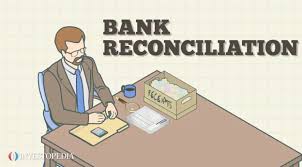
Bank Reconciliation and Internal Control. Bank reconciliation refers to the process performed by companies in ensuring that a company and its records such as ledger accounts and balance sheet are correct including the bank records. The process begins with the company making notification of balances per the statements and after that making some notations concerning the bank balances.
Possibilities can emerge that the bank received money during the closing date of the organization and recorded it properly in its records (Osborn 2013). It might have been recorded in the bank’s records late and appears in the records of the next bank statement, hence resulting in a deposit in transit.
It is, therefore, an important tool in internal control because it gives an accuracy of the records of accounting in the financial statements of the company. If the bank reconciliation statement is carried out properly, it presents the actual performance and help in the elimination of discrepancies in accounting information. After the adjustment in balance per bank to represent the true balance and the balance per book adjusted, the actual values are a true representation and help in internal control by avoiding omissions due to the hard and tedious process of filling accounting information (Weygandt et al., 2015).
It helps in the preparation of statements of accounts for the disparity amid cash balance according to the bank statements and the money equilibrium in the money account of the company.
Want help to write your Essay or Assignments? Click here
The person receiving cash payments should not perform the reconciliation or prepare the reconciliation statements. When the bank reconciliation is done by someone other than the one authorized to check the record keepers and the signers, internal control over cash has been achieved by the company. The main argument behind this is that, if the same person performs both tasks, then the same discrepancy or omission can be repeated if there was any hidden fault in the records.
Want help to write your Essay or Assignments? Click here
BRCA1 Gene of Breast Cancer
If you were Rachel’s healthcare provider, what would you do? Provide a rationale for your response
All the patients in the healthcare sector are privy to patient confidentiality. Physicians are not required to release any information regarding their patient to anyone without their consent. The sole purpose of having patient confidentiality is to build a good relationship between the patient and the physician. It also prevents stigmatization of patients suffering from certain disease conditions (Stephens et al., 2012).
However, there instances where patient confidentiality is breached. This occurs in cases where there is concern or safety for other individuals. This means that the disease condition affects another party which has no information regarding the disease. In the case study, Rachel is predisposed to breast cancer since it has been established that she has the BRCA1 Gene of Breast Cancer (Stephens et al., 2012). Since the gene is inherited, there is a high likelihood that both her sisters may be predisposed.
Rachel does not want her sister to know that her sister has the disease condition (Bombonati & Sgroi, 2011). As already established patient confidentiality exists between Rachel and me. However, failure to inform the other party would significantly affect their health status (Bombonati & Sgroi, 2011). Thus, in this case, I would advise Rachel to talk to both her sisters since the case will not involve patient confidentiality. If Rachel does not do so, I would advise them to talk to a different genetic counselor with the hope that she changes her mind.
BRCA1 Gene of Breast Cancer
Want help to write your Essay or Assignments? Click here
Include the pathological processes associated with breast cancer. What role does the BRCA1 gene contribute to managing the patient’s care?
Breast cancer is a multistep process that is triggered with a defect in the cell cycle that regulates how cells divide in the breast. According to Bombonati & Sgroi (2011), breast cancer is made up of four steps. The first step after the dysregulation of the cell cycle processes is the formation of a flat epithelial atypia which is progress to atypical ductal hyperplasia. After some time, it progresses to ductal carcinoma in situ before finally moving the lethal stage that is known as invasive ductal carcinoma (Bombonati & Sgroi, 2011).Once the last stage has developed the disease starts to metastasize and establishes its blood supply and other important physiologic molecules.
BRCA1 gene has been implicated in the majority of the hereditary ovarian and breast cancers. Physicians normally look for this gene mutation through the family history. Once the physicians have established that patients have these genes, the patient is genetically tested, and if the results turn out to be positive, the patient undergoes prophylactic treatment which is used to prevent ovarian and breast cancer (Bombonati & Sgroi, 2011). The presence of the gene BRCA1 assists patients to know their disease state.
Want help to write your Essay or Assignments? Click here
BRCA1 Gene of Breast Cancer
Describe and explain the role of the BRCA1 and breast cancer 2, an early onset (BRCA2) gene in contribution as a risk factor for breast cancer.
Two genes that have been identified that predispose women to breast cancer. Genetic mutations in the germline of BRCA1 gene predispose 15-45% of all cases of hereditary breast cancer. It has also been associated with 60-80% of all the breast cancer cases in women.
Additionally, it has been associated with 20-40% 0f all the ovarian cancers. Mutations associated with the gene BRCA2 have been known to have a less incidence of breast cancer. The case is low compared to that of BRAC1 (Stephens et al., 2012). Anyone associated with the gene BRAC2 has a 6% incidence of developing breast cancer in their lifetime.
Analyze the risk factors for breast cancer and possible interventions to preventive health management for women and men.
Several factors increase the risks associated with mutations in the genes BRAC1 and BRAC2. Such factors include the presence of bilateral cancer in the same women, family history of breast cancer and cases of having a genetic mutation in the BRAC1 and BRAC2 gene in the family (Stephens et al., 2012). Other factors include alcohol consumption, radiation exposure, being overweight, environmental chemicals and postmenopausal weight gain.
The first preventive measure involves undergoing breast cancer screening that can detect the presence of the gene defects associated with BRAC1 and BRAC2. Several different types of tests are available. They include mammograms, use of biopsies, clinical breast exams, hormone receptor assays and magnetic resonance imaging (Stephens et al., 2012). Early detection is key to early treatment. The other factors are easily preventable. For example, physical activity reduces incidences of being overweight.
Want help to write your Essay or Assignments? Click here
Genetically modified organisms (GMOs)
What is GMOs and its purpose?
Genetically modified organisms (GMOs) are organisms whose genes have been modified through addition of a gene that enables the genetically engineered crops express the specific desirable trait. The main aim of genetic engineering of organisms is to improve the nutritional qualities of an organism (Bratspies, n.d.).
For instance, several crops have been engineered to make them resistant to herbicides, become tolerant to extreme environments such as droughts, or add the nutritional value of an organism. The general goal or objective is to make the yield of the plant or animal increase; and to make the products desirable to producers as well as the consumers (World Health Organization, 2013).
How Genetically modified organisms (GMOs) are created?
The key steps in creating GMOs include the identification of key steps, specific trait isolation, insertion of the isolated trait into the organism, and organism propagation. Research continues to identify new methods to manipulate the organism’s genes; the most common method that has been used is using bacterial phage’s to insert new genome into the host genome where it is expressed. This has been done successfully for example, in maize using Baccillus thuringiensis. The current genetic engineering methods involve editing of the genome directly (Perry, n.d.)
Want help to write your Essay or Assignments? Click here
Genetically modified organisms (GMOs) foods in the supermarket
The USA is the leader of producing GMOs, which accounts for at least 66% of the GMOs globally. According to Centre for Food Safety, approximately70% of the foods reaches the supermarkets. These include soybean, corn, canola, sugar beet, alfalfa, aspartame, dairy products, papaya, and squash. Approximately, 70% of products made from these substances are GMOs derivatives.
Importantly, the livestock reared for their by-products such as cattle, sheep, poultry and swine have not been genetically engineered, nor are they going to be any time soon. However, GMOs play a huge role in the animal feeds as well as during the processing of these animals by products. The animals that have been genetically engineered for pharmaceutical by products (insulin in sheep) are not approved to be used as food (World Health Organization, 2013).
Want help to write your Essay or Assignments? Click here
Safety issues for Genetically modified organisms (GMOs) food
The issue of GMOs safety is highly controversial. Some people perceive GMOs as health threats whereas some food regulatory bodies (U.S. Department of Agriculture) deem GMOs food as safe. There are few studies that have highlighted potential risks of GMOs to human health, farmers, and the environment as a whole. This includes allergic response to some proteins in GMOs food.
Other risks that have been reported by other research include risks of outcrossing for plants (environmental issue), modification of major organs, infertility, immunological response and faulty regulation of insulin. However, most of these studies have been inconclusive- an area in research that needs more exploration (Centre for Food Safety, 2015).
Want help to write your Essay or Assignments? Click here
Altogether, it is vital to note that there are national and international authorities established whose role is to solely assess the GMOs food rigorously before they are approved for commercialization. These agencies focuses on the safety of GM foods by conducting toxicity tests to identify a) immediate, b) allergenicity, c) stability of the modified genome and the gene inserted, d) nutritional changes and effects associated with the modification, and e) any other unprecedented effects. The GMOs food in our supermarket shelf has met the standard criteria of the tests; thus, are less likely to cause harm (World Health Organization, 2013).
Additionally, the benefits of GMOs outweigh the risks. The benefits includes increased savings through reduction of costs involved during planting and harvesting of the food; reduced cost of production results to low retail of the product. The benefits of nutrition improvement are evidenced in crops such as the golden rice which contains the iron and beta-carotene and insulin producing potatoes. These plants species have not been approved yet, but the research is still underway to increase the productivity as well as the efficiencies of the crop. If biotechnology is embraced, one can only imagine the potential health improvements that will be attained (Centre for Food Safety, 2015).
Want help to write your Essay or Assignments? Click here
Regulation of Genetically modified organisms (GMOs)
In the USA, GMOs laws involve three regulatory agencies including, the US Department of Agriculture (USDA), Food and Drug Administration (FDA), and Environmental Protection Agency (EPA)). The USDA responsibility is to ensure that the GMOs pose no threats to the health of the plants and the animals. Therefore, the GMOs researchers and developers are expected to apply for permit to address these potential risks. The EPA has a major role in the regulation of GMOs, especially those that have pesticide genomes (Centre for Food Safety, 2015).
The agencies set regulations such as the acceptable levels of the pesticide. The developers are expected to describe the short term and long term pesticide consequences on the livestock, human, and the environment. In human health, FDA carries the largest role as it is mandated to regulate the safety of the GMOs consumed by the people. FDA ensures that the GMOs foods are not toxic or allergenic (Centre for Food Safety, 2015).
The main issue that needs to be regulated includes the labelling of the GMOs food or products derived from these food products. This will ensure that only safe GMOs is allowed to be commercialized, and must be clearly labelled to ensure that consumers ethical right of autonomy is sustained (World Health Organization, 2013).
Want help to write your Essay or Assignments? Click here
References
Bratspies, R. The Illusion of Care: Regulation, Uncertainty, and Genetically Modified Food Crops. SSRN Electronic Journal. http://dx.doi.org/10.2139/ssrn.353320
Perry, M. Genetically Modified Organisms: Why We Need a Transparent System of Regulation. SSRN Electronic Journal. http://dx.doi.org/10.2139/ssrn.1533657
Want help to write your Essay or Assignments? Click here
World War 1 (WW1) similarity to Warfare
World War 1 (WW1) is fundamentally similar to warfare as it is practiced today
The year 1914 witnessed the class of large armies that were armed with deadly new weaponry and military hardware which had been developed all through the 2nd industrial revolution of the late nineteenth century. Chief among these new weapons was the quick-firing artillery that was able to deluge enemy fighters with hails of lethal lead balls that cascaded from shrapnel shells. In the meantime, the bullets that were fired by machine guns and rifles had actually gained in accurateness and range and were able to cause terrible wounds. World War 1 (WW1) similarity to Warfare.
By the ending of the 1914, over 1 million European combatants had been killed. The armies were compelled to seek the relative safety of dugouts and trenches: a novel form of combat was born.[1] This argumentative essay supports the argument that the First World War is fundamentally similar to how warfare is currently being practiced.
The First World War introduced a number of advancements in science and technology into modern warfare as it is currently being practiced nowadays. These advancements transformed the nature of warfare including combat tactics and strategies. It is notable that on both sides, inventors and scientists worked all through the war to improve their technology so as to give their side an advantage during the battle.[2]
World War 1 (WW1) similarity to Warfare
Want help to write your Essay or Assignments? Click here
The initial years of WW1 could be described as a class of twentieth-century technology with nineteenth-century warfare in the form of ineffective combats that resulted in many casualties on both sides. In essence, it was really not until 1918, WW1’s concluding year, that the main armed forces started to make effective steps in transforming matters of tactics, control and command to adapt to the modern combat zone, and began harnessing the many new technologies to effectual military purposes.
Tactical organizations for instance changing the focus of command from one-hundred-man company to the ten-man squad went hand-in-hand with the first submachine guns, armoured vehicles, as well as automatic rifles which could be carried and utilized by a single soldier.[3] Likewise, in warfare as practiced today, major armies particularly the Allied forces including Americans, the French, Australians and the Brits have effectively harnessed a number of novel technologies to effective military purposes for instance the utilization of unmanned drones to spy on their enemies and even for dropping bombs on enemy targets.
World War 1 (WW1) similarity to Warfare
Tanks: tanks, which were highly armoured vehicles, were initially introduced during the First World War and were utilized in crossing No Man’s Land between trenches. Tanks had mounted cannon and machine guns.[4] Even though the first tanks were difficult to steer and were not dependable, they in fact became more effectual and efficient by the conclusion of WW1, and are highly advanced as used in warfare today.
War in the air: WW1 was actually the very first warfare in the history of wars in which airplanes were employed. At first, airplanes were utilized in observing the troops of the enemy. Nonetheless, by the ending of the warfare, airplanes were utilized in dropping bombs in enemy cities and on the enemy troops. In addition, airplanes were mounted with machine guns which were utilized in shooting down other airplanes.[5]
Changes in naval warfare: during the First World War, the most dangerous ships were referred to as dreadnoughts – they were basically big metal armoured warships. The dreadnoughts had long-range guns which were powerful that allowed these ships to attack other battleships as well as targets on land from a long distance. During this war, the main naval fighting was the essentially the Battle of Jutland.
Other than this fighting, naval battleships of the allied forces were utilized in blockading Germany to stop food and other supplies from reaching the nation. Moreover, at sea, submarines were used in attacking ships.[6] Battleships became more powerful and quicker than ever before and utilized newly invented radios in communicating effectively.
Want help to write your Essay or Assignments? Click here
Trench warfare: it is worth mentioning that much of the battle along the western front was fought with the use of trench warfare in which both sides of the combat dug extensive lines of trenches which helped in protecting the soldiers from artillery and gunfire. No Man’s Land was the term used in referring to the region between enemy trenches. For a number of years, trench warfare resulted in a stalemate between both sides. Both sides lost millions of fighters but neither side gained ground.[7] The popular image of WW1 is combatants in muddy dugouts and trenches living despondently until the subsequent assault.
New weapons: some of the new weapons included machine guns, artilleries, chemical weapons and flamethrowers. During WW1, the machine gun was improved considerably. The machine gun was made easier to move around and much lighter. Big guns commonly referred to as artilleries were improved throughout this battle including anti-airplane guns which were aimed at shooting down airplanes of the enemy. Most of the casualties during this battle were inflicted with the use of artillery and some big artillery guns were actually used in launching shells roughly eighty miles[8].
Moreover, WW1 introduced chemical weapons to the war. Chlorine gas was initially used by Germany for the purpose of poisoning unsuspecting troops of the Allied forces. Afterwards, mustard gas, which was more deadly, was developed and utilized by both the Allied forces and the German troops. By the ending of this warfare, troops on both sides of the conflict were equipped with gas masks and the chemical weapon actually became less effective.[9]
The war came to an end on 11/11/1918, and modern war technology had altered the course of civilization. Millions of civilians and enemy soldiers had been starved, maimed, gassed or killed. Disease and famine continued raging through the central parts of Europe particularly in Germany and it took very many lives. Thanks to rapid advancements in technology in virtually every area, the nature of warfare had forever changed, affecting sailors, airmen, combatants and civilians similarly.
World War 1 (WW1) similarity to Warfare
Want help to write your Essay or Assignments? Click here
WW1 is essentially the same as warfare as practiced at the moment considering that just like during the First World War, warfare today is characterized by the use of tanks, machine guns, artilleries, battleships, and even airplanes – technologies that were invented and first used during the First World War. For instance, in the modern warfare going on in North Africa and the Middle East in which the United States and its Allies are fighting against terrorist groups including Al-Qaeda and the Islamic State, the use of machine guns, artilleries, cannons, and tanks are used extensively by both sides.
However, mechanized warfare, war airplane and tank technology initially developed in WW1 have become more and more sophisticated and fearsome military hardware in today’s warfare and have in fact made the trench outdated.
In addition, just as warfare is being practiced at the moment, WW1was actually determined largely by fighting skills, tactics, industrial capacity and logistics. Also, major warfare today involves a number of different countries in different regions of the globe, and surveillance and communication are an essential aspect of warfare today.
Similarly, WW1 was the first main warfare which involved several countries in various parts of the globe and surveillance and communications were gradually more becoming a significant aspect of the fighting.[10] Equally important, the First World War was a combat of firsts – a multinational combat from traditional hand-to-hand fighting to high-tech, sophisticated military hardware – that is still the characteristic of armed combats today.
World War 1 (WW1) similarity to Warfare
Want help to write your Essay or Assignments? Click here
Furthermore, the consequences of warfare as practiced today are more or less the same as the consequences of war during WW1. In today’s warfare just as in WW1 warfare, most of the enemy soldiers and civilians in the countries where the war is being waged end up getting starved, killed or maimed. Modern warfare waged in Iraq, Libya, Yemen, Syria and other places today have similarly caused significant famine.
Malnutrition and starvation continued taking the lives of children and adults in Germany for several years following the end of the First World War in 1918.[11] Likewise today, malnutrition and starvation have taken the lives of many children and adults in Libya, Syria, Yemen, and Iraq thanks to the warfare going on in these countries. Years after these fighting end, malnutrition and starvation are also likely to continue taking the lives of people in these places.
Conclusion
To sum up, the First World War is fundamentally the same as how warfare is currently being practiced. Just like during WW1, in warfare today, major armies have properly harnessed a several new technologies to effective military purposes for example the usage of unmanned drones for dropping bombs on enemy targets and spying on enemies. Just like WW1, warfare as practiced these days involves several countries. Equally important, surveillance and communication are extensively utilized in today’s warfare just as how it was used during WW1.
World War 1 (WW1) similarity to Warfare
Want help to write your Essay or Assignments? Click here
Want help to write your Essay or Assignments? Click here
Critical Research
The aspect that was to me was the approaches that are applied in communication research. These approaches are divided into quantitative research, qualitative research, critical research, and rhetoric research. Of the four, the model that I found to be quite interesting is the critical research model. According to Wood, critical research is not interested much with understanding and explaining organizational communication (Wood, 2014). However, I learned that this model lays more emphasis on analyzing, judging, and criticizing values.
Additionally, critical research just as the word “critical” suggests, focuses more on seeing how the society or an organization exists in a world full of power imbalances. In ideal societies and institutions, there are those individuals that have power and those that lack. Researchers who conduct critical analysis strongly believe that those without power are purposefully prevented by the powerful from attaining ultimate quality. Therefore, critical scholarship tends to be inclined towards the side of weaker individuals when commenting or studying relations of dominance (Wood, 2014).
I also noted that critical theory aids us to question institutions, ideologies, identities, and interests that seem to be dominant and challenging. For instance, critical research helps us to examine whether or not ideologies that have been established within an institution are fundamentally dangerous particularly to the workers. Moreover, with critical research we are in a better position to question certain ideologies on where they came from and the effectiveness of their applicability.
Usually, managers come up with certain ideologies that tend to be inherently problematic for the employees. Therefore, it is the duty of workers to put their best foot forward and challenge such ideologies lest they become implemented for several years without being challenged. Critical is also significant since it aids in examining different institutions to identify which ones are dominant in the society and which ones are not safe for the general worker.
Want help to write your Essay or Assignments? Click here
Want help to write your Essay or Assignments? Click here
Culture and Strategy
Abstract
The relationship of organizational culture and progression has been subject of different examinations over the span of the latest years. The colossal number of social variables under investigation has incited an isolated thought of society for development.
Further, managerial practice requires a concealed structure remembering the final objective to pick what society should be completed in order to improve and to study if a specific culture is a convincing and powerful coordination instruments. The motivation behind this paper is to inspect the idea of the hierarchical culture and give a brief discourse on the methodologies utilized for overseeing it in culture and strategy of organizations.
Introduction
Hierarchical culture emphatically influences organization and administration, which ascend out of its slant and its substance. Hierarchical society is described as a course of action of assumptions, qualities, norms, and perspectives, appeared through pictures which the people from an organization have made and gotten through basic experience and which offer them some help with deciding the essentialness of their general surroundings and how to absorb it. (Janićijević, 2011).
Presumptions, qualities and gages which the general population from a firm shares completely shape their interpretative game plans. Through interpretative courses of action, the general populations from an association assign repercussions to events inside and outside the association and comprehend reality that incorporates them (Janićijević, 2011). The conduct, activities and trades of the general population from an association rise out of the inducing that reality of that association has for them.
Various leveled society is a sort of aggregate interpretative course of action shared by the general population from an association, because of which they dole out proposals to events, individuals, and occasions inside and outside of the association correspondingly and treat them moreover (Janićijević, 2011). In this way, the lifestyle of an organization surmises that each one of the people from the organization likewise appreciate the organization.
The character of different parts of management and organization, for instance, methodology, structure, activity style, Organizational taking in, a game plan of prizes, and motivation, rises totally from the way in which delegates and administration understand authoritative reality and carry on in it (Janićijević, 2011). Thusly, Organizational society, through its effect on the interpretative plans and direct of the people from an organization, shares in framing distinctive portions of organization and administration.
Subordinate upon the qualities and measures contained by the Organizational society, top organization picks the technique and courses of action progressive structure, boss shape their drive style, delegates depict their behavior of intuition and needs, and the human asset executive plots the pay framework in an affiliation. A solid sort of the effect of Organizational society on an association and organization is found in the way that parts of an association and organization vary in various sorts or sorts of legitimate society. By the day’s end, specific sorts of society in association’s propose different techniques, legitimate structure models, pay frameworks, organization styles, and so forth (Janićijević, 2011).
One of the key parts of organization that are impacted by definitive society is the organization of progressive society. Definitive society impacts the choice of satisfactory Organizational culture organization correspondingly it impacts every single another bit of organization. Social suppositions and qualities shared by the general population from an association pick the path in which workers and executives will value the association itself, and thusly the satisfactory approach to manage transform it (Janićijević, 2011).
Culture and Strategy
Want help to write your Essay or Assignments? Click here
What will be resolved as a suitable, effective, or steady methodology for changing the association will rely on upon an exceptionally fundamental level on the common suppositions and estimations of operators and managers worked in their interpretative game plans. Whether the developments are incremental or radical, complete or deficient, encouraged starting from the top or from the base up, concentrated on the culture of the “hard” or of the “touchy” some segment of association, will all, metaphorically talking, rely on upon how the pioneer and the general population from the association see its working and a suitable, strong, or down to earth method for taking off improvements (Aguiree, Post, and Alpern, 2013).
This is the motivation driving why the strategy of legitimate culture organization will be all around assorted in various Organizational social requests. For instance, if various leveled society is told by the estimation of adaptability, this recommends the general population from the association will consider cultures to something unprecedented and obliging for the association and themselves.
For this situation, cultures are slanted to be reliable, and thusly additionally incremental in nature, in light of the way that there will be no need for radical cultures adequately by virtue of the way that they are consistent (Janićijević, 2011). Additionally, cultures will be driven with less resistance yet rather more eagerness by the agents. Then again, if Organizational society contains the estimations of predictable quality and conservatism, then the general population from the association will consider cultures as dangerous, both for themselves and the association.
Cultures will be phenomenal, yet when they do happen they will be radical and wide. They will be composed to a wonderful level of resistance from and an all around insignificant level of sponsorship by the general population from the association, who will be for the most part sit out of gear powers of progression (Janićijević, 2011).The degree of this paper is to appreciate and examine the legitimate society and organization philosophies to manage the troubles stood up to by the various affiliations.
Culture and Strategy
Want help to write your Essay or Assignments? Click here
Review of Strategies for Organizational Culture
In the extent of various leveled culture association, the considered scholastic specialists and honing boss has been basically focused on three central solicitation: what cultures, why it cultures, and when it cultures. Along these lines, the three key subjects in various leveled culture research have been causes or variables of legitimate culture, definitive culture content, and the character of the progressive culture process.
The conclusion came to has been that authoritative cultures are begun as a result of either internal or external causes. From this time forward, two sorts of hierarchical culture have been isolated by the measure of cause: authoritative headway and alteration (Aguiree, Post, and Alpern, 2013).
Concerning culture content, the survey of forming demonstrates that progressive cultures are segregated in two imperative courses: cultures of definitive statics (structure and framework) and cultures of legitimate segments (process), besides cultures of work structure (assignments) and cultures of social structure (relations)). At long last, research has displayed that, as showed by the character of the strategy, various leveled cultures can be tireless or sporadic.
Tenacious cultures are incremental (first request cultures), divided, and transformative while sporadic cultures are radical (second request cultures), complete, and dynamic. The part of the pioneer in the midst of the time spent culture has moreover been a fundamental issue in definitive culture research (McGuire, 2003; Madu, 2005).
Not at all like the issues of cause, substance, have process, and authoritative culture organization, hierarchical culture methods been less present in investigation. Authoritative culture framework joins the system, strategy, or route in which cultures are realized in an affiliation. This definition proposes that movements are continually orchestrated and that, at whatever point we examine culture execution method, we truly discuss masterminded hierarchical cultures (McGuire, 2003; Madu, 2005).
The way that the primary course of action of authoritative culture strategy oversees organized culture system in like manner adds to this impression. In any case, this does not for the most part should be the circumstance. Cultures can similarly be unconstrained or unconstrained, and their anticipated approach, strategy, or the best approach to constitute a culture framework. They can be a strategy for recognizing authoritative culture, regardless of the way that the movements are off the cuff (McGuire, 2003; Madu, 2005).
Culture and Strategy
Want help to write your Essay or Assignments? Click here
While most specialists while examining business or corporate approach truly mean adjusted, formalized, organized decisions, distinctive scientists point out that strategy, can rather be fathomed as a bona fide security partner particular business decisions and giving them consistency, which is new and just thusly legitimized as a framework, rather than a normal, orchestrated decision arranged early (McGuire, 2003).
Likewise, in the field of hierarchical culture, culture framework may be fathomed as a masterminded decision of the administrators of advancement, furthermore as a creating case of development through which cultures are recognized and which grabs its shape entirely when the movements have been made sense of it. Starting now and into the foreseeable future, the discernment of legitimate society structure in this paper is to some degree more wide than the one in the much grasped work by Chin and Benne, who were the first to accumulate progressive society frameworks (McGuire, 2003).
The judicious observational system is developed on the suspicion of the common sense of Organizations and the comprehensive group who constitute them (Sami, 2012). Affiliations are seen as a shrewd means for completing the common focuses of their kin through aggregate activity. Individuals are overseen as regular creatures lead with no other individual’s data interest.
Along these lines, societies are executed by demonstrating the general population from an association that they are reasonable, i.e., reinforced and critical from the viewpoint of accomplishing progressive objectives, furthermore obliging to the self-vitality of the general population from the alliance (Sami, 2012). The supposition is that the general population from the relationship in which the developments are performed will, as normal creatures, carry on as exhibited by their reasonable given side hobbies.
Therefore, in the event that they are given watch that a society is to their most essential purpose of inclination, they will remember it.Cultures are driven through the typical system of information party and utilization of learning in dealing with the issues that the affiliation faces. Essentially, cultures are driven through the methodology of utilization and testing of specific theories, which give off an impression of being adequate in a given setting (Long, 1997).
Culture and Strategy
Want help to write your Essay or Assignments? Click here
Authoritative cultures are driven in five stages: issue conspicuous verification, information get-together and examination, the time of alternative diagrams, determination of the perfect procedure, and execution of the game plan. In the adjusted framework, the key driver of societies is accurately the data with respect to the issue which should be taken care of and the conceivable fundamental reasoning strategies.
On the off chance that the data is instigating and clear, and on the off chance that it is decisively in all actuality, the general population from an association will, as shrewd creatures, perceive the execution of societies (Luthans, and Doh 2008; McGuire 2003). It is thusly vital that data gathering is driven purposefully and in a methodologically noteworthy way, ideally by an authority (it is as regularly as could reasonably be expected the case that advice are contracted in this way).
The strategy of granting information concerning the issue and with respect to the movements which will deal with the issue is uneven and beginning from the top. Correspondence includes top organization, or authorities picked by top organization, showing the “truths” of the bona fide condition, the theoretical model which enables the offered situation to be understood ‘legitimately’, and also the proposition for culture which really ascend out of this perception (Luthans, and Doh 2008; McGuire 2003).
No dialog or talk is joined into which the people from the affiliation would be allowed to test, address, or rename the “truths” or theoretical models showed to them (Luthans, and Doh 2008; McGuire 2003).
Culture and Strategy
Want help to write your Essay or Assignments? Click here
It is clear that the executives of headway in this system are the top association, and that the heading of progression is starting from the top. The part of the general population from the connection is sit without moving and is obliged to enduring the data and acting in like way. The level of support of the alliance individuals is low, and the response to this course of action of the people in the developments is, most perfect circumstance, assertion. As a last resort, the imperviousness to culture is high (Luthans, and Doh 2008; McGuire 2003).
Leadership/Management and Organizational Culture
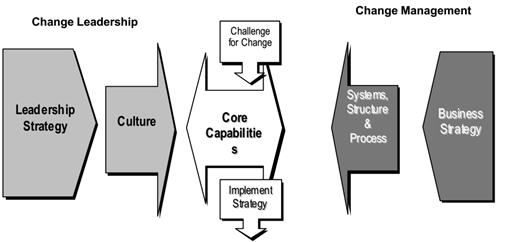
Organizations are not any more liable to accomplish business objectives without a key business process that are associations liable to accomplish new social abilities without a key authority process. Whenever consolidated, the business methodology and authority system can work all the while to grow new center capacities essential for the association’s future.
We present the defense that it is administration, as a deliberate gathering of similarly invested individuals, which can exhibit and take part in the better approaches for doing and being that advances the way of life and empowers diverse business results (Dilobe &Haccoun, 2010; House, Javidan, Hanges, & Dorfman, 2002; Eromafuru 2013; Woszczyna , 2011; Salamzadeh, , Ahmadi & Akbari, 2012; Eromafuru, 2013).
Culture and Strategy
Want help to write your Essay or Assignments? Click here
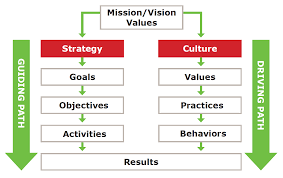
It is an initiative that imagines future course, adjusts assets, and rouses the dedication of individuals toward this normal reason. A Leadership Strategy can control that basic procedure of the association’s advancement through initiative toward a typical reason for building the couple of, new capacities inside of the heart of the association – its way of life. Adjusting to culture recommends that associations need go to new center capabilities. The movement from an item prompted administrations drove IBM required that the way of life of this once ambling behemoth turn into a group based, the client engaged, elegant organization (McGuire, 2003).
Figure: Leadership Strategy McGuire (2003).
Figure: Leadership Strategy McGuire (2003).
According to Haccoun et.al, (2010); Dorfman et.al, (2002); Eromafuru (2013); Woszczyna , (2011); Akbari et. al, (2012); Eromafuru, (2013), the key mechanical assemblies for executing society in perceiving observational procedure are assignments, or work positions, and not the social structure of the affiliation and the relations within it. Consequent to the affiliation is appreciated as a prudent contraption for achieving shared targets, societies in it are recognized fundamentally through changing the formal, masterminded, “hard” parts: endeavors, structures, methods, methodologies, strategies, and the association with its environment.
Simply first demand societies can be instated and coordinated through the sound observational system since the method does not allow renaming of the assumptions of reality; this future a bit of second demand societies. As a rule, societies don’t require all that much time; beside when the information gathering technique is greatly mind boggling (McGuire, 2003).
Culture and Strategy
Want help to write your Essay or Assignments? Click here
A deterministic, as opposed to the voluntary supposition of human activity, underlines this technique. The procedure of progress does exclude the through and through freedom and decision of individuals from the association. The strategy, or of progress, is as of now dictated by the target way of the issue, and it is the undertaking of the individuals who settle on choices in the association simply to apply it to sufficient information and hypothesis (Dorfman et.al, 2002; Eromafuru, 2013).
Power coercive strategy translates that a connection is seen as a political structure in which the general population who have the force likewise have the advantage to deal with the association and along these lines change it. The man is not a run of the mill but rather a political being, who submits to the will of the all the more compelling. Along these lines in force coercive framework force is the key driver and contraption for society (Dorfman et.al, 2002; Eromafuru, 2013).
The general population who have the force; when in doubt the pioneer or top association, coordinate the developments and, by mauling the force they have, power these developments on interculture individuals from the connection. The general population from the alliance is relied on to obey and execute the developments unquestioningly. This strategy depends on upon the supposition that the advantage to urge the course of aggregate activity in one party in like way climbs up out of force. Along these lines, the sub-par individuals from a social event in like way anticipate that the pervasive individuals will set the course in which the developments will be executed (McGuire, 2003).
The correspondence is one-sided and coordinated starting from the top. It comprises of the pioneer or administration achieving a choice with respect to the tackling of an issue, and after that conveying to their devotees and association individuals how, when, where, and who will execute the progressions which will take care of the issue. The main operators of progress are the pioneer or administration of the association who has the ability to execute the progressions.
Culture and Strategy
Want help to write your Essay or Assignments? Click here
The interest of the individuals from the association in culture is low, and their part is uninvolved and boils down to minor dutifulness. In this methodology, the data stream course is starting from the top, in light of the fact that the specialists of progress just advises the association individuals from what is anticipated from them and does not get input. For the same reason, the culture exercises are one-sided (Dorfman et.al, 2002; Eromafuru, 2013; McGurie, 2005).
The power-coercive methodology can deliver just first request culture since it does exclude changing the suppositions, qualities, or states of mind of the individuals from an association. The pioneer who applies this culture system is not keen on changing the convictions and estimations of the individuals from the association so they acknowledge the progressions; rather, the pioneer, by the utilization of force, just drives them to consistence.
This is the reason the progressions will be conceivable just inside of the current worth structure, which prompts first request cultures. Of the considerable number of systems, force coercive procedure prompts the quickest results and this is its primary leverage and the motivation behind why it is utilized generally regularly. In any case, its inconveniences are exceptionally various; for instance, the decimation of inspiration and dedication, extremely solid imperviousness to cultures, and the absence of comprehension of cultures prompting their wasteful usage (Dorfman et.al, 2002; Eromafuru, 2013; McGurie, 2005).
They all Dorfman et.al, (2002); Eromafuru, (2013); McGurie, 2005) concur this society strategy is centered around relations and social structure, as opposed to on work structure and assignments. Since reliance relations are the establishment of this framework, it commonly relies on upon the relations between the effective overseers of societies and the humble individuals from the association. Therefore, control coercive strategy depends on upon relations and the social, nice, “delicate” segment of relationship as an instrument for society.
Power coercive strategy translates the viewpoint of human activity as unshakable, compelling a perspective of the world in which individuals are free directors who can independently pick their activities. In any case, this totally adaptability infers just to the capable pioneer or chief and not to the straggling remains of the alliance (Dorfman et.al, 2002; Eromafuru, 2013; McGurie, 2005)…
Culture and Strategy
Want help to write your Essay or Assignments? Click here
The developments are driven by first changing the suppositions, qualities, standards, and viewpoints shared by the association individuals, and after that besides changing their activities and correspondences, or relations. Along these lines, it is unequivocally these relations and social segments of the alliance that are the vital instruments of headway in regularizing re-educative framework, and not its “hard” parts, i.e. tries.
In this structure, societies happen at the level of relations between the connection individuals. Standardizing re-educative methodology merges the system of reframing, or changing, the socially-made picture of reality, from which societies of both aggregate suppositions and qualities rise (Dorfman et.al, 2002; Eromafuru, 2013; McGurie, 2005).
By researchers, Dorfman et.al, (2002); Eromafuru, (2013); McGurie, (2005); Akbari et. al, (2012); in this manner societies in this reasoning are created both starting from the top and from the base up, and the data stream is multilateral. In the standardizing re-educative structure, the managers of headway in a connection are both the association and the authorities. The alliance individuals are dynamic people in society with an irregular state of endeavor: from this time forward the solidness to culture is sensibly low.
Societies composed by regularizing re-educative philosophy assemble the dedication of the association individuals to the new picture of reality and new connection and is of a higher quality than the past two strategies which request the alliance individuals’ insistence and detached assent. The regularizing re-educative methodology might start and induce second request society since it determines changing the path in which the general population from an alliance handles their general surroundings. However the execution of this strategy takes longer, as creating suspicions, qualities, gages, and dispositions is not a quick technique.
Culture and Strategy
Want help to write your Essay or Assignments? Click here
Conclusion
The paper has demonstrated that there is a theoretical explanation behind the supposition that various leveled society is one of the variables in the determination of authentic society association systems. In a split second it is the key to correctly test this presumption by testing the speculations made in this paper. It is also fundamental to look at it and how the way of life impacts the ability of the way of life framework and its flourishing. From this paper, a supposition additionally develops that there might be a criticism impact of organization society strategy on various leveled society.
Inside and out that truly matters, this paper can be prescribed to affiliation association which is planning progressive societies, to help with picking the association strategy for society that is awesome with the way of life of their affiliation. This will add to the suitability and accomplishment of the way of life procedure. With the target this should be conceivable they should have an OK learning of the way of life of the connection they are changing, besides of the open organization society procedures.
Culture and Strategy
Want help to write your Essay or Assignments? Click here
References
Aguiree, D., Post, R. V., & Alpern, M. (2013). Culture’s role in enabling organizational culture. Booz & Company.
Dilobe, N., & Haccoun, R. (2010). Measuring Core Dimension of Organizational Culture: A Review of Research and Development of New Instrument. University De Catholique.
Divan, S. M. (2012). CHANGING “THE WAY WE DO THINS” (Unpublished doctoral dissertation). California State University, Sacramento, LA.
Donell, O., & Boyle, R. (2008). Understanding and Managing Organizational Culture. Dublin, Ireland: IPA.
Eromafuru, E. (2013). Building and Sustaining Organizational Culture through Innovative and Strategic Leadership. International Journal of Humanities and Social Sciences, 3(11).
Heracleous, L., & Langham, B. (1996). Strategic culture and organizational culture at hay management consultants. Long Range Planning, 29(4), 485-494. doi:10.1016/0024-6301(96)00040-4
House, R., Javidan, M., Hanges, P., & Dorfman, P. (2002). Understanding cultures and implicit leadership theories across the globe: an introduction to project GLOBE. Journal of World Business, 37(1), 3-10. doi:10.1016/s1090-9516(01)00069-4
Huiri, D. (2011). THE IMPORTANCE OF STRATEGIC MANAGEMENT. SAVONIA UNIVERSITY OF APPLIED SCIENCES.
Janićijević, N. (n.d.). THE INFLUENCE OF ORGANIZATIONAL CULTURE ON ORGANIZATIONAL PREFERENCES TOWARDS THE CHOICE OF ORGANIZATIONAL CULTURE STRATEGY. ECONOMIC ANNALS, 18(193).
Long, D. D. (1997). Building the Knowledge Based Organizations: How Culture Drives Knowledge Behaviors. Center for Business Innovation.
Luthans, F., & Doh, J. P. (2008). International Managment (9th ed.). McGraw Hill.
Madu, B. C. (2005). Organizational culture as a driver of competitive advanatage. Journal of Academic and Business Ethics, 3(2). Retrieved from http://www.aabri.com/manuscripts/11791.pdf
McGuire, J. (2003). Leadership Strategies for Culture Culture Developing Culture Leadership as an Organizational Core Capability. The Center for Creative Leadership – Friends of the Center Leadership Conference, Florida.
Pudelko, M., Reiche, B. S., & Carr, C. (2011). WHY INTERNATIONAL STRATEGY AND CROSS-CULTURAL MANAGEMENT MATTERS IN BUSINESS RESEARCH AND EDUCATION. Schmalenbach Business Review.
Salamzadeh, Y., Ahmadi, A. A., & Akbari, J. (2012). Relationship between Organizational Culture and Strategy Implementation: Typologies and Dimensions. Global Business and Management Research: An International Journal, 4(3).
Sami, W. (2012, November). Organizational Culture. Helbing and Associates, 2-8.
Sliwa, M. (2011). Strategies for Culture. Culture for Development (3). mik.
Trompenaars, F. (1996). Resolving International Conflict: Culture and Business Strategy.Business Strategy Review, 7(3), 51-68. doi:10.1111/j.1467-8616.1996.tb00132.x
Tsai, Y. (2011). Relationship between Organizational Culture, Leadership Behavior and Job Satisfaction. Retrieved from BMC Health Services Research website: http://download.springer.com/static/pdf/576/