

Medical Nursing for Veterinary Technicians

Medical Nursing for Veterinary Technicians

Want help to write your Essay or Assignments? Click here

Medical Nursing for Veterinary Technicians

Part 1: Orogastric tube placement

Orogastric tube is normally used to decompress the stomach of the patient, especially if the stomach is distended so much that it makes it difficult for adequate ventilation. Decompression is done by placing the orogastric tube (a flexible tube) into the canine’s mouth into the stomach (Jack & Watson, n.d.).

Procedure of placing and removing orogastric tube

Similar to any other procedure, several steps are needed to conduct this process to ensure safe tube placement and efficient decompression.  To begin with, the healthcare provider must prepare in advance all the equipment required, as indicated by the proper sizes of tubes as based with the patient’s age. The healthcare provider must get donned with the appropriate personal protective equipment to protect the canine and himself from infection causative agents (Jack, Watson & Heeren, 2014).

 The patient is then properly positioned. For instance, in non-trauma and non-intubated patient, the head should be placed in a flexed position. This helps easier passage of the orogastric tube through the oesophagus. However, most of the patients that demand gastric decompression are often intubated; thus, head movements may jeopardize positioning of the endotracheal tube. In this case, the head position should be neutral.

To estimate the depth of tube, measurements should be done from the mouth, around the patient ears to position just below the xyphoid process.  Starting from the procedure, the distal end of the tube must be coated with a lubricant that is water soluble (usually Viscous Lidocaine) to minimize injuries and discomforts (Jack, Watson & Heeren, 2014).

Want help to write your Essay or Assignments? Click here

 For the intubated patients, the endotracheal tube should be held by the assistant provider firmly, as the provider inserts the orogastric tube in the mouth, down to the oesophagus. The tube should pass with ease, and if any resistance is felt; then it should be withdrawn and procedures begun again. The tube is then placed on the premeasured depth.  The syringe is then inserted at the end of the orogastric tube to withdraw the stomach content. In advanced healthcare facility, the tube is hooked directly to suction that will withdraw gastric contents. 

To ensure that the tube is properly place, a syringe filled with air is usually placed on one end of orogastric tube, and the provider listens above epigastrum instil air rapidly at least 20cc. If it was well placed, the injected air is heard. The tube is then secured in place using a tape (Kirk, Othmer, Grayson & Eckroth, 2013).

 If the correct placement of orogastric tube is bot confirmed, it should be removed immediately.  The tube should be removed immediately if the patient develops shortness of breath or breathing difficulties. During the removal procedure, the patient should be administered with activated charcoal through the tube, by either blowing it into the tube of flushing with water.

The tube should be kinked to prevent the aspiration of lavage fluid.  Once the tube has been kinked, it should be removed in one quick sweep. The patient should be extubated upon the return of gag reflex. The patient should remain head elevated in sternal recumbency position to avoid aspiration (Osweiler, 2011).

Want help to write your Essay or Assignments? Click here

Advantages and contraindications

The advantage of this procedure is that it facilitates the decompression of air from the patient distended stomach, thus improving the patient’s ventilation. Additionally, it orogastric tube is also used to empty the stomach content to avoid regurgitation and potential aspiration. This root is preferred as it helps minimize health complications that occur with the nasal routes such as bleeding and nasal trauma.

The contraindications of this method is that it should not be performed in patients identified with intact gag reflex, but it is the most safe methods for patients with major trauma in  the head, spinal cord or facial as it minimizes complications (Kirk, Othmer, Grayson & Eckroth, 2013).

Complications of orogastric tube placement

If the tube is well inserted, minimal complications should arise. However, some of the complications noted includes mal-positioning of the tube causing discomfort. Oesophageal variceal haemorrhage and posterior pharyngeal perforations could occur during insertion. The complications that could arise during use include reflux, sinusitis, blockage and kinking of the tube. In some cases, unprecedented dislodgement could occur and mucosal adherence complications could arise during removal processes (Osweiler, 2011).

Part 2:  Fluid administration

1. Physical parameters

 Fluid therapy is very vital for most of the medical conditions for veterinary patients. To identify the exact need for fluid therapy, the patient history and physical exam findings play a huge role in determining the fluid selection, volume, location needed and composition of the fluid. Therefore, fluid administration is individualised to patient needs (O’Grady, 2011).  

The health assessment conducted includes pulse rate, respiratory rates, lung sounds, body weight, skin turgor, mental state, and mucous membrane colour and temperature extremity. These assessments provide clue of dehydration. The clinical signs that correspond to dehydration percentages are shown below (Gajewski and Hillel, 2012).  

PercentagesClinical signs
5% and below dehydrationNo clinical signs detectable, mild dehydration
 5%-6% dehydration Subtle skin elasticity is loss
6%-8% dehydration Moderate dehydration. Reduced skin turgor, slightly sunken eyes into the orbitals, high capillary refill time
10%-12% dehydration  Severe dehydration. Completely dry mucous membranes, sunken eyes, dull eyes, loss of skin turgor, and signs of shock including tachycardia, weak pulses, irregular heart rate and consciousness alteration.
12%-15% dehydration Most severe dehydration. Signs of shock present, death imminent of uncorrected quickly.

Want help to write your Essay or Assignments? Click here

2. Phases of fluid therapy for feline patient

 The patient in this case study is a cat that weighs 8 lbs; dehydration rate is reported at 10%. The patient does not present signs of shock. The cat does not suffer from diarrhoea or vomiting.

 a) Calculating the fluid need rates

 To identify the fluid replacement volume, the veterinarian needs to know the dehydration percentage, the ongoing fluid losses as well as the fluid maintenance requirement. This is calculated as based using the following formula (Hansen, 2012).;

 Fluid deficit (ml) = Body weight in Kg x percentage dehydration (in decimal point)

The ongoing fluid loss includes sensible as well as the insensible fluid losses. The sensible fluid losses include those which can be quantified such as urination. The insensible losses includes   those which cannot be quantified e.g. through faeces and cutaneous losses.  Maintenance fluid is the volume required by the patient per day to sustain the patient balance.

Most of the providers apply the standard requirements such as 40- 60 ml/kg/day.  However, it is important to monitor the maintenance requirements by calculating the hydration deficit.  In this case, the patient is has no ongoing losses, thus the fluid maintenance is as calculated below (Davis, 2013).

Fluid deficit (ml) = Body weight (lb) X percentage dehydration (in decimal) X 500

                                    8 x 0.1 x 500 = 40ml/kg/day

Monitoring IV fluid therapy and its importance

 The patient IV fluid therapy is monitored by conducting serial measurement of the body weight to monitor excessive or inadequate fluid therapy. The new weights will be compared with the base line weight. The serum chlorides measurements will also be conducted to enable identify electrolytes imbalances. The measurements of urinary output are a good indicator of fluid balance. Therefore, monitoring is important it enables the veterinarian identify of there is over or under provision of fluid; and early identification of electrolyte imbalances that could lead to further complications (O’Grady, 2011).

Want help to write your Essay or Assignments? Click here

Part 3 Dental Prophylaxis

a) Difference between horse and dog teeth

Like any living animals that have teeth, horses and dogs have premolars, molars, incisors and canines. The tooth structure is similar to the other animals.  The horses have hyposodont tooth and the jaw conformation is anisognathic. The upper jaw and the maxilla are considerably wider in comparison of the mandible and the lower jaw (Kirk, Othmer, Grayson & Eckroth, 2013).

This enables the horse maximize their chewing efficiency, making them fed adequately for long time.  On the other hand, dogs are carnivore and thus their teeth reflect the evolutionary history of carnivores. However, pet dogs are omnivores; which requires dental management practices such as prophylaxis. The differences of the two species teeth is as summarized in table 1.2 below (Berkovitz, Moxham, Linden & Sloan, 2010):

 Horses’ dental formulaDog’s  dental formula
a) Temporary teeth I – 3/3 C- 0/0   P – 3/3  M – 0/0 = 12 x 2 = 24 b) Adult (permanent teeth) I – 3/3  C – 1/1   P – 3 or 4/3  M – 3/3 = 20 (or 21) x 2 = 40 (or 42)  a) Puppy (temporary teeth). I – 3/3  C – 1/1  P – 3/3  M – 0/0 = 14 x 2 = 28 b) Adult (permanent teeth) I – 3/3   C – 1/1   P – 4/4   M – 2/3 = 21 x 2 = 42  

b) Importance of dental prophylaxis in both species

 The dental prophylaxis consists of examination of oral dental, coupled with odontoplasty of the enamel points that are extremely sharp.  In horses, the sharp enamels should be removed two times year when the permanent dentition; and after as many times as required, depending on the horse management practices. For horses that graze freely in the range may require dental prophylaxis yearly; whereas those confined should be done twice a year. In dogs, they should have dental prophylaxis performed at least once per year (Gajewski and Hillel, 2012). 

In both, the aim and importance of this practice is to remove the sharp enamel edges that could cause irritation of the soft tissue. Additionally, it is also done to clean the two species teeth and make the evaluation of the oral cavities or any dental related health complication present (Kirk, Othmer, Grayson & Eckroth, 2013).

Want help to write your Essay or Assignments? Click here

c) Comparison of dental prophylaxis procedures in both species

 The procedure is quite similar, where the animals are put under general anaesthetic care, to ensure that the patient is comfortable and to ensure effective cleaning. It also allows insertion of endotracheal tube in the trachea of the patients, in order to protect the bacteria from cleaned teeth from invading the lungs. The dental prophylaxis includes (Berkovitz, Moxham, Linden & Sloan, 2010):

 a) supra-gingival cleaning; which involves the cleaning of the regions above the gum line done suing the mechanical scalers.

 b)  Subgingival cleaning; involves cleaning of the ears below the gum line to remove the plaques as well as the calculus responsible for periodontal infection. This stage mainly causes the roughening of the teeth.

c) Polishing;  The roughened surfaces increases retentive ability of plaque and calculus, causing faster build up  and progression of periodontal disease progression. Polishing is done to smoothen tooth surface, reducing the adhesive plaque ability.

d) Sulcal and subgingival lavage; the polishing as well as the scaling and polishing makes lots of debris get trapped, the gingiva is flushed with antibacterial solution, where periodontal disease occurs, then it is flushing is done using saline. 

e) Fluoride treatment; done to strengthen and harden the dentin, which causes the tooth sensitivity to reduce, and is known to retard the formation lesions.

f) Treatment planning; done using dental graphs and all other modalities responsible in reestablishment of oral health.

g) Dental charting: involves recording if the findings and oral health recommendations. The chart is used to examine the disease progression or regression.

Want help to write your Essay or Assignments? Click here

Part 4

What is CPR? What is its goal?

 Cardiopulmonary Resuscitation (CPR)  is used  to check dog’s heartbeat when the dogs gets accidentally  injured and stops  breathing with the aim of bringing it back to life.  The pet’s owner should report the incidence to the provider so that they can prepare the emergency room adequately. The procedure used to perform CPR includes is described (Sirois, 2013).

 Procedure of performing CPR

To begin with, the veterinary should be armed with their crash cart. The basic items in this cart include endotracheal tube, needles/syringes, Dopram, IV catheter supplies, bandaging materials, epinephrine and atropine. To perform CPR, the dog’s mouth is open gently, and the tongue pulled out.  The dog’s neck and head is straightened gently to avoid further injuries. The dog’s chest is examined to check sign of respiration (Sirois, 2013); which can be evaluated by holding the dog’s mouth to feel any respirations.

If the dog is not breathing, then one performs mouth to snout by holding the mouth closed, the provider should cup his or her hand around the dog’s nose and blow two breaths into the dog’s snout. The breathing should go in, the procedure should be continued. The recommended breaths are one breath for every 3 seconds or an average or 20 breaths/min (Macintire et al., 2012).

The next step is to check for circulation. The dog’s femoral artery should be checked to check if it has pulse. If no pulses are felt, chest compressions should be done. The dog should be positions on its right side; the dog’s chest is located (normally at the position where elbow joins the ribcage).  The compression should be done based on the dog’s size. For dogs below 16 pounds, compression should be done using thumb and forefinger in both chest sides (Jack, Watson & Heeren, 2014).

For larger dogs, palm method compression is the most effective.  The compression should be done 1.5 inches for each compression.  The compression rate which is recommended should be at least 3 compressions/ 2 seconds.  For every 15 compressions, at least two breaths should be done. Where there are no abdominal injuries, the healthcare provider assistant should perform interposed compression of the abdominal simultaneously.  This aids in making the blood flow back to the heart. The CPR procedures should be repeated until the sign for breathing or pulse is heard from the dog (Lopate, 2012).

References

Berkovitz, B., Moxham, B., Linden, R., & Sloan, A. (2010). Master Dentistry Volume 3 Oral Biology. London: Elsevier Health Sciences UK.

Davis H. (2013). Fluid therapy for veterinary technicians. Retrieved from http://www.dcavm.org/11%20oct%20 technotes2.pdf.

Gajewski M, Hillel Z. (2012). Anesthesia management of patients with hypertrophic obstructive cardiomyopathy. Prog Cardiovasc Dis 2012;54(6):503–11.

Hansen B.(2012). Technical aspects of fluid therapy. In: DiBartola SP, ed. Fluid, electrolyte, and acid-base disorders in small animal practice. 4th ed. St. Louis (MO): Elsevier Saunders; 2012:373

Jack, C., & Watson, P. Veterinary technician’s daily reference guide.

Jack, C., Watson, P., & Heeren, V. (2014). Veterinary Technician’s Daily Reference Guide: Canine and Feline, 3rd Editi. John Wiley & Sons.

Kirk, R., Othmer, D., Grayson, M., & Eckroth, D. (1984). Encyclopedia of chemical technology, third edition. New York: Wiley.

Lopate, C. (2012). Management of Pregnant and Neonatal Dogs, Cats, and Exotic Pets. Hoboken: John Wiley & Sons.

Macintire, D.K., Drobatz, K.J., Haskins, S.C., et al.(2012). eds. Manual of small animal emergency and critical care medicine. 2nd ed. Philadelphia (PA): Wiley Blackwell:69.

O’Grady, NP. (2011). Alexander M, Burns LA, et al. Guidelines for the prevention of intravascular catheterrelated infections, 2011. Department of Health & Human Services, USA. Centers for Disease Control. Retrieved from www.cdc.gov/hicpac/pdf/guidelines/bsi-guidelines-2011.pdf.

Osweiler, G. (2011). Small animal toxicology. Ames, Iowa: Wiley-Blackwell.

Sirois, M. (2013). Mosby’s Veterinary PDQ. London: Elsevier Health Sciences.

Want help to write your Essay or Assignments? Click here

Discrimination Issues Essay Paper

Discrimination Issues

Want help to write your Essay or Assignments? Click here

Discrimination Issues

Introduction

In this contemporary society, people have based the element of religious accommodation in making different decisions especially within work environments that have seen the employers either agreeing with the employees or having a different feeling in consideration of the differences in beliefs and discrimination issues. Today, it is more likely to find a Christian refusing to employ a Muslim because they have different beliefs and faiths.

The law therefore considers religious discrimination in different angles (Burmeister, 2014). These laws therefore address the issues that tend to be different from the other forms of employment discrimination. These laws have been constituted in a complex manner, a factor that has seen the reduction of religious discrimination and accommodation cases within the working environment. This paper therefore seeks to carry a study on discrimination issues as regarded by religion and accommodation.

Issue

Flips burger is a company that has fifteen employees with the company putting emphasis on adhering to its rules and regulations as defined by the EEOC. According to the case study, a plaintiff was fired for legitimately acknowledging her religious beliefs by putting on a Hijab to work during their Ramadhan celebration (Burmeister, 2014). It is however essential to note that the defendant had no valid reasons to prove the Plaintiffs breach of the working conditions.

It is essential to establish the fact that the employers always have the right to develop boundaries and policies in the manner in which employees dress. However, religious and accommodation issues are likely to come in between this aspect (Burmeister, 2014). It is in this case essential to stress that if the dressing code genuinely reflects the employee’s religious belief, there is need for the employer to accommodate these beliefs since failing to do this would create issues for the employers business.

Elements of the Cause of Action

In determining the elements that led to the cause of action, it is vital to understand that the defendant had the capacity and authority to set work place rules in governing the image of the company and in promoting the professional appearance of his employees as would be indicated in a court of law (Massengill, & Petersen, 2008). However, there is a need to grant opportunities with the aim of accommodating the employee’s genuine religious beliefs such as the wearing of Hijab to work. This therefore depicts the manner in which the employer discriminated the employees’ rights within the work environment.

Discrimination Issues

Want help to write your Essay or Assignments? Click here

Applicable Defenses for the Case

Even upon the placement of policies within the workplace, employees need to be on the look in considering and accommodating the religious beliefs of the employees as a way of avoiding litigation. In as much as the employer may have had no reasons of terminating the services of the employee, it is essential to consider that this is an act of discrimination that is also viewed as unethical (Massengill, & Petersen, 2008).

Considering the fact that the Plaintiff provided the employer with adequate notice about the religious even that was underway and the practices that follow these events, the employer still failed to accommodate this fact, a factor that proves that he is guilty of discrimination.

The Basis for the Judge’s Rule

It is essential to consider the fact that this case needs to be determined in different ways. First, the employer who is the defendant having been provided with adequate notice on the employees beliefs failed to accommodate the beliefs of the employee. This therefore denotes that fact that the employee’s religious rights were violated (Rabin-Margalioth, 2003). The judge would therefore consider the fact that the employee’s garments were worn for religious purposes and were not injurious to the public’s welfare.

However, two issues remain that need to be considered. The wearing of Hijab may be acceptable within a work environment. But the other Islamic clothing’s that cover the body and the faces of an individual such as the Niqabs and the burkhas may prove challenging to tolerate especially for the employees who serve within public places (Rabin-Margalioth, 2003). This would hinder the manner in which humans communicate especially when not seeing the face of someone serving you.

These are factors that employers therefore need to deliberate with employees in striking an agreement. It is therefore significant that the employer needed to ensure that the organization incorporated the element of inclusivity in accommodating the employees and their religious beliefs even when the company was concerned about its image in order to avoid the litigation.

Discrimination Issues

Want help to write your Essay or Assignments? Click here

Conclusion

This study confirms that fact that people have based the element of religious accommodation in making different decisions especially within work environments that have seen the employers either agreeing with the employees or having a different feeling in consideration of the differences in beliefs. The employers always have the right to develop boundaries and policies in the manner in which employees dress.

However, religious and accommodation issues are likely to come in between this aspect. It is therefore essential for employers to consider the religious beliefs and practices of their employees in order to protect the rights of the workers and avoid litigation.

References

Burmeister, B. (2014). What you should know about the Employment Equity Amendment Act. Finweek, 18-20

Massengill, D., & Petersen, D. J. (2008). Job Requirements and Religious Practices: Conflict and Accommodation. Labor Law Journal, 39(7), 402-410.

Rabin-Margalioth, S. (2003). Anti-Discrimination, Accommodation and Universal Mandates–Aren’t They All the Same? Berkeley Journal of Employment & Labor Law, 24(1), 111.

Want help to write your Essay or Assignments? Click here
Self Management and Self Development

Self Management
Self Management

Self Management and Self Development

Want help to write your Essay or Assignments? Click here
Introduction

For individuals to perform better there are things that they ought to do. According to Illand (2012, p.45), two of the fundamental things for good performance are self management and self development. These two aspects of performance are important for the purpose of ensuring that individual contribution towards the overall objective of an organization is capable of creating high level efficiency.

For better understanding of the above two aspects of an individual, the details of each one of them will be discussed in this essay. Additionally, this essay will focus on the concepts that surround each one of them. This essay will also try as much as possible to outline the theories that give more insight of self management and self development. A summary of all that surrounds self management and self development will be given in the conclusion section.

Self management

Self management refers to the taking up personal responsibility in all matters related to the behavior of an individual. In self management, it is the duty of a person to ensure that the decision to take a particular path in terms of action lies squarely on him or herself (Eicholz 2011, p.64). Self management stipulates that a person should be able to have self control when it comes to the way he or she handles personality related affairs.

For successful self management process, it is important to draw guidance from various aspects of an individual. Self management is more concerned with a person being able to understand more about oneself. It entails first being able to gather more self knowledge. With self knowledge identified, it is possible to have proper self management through inviting certain skills and aspects into the behavior of an individual.

One of the things that enhance self management is motivation. Motivation refers to the ability of a person to be able to develop interest in doing something (Nussbaum 2013, p.39). Therefore, with motivation an individual will always have a positive attention towards activities that he or she purposes to do.

Secondly, self management is usually supported positively by having self reflection. Self reflection refers to the process of looking deeply into the personality of an individual. Therefore, when a person is able to understand better about his or her personality and skills, it is always easy to have self management.

Self management is also supported by coming up with ambitious targets. Upon reflecting and knowing oneself better, an individual is supposed to set some bars that have to be hit (Merkle 2011, p. 21). These targets regarding self behavior should be set so that they offer a clear guidance towards achievement of full self management. Additionally, an individual should come up with a system for analysis and evaluation of the self management process. This is necessary for the purpose of ensuring that the process of self management does not spin out of control.

Self development

Self development refers to an individual activity where the aspects that define a person are improved consistently. Self development refers to a situation whereby an individual is able to improve on aspects of life such as the skills held, level of talent, the level of self awareness and knowledge. From self development, an individual is able to perform better each new day as a result of improving on the personal driving forces.

The importance of self development is emphasized by the fact that certain changes keep on occurring. The fact that the environment in which people operate in keep on changing calls for self development for the purpose of catching up. Additionally, work and employment situations of individuals keep on changing thus the need for individuals to embrace self development to ensure that there are no negative effects as a result of the dynamism.

An individual is supposed to ensure that the process of self development leads to positive results (Gall 2011, p. 245). This is necessary since it ensures that there is good progress that a person is experiencing. For positive effects to be experienced by a person, it is important to for a person to ensure that whatever needs to be improved is well defined. This means that the aspects that an individual wants to make better about him or herself need to be clear.

The importance of clear target for improvement lies in the fact that it is easy to make a clear self management plan and evaluate accordingly as the process continues (Reddy 2012, p.16). Additionally, for a successful self management process, it is extremely important for an individual to come up with a priority list of whatever is to be improved. The need for prioritizing what is to be improved is brought about by the fact that some aspects and skills are required first so that they may support the process of self management (Udo 2013, p. 18).

For example, the improvement of personal discipline is a priority for the purpose of supporting the improvement of others such as consistency. It is worth noting that the process of prioritizing in self development is made better through identifying what aspects or skills of an individual will be required in future. This means that efforts put on improvement should target aspects or skills of a person that will be useful in future.

Want help to write your Essay or Assignments? Click here
Theories supporting self management and self development

There are several theories that have content supporting self development. Developmental humanistic approach theory argues that employees should be given power through being taken for training. According to Masters and Wallace (2013, p.32), this theory argues that when the employees are given an opportunity to learn, they get to improve on some of their skills thus benefiting an organization.

Additionally, when people employees are taken through developmental processes, they feel appreciated and in return create more output for an organization. The other theory that supports self development is the human capital theory. The human capital theory argues that it is beneficial to put more resources into human resource development in an organization.

Conclusion

It is worth noting that it is only personal responsibility which is capable of moving a person to a higher level of self management and development. The consistency of the positive aspects of these personal activities should be grown every day. Every person should ensure that the skills that improve the level of self management and development are internalized for better results.

For efficient processes of self management and self development, it is necessary to have a good system for carrying out evaluation (Davis 2014, p,89). These processes should be evaluated regularly to ensure that they are within the plan. Any negative deviations identified in the process of evaluation should be controlled to ensure that the relevance of self management and self development is not lost.

The strengths identified and improved should be utilized to ensure that the performance of an individual is at a high level. Furthermore, if any weaknesses are identified, it is important to ensure that they are managed well and transformed into strengths.

References

Davis, F 2014, Personal Development In A Nutshell, Pagefree Publishing Inc

Eicholz, M 2011, Personal Development: Through Self-Awareness, Institute for Transformation Llc

Gall, MR 2011, How Internal Communication Can Contribute to Successful Personal Management, Grin Verlag

Illand, A 2012, Self-Management: Time Management, Life Management and Personal Management, Illand Business Pages

Masters, A & Wallace, H 2013, Personal Development for Life and Work, Cengage Learning

Merkle, JA 2011, Management and Ideology, University of California Press.

Nussbaum, M 2013, The Fragility of Goodness, Cambridge University Press

Reddy, RJ 2012, Personnel Management, APH Publishing.

Udo, F 2013, How to Become Extremely Successful in Business Management, Ufomadu Consulting & Publishing

Want help to write your Essay or Assignments? Click here
Transocean Case Study Essay Paper

Transocean
Transocean

Want help to write your Essay or Assignments? Click here
Transocean Case Study

1.0 Introduction

The paper will evaluate the strategic position of Transocean, a major player in global offshore drilling services in the oil and gas industry. Strategic management is a process that entails formulating and implementing main objectives as well as initiatives a company takes based on the available resources. It also takes into consideration the evaluation of external and internal environment in which the firm operates.

Founded in 1953, the company is headquartered in Houston Texas. Transocean administrative division has since shifted to Vernier, Switzerland for tax and client servicing reasons. Various models such as STEEPLE, Ansoff and Porter’s Five Forces will be used to paint the company’s strategic position when it comes to, macro-environmental review, competition, diversification strategy, market development, product development and market penetration. To wrap up, the paper will make recommendations regarding the direction the company has to take to remain sustainable.

1.1 Analysis of Transocean Limited

Transocean is a prominent global provider when it comes to offshore drilling services for energy establishments. The company owns and operates the world’s most multipurpose flotillas that concentrate on deep-sea and extremely harsh environment drilling (Deepwater.com, 2016). With a fleet of sixty-one portable offshore drilling components, the company offers powerful rigs for deepsea drilling. Transocean helps clients to establish and develop oil as well as natural gas stockpiles.

The company offers an exceptional drilling performance that is anchored in a solid experience that spans more than a half a century. Transocean shares are listed on the New York Stock Exchange under the acronym RIG and Swiss Stock Market under the acronym RIGN.Transocean operates more than 140 offshore rigs in almost all mainmarine markets. Apart from offering drilling services offshore, the company offersdrill management services globally. Transocean operates not just the largest extreme-deepsea flotilla of drill ships global, but it is also the largest offshore fleet worldwide.

The company hires more than 20,000 employees with the technical expertise that is the envy of their business rivals(Deepwater.com, 2016). Moreover, Transocean provides management and accomplishment services for assessment and production firms regarding offshore drilling schedules. The company’s mission is to become a leading offshore drilling organisation that provides rig-based services with a global reach, by incorporating a highly dedicated workforce,state of the art machinery and ultra-modern technology, while concentrating on technically demanding environments (Transocean, 2007b)..

The company is dedicated to values that represent its focus, innovativeness, safety, trust and reliability. The company promises to surpass not just the anticipations of theclient, but employees and shareholders as well (Deepwater.com, 2016). Transocean’s strategic goals include getting aligned with its customers when it comes to supporting and ensuring delivery of clients’ business objectives.

The company conducts its operations with distinction which is characterized by safety and efficientoffshore solutions (Deepwater.com, 2016). In addition,Transocean keeps on enhancing its corporate culture and processes to optimize returns. Lastly, the company not only attracts but also nurtures and retains the industry’s best employees.

Want help to write your Essay or Assignments? Click here

2.0 Industry Trends

Drilling oil and gas was previously dependent on backlogs. Contract bores alter their rates based on their rig charges relative to retailing oil and gas prices. Usually, contract bores tend to wait on the day down, and speedily adjust their prices upwards depending on how the markets are performing (Redall, 2012). There has been a widespread pattern of extreme deepsea rig business with strong daily charges.

However, there has been a downward trend in mid-water rig markets. The most lucrative market lies of the Gulf of Mexico and West African coastal line, down to the south of Africa. The demand for deep-sea rigs is anticipated to remain jerky in the short-term(Helman, 2015).As of now, approximately 206 floaters are operating under contract across the industry (Deepwater.com, 2016).A large percentage of the total number is idle for completing major contracts.

3.0 Analysis the different types of strategic options

3.1Ansoff Matrix:

    Existing Markets    Market Penetration      Product Development  
    New Markets  Market Development      Diversification    

Existing Products

New Products

Transocean is a dominant player in a market that is not highly saturated. However, to remain at an edge over its closest business rivals, the company has adopted different approaches. Based on the Ansoff matrix, Transocean has been using a low pricing model to penetrate the market. When it comes to market development, Transocean has been offering ultra-deepsea drilling and management services in various parts of the world. What makes the company the envy of its business rivals is the fact that Transocean’s product development strategy works magic. Apart from ultra-deepsea boring services, the company offers rig and deepsea drilling consultancy services which is certainly some form of diversification hence competitive edge.

In short, Transocean operates in the same market by adopting a horizontal strategy in terms of expanding the product line. Lastly, Transocean has a predominantly diversified portfolio. To diversify risks, the company has necessitated mergers and acquisitions when it comes to financial management and technical expertise. The company operates in various regions such as the United States, the Gulf of Mexico, the North Sea, West Africa, and Southeast Asia, Middle East and the Arctic.

3.2Porter’s Five Forces

3.2.1Competition

Transocean threat of competition is moderate to high. For example, following a merge in mid-2007 between Rig and Transocean’s chief rival Global Sante Fe, this attempt reduced competition particularly, in ultra deep-water segments. While Transocean has almost a monopoly in ultra deep-water drilling, It is likely to enjoy less competition in ultra deep-water, especially in harsh climates that require technical personnel.

In fact, this contributed to the need for anti-trust lawsuit following the merger between RIG and GSF. Nonetheless, the firm has exposure to different offshore markets such as jackupsegment that is associated with intense competition in various regions globally as well as pricing (Porter, 2008). By and large, the organisation has less competition in ultra deep-water segments, with a somewhat intense competition in mid-water floater and also jackup segments.

Want help to write your Essay or Assignments? Click here

3.2.2 New entrants

Transocean enjoys a low threat of new entrants. With respect to offshore contract drilling sector, it requires huge investment in fleet and rigs before getting inflows from gas and oil organisations (Porter, 2008). This makes nearly impossible for new firms to enter this sector.

3.2.3 Substitute

The main threat of substitute is the changing the energy source from hydrocarbon to renewable sources across the world, which is not likely in the short-run (Turner, 2007). Therefore, the threat of substitute is low.

3.2.4Purchasing power

Transocean’s purchasing power is moderate. Much as exploration and production firms have power when it comes to negotiating, especially in mid-water floaters and jackupsegments, they have sufficient ability and provision of idle rigs. In essence, the buyers are in aposition to negotiate low daily rates in the contracts while ultra deep water segments maintain stringent rates (Schlumberger, 2008).

3.2.5Suppliers’ power

The supplier power is moderate. Transocean providers have some degree of power. For instance, suppliers like National Oilwell Varco take part in the decision making in constructing Transocean’srigs andother essential parts. Luckily, this is crucial for Transocean since National Oilwell Varco has a few plans of increasing the fleet of drillships. In general, benefits from pricing since they are the main clients to themajority of their specialised providers (Porter, 2008).

Want help to write your Essay or Assignments? Click here

3.3 STEEPLE

3.3.1 Social

The organisation takes part in various social activities, including charitable contributions to developing environmental initiatives to increase its reputation.

3.3.2 Technological

Technology is necessaryfor drilling sector as such Transocean gets its strength in technological development. While oil drilling and the ecology are related, so is technology and demand. Drilling in deepwater is more and more vital from drilling organisations since they are considered to be more profitable. The firm is positioning itself to capitalize in this segment. For instance, in 2007, Transocean acquired a drillship worth USD 470m to take advantage of deep-water drilling, which allows the firm to drill up to ten thousand feet.

Due to advanced underwater drilling, there has been a decrease in jackup rigs demand (Associated Press, 2007). This presentsTransoceanwith the opportunity to beat their rivals like Noble Corporation in the struggle for innovation. Currently, the firm is leading in deep-water exploration (Katsaros & Christy, 2005).

3.3.3 Economic

Cost is a major challenge for drilling organisations. As oil price rises, the cash flow increases too, which makes organisationsinvest considerably in drilling activities? Furthermore, the new techniques of recovering oil though they are essential in the growth of petroleum production, are leading to an increase in the gasoline price. Implicitly, thehigh price of oilis required to make drilling firms profitable. High global investment drives drilling.

With great interest to drill in foreign regions, global investors are significantly investing, hence leading to expansionof oil and gas sector (Maksoud, 2007).Even though raising oil cost will adversely influence Transocean, in reality, will be beneficial in the long run. Oil cost is inelastic. In other words, afluctuation will insignificantly affect demand. Therefore, increasing oil prices willboost cash flow for Transocean, which means additional business like funding new drilling projects.

3.4.4 Environmental

On environmental protection, Transocean is committed to enhancing its stringent police on Environmentalmanagement system (EMS). Transocean’s EMS visitation is conducting its operations in a standardised manner that fulfills the high levels of stipulated laws to drive continuous enhancements while instilling ownership across its facilities (Transocean, 2007a). The organisation is environmentally sustainable by way of using green products and assessment is utilized as part of routine operations.

The firm also focuses on recycling. Additionally, Transocean has set up a recycling plan, where recyclables are sorted and compressed in rigs. After compression, they are transported to Tech Oil Products and donated to a recycling hub in the ARC of Iberia.

Transocean has collaborated with different oil and gas firms such as Subsea 7, and BP in the SERPENT project. Thisentails necessitating access to the installations, in partnership with their customers to present scientific knowledge to experts in the SERPENT project (Dictionary.Cambridge 2012). In turn, the analysts conduct various projects including assessing biodiversity and effects of drilling on the environment.

The analysts also work on the company’s rigs to study marine species (Transocean, 2007a). By and large, Transocean protects the environment in which it operates to demonstrate that the company recognises the consequences of natural demand shifters.

3.4.5 Political/Legal

Oil presents this organisation with a strong political force. Because oil is the primary source of energy internationally, thus, the supply of oil is related to power regardingpolitics; oil firms leverage authority over regimes (Dictionary.Cambridge 2012). With no oil organisations, United States is likely to lose its dominance in developing nations remarkably. Though oil drilling firms are fundamental in giving regimes the authority, they are still regulated and work as per government laws, such as prohibiting drilling in particular regions like the Gulf of Mexico to protect the environment.

In 2007, the Congress was promoting the closure of a quarter-century ban on the production of offshore energy. This decree banned 85 percent of all drilling in United States’ continental shelf, greatly affecting oil drilling firms including Transocean (Kamalick, 2007). Furthermore, the Congress were supporting the opening of additional shorelines, which was associated with renewable sources of energy, as such they sought for support from environmentalists. While regimes exercise their authority on oil and gas providers, these providers, in turn, have authority over the very regimes.

Want help to write your Essay or Assignments? Click here

3.4.6Ethical Standards

Transocean aspires to ensure financial discipline in their disclosure, honesty and candor in all their engagements with clients, ahigh esteem for employees, customers and suppliers, the safety of employees, property and the ecosystem and technical leadership. Loyalty to these core values demands the company to execute its operations in tandem with thelaw and the utmost standards of business ethics.

In advancing that objective, the company embraces the Code of Business Conduct and Morality, the firm’s environment is also a corrupt free zone and an Anti-Corruption and Business Conduct Policy takes care of that. Again, directors and employees are not allowed to enhance the culture of inside trading. Nonetheless, all employees should adhere to the privacy policy.

4.0 Recommendations

Since oil is directly associated with international authority, oil drilling organisations have authority over regimes, nevertheless, with another alternative, Transocean should continuously go this direction to maintain the lead if the primary source changes

Much as the company has advanced drillship tools, it should take a notch higher by researching new products in comparison to its rivals.When it comes to maintaining competitiveness in oil and gas industry, Transocean should use differentiation strategy that will be vital in developing clients’feedback and service delivery. The differentiation strategy should focus on quality rigs, particularlydeep-water drilling and ability to survive environmental disasters such as hurricanes.

While this threat of substitute islow, in future it may reduce the demand for oil. For that reason, Transocean should create awareness among clients about the benefits of oil in comparison to other energy sources. This can be carried out through advertisements. For instance, the organisation should use ads that demonstrate even with the use of alternative sources such as ethanol, which is considered environmentally sustainable compared to oil. Ethanol requires aconsiderable quantity of biomass. In the even that US, ethanol from corn is employed on a large scale, then it will contribute to increased costs of corn.

The prices of beef will also skyrocket remarkably as cows feed on corn products. On the other hand, if Brazilian corn is used thatis produced from sugar; rainforests in the region will be cut to provide land to grow sugar. Creating awareness through ads will help Transocean increase the demand for oil while increasing the demand for petroleum products from the company.

The company should embrace Ansoff model to diversify its portfolio. Instead of concentrating on drilling and consultancy, the company can take a leap of faith and venture in other business like marine transport, finance, healthcare, real-estate, heavy metal processing among others. Diversification is critical because it will help the company spread risks, when oil business is at its low.

Want help to write your Essay or Assignments? Click here

5.0 Conclusion

The study set out to evaluate Transocean position in the offshore drilling services. The company’s background, values and strategic goals were highlighted at the outset. To understand the company’s product and market development; market penetration and diversification, the Ansoff Matrix was used. The Porter’s Five Forces were employed to establish the intensity of the competition. However, STEEPLE model was used to evaluating the company macro-environment. In the end, the paper touched on the best practices as assured by ethics codes. Recommendations were made regarding the corporation’s future. 

6.0 Bibliography

Associated Press 2007. JP Morgan Securities analyst upgrades GlobalSantaFe, Transocean to “neutral.” Retrieved 17th March. 2016 from Factiva.

Berman, A. 2007. Drilling advances. World Oil, 19. Retrieved March 17, 2016 from Business Source Premier Database

Deep Sea Drilling Project 2015.” The Columbia Encyclopedia, 6th ed.. 2015. Encyclopedia.com. 17 Mar. 2016 <http://www.encyclopedia.com>.

Dictionary.Cambridge 2012. PESTLE analysis. [online] Available at: http://dictionary.cambridge.org/dictionar0y/business-english/pestle-analysis?q=pestle+analysis [Accessed: 6th august 2012].

Helman, C, 2015. Forbes.com, Retrieved March 17, 2016 from http://www.forbes.com/sites/christopherhelman/2015/03/16/oil-layoffs-itemized-75000-andcounting/

Deepwater.com, 2016. Deepwater.com accessed on 18th March. 2016 at <http://www.deepwater.com/>

Katsaros, J.&Christy, P. 2005. Getting It Right the First Time: How Innovative Companies Anticipate Demand. Westport, CT: Praeger

Kamalick, J. 2007. Untitled. Chemical Business Americas, p. 26. Retrieved March 17, 2016

Maksoud, J. 2007. International investment pours into Africa. Pipeline and Gas Journal,pp. 42-44.

Porter, M. 2008. The Five Competitive Forces That Shape Strategy. Harvard Business Review, 15 January 2011.

Redall, B, 2012. Reuters.com, Retrieved March 17, 2016 from http://www.reuters.com/article/us-fieldservices-powerstruggleidUSBRE8AC05S20121113#y2LttEqUfwzf4Kja.97

Schlumberger 2008. Day rate. Oilfield Glossary. Retrieved March 17, 2016 from http://www.glossary.oilfield.slb.com/Display.cfm?Term=day%20rate

Transocean, Inc. 2007a. Responsibility. Retrieved March 17, 2016 from www.deepwater.com

Transocean, Inc. 2007b. Our company. Retrieved March 17, 2016 from www.deepwater.com.

Turner, H. (2007). Conversation about Transocean and alternative fuels.

Want help to write your Essay or Assignments? Click here

NHS: National Health Service

The National Health Service (NHS)

Want help to write your Essay or Assignments? Click here

The National Health Service (NHS)

Introduction

The National Health Service (NHS) is identified as one of the best healthcare system. This is attributable to the National Health Service April 2013 health reforms; which aimed at improving care delivery with fewer resources. These reforms have made improvements in a number of areas in healthcare including funding of the system and patient satisfaction, making the NHS to be more efficient.

Patient choices have been extended to primary care, community care and in mental health services (NHS England, 2014). There has been increased transparency on patient outcomes and data. However, several studies have reported less positive information on National Health Service reforms. According to critics, the benefits and savings being reaped from the reforms is only short term, and that it is not sustainable.

Want help to write your Essay or Assignments? Click here

The progress of the reforms are somewhat disappointing towards establishing a sustainable integrative healthcare services which impeded the establishment of greater use of A&E alternatives, high level completion or greater capacity for outpatient care (Tian, et al., 2012).

For this reason, this article will explore how the NHS reforms introduced in April 2013 have brought changes in the healthcare services. The main reasons behind the introduction of these reforms will also be evaluated. This will facilitate the understanding of development of healthcare systems in the UK, and the State’s roles in changing of the system (Murray et al., 2014).

Additionally, the reasons for recent changes to National Health Service will be evaluated through the analysis of healthcare policies and political perspective in the contemporary health issues in the UK. This facilitates understanding of the various debates and concepts of health promotion, public health, and management of the health services. This paper is planned as follows (Trust Development Authority, 2014);

Want help to write your Essay or Assignments? Click here

 Development of healthcare in the UK and Changing of the States roles

 The healthcare system in the UK was established after World War II, and began its operations on 5th July 1948. The National Health Service was proposed in the UK parliament in 1942 in the Beveridge report on Social Insurance (BSI) and other health services allied. The NHS is a bequest of Aneurin Bevan, a previous mineworker who turn out to be the then Minister of Health. NHS was established under the doctrines of impartiality, universality and easy access and delivery of services. The principles were facilitated by a central funding from the government (Alexander, 2013).

In England, the health policy and healthcare is the accountability of the central government. In Scotland, Northern Ireland and Wales, the health care and health policy is the concern of the decentralized governments. In every of the United Kingdom nations, the National Health Service system has its unique structure as well as organization, but has a general organization structure.

Generally, the healthcare consists of two major categories, one section deals with strategy and policy management, whereas the other deals with actual clinical care and medical interventions, which is in turn subdivided into primary care ( General physicians, pharmacists, dentists etcetera), secondary care ( consists of hospice-centred care) and tertiary maintenance (expertise hospitals) (Woringer et al., 2015).

Want help to write your Essay or Assignments? Click here

Recently, the distinction amid the two sections has become less clear. This is attributable to the fact that the last few years have been guided by shifting balance of authority. The other phase and Walness reports have described the gradual changes within the National Health Service that has resulted into shift towards the local or devolved rather than the centralised decision making process.

The emphasis has been on identification of barriers to effective delivery of the primary and secondary care. This was reinforced by the previous government on 2008 in the strategy dubbed “NHS Next Stage Review: High Quality Care for all” (Cornock, 2016), and “Equity and excellence: Liberating the NHS” 2010 strategy that has remained focus of the current government (Cornock, 2016).

The government has remained supportive of the initial NHS principles but possibly through different mechanisms. Recent past, the United Kingdom`s government announced plans to develop strategies that will produce most radical changes in the NHS. The white paper proposed on July 12th, 2010 “Equity and excellence: Liberating the NHS” aimed at outlining strategies that creates a patient centred and more responsive NHS (Trust Development Authority, 2014).

Want help to write your Essay or Assignments? Click here

Reasons for reforming NHS

The NHS reforms introduced in April 2013 aimed at bringing positive change to the services. Learning from the past mistakes in UK and elsewhere, it was just right time to bring about the fundamental shift to reform the National Health Service.  Previously, the UK politics and policy only established short-term political initiatives which were the main hindrances of long-term policy achievements and establishing a sustainable and transformational change.  The previous government’s structural reforms were large-scale which acted as major distractions rather than facilitators (NHS England, 2014).

The NHS reforms ensured that such distractions are avoided in the future. Previously, the NHS reforms relied on external stimuli such as performance management, targets, quality inspection and regulation, choice and competition.  These were too little to offer for improvement from within the health care. This called for a new settlement where the strategic role of a politician could be demarcated clearly. This helped minimize the frequent shift in directions which hindered transformational change (Trust Development Authority, 2014).

Unlike in the past, April 2013 National Health Service reforms did not dwell on bold strokes or politician big gestures, but rather engaged the primary care, secondary care and tertiary care providers. It focused mainly on healthcare staff improvements. The complementary approaches used by these reforms pursued national leadership in combination with devolution, competition and innovative standardization (NHS England, 2014).

The April 2013 reforms focused on transparency, devolution and performance in a systematic manner. The reforms ensured that the improvement in the NH was based on commitment instead of compliance by investing in staff improvement to empower them to achieve sustainable quality improvement. The reforms envisioned a high performing healthcare organization, which indicated continuity in leadership, organization stability and clear goals for improvement in delivery of healthcare services (Woringer et al., 2015).

Want help to write your Essay or Assignments? Click here

Underlying concepts of funding in healthcare

The overall organizational structure of NHS in the National Health Service fiscal support is obtained from taxation. Approximately, 60% of the funds are used for staff salary, whereas additional 20% is used for medical appliances such as drugs, buildings, training costs, and equipment. The principle founders of the NHS system were the NHS primary Care Trusts (PCTs).

They disburse funds to the commissioned healthcare providers such as the NHS trusts, General Providers and Private providers according to the agreed contract basis. In public healthcare medical cover, vast of the National Health Service services are free. This implies that UK citizens need not pay anything for doctor visits, nursing services and consumable charges such as medications and laboratory services (Iacobucci, 2015).

The Department of Health have the responsibility for direction of National Health Service, public health and social care and the delivery of care. This includes developing policies and strategic interventions and ensures that they secure healthcare resources. Previously, there are about 10 strategic Health authorities manages NHS at local level, and the PCTs control approximately eighty percent of the NHS budget to provide the commission services and governance, and to ensure resource availability within the public health.

The NHS trusts operate on basis of paying by results (NHS England, 2014). Examples of NHS trusts include the Mental Health, Acute care, Ambulance, Foundation Trust and Children’s Trust. The foundation Trusts was developed to increase financial obligations and are monitored by an independent body. These include the Care Quality Commission, National Audit Office, Audit commission, Medicines and Healthcare Products Regulatory Agency, British Medical association, and the National Institute for Health and Clinical Excellence (NICE) (Frisina Doetter & Götze, 2011).

Want help to write your Essay or Assignments? Click here

Evaluation of health policies as well as political thoughts in contemporary health issues

The government has embarked on widespread reform programme which aims at introducing substantial changes in the NHS structure and management, and to improve the quality of care delivery. For instance, a number of new changes in NHS was introduced by the April 1st NHS reforms in England. One of the main changes done by these reforms includes shifting of responsibilities that originally were in the Department of Health, to the politically independent entity- the NHS commissioning Board.

The reforms will also establish a health specific economic monitor whose aim is to guard the healthcare delivery from ‘anti-competitive practices. The reforms ensure that all NHS trusts are shifted to foundation trust status (Le Grand, 2013).

The reforms are expected to fill some gaps in the UK healthcare system. According to the April 2013 reforms, the government supports the idea of GP commissioning. This implies that the key decisions of patient’s treatment should be made by GP in partnership with the service user rather than the managerial organisations.

The Strategic Health Authorities (SHAs) and Primary Care Trusts (PCTs). Under the new reform, GPs are integrated in the consortium that controls commission’s services and budgets. However, the NHS commissioning Board is expected to reduce health inequalities so as to access healthcare (Edkins, Cairns & Hultman, 2014).

The government white paper calls for a healthcare system that moves away from the centrally-driven healthcare system to one which focuses on the patient outcomes and the quality of care delivered (Mead, 2013). This devolution of healthcare system implies the five main domains used to assess the effectiveness of the program success are realized.

These includes reduction of premature death, improving the life of people living with chronic diseases, helping people recover from preventable injuries, ensure people easily access better care services equitably and ensuring a safe environment and protecting people from harm (Mead, 2013).

Want help to write your Essay or Assignments? Click here

The reform has been highly criticized warning that the move is creeping towards privatisation of commissioners. The opponents argue that the profit oriented firms could oust GPs from their role of making decision on effective treatments due to the creeping privatisation of primary care.

According British Medical Association (BMA), the reforms would make the relationship between physician and patients will suffer irreparable damages, and the negative impacts will damage NHS irreversibly. According to the BMA, health and social care bill is incoherent, complex and unfit for its purpose. They argue that to sustain the implemented reforms will be difficult (Sussex, n.d.).

The privatisation of commissioning will cause massive effects on public health, as it will is likely to exacerbate health inequalities and loss of accountability. Most of the areas affected by the reforms are about the issue of how money is spent and who makes the decisions. This is because new organizations are being established and others being abolished. The legal responsibility for management of NHS budget will be shifted to new organisations. Local councils are also given higher mandate in matters that influence health services. The suggested performance reforms and finance performance is somewhat daunting (Milburn & Flowerday, 2012).

Want help to write your Essay or Assignments? Click here

 For instance, on autonomy, many people believe that the policy landscape is clear. This implies that the NHS Trusts autonomy would be progressively replaced by the independent foundation trusts. According to Cornock (2016), the rising new relationship between commissioners and providers will help bring primary and secondary care closely, which will help merge the transformation and sustainability plans to sustain effective delivery of services (Triggle, 2014).

However, this would imply deterioration of performance and finance as the central control of healthcare budget is extended to include other aspects of healthcare such as operational management and workforce (Murray et al., 2014). As the issue of finance recedes, NHS is expected to invent new approach to sustain the earned autonomy for NHS providers. This is a challenge because the foundation trust model may fail to ultimately protect the local organizations autonomy. Therefore, to reinvent autonomy, the NHS governance and structure will need to be restructured (Woringer et al., 2015).

Conclusion

Despite the fact that the reforms were established to reduce health inequalities, the reforms issues are highly debateable. The government believed that the NHS reforms were the best approach to improve the public health. Clearly, many things as highlighted by BMA have been overlooked. In this context, the NHS needs to make more honest assessment of what can be achieved and ensure that the strategic plans designed are comprehensive and realized.

Want help to write your Essay or Assignments? Click here

References

Alexander, J. (2013). The Tavistock and Portman NHS Trust short course Holding the Baby and Toddler Mind: An individual family and community perspective April 2013. Infant Observation, 16(2), 200-204. http://dx.doi.org/10.1080/13698036.2013.818362

Cornock, M. (2016). Removing rancour in examining mistakes would be new for the NHS. Nursing Standard, 30(30), 30-31. http://dx.doi.org/10.7748/ns.30.30.30.s38

Edkins, R., Cairns, B., & Hultman, C. (2014). A Systematic Review of Advance Practice Providers in Acute Care. Annals of Plastic Surgery, 1. http://dx.doi.org/10.1097/sap.0000000000000106

Frisina Doetter, L., & Gatze, R. (2011). Health Care Policy for Better or for Worse? Examining NHS Reforms during Times of Economic Crisis versus Relative Stability. Social Policy & Administration, 45(4), 488-505. http://dx.doi.org/10.1111/j.1467-9515.2011.00786.x

Iacobucci, G. (2015). Privatisation of cancer and end of life care services in Staffordshire could threaten NHS providers, warn critics. BMJ, 350(mar19 9), h1557-h1557. http://dx.doi.org/10.1136/bmj.h1557

Le Grand, J. (2013). Will 1 April mark the beginning of the end of England’s NHS? No. BMJ, 346(mar26 4), f1975-f1975. http://dx.doi.org/10.1136/bmj.f1975

Mead, J. (2013). Orthopaedics – Allegation of obsolete procedure dismissed: Ecclestone v Medway NHS Foundation Trust (High Court, 12 April 2013 – Judge Reddihough). Clinical Risk, 19(3), 83-84. http://dx.doi.org/10.1177/1356262213497684

Milburn, S., & Flowerday, A. (2012). Delivering scalable Telehealth: What is Scale? With case studies from NHS providers, a perspective on the challenges, constraints and issues associated with scalability. Int J Integr Care, 12(4). http://dx.doi.org/10.5334/ijic.931

Murray, R. et al., (2014). Financial failure in the NHS: What causes it and how best to manage it, The King’s Fund. Retrieved from http://www.kingsfund.org.uk/sites/files/kf/field/field_publication_file/financial-failure-in-the-nhs-kingsfund-oct14.pdf

NHS England. (2014), Examining new options and opportunities for providers of NHS        care: the Dalton Review. NHS England (2014), Five. Retrieved from https://www.gov.uk/government/uploads/system/uploads/attachment_data/file/384126/Dalton_Review.pdf.

Sussex, J. (n.d.). How Fair? Competition between Independent and NHS Providers to Supply Non-Emergency Hospital Care to NHS Patients in England. SSRN Electronic Journal. http://dx.doi.org/10.2139/ssrn.2640148

Tian, Y. et al. (2012). “Data briefing: Emergency hospitals admissions for ambulatoryCare-sensitive conditions”, The King’s Fund. Retrieved from http://www.kingsfund.org.uk/publications/data-briefing-emergency-hospital-admissions-ambulatory-care-sensitive-conditions

Trust Development Authority. (2014). Annual report and accounts for the period 1 April 2013-31 March 2014. Retrieved from http://www.ntda.nhs.uk/wp-content/uploads/2014/07/NHS-TDA-Annual-Reports-and-Accounts-201314.pdf.

Triggle, N. (2014). Five-year plan to transform NHS focuses on teamwork. Nursing Management, 21(8), 10-11. http://dx.doi.org/10.7748/nm.21.8.10.s12

Woringer, M., Cecil, E., Watt, H., Chang, K., Hamid, F., & Khunti, K. (2015). Community Providers of the NHS Health Check CVD Prevention Programme Target Younger and More Deprived People. Int J Integr Care, 15(5). http://dx.doi.org/10.5334/ijic.2185

Want help to write your Essay or Assignments? Click here

Simulation Model of Manufacturing using WITNESS Software

Simulation Model
Simulation Model

Want help to write your Essay or Assignments? Click here

Simulation Model of Manufacturing using WITNESS Software

Introduction

Nowadays, simulation models which are designed based on varied simulation software have gained wide utilisation in the evaluation of different aspects of manufacturing systems. In this group project, the WITNESS software will be applied to simulate the packaging process of an automobile manufacturing assembly line in a production company that is cost-conscious and interested in introducing a new product (Ceric, 2014). Technically, line balancing through optimization of the manufacturing and packing processes is one of the components of improving production efficiency in manufacturing industries.

As a result, the concept of manufacturing process optimization itself is based on the fact that everyone as well as the machines is working together in a balance in a manner that the amount of work carried out by staff or machines with similar capacities is the same, and the variation is smoothed to ensure that no particular element of the production process overburden (Carrie, 2014). This is aimed at ensuring that waiting time for work is alleviated and therefore it is carried out in a well organized and single piece flow.

Want help to write your Essay or Assignments? Click here

The Description of the System that is going to be Modelled and the Problem(s)

Inadequate software experimentation irrespective of adequate modelling is usually among the leading causes of poor decisions in manufacturing companies and often gives detrimental results, especially when there is involvement of financial investment (Ballakur & Steudel, 2007). The group project is about a weighing and packaging process simulation model in a manufacturing company based on WITNESS software. The group project is regarding improvement of the performance of the packing area with the help of simulation model.

The automobile company produces both motor vehicles and respective motor body parts by implementing lean manufacturing system in their plant. The main objective of this simulation model based on WITNESS software is to strive to reduce congestion at the packaging area of an automobile manufacturing company’s assembly line, particularly by improving the efficiency and productivity of weighing and inspection as well as wrapping and cartoning processes through precise simulation.

For this project, our group modelled the functions or operations of the packaging area of Nissan Motor Manufacturing (UK) Limited, which was selected due to the challenges they were experiencing when the company was undertaking an aggressive expansion strategy not only in its Sunderland manufacturing plant, but also in other regions in the United Kingdom and across the world.

However, due to the limitations of the WITNESS simulation software as well as the short duration through which the project had to be completed, our group opted to settle for a section of the manufacturing process, that is, the packaging where various processes are carried out.

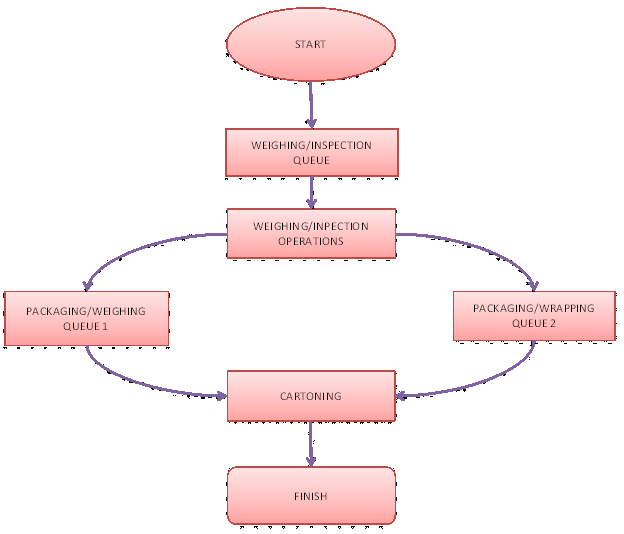
As a result, our group decided to focus on only some aspects of the packaging section, particularly the last stage of quality control which is the final inspection and weighing of various body parts as well as wrapping and packaging of the motor body parts in cartons. In particular, we modelled the packaging of bush press for its latest model of car known as Qashqai.

The reason why we chose this problem for the simulation model is attributable to the fact that, Nissan company was a good case of how many automobile manufacturing companies are faced my numerous challenges when it comes to addressing the challenge of space utilization and reduction of congestion not only in their packaging section, but in the entire manufacturing process as a whole even though the former is more imperative considering that, it is the last stage in the manufacturing process prior to the body parts being taken to the warehouse awaiting to be shipped overseas or transported for distribution (Lanner, 2013).    

This choice was further attributed by the fact that, some data was available online in addition to the potential of making estimations that are not significantly different from the anticipated results of the actual manufacturing process. Thus, considerable data was collected concerning Nissan Motor Manufacturing Company Limited, particularly the manufacturing plant which is based in Sunderland.

This was further enhanced by making estimates that were not significantly different from the actual production process data. No particular visit was made to the actual manufacturing plant location, but quite a lot of time was spent discussing the various aspects of the manufacturing process data including the processes included in the packaging section, arrival profile of the finished body parts, shifts of employees working in the packaging section as well as the durations needed to each of the considered process for each body part.

Sometimes the packaging area may involve many activities, but in our project we specifically focused on the final inspection and weighing of the finished body parts particularly the bush press as well as the wrapping and cartoning of the bush press prior to being taken to the warehouse for storage awaiting dispatch to the market. We focused on bush press because of their peculiar nature which makes their demand extremely high in the market, especially at a time like this when Nissan Motor Manufacturing Limited was experiencing tremendous growth in its production capacity due to increased market demand.

Want help to write your Essay or Assignments? Click here

In an automobile manufacturing market which is hugely competitive, Nissan has to no option but making sure that it demonstrates superb value for money in its attempts towards securing contracts for new car models’ production (Lanner, 2013). This is attributable to the fact that these new contracts for the manufacturing of new car models can only be secured by companies that have the ability to provide the best option in manufacturing with regards to cost, delivery, and quality.

In particular, the Nissan manufacturing plant in our group project faces stiff competition not only from competitors in the market but also other Nissan plants located in UK as well as across the world. As a result, the Nissan manufacturing plant based in Sunderland is without any doubt in desperate need to make sure that there is optimization of its production processes, especially for the manufacturing of the latest Nissan’s Qashqai car model (Lanner, 2013).

This was to a significant extent motivated by the introduction of the suspension plant that was specifically installed for the manufacturing of the Qashqai model, and the company needed to succinctly understand and outline the role of this newly introduced automobile manufacturing technology (Lanner, 2013).

In addition, there was need to delve into details of the sources of congestion in the packaging section which was becoming a common phenomenon sometimes hindering smooth production flow due to lack of space for convenient and flexible manoeuvring of company employees during manufacturing processes as well as limiting storage space of finished bush press automobile body parts and delays in market delivery to meet the orders placed for finished parts.

There are also other aspects of the simulation scenario that have the potential to impact the throughput of the automobile company including number of employees, production durations, number of automobile parts that can be at a time, sources of raw materials, the market demand, technology employed in the manufacturing assembly line and packaging, size of the warehouse and many others (Fishwick, 2008).

Most of these aspects can not be easily altered without expensive changes have to be made to the company, which is mainly the reason why in this group project we are going to begin by optimizing the packaging section efficiency and performance, particularly the inspection and/or weighing as well as wrapping and cartoning processes. The WITNESS software simulation group project will be divided into five main parts.

These parts are particularly: the introduction, the role/importance of WITNESS simulation software in company manufacturing process, model build process and analysis of collected data, implementation of the simulation model as well as the improvement of the simulation model and conclusion.

The introduction part will provide basic and/or background information about simulation models in company manufacturing process and in particular emphasizing on WITNESS simulation software on which this project will be based. The purposes for which software based simulation models have been used in manufacturing will be discussed in this part.

In addition, the place of simulation in contemporary manufacturing processes will also be discussed together with the progressive use and progress made in computer simulation models to simulate various manufacturing systems and/or processes for reduction of costs and improved productivity. The essence of the wide usage of simulation in company manufacturing processes as a stylish, flexible and contemporary management tool will be highlighted.

Want help to write your Essay or Assignments? Click here

The second part will discuss the role of simulation in manufacturing process. An emphasis will be put on reviewing literature to provide evidence on the use of simulation in manufacturing process. In this part, focus will be on production aspect of the manufacturing process and how simulation modelling has been used to facilitate making of decisions and its imperativeness in solving production management problems.

The third part will present the simulation model building process with an emphasis on elucidating how the simulation model will be executed. This will be done simultaneously with collection of data and analysis of the results of the simulation model in order to identify the bottlenecks of the manufacturing process or production system as well as the underlying issues that cause the problems.

The fourth part will be concerned with the implementation of the developed simulation model based on WITNESS software in order to identify, verify and validate the simulation model results. Finally, the last part will discuss the modifications if necessary that will be made on the developed simulation model in order to improve the manufacturing process for increased total output (productivity) and maximization of inventory of products. Lastly, recommendations and a conclusion on the simulation project and the developed simulation model based on WITNESS software will be provided.  

The Conceptual Model

The packaging section consists of six weighing and inspection machines {m = 1, 2, 3, 4, 5, 6} and each of the machines work at the same rate and similar in specifications as well as stop time intervals, even though the frequency of stoppages are randomly distributed between all the six machines. The stoppage interval of the six weighing and inspection machines is approximately a negative exponential distribution of 240 minutes and upon stoppage the repair time range between a minimum of 15 minutes and a maximum of 20 minutes.

Fifty applications (bush press automobile parts) arrive in every 30 minutes and are buffered into a queue awaiting to be inspected and weighed by the inspection and weighing machines prior to wrapping and eventually being put into cartons. This operation takes duration of between 2 and 10 minutes for each application (bush press automobile parts) meaning the process a uniform cycle time of between 2 and 10 minutes.

Want help to write your Essay or Assignments? Click here

From the inspection and weighing machines the applications (bush press automobile parts) are directed into another queue of the packaging or wrapping machines where they are wrapped before being put into cartons and then taken to the warehouse for storage awaiting dispatch to the market. There are two packaging or wrapping machines arranged in a conveyor format each with a capacity of 1000 applications (bush press automobile parts) meaning the total buffering capacity of the wrapping machines is 2000.

Subsequently, the wrapped applications (bush press automobile parts) are directed to the cartoning machines which package them into cartons. There are four cartoning machines {m = 1, 2, 3, 4} which operate effectively throughout unless during planned maintenance shutdown and during this period the production is temporarily stopped or a contingency plan is implemented in case there is a high demand. This operation takes duration of between 2 and 15 minutes for each application (bush press automobile parts) meaning the process a uniform cycle time of between 2 and 15 minutes. The packaging area operations are illustrated in the conceptual model shown below:

Figure 1: Conceptual Model

A combination of the conceptual model simulation modelling information with the shifts, sub-shifts as well as shifts and sub-shifts breaks the outcome of running the simulation model based on the specifies rules both the model outcome without element flow illustrations and the one with element flow illustrations are shown in Figure 2 and Figure 3 shown below respectively:  

Figure 2: Final Model without Elements Flow

Figure 3: Final Model with Elements Flow

The Data Collection and Input Modelling Process

Data collection

According to Ballakur & Steudel (2007) data collection constitutes the most imperative part of the entire despite of it being a very daunting, frustrating as well as time consuming task mainly because it sets the stage for the simulation project as a whole. As a result, the time needed to develop the simulation model may significantly vary based on the extent of quality and quantifiable data that should be collected prior to beginning the actual simulation.

Banks and Carson (2004) argued that even when the validity of a simulation model structure has been confirmed, if collected data is inputted incorrectly collected, followed by inappropriate analysis, the resulting simulation output will not be a representation of the actual environment, and will provide misleading and possibly damaging information. In this group project, the data was not fully available and the collected data was supplemented by some tentative estimation to ensure significant variation was not witnessed between the actual production scenario and the simulation scenario.

In particular, the data was collected about Nissan’s packaging section processes specifically on the arrival profile, shifts and sub-shifts, activity cycle times, capacity of queues,  as well as stoppages of the inspection and weighing machines for the bush press body parts from the assembling line.

Arrival Profile

TimeLengthVolume
18:003050
28:303050
39:003050
49:303050
510:003050
610:303050
711:003050
811:303050
912:003050
1012:303050
111:003050
121:303050
132:003050
142:303050
153:003050
163:303050
174:003050
184:303050
195:003050
205:303050

Day shifts

Period TypeWorking PeriodRest TimeOvertimeSubshift NameTotal
1Subshift4809600Day subshift1440
2Subshift4809600Day subshift1440
3Subshift4809600Day subshift1440
4Subshift4809600Day subshift1440
5Subshift4809600Day subshift1440
6Subshift24012000Day subshift1440
7Subshift24012000Day subshift1440
Total28807200010080

Breaks during Shifts

Period TypeWorking TimeRest TimeOvertimeSubshift NameTotal
1Period180150195
2Period105600165
3Period120150135
4Period758700945
Total48096001440

Stoppages of the Final Inspection and Weighing Machines    

Final Inspection and Weighing Machine Operation Stoppages
Busy TimeNegative exponential distribution of 240 minutes 
Repair TimeA uniform distribution of 15 minutes minimum and 20 minutes maximum

Simulation rules were also considered whereby all input rules were set to be push and the output rules were set as pull i.e. the default rules in the simulation model settings. As a result, the simulation rules were used to connect the flow of elements through the simulation model from start to finish.

Want help to write your Essay or Assignments? Click here

China superpower of manufacturing economy

China superpower of manufacturing economy

Want help to write your Essay or Assignments? Click here

China superpower of manufacturing economy

Over a period of many years, China has held its position as the world superpower of the manufacturing in the general merchandise sector. This is due to the rapid and dynamic growth in its economy, building focus in the world demand for manufacturing products and services.  The country’s population, political stability and consumer interest and pattern can be explain its position as the world superpower of manufacturing in general merchandize. The country is however experiencing stiff competition from India, one of the world’s rapidly growing country economies.

India has in the past twenty years rapidly increased its share in the manufacturing industry. The country has recorded positive improvement in its gross domestic product (GDP). India just like China records one of the highest populations in the world (Ghemawat & Hout, 2016, p. 86). This offers a vast market for consumers and traders in the region. The country has taken advantage of its growing population to invest in merchandise market development. This has posed a significant threat to China’s position as the world superpower in the manufacturing industry.

Want help to write your Essay or Assignments? Click here

Subsequently, it can be argued that India is rapidly rising into the next superpower after China through their shift in development of technology (Gupta & Wang, 2009, p.25). The country is facing a drastic change in the industrial revolution through adopting a modern forms of technology applied in the manufacturing industry. This has increased their overall business performance.

India has tightened its grip in both the private and public sector, embraced trade liberalization and increased their involvement in foreign direct investment (Xingxing 2015, p. 685). This has primarily improved the manufacturing industry of India, making it a viable candidate as the next superpower after China.

Furthermore, the rapid expansion of information technology in India has accounted for the growth of commerce, business services, and banking. Moreover, India has gained an international reputation as an IT enabled center of the world. This has increased its global position in the e-commerce sector, improving its strength in the manufacturing industry globally.

In addition, India is experiencing growing investment rate, with an average of thirty-two percent compared to that of China at thirty-five percent (Mahtaney, 2007, p. 2455). This rate is set to project in the next year and India could surpass China’s the rate, making it the world superpower in the manufacturing industry.

Want help to write your Essay or Assignments? Click here

China is facing a significant challenge in their population, as a large percentage of the population is set to experience old age in the future years. This is bound to affect its general labor output, unlike that of India which is strengthening. India has a demographic surplus of younger generation increasing their task force in the manufacturing sector (Takeuchi, Chen & Lam, 2009, 86). The growing generation is also experiencing the best form of education, expanding their expertise in the sector. Based on these projections, it is predicted that India may overtake China as the current superpower in the manufacturing industry.

Reference List

Ghemawat, P, & Hout, T 2016, ‘Can China’s Companies Conquer the World?‘, Foreign Affairs, 95, 2, pp. 86-98, Academic Search Premier, EBSCOhost, viewed 30 March 2016./

Gupta, A, & Wang, H 2009, Getting China And India Right: Strategies For Leveraging The World’s Fastest-Growing Economies For Global Advantage, San Francisco: Jossey-Bass, eBook Collection (EBSCOhost), EBSCOhost

Mahtaney, P 2007, India, China, And Globalization: The Emerging Superpowers And The Future Of Economic Development, Basingstoke [England]: Palgrave Macmillan, eBook Collection (EBSCOhost), EBSCOhost

Takeuchi, N, Chen, Z, & Lam, W 2009, ‘Coping with an emerging market competition through strategy-human resource alignment: a case study evidence from five leading Japanese manufacturers in the People’s Republic of China’, International Journal of Human Resource Management, vol. 20, no. 12, pp. 2454-2470. Available from: 10.1080/09585190903363763.

Xingxing, L 2015, ‘An Economic Analysis Of Regulatory Overlap And Regulatory Competition: The Experience Of Interagency Regulatory Competition In China’s Regulation Of Inbound Foreign Investment‘, Administrative Law Review, 67, 4, pp. 685-750, Business Source Complete, EBSCOhost,

Want help to write your Essay or Assignments? Click here

Impact of Motivation on Productivity

Impact of Motivation on Productivity

Want help to write your Essay or Assignments? Click here

Impact of Motivation on Productivity

Manzoor, Q (2014). The impact of employees’ motivation on organizational effectiveness. Retrieved from: European Journal of business management, 3. Retrieved from http://www.iiste.org/Journals/index.php/EJBM/article/viewFile/265/150

The success of a business is influenced by the level of employee motivation. Productivity and profitability are the results of happy and hardworking workers. Motivation is dependent on individual employee since some may be motivated by money, others promotion and others are motivated by having equity in the business. The only way to motivate employees is finding out what each wants and making it available or assisting them to earn it. If all employees are motivated, the result will be high productivity and profitability.

Weldeyohannes, G 2015. Employee motivation and its impact on productivity in the case of National Alcohol and Liquor Factory. Journal of Poverty, Investment and Development, 15. Retrieved from http://www.iiste.org/Journals/index.php/JPID/article/viewFile/24894/25497

The author carried out the research to identify the existing motivational strategies in National Alcohol and Liquor Factory and assess their impacts on productivity. The quality of the motivating system, type of motivation, and roles played by the motivated employees are some of the items analyzed to address the issue of employee productivity. By carrying out the research, the company was able to identify gaps in its motivational system and focus on motivation since it affects the productivity of the organization.

Barg, J Ruparathna, R, Mendis, D & Hewage, K (2014). Motivating workers in construction. Journal of construction engineering, 11. Retrieved from http://www.hindawi.com/journals/jcen/2014/703084/

Construction industry lagged behind in productivity compared to other industries. Attitude, employee-employer relationship, and lack of communication are some of the main issues affecting motivation in the workplace.  Work climate, employee development, perceived equity, work objectivity, and organizational climate should be addressed with relation to employee motivation.

Want help to write your Essay or Assignments? Click here

Serchuk, D (2010). Shareholders win when employees are motivated. Forbes, 3.  Retrieved from: http://www.forbes.com/2009/08/23/employee-motivation-stocks-intelligent-investing-returns.html

An environment that fosters motivation makes employees feel that there is constant communication, have control over their work and are respected. According to the research, firms that had motivated employees had a subsequent increase in their stock prices resulting in high dividends for shareholders. Being less strict on internet use, measuring performance with set goals, and consistent measurement of performance are some of the ways the author indicates crucial in improving productivity.

Michael, J (2015). Increasing productivity of retained employees after a workforce reduction. Scholarly works: Walden. Retrieved from http://scholarworks.waldenu.edu/cgi/viewcontent.cgi?article=3009&context=dissertations

The study was carried out in the United States telecommunication industries due to the increased downsizing of workers. Systems theory was used to assess the available strategies for managers to increase the motivation of the retained workers. Communication is the most crucial element in motivating the workers.

Willyerd, K (2014). What high performers want at work? Harvard Business School, 1. Retrieved from:  https://hbr.org/2014/11/what-high-performers-want-at-work

High performers are the most productive compared to average workers according to the research. High performers are few in the workplace yet they the most satisfied with their jobs. The best strategy should be to increase retention rates for the high performers. The study was conducted in 27 countries to determine the future expectations of the workforce. Base pay and bonuses are what satisfies most employees.

Want help to write your Essay or Assignments? Click here

McGregor, L & Doshi, N (2015). How company culture shapes employee motivation. Harvard Business School, 1. Retrieved from: https://hbr.org/2015/11/how-company-culture-shapes-employee-motivation

Culture is critical in an organization as it drives performance and affects business processes. A good culture encourages play, potential, and purpose while at the same time reducing economic and emotional pressure. The research was carried in 50 companies around the world.

Sullivan, J (2011). Increasing employee productivity: The strategic role the HR essentially ignores. ERE Media, 1. Retrieved from http://www.eremedia.com/ere/increasing-employee-productivity-the-strategic-role-that-hr-essentially-ignores/

According to the author, morale can be defined as an individual’s state of mind resulting from emotions and feelings. It is an elusive quality that determines the attitude towards other team members, workplace environment, and the overall organization. Job insecurity, excess outsourcing, perceived unfairness, and poor compensation lead to poor morale. Thus, employees focus on how to improve their careers instead of being productive. Managers are encouraged to build an organization culture that meets the needs of each employee to increase their motivation and productivity.

Want help to write your Essay or Assignments? Click here

Puwanenthiren, P (2011). The reward system and its impact on employee motivation in the commercial bank of Sri Lanka, PLC. Global Journal of Management and Business Research, 11. Retrieved from https://globaljournals.org/GJMBR_Volume11/9-Reward-System-And-Its-Impact-On-Employee.pdf

Organizations are focusing on having an equitable balance between employee contribution to the firm and the firm’s contribution to the workers. Recognition, benefits and compensation are some of the rewards associated with the balance between the firm and the employees in the bank. Balance leads to motivation hence increase in productivity.

Williamson, F (2014). Enhancing strategies to improve workplace performance. Walden, 121. Retrieved from http://scholarworks.waldenu.edu/cgi/viewcontent.cgi?article=1105&context=dissertations

The author applied Maslow hierarchy of needs to analyze motivation in relation to productivity. Strategies must be put in place to address the misunderstandings that happen when there are changes in organizations. Attitude, beliefs, and background can result in destructive or constructive acts that affect workplace performance.

Want help to write your Essay or Assignments? Click here

CSR, Business Ethics & Sustainability

Business Ethics, Sustainability & CSR

Want help to write your Essay or Assignments? Click here

Business Ethics, Sustainability & CSR

Introduction

Intense competition has forced most companies to change their operations tremendously. Specifically, the retailer supplier relationships have been forced to change in the face of system level competition (Carne & Matten, 2010). The emergence of new forms of retailing such as the internet retailers has even put more pressure on the traditional retailers. In spite of the pressure. the expectations are still high from the stakeholders who expects the retailers to provide excellence services to their customers.

The customers are increasingly becoming concerned of what their retailers sell, in addition to the prices that they sell them. Of the concern to some people is that some merchandise sold by the retailers comes from sweatshops (Smestad, 2010). Many activists are concerned with the social contract that exists between such organizations and the society. Such groups argue that retailers must assume the greater responsibility for human welfare throughout their supply chain. At one time, it emerged that some cloth line being sold at Wal-Mart stores have come from intolerable working conditions in Honduras. This paper uses ethical theory and analyzes an ethical issue in Wal-Mart.

The Unites States have created a keen interest to monitor the supply chains with the sole aim of protecting the human rights and the environment. In this regard, companies have been forced to update their supply chains to ensure that all their suppliers meet the minimum required levels of the law. In this regard, the companies are required to verify, audit, certify that their suppliers comply with the law of slavery and human trafficking (Pickles & Zhu, 2013). In addition, the companies are required to maintain internal accountability standards and conduct proper training for their employees to reduce the risks associated with human trafficking and slavery.

Concept of Business Ethics and CSR

Globalization has facilitated more trade across the border, leading to lack of universal standards and regulation to protect such trade. In addition, the multinational corporations have become more powerful than the individual governments, thus limiting the ability of such governments to regulate them (Adams, 2002). However, the advancements in communications technology and the changes in consumer behavior have exerted pressure on organizations to become more accountable in terms of ethics and social responsibility.

The concept of CSR promotes the ethical behavior toward s the society, leading to increased consideration of stakeholders and the promotion of the social good beyond the legal requirements. Apart from making profits, it has become the responsibility of the firm to take care of the interests of its stakeholders and the environment. The diagram below shows the dimension of CSR.

Want help to write your Essay or Assignments? Click here

Ethical Theories

Ethical theories include systematizing, defending, and recommending on issues of moral values or right conduct. In arriving at a business decision, ethical theories are foundations of ethical analysis, as they are viewpoints on where the management obtains guidance. Wal-Mart applies the theory to a set of common goals for it to be beneficial for their organization. Ethical principles such as least harm and respect for human rights are some of the cornerstones of Wal-Mart CSR (Worthington, Ram, & Jones, 2006). Virtual ethics theory and utilitarian ethical theory are some of the theories that can be used to describe the Wal-Mart Practices.

Utilitarian ethical theory forecasts the impacts of any action taken. In this theory, Wal-Mart is able to compare similar predicted solution and choose the best course of action that is more beneficial to more people and the society. Therefore, the company settles on the choice that results to the greatest benefit to the most people (Vyakarnam, 1997). For example, Wal-Mart chooses to deal with supplies that have proven track record of human rights and environmental protection.

Categorization of utilitarian emanates into two groups namely; act and rule utilitarian. The company takes the action that favors the larger number of people regardless of personal feeling or societal rules such as law and constitution. In this theory, an individual right might be violated in order to attain a benefit to majority people. On the other hand, this law does not put into consideration justice, autonomy, and beneficence.

Want help to write your Essay or Assignments? Click here

It has the element that creates a typology of stakeholders’ cultures consisting of beliefs, values, practices that take a great role in problem solving and maintaining the stakeholders’ relationship (Smestad, 2010). For instance, by selling their products at profit, the company is able to finance initiatives that create benefits for its stakeholders. The customers may be paying more for the products. However, such extra profits are used by the company to support environmental protection initiatives and green economy.

The driving force behind the ethical behavior of Wal-Mart is based on their decision to act as a moral agent, rather than the outcome. The company applies the principles of kindness, humility, and charity to ensure that their stakeholders are safe (Herningway & Maclagan, 2004). These values are based on the religious beliefs that encourage their members to act with honesty and kindness while dealing with other entities.

In their business dealings, Wal-Mart protects their reputation through their honesty and fairness in their business dealings. In this regard, Wal-Mart partners with companies with world class eco-manufacturing facilities and good record of social compliance. In the United States which is the home town of Wal-Mart, majorities are Christians and thus tend to support the Christian beliefs in their business operations.

The ethical principles of Walmart employees is mainly based on the good conduct and fairness and portrayed in the Christian beliefs. Therefore, it is the principle of the company not to exploit people around them and shun any of their partners who exploits their stakeholders. The company does this at will without being forced by any other law or entity.

Want help to write your Essay or Assignments? Click here

Virtue theory holds is necessary to incorporate moral theory in management and the activities of the organization as it directs and motivate behaviors towards the success of the business (Crane & Matten, 2010). It provides for foundation of business ethics with the connection of ethics to business positivity. It also provides an environment in which managers’ advances on tactics, strategies, plans, policies, and procedures to attain a clear business mission and in achieving economic success.

Virtuous behavior is required at all the levels in a business from staffs who understands that an organization is a natural and moral ways of achieving actualization. Virtuous staffs set value producing goals and work towards their achievement as they are energetic who stress on reality, think positively, ask and listen carefully, manage time effectively and are organize their work efficiently.

Conclusion

Intense competition has forced most companies to change their operations tremendously. Due to this, some companies have gone to the extent of benefiting from sweatshops to increase their sales. However, people are increasingly becoming more aware and companies are forced to adhere to the requirements of ethics and CSR. Wal-Mart is one of the retailers that adhere to business ethics and CSR to help their stakeholder. On the other hand, they also benefit from the CSR initiatives.

Bibliography

Crane and Matten (2010) Business Ethics, OUP, Oxford, Chapters 1 & 3

Perry and Ahmad (2015, forthcoming) ‘Islamic and Buddhist perspectives of Corporate Social Responsibility’ in Örtenblad, A. (Ed.) Handbook of Research on Corporate Social Responsibility, Edward Elgar, UK

Adams (2002) ‘Retail profitability and sweatshops: a global dilemma’, Journal of Retailing and Consumer Services, 9 (3), pp.147-153

Porter, M.E. and Kramer, M.R. (2006) ‘Strategy and society: the link between competitive advantage and corporate social responsibility’, Harvard Business Review, 84 (12), pp. 78-92

Pickles, J & Zhu, S. (2013). The California Transparency in Supply Chains Act. Working Paper 15. University of North Carolina.

Smestad (2010) ‘The sweatshop, child labour, and exploitation issues in the garment industry’, Fashion Practice, 1 (2), pp.147-162

Hemingway & Maclagan (2004) ‘Managers’ personal values as drivers of corporate social responsibility’, Journal of Business Ethics, 50 (1), pp.33-44

Worthington, Ram and Jones (2006) ‘Giving something back: a study of corporate social responsibility in UK South Asian small enterprises’, Business Ethics: A European Review, 15 (1), pp.95-108

Vyakarnam et al (1997) ‘Towards an understanding of ethical behaviour in small firms’, Journal of Business Ethics, 16 (15), pp.1625-1636

Want help to write your Essay or Assignments? Click here