

Business Operations and Systems

Business Operations and Systems

Want help to write your Essay or Assignments? Click here

Business Operations and Systems

Introduction

B&M is the fastest growing retailer business that has outlet stores on more than 450 high streets in UK and Germany. In the UK for instance, the company offers clients a wide range of FMCG products at reasonable costs. The company’s primary operations objective is to provide customers with an enjoyable shopping experience, premium products and eccentric value to win customer loyalty.

In 2015 the retailer registered an average 2.7 million client transactions on a weekly basis. Zero expenditure on the advertisement is what drives the cost leadership. This paper evaluates operation management for a B&M retail stores in the UK. It looks at some of the challenges the company grapples with in its bid to transition online.  

Part 1

Why Customer Turn up to the Stores

Electronic retail establishments’ invest a lot on promotions to gain more clients. The approach is even capital intensive when customers flock online, especially with heightened competition. With this in mind, it would be prudent to comprehend the type of entry for every client to determine the earnings of the marketing efforts. B&M embraces various channels to win customer loyalty including; recommendations, paid search, marketing offers, mobile apps and gift cards among others.

Customer engagement

Clientele involvement is crucial because it aids in determining consumer behavior. To evaluate customer relationship at B&M, it is necessary to use three fundamental dimensions such as mailer response, visitation trend and procurement behavior.

B&M should use mailer response to enhance shopping. Personalized reminders can be employed to attract customers. Close consideration to this will enhance the organisations capacity to capture the most actionable client-related statistics.

Visitation trend: this type of information is one huge playground on which in-depth review can be pegged.  This type of data is critical when it comes to helping clients engage with customers (Pettersen, 2009). For computing customer value, defined metrics such as some visits to either particular brands or offers may be employed to project the clients value (Slack et al. 2012).

Procurement Behavior: Autoresponders and the visiting trend can be used to analyze the customer interest. Buying behavior is a reflection of how clients are involved.

Want help to write your Essay or Assignments? Click here

Customer Exit/Churn

It is the dream of every business to retain clients, however, for most online retailers, about 50% of customers will just make a one-time purchase. Some recurrent purchases may also wither over a particular period.

At least one in every four online shopping has failed to reach the client in good time, as such; millions have been forced to put up with late consignments (Retail Week. 2012).  While more than 50% of people prefer to make online purchases all for good reasons, about twenty-six percent of online customers have witnessed issues when it comes to delivery of products (Retail Week. 2012). In short, B&M is likely to grapple with the urgency of delivery for online distribution market.

Customer value for online shoppers

People make online purchases not because a given store has some of the most sophisticated technology or impressive media; they buy from these infrastructures because they need solutions to their problems. For sustainable business operations, B&M should help clients resolve problems by offering products that are tailored to solving client problems.

Want help to write your Essay or Assignments? Click here

The Changing Online Value Chain

When transitioning online, the value is altered by a linear flow of physical goods and services to a multi-directional data flow. At every phase of the supply chain, valuable information is collected, evaluated and disseminated to others. Apart from the products and services, the information is critical when it comes to creating real clientele value. While B&M takes advantage of cost leadership it is also essential to understand that customers make purchases not because of cheap prices but for many other reasons such as:

Save time: B&M should assist people to access goods and services promptly.

Minimise Risks: Offer complete data that assist each client in making informed procurement decisions
Stock Things they Treasure: Sell products people may want to buy

Status: Develop networks with specialized discounts
All these variables are dependent on having the best data about items, services, clients, markets and partners. Gathering, synthesizing and disseminating information in ways clients find essential is a powerful means to value creation.

Want help to write your Essay or Assignments? Click here

Challenges of Online Buying

Buying goods online are convenient compared to visiting a physical store. Also, online buying presents clients the opportunity prices a wide of products. Much of online marketing and security have developed; it is associated with a myriad of problems including buying the wrong product, being scammed on the internet (Slack, Chambers and Johnston, 2004).

Wrong order

When buying online, if a shopper request for a product and get a wrong one, it is the responsibility of B&M to correct the mistake or refunds the customers. Online stores recognise the customer service can either make or harm their operations; therefore, B&M should be prepared to correct this issue if they occur. For instance, they can compensate the cost of shipping.

Nonetheless, on internet auction websites, this procedure is not clear since they act as platforms for connecting shoppers and sellers (Rosemann, 2010). In certain cases, they can provide an online method for addressing delivery of wrong products and act as intermediaries in the procedure. Therefore, for B&M when settling for an online system, it should put in place a resolution center to address issues related to the wrong delivery of products as such errors can adversely affect its operations.

Delayed delivery

With online buying, there are changes of not getting products or delayed delivery. If shoppers fail to get their products within the stipulated time frame, the seller should refund the buyers. As such, B&M will be put in place appropriate models to ensure clients get their orders on time. Furthermore, the store will also be ready to help clients in case the product is not delivered. Nevertheless, if the product is not delivered B&M will provide shipping as well as tracking details; refund or send a replacement.

Under certain condition, an order can be shipped but goes to the wrong address; stolen, or inadvertently left. If such occur, the store will be ready to give resolve such issues. With regards to international customers, when a wrong order is delivered, major online vendors require settling the case in a local court. This is not practical; therefore, B&M will liaise with a store near the clients and replace it with the right one.

Want help to write your Essay or Assignments? Click here

Appropriate operations models (quality/depth).

Delivering products to clients on time and the suitable temperature is an import strategy for B&M’s success. Clients have a higher expectation when it comes to distribution of goods, accuracy and flexibility. B&M has to adopt a window while ensuring that frozen products are stored at the appropriate temperature. There are different operation models including;

Distribution operation; this model is regarded strategic operation for an online entity to perform its delivery channels. It implies that the organisations has total control of the distribution process and can use it as a venue for developing a relationship with clients. B&M can adopt its delivery channels enabling it to provide state-of-the-art in a 2-hour delivery window.

Outsource distribution of goods; B&M can contract a third party like express distribution services. This will help the organisation to delegate the challenging role of scheduling daily routes to an expert, permitting it to concentrate on other parts of the operations.

This model does not investigate infrastructural facilities though it’s flexible if demand fluctuates. Nevertheless, this method is perilous such that B&M outsource a third party firm to control its operations. Additionally, this model provides an opportunity for developing a relation with client.

Third location delivery or click and drive model; the clients make online orders and pick them at particular locations. 

These sites can be owned by B&M or particular warehouse or third-party areas such as post office. Third location delivery will allow B&M to save distribution expenses and increase client fulfillment with extra services (Retail Week. 2012). Unattended delivery through insulated boxes: This will enable B&M effectively use its distribution routes. Also, this model is convenient particularly, for clients who are present during childbirth time.

There is no appropriate model, in-store buying model appears effective especially, in small demand sectors, however once the volume increases centralised warehouse technique is efficient. Some stores have realized and are adopting hybrid techniques, integrating in-store model with centralised warehouse technology (Johnson & Clark, 2008). Similarly, stores are experiencing a trade-off between providing convenient delivery services and efficiency.

Want help to write your Essay or Assignments? Click here

Creating Customer Value

There are different ways for the organisation to create value for its clients, especially when buying online. These methods include;                                                                                             

Release trapped value to improve efficiency. Creating value is sufficient where shoppers can quickly find products and at affordable rates. B&M can convert its Saturday parking area into a full-time shopping area. Offering new techniques to perform regular tasks also increase value, for example, providing instant downloads for important details instead sending via post office.     

New-to-the-World Value presents new things that clients find not only essential but also valuable. In this case, B&M stores can offer products that meet the needs of the individual client, allowing them to develop groups of shared interests while allowing collaboration between individuals separated by location and time.           

Online buying is flexible B&M can test new offers and determine the one the works effectively. Integrations can be applied to interrupt existing pricing strategies and increasing access globally. Regardless, value creation plan, the store can rely on the provision of relevant information to create long-term client value.

Want help to write your Essay or Assignments? Click here

Part 2

Tips: Structure for part two:

Root Definition (based on your chosen solution).

Root definition will be used by the project team, estimators and development managers; they will take the project (online ordering system) from the business manager. Using the necessary technology, expertise, process and develop an understanding of the project and the required costs (Holt, 2009).

This is a significant step as it helps the B&M to examine if the project is viable or not. This will be done within a short period with the assistance from consultants. This procedure is extremely competitive where the suitable bidder is selected based on the performance as well as organisational goals.

Table for CATWOE (this is to test the Root Definition).

This project will include

Customer: in this case, B&M clients

Actors including development manager, project team, estimator, software engineer and business manager. In short these are B&M employees who will manage the online system

Transformation; this will be in the form of processes, knowledge, technology and relevant details about the project. All the aspects are important in preparing a detailed recognition of the project while cost estimation to evaluate the viability of the bid. Why bother? Is vital in examining the probability of making the tender.

Therefore, B&M store should adequately understand the project. In essence, the organisation should determine whether or not the project fits with its objectives, cost and time frame. Owner; this include the project team. The environment includes different factors including organisational objectives, quality, cost, timeline, and competition.

Want help to write your Essay or Assignments? Click here

13. “AS IS” process plan (include brief summer of the process plan).
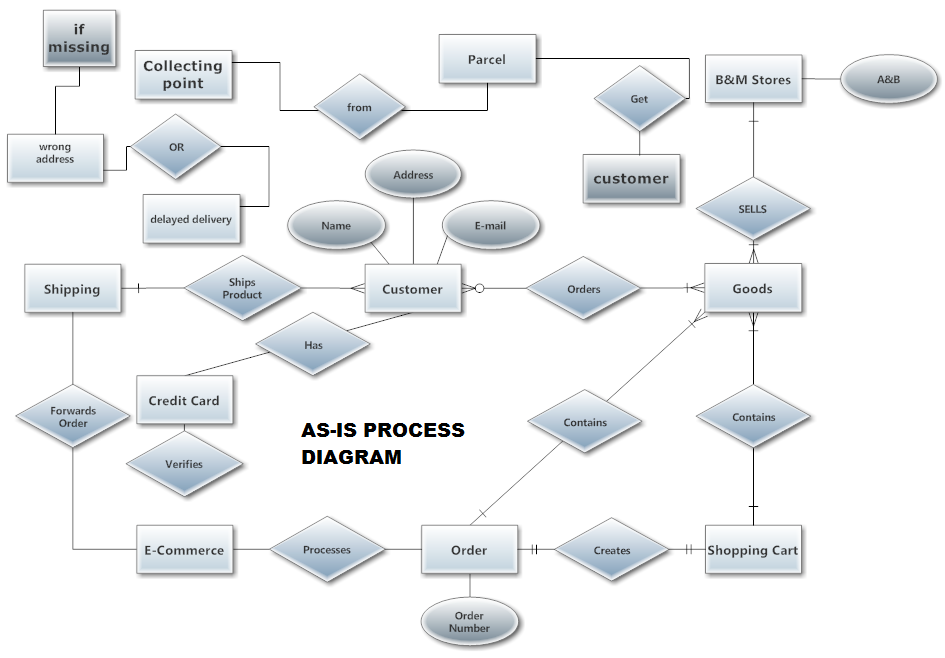
14. “TO BE” process program (include summary to explain the process plan)

In the “AS IS” process plan the problem is defined based on the clients’ perspective, there will be the challenges of wrong delivery or products and delayed delivery. Therefore, the process will be designed in a way that addresses these problems. In addition, the process will be developed while putting into account the incentive structure of B&M store. For instance, the company will monitor delays and unlawful delivery of products by returning the product to the warehouse.

Want help to write your Essay or Assignments? Click here

When it comes to the cause of wrong or delayed delivery, B&M will adequately assess the current condition with careful consideration of the problem. In the case of additional stages in the delivery process, the firm will eliminate some to fasten the process. After which an improved plan will be designed as shown below;
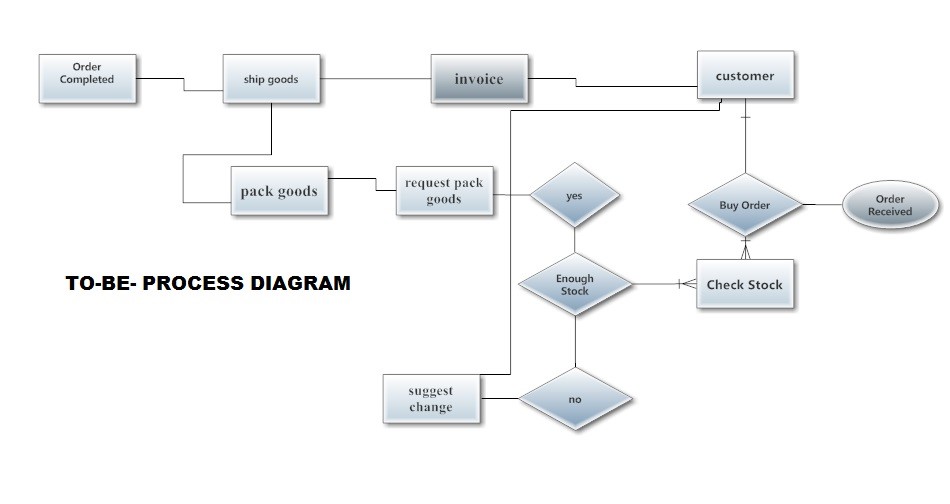
Part 3

Discuss how the managers would turn performance objectives into operations priorities and the resources that would be necessary for effective implementation of the new process (about six hundred words).

Transforming a strategy into positive outcomes starts with organizing people and practices through actions that are not restricted to strategy formulation, strategic and practical planning, accounting, talent and initiative control, projecting and technology (Heizer, 2011).

The leadership at B&M should implement a deliberate strategy by formulating, scheduling, and strategy control as opposed to depending on informal procedures and worksheets. There’s also the need to link the strategy and operations with an understanding that all areas of the company work in tandem to deliver performance (Marr, 2011).

Handling implementation as a process

The use of a balanced scorecard can help to translate approach into operational reality. Research indicates that the leadership craving for transformation and commitment essential to create and enhance a rigorous performance supervision process enhance the chances of success (Fitzsimmons & Fitzsimmons, 2007).

Strategy development

B&M managers can develop tactics to turn performance objectives into operations priorities. Regardless of the extensive use of management techniques such as balance scorecards, a few managers are skilled in developing a strategy. With a strategy in place, the managers will be able to clearly articulate operational priorities in a given time frame (Holt, 2009). In addition, they will easily galvanise B&M based on a particular as well as measurable strategic direction.

The managers will also use the strategy as a platform for identifying drivers of performance that result in positive outcomes. Besides, managers will be capable of understanding how clients and external environment affect performance while they rigorously examine inherent abilities.

Want help to write your Essay or Assignments? Click here

Translating the strategy

Translation of policy requires that managers use the outcomes and integrate them into a structure such as balanced scorecard. Strategy translation is vital as managers will use it to understand the connections between cause and impact among performance objectives and operations results through a particular structure (Jeston & Nelis, 2008). 

This is imperative, as it helps managers to not only identify, but also select and search for portfolios required to prioritise operations. Apparently managers assign responsibility to drive performance against strategic goals while developing an information- acquisition technique to collect metrics (Sachon, 2010).

Structuring

When it comes to structuring, managers control the continuous alignment of the firm by the performance objectives. However, the managers are required to export priorities identified during strategy translation (Jeston & Nelis, 2008). Much as this is vital and challenging move, it requires working in two unique though connected ways. To start with, whether the company is implementing a new process or not, employees should work together and recognise the change.

Managers should be aware of the firm’s strategy and use different methods to ensure that employees understand it (Fitzsimmons & Fitzsimmons, 2007). They also need to align incentives with plan. This is the social component of structuring, where managers persuade the firm to recognise while supporting change.

Moreover, there is a technical aspect of restructuring, which require managers to make sure that different operations work seamlessly. As such, the managers have to align improvement plans using Six Sigma or other performance targets. This procedure is commonly known as cascading and it has to integrate operational dashboard as well as balanced scorecards with strategies associated with the wider strategy of the firm (Rosemann, 2010).

Want help to write your Essay or Assignments? Click here

Plan operations

The top management at B&M should weave initiative control into the budgetary planning process, to ensure strategic investments obtain funding. This calls for the development of an incorporated scheduling procedure that provides a smooth transition from strategic planning to financial planning that is comparatively seamless and harmonized (Simchi-Levi, 2007).

They should employ methods like rolling estimates, model driver transparency to allow on-time allocation (Harrison, 2014). Above all, managers at B&M should leverage the company’s performance and business intelligence applications to support each stage.

Using a Balanced Scorecard, discuss how the business performance can be measured post implementation

Perspectives

As far as the balanced scorecard is concerned, the B&M is examined from four viewpoints, and to develop metrics, collect data and evaluate it based on these perspectives:

The Learning and Growth Perspective

This perception comprises employee training and organisational cultural attitudes connected to both individual and corporate self-improvement. In this age of technological transformation, it is somewhat critical for information employees to be in a continuous learning mode (Kaplan, 2010).

Metrics at B&M can be executed to instruct top managers in channeling training funds where they are needed most (Anupindi et al. 2008). Whatever the case may be, learning and development comprise for the success of B&M. Moreover, learning entails communication among employees that enable them to obtain help on an issue if need be.

Want help to write your Essay or Assignments? Click here

The Business Process Perspective

With this perspective, the top managers can determine how internal business processes run, and whether or not its business processes conform to clientele requirements (Kaplan and Norton, 1996). However, metrics should be developed by those people who understand the business operations, with the organisation’s distinct objectives (Heizer, 2011).

Customer Perspective

When it comes to client perspective, B&M focuses on fulfilling the expectations of customers. These are the main parameters; if the B&M fails to meet clients’ needs, they find other companies, to satisfy these expectations. The poor performance of customer perspective is the main parameter of that can lead to the decline of B&M though the companies past financial records look well. In creating satisfaction metrics, B&M must analyse the type of clients and varieties of procedures used to produce goods and services.

Financial Perspective

Financial information is vital in measuring post implementation. As such it should be timely and accurate as such B&M management should be ready to provide it when needed. There is adequate processing of financial records. With the adoption of the online ordering system, processing will not only be centralised but also automated.

Nonetheless, economic contributes to unbalanced condition compared to customer, business process and learning perspectives (Harrison, 2014). For that reason, financial-based information like cost-benefit and risk assessment information can be integrated to measure adequately business performance.

Bibliography

Anupindi, R et al (2008) Managing Business Process Flows: Principles of Operations Management Harlow: Pearson Educationed. Harlow, England: Pearson Education

Fitzsimmons J & Fitzsimmons M (2007) Service Management: Operations, Strategy, Information Technology London: McGraw-Hill

Harrison, N. (2014). PoundLand Expands to Online. Retail Weekly Journals. 1 (1), p1-7.

Heizer, J. (2011). Statistical Tools for Managers. Operations Management. 6 (2), p14-23.

Holt, J (2009) A pragmatic guide to business process modelling London: British Computer Society.http://www.bandmretail.com/about-us/history.aspx

http://www.retail-week.com/multichannel/highs-and-lows-of-click-and-collect/5037714.article [Accessed: 28th Feb 2016].

Jeston, J & Nelis, J (2008) Business process management: practical guidelines for successful implementations 2nd Ed. London: Butterworth-Heinemann

Jeston, J & Nelis, J (2008) Management by process: A practical road-map to sustainable business process management London: Butterworth-Heinemann

Johnson, R & Clark, G (2008) Service operations management Harlow: FT/ Prentice Hall

Kaplan, R (2010). Alignment. Harvard: Harvard Business Press. P29-56

Kaplan, R. S. and Norton, D. P. 1996. Using the balanced scorecard as a strategic management system. Harvard business review, 74 (1), pp. 75–85.

Marr, B (2011). The balanced scorecard and intangible assets: similar ideas, unaligned concepts. 4th ed. Cranfield: Emerald Group . p86-99.

Pettersen, J. 2009. Defining lean production: some conceptual and practical issues. The TQM Journal. 21 (2), p34-51.

Retail Week. 2012. Highs and lows of click-and-collect. [online] Available at:

Rosemann, M 2010. Handbook on Business Process Management. Queensland: Gold Coast Press. P29-54.

Sachon, M. 2010. IESE Insight Hard Discount Retailers: The Secrets of Their

Simchi-Levi, D (2007) Designing and managing the supply chain: concepts, strategies and case studies 3rd Int Ed. Boston: McGraw-Hill

Simha, R Magal & Word, J (2009) Essential of Business Processes and Information Systems Chichester: John Wiley and Sons

Slack, N et al (2012) Operations and Process Management: principles and practice for strategic impact third Edition: Pearson

Slack, N., Chambers, S. and Johnston, R. 2004. Operations Management. 4th Success. [online] Available at: http://www.ieseinsight.com/doc.aspx?id=1125 [Accessed: 28th Feb 2016].

Want help to write your Essay or Assignments? Click here
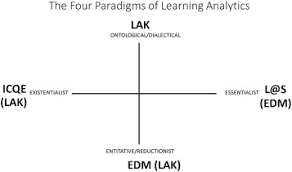
The Four Paradigms of Education

The Four Paradigms of Education

Want help to write your Essay or Assignments? Click here

The Four Paradigms of Education

Educational Inquiry Key Theoretical and Methodological Perspectives

Introduction

For decades now, the paradigm wars have continued amongst the supporters that argue fiercely for the superiority of their paradigms of choice. This has therefore resulted in a paradigm dialogue that has seen supporters accept their differences and come to the understanding that each and every paradigm in education has an equal importance(Hargreaves, pp 161-76.1997).

In other words, there is no research paradigm that is superior since each has a specific purpose in providing a distinct approach in which knowledge is acquired and dispensed. This clearly depicts the need for educational researches geared towards providing an understanding on the key theoretical and methodological perspectives. The outcomes of this research studies should, therefore, empower and envisage new practices and policies that have the capacity to meet the current emerging needs of education.

Research evidence that is developed to inform education practices remains an intergral element that can be acquired from different sources. The variability in the structure of research and design through which evidence are obtained is exhaustive. In achieving the demands of this paper, it is necessary to heed that I shall incorporate the two essential research approaches, the qualitative and quantitative methods in achieving data towards a course(Hargreaves, pp 161-76.1997).

Different forms of qualitative and quantitative evidence obtained from the research method can, therefore, allow an individual to examine and explore the disciplines that are encapsulated within the context of educational research. It is significant to note that these two evidences provide data to the endless dilemmas that exist within the educational setting.

This research paper will be divided into four sub-sections with the first section addressing the scenario and the context of the need for change in the curriculum at an educational institution and its context. The second section depicts the different paradigms and how research is employed in understanding them. An analysis is given in the third section that displays the differences between these paradigms and finally the paper analyses my explanation on how to align these paradigms.

Want help to write your Essay or Assignments? Click here

Part 1

This research process begins with a controversial situation that raises a critical question (Aberystwyth University 2014). The situation that lies in this study involves that of the German Government declaring that schools should change their mediums of instruction from German to English in all of their subjects. There is also need to develop a fully functional English environment with the aim of promoting proficiency in the greater use of the language, a factor that will enable the institution and its learners to globally compete through a standardized language.

Before carrying out research, there is need to undertake a certain school of thought. In order to also formulate research questions, there is a significant need for understanding the operating paradigms in as much as this paradigm may precede the research questions. In this study, the primary operating paradigms include; positivism, interpretivism, critical research and constructivism.

Part 2

An analysis of the Four Paradigms and Proposed Research Questions

The term paradigm needs a clear understanding. Hargreaves (1997) insinuates that a paradigm infers to a comprehensive world view, belief systems, or conceptual framework that has the capacity to guide a research and practice within a given field (p.44).

From the lenses of philosophy, a paradigm entails the existing views of the nature or reality (i.e., ontology) whether it is internal or external to the knower; a related perception on the type of knowledge that is generated and the underlying standards that justify this functions (i.e., epistemology); and a disciplined approach through which knowledge is produced (i.e., methodology).The main paradigms in this research study includes;

Want help to write your Essay or Assignments? Click here

Positivist Paradigm;

The concept of positivism bases its theory on the numerical and statistical interactions of a study. The holders of this school of thought make use of the quantitative research methods to gather quantitative data that leads to an increased understanding of the external objectives and realities. Considering the proponents of ontology and epistemology, the positivists pursue approaches aimed at determining the casual links in a study(Helsper, & Eynon, pp. 503–20. 2010).

This clearly indicates a point when English is introduced as an instructional standard.This would mean that English would be viewed as an essential subject that fosters and develops proficient speaking within the learners. The positivists in this line would either support or refute this approach through empirical indications that replicates knowledge. The positivists may, therefore, ask the below-stated research question;

How effectual would an English immersed environment and modification approach as a medium of instruction impact proficiency in learners?

Having determined the research question, the positivists, therefore, take approaches in defining their methodological approaches. It is, therefore, significant to note that the holders of this view align themselves with a quantitative methodology that matches their concepts and objectivity. However, the challenge that is likely to occur is in the fact that the distinction between the qualitative and quantitative research models may prove unhelpful (Helsper, &Eynon, pp. 503–20. 2010).

It is, therefore, significant to mention that the research question establishes a cause and effect approach since it questions the effectiveness of the study. In addition to this, the question also quantifies the proficiency of using English as an instructional medium and compares the pre-policies and post policies of the outcomes.

In order to develop an internal consistency within these paradigms, there is need to consider the fact that some options tend to be congruous and may not be determined through a research methodology as inclined on the paradigmatic position (Helsper, & Eynon, pp. 503–20. 2010).

This therefore gives the positivist an opportunity to make use of the quantitative research approaches that are geared towards the collection of empirical data that are referenced, a factor that points to the need of encapsulating these methodologies with research questions.

Want help to write your Essay or Assignments? Click here

Through a deep understanding of the paradigm and its methodologies, the positivists are in a position to determine the most efficient design framework. Positivism is in this case knitted through a scientific and experimental process that produces statistical data.

In this case, data collected is quantifiable in nature, and using this data gives a comparison and establishes statistical cause and effect (Helsper, & Eynon, pp. 503–20. 2010). The random control trail (RCT) remains one of the essential experimental approaches that are closely tied to the positivistic paradigm since it identifies and determines the impact of an intervention.

The use of the RCT as an experimental tool has been determined to provide credible information on the manner in which these paradigms are effective. However, it is vital to consider the broadness of experimental studies, a factor that calls for the development of research questions that address the proficiency of these paradigms with these requiring regular follow-ups on the students (Open University 2014a).

On the other hand, through the use of a longitudinal study, the size and scope of the study may be similar to that of the experimental approach but differs in its inference and generalizations. The positivists consequently have the capacity to conduct short-termed research approaches as compared to the longitudinal approach that is considered to be long-termed and consumes more time.  The combination of these two approaches therefore provides the positivists with the required data in response to their research questions.

Want help to write your Essay or Assignments? Click here

Interpretivist Paradigm;

According to this viewpoint, learning is considered as conceptual. The holders of this view allege that individuals remain the constructors of reality (Open University, 2014a). The environment in which the interpretivists live in is constituted as the origin of beliefs and attitudes. In the formulation of a research question that is in line with their views, the holders of this ideology are likely to take an individual stance. With the concepts of individuality and perceptivity in their perceptions, an interpretivist is likely to ask this as a research question;

How can a student’s self-identity be impacted in a fully immersed second language environment?

It is essential to note that this research question aims to display how the changes involved in this paradigm may influence a learner. The interpretivists are consequently likely to pursue explanations on the orientations that intrigue the development of the distinctive orientations(Open University 2014b).

The formulation of research questions that are ontologically weighed through the lenses of epistemological orientation enables the interpretivist’s paradigm to develop qualitative research approaches through the collection of qualitative data.

It is, therefore, essential to acknowledge the fact that a research question should guide in the development of a research methodology (Open University 2014b).According to the interpretivist view, it is critical to determining the reality of the impact that may be caused on a student’s self-identity as a result of an introduced change. Changes are more likely to occur over a short span of time with this leading to the interpretivist core aim in exploration.

To gather the required data that answers the interpretivist research question, the holders of this school of thought may choose to conduct an ethnographic study since this design framework provides a deeper explanation of the concepts involved or through a longitudinal case study that combines the proponents of these two frameworks in providing accurate individualized data over a period (Open University 2014c).

Through an ethnographic design that is developed through open-ended questions, the interpretivists are in a position to analyze the things that are done and said within different contexts. This clearly indicates that data is collected through an ethnographic frame with the changes in the use of quantitative approach in data collections still considered as credible.

The interpretivists therefore purse approaches of determining self-identities through the use of open-ended interviews coupled with observations that give proof of the intensity in the collection of data (Open University 2014c).

Interviews conducted in this form consequently explore the self-identity of individuals and gives more light into the manner in which these identities are developed through an ethnographic design framework. The interpretivist, therefore, will analyze the data that wholly depends on the rationale for the study.

Want help to write your Essay or Assignments? Click here
Constructivist’s Paradigm;

This paradigm holds that reality is a continual process that is constructed by an individual through interaction and symbols, and also that reality can be shared. Through the eyes of the constructivists, the acquisition of knowledge remains an active process where an individual’s mind is agentive and meaning is negotiated within the social environment (Prensky, pp 1–6. 2001).

The constructivist paradigm upholds the element of talk as vital since meaning and interpretation can only be shared through talk. In accordance with this scenario, the constructivists will agree with the fact that the implementation of an English environment may have an impact on communication between the students will be enhanced in terms of their abilities. However it is crucial to heed that this may also result in the prevention of the necessary development processes that may promote the students understanding.

Familiarization with this new language and other environmental factors over a period of time may also have an impact on an individual’s life. With this, it is essential to note that the constructivist may develop such a research question;

Want help to write your Essay or Assignments? Click here

To what degree and depth will the confidence of the students and their contributions to learning be impacted by changing the medium of learning from German to English?

The qualitative approach of data collection is an instrument that is associated with constructivism. It is, therefore, important to mention that while carrying out a constructivist oriented research, it is essential to utilize a mixed approach of research (Prensky, pp 1–6. 2001). Before choosing an appropriate research and data collection methods, the constructivists need to determine the data requirements that will address the objectives of the research and its questions.

Also, a factor to consider is the opinions and interactions of students since these remains beneficial in disclosing the changes and initiating an understanding of how the changes impact the students

To gather the required data in addressing the research questions, the holders of this view may resort to a longitudinal case study approach. This approach allows the research to be conducted over a period of time giving the constructivist the opportunity to track changes (Prensky, pp 1–6. 2001). Investigations can consequently be conducted through case studies through the inclusion of a real-life experience that may be incorporated through the designed framework.

Upon the selection of an appropriate design framework, there is need as determined by constructivism in taking cognizance of data collection approaches that takes the opinions and perceptions of the respondents based on their individual experiences.  The use of semi-structured and qualitative approaches of research is in this case considered as essential in aiding the collection of data.

Want help to write your Essay or Assignments? Click here

Critical Research Paradigm;

This paradigm elevates the social elements of change through a research approach that reviews the greater social context.Critical research approaches in this case need to be designed in an ontological manner that are centered on realities developed through other forces that are subjected on the element of change. Knowledge and reality in light of epistemology are tied together through an interactive process that may be challenging in separating (Shawer, pp. 333–59.2010).

A critical research therefore pursues avenues of exposing the inequalities and divisions caused socially with the view that by changing and challenging the social contexts, the inequalities and divisions will be mitigated. In this context, critical research needs to consider the changes that occur in policies and the manner in which impacts non-English speaking tutors.

Even though this paradigm aims at developing and advancing proficiency, the marginalization of those who are not proficient in English is likely to occur as a result of the developed policies.   Researches may therefore consider asking the questions listed below:

How will the teachers who lack proficiency in speaking English be impacted by these changes in policy?

In consideration of the fact that the theoretical considerations are in this case constituted and the research questions also framed, researchers only need to choose an approach aimed at conducting the study. Sources determine that there is need to take cognizance of the value of study and avoid the element of subjectivity and duality (Shawer, pp. 333–59.2010).

The qualitative approach remains the most preferred methodological approach in conducting such a study since the voices of the marginalized individuals also play a significant role.

The interpretation of research whether it is qualitative or quantitative relies upon the researches clarity in the theoretical stances that are developed with the aim of guiding the research methodologies and data collection an interpretation approaches. In voicing out issues, it is therefore essential to make use of the qualitative and quantitative research approaches that shared the same characteristics with the action research considering that the perceptions of the researchers are directed towards the belief that knowledge is a social construct.

Want help to write your Essay or Assignments? Click here
Part 3

Differences in Positions Held

When research questions are tackled from a different angle, it is noticeable that there are ontological and epistemological bearings that are pegged with these studies. This therefore determines that the problem and develops a research approach that collects data and analysis’s with the aim of establishing a solution to this (Hargreaves, pp. 3-17. 2007).Ontology in relation to this has the capacity to question what is available for a study.

In line with the views of the positivists, a research study remains an external objective reality where evidence is empirically collected by observations made and experimentations. The positiviststake consideration of the statistical relationships and casual connections that exist in the manner in which human behavior is defined as a quantifiable variable.

On the other hand, the perception that an individual’s behavior remains stable across different contexts is however disputed by the interpretivist since this remains the study of the external realities. The interpretivist position believes that reality is an individually constructed concept that is primarily based on apersonalized analysis of a situation(Hargreaves,pp. 3-17. 2007). The interpretivist criticizes the positivists for neglecting the elements of interpreting individuals and refutes the allegations that casual effects are considered linear.

In order to understand the aspect of behavior in the lenses of the interpretivists view, there is a need to take consideration of how sense is derived out of the world. In this case, differences are likely to be seen between the positivist approach and their orientation with the interpretivists in the manner in which reality is developed, a factor that leads to apt reality (Open University 2014a).

However, researchers tent to reject the positivist approach on objectivity and neutrality. These researches consequently argue against an interpretivists view since these views are developed on social elements that fail to understand the behaviors and interactions of human beings.

The constructionist share insights with the critical researcher’s ontological views that perceive reality as a component that is greater than an individual, but the constructivist believe that reality can only be shaped through a process of communication. The constructivist also has variable views that differ from that of the positivist’s ontological stance(Open University 2014a). According to the holders of this paradigm, the reality is not objective but subjective and only depends upon the shared meaning.

In as much as the constructivists do not agree with the fact that different interpretations can be developed in line with this same phenomenon’s, they share the same notion with the interpretivist. In addition to this, the positivists believe that reality can only be understood in light of a procedural approach that includes objectivity a factor that implies that the phenomenon is uniform and measurable across different contexts (Open University 2014b).

Want help to write your Essay or Assignments? Click here

According to the positivists, there is a distinction between objects and subjects that grant a value-free research that are transparent and free from fallacies. On the other hand, the interpretivists stick to their views that perceive the element of value as inherent within a research process. However, research tends to lie on the interpretivists since it acknowledges that value tends to be present when a researcher is neutral (Open University 2014b).

Critical researchers therefore dig deep in viewing change and empowerment as an approach directed towards critiquing the interpretivists, with this considered to lack credibility is some areas. Constructivists in line with this believe that reality remains a shared construct developed through interaction. Here, meaning is developed through a social process on an agentive mind with the ontological and epistemological orientations having the capacity to approaches of conceptualizing and addressing issues.

The polarization of research methods therefore takes precedence in two approaches that incorporate the qualitative and quantitative approaches that are aligned towards particular paradigms (Open University 2014c). Positivism centrally relies upon the integration of qualitative data while the interpretivist and the constructivists hugely focus on qualitative methods in the collection of data.

The qualitative and quantitative research methods in line with these paradigms has been critiqued  by several schools of thought that believe that all research studies are designed under the directives of the qualitative and quantitative methods of research and that combining both this methods can be beneficial (Open University 2014d).

Tied to the quantitative-qualitative dichotomy is an objective-subjective methodology that believes the qualitative approach to data collection produces objective data that is free from biases whereas the quantitative method in inherently subjective and can be contextualized.

Want help to write your Essay or Assignments? Click here

Researchers who use the qualitative approach are therefore bound to make subjective decisions during the synthesis of data. These can determine the neutrality of the research approach that is prevalent when learning approaches may be hard to achieve (Stylianou, et.al).  The researchers who incline towards the positivist side view the aspect of neutrality as theoretical assumptions presented in a methodological approach. 

An experimental model in this case determines the viability of an educational intervention and its effectiveness and depicts the use of a randomized control trail as an element in accomplishing this study. Through a well formulated and structured RCT the holders of this ideology can establish some of the casual ties that related to this study.

Torgerson (2009) recognizes the need to employ this approach in a complex scenario however; he overlooks the errors that are likely to occur through this approach (Torgerson, 2009). It is therefore important to mention that a randomized allocation of a subject is a significant factor and without it, researchers are bound to experience biases that may invalidate an experiment.

The aspects of scale and scope also remain significant factors to mention. Torgerson (2009) suggests that there are quantitative limitations to experimental designs and asserting that a qualitative study remains an important research method.

Blatchford (2010) alleges that a momentous study comes from the avoidance of polarization of the qualitative and quantitative methods. This clearly indicates that the differences that a research holds can be conducted through the use of an alternative approach that aims at increasing the pedagogical validity of the findings thus aligning this proponent to the constructivist orientation.

A longitudinal study that is used as a design frame and is mainly aligned with the positivistic paradigm is mixed with other design methods that operate under various paradigms.  These studies according to studies are considerably large and can only be implemented over duration of time, a factor that makes them more prevalent in the production of generalized views.

Similar to experimental designs, the longitudinal method uses a randomized approach to selecting participants. Randomization in this aspect is not initiated to castigate the differences between the participants but to produce a sample that represents the population as opposed to the RCT method

The use of both the qualitative and quantitative approaches intrigues the aspect of including an investigation to ascertain the responses to the research questions and whether they have meaning (Gage, pp. 4-10. 2009). However, it is significant to underline the positivists in many instances are only concerned the validity of data and its replicability, aspects that are not in any way associated with the qualitative methodology.

The interpretivist and the constructivist views in this case would both conduct a research approach that unveils the opinions and perspectives of the outcomes over time duration.

Want help to write your Essay or Assignments? Click here

In a case study design frame, it is imperative to understand that the researchers have the capacity to conduct a study and discover the authenticities of life since the functions of these design frames are based on an individual or at times they are combined with other design frames. This approach shares its similarities with ethnography in as much as the two design frames may differ in their implementation (Hammersley, pp. 3-14. 2006).

Case studies enable the researchers to be placed as observers whereas in ethnography the researcher is viewed as a participant. Considering the proponents of ontology and epistemology, the positivists pursue approaches aimed at determining the casual links in as study (Helsper, & Eynon, pp. 503–20. 2010).

This clearly indicates a point when English is introduced as an instructional standard. This would mean that English would be viewed as an essential subject that fosters and develops proficient speaking within the learners. The positivists in this line would either support or refute this approach through empirical indications that replicates knowledge.

The positivists may, therefore, ask the below-stated research question;Critical researcher paradigm pursues approaches of exposing the inequalities that exist within a social environment by revitalizing change. In as much as case studies and ethnographies allows critical researcher to explore the voices of different individual within the society, an action research would only align its functions in challenging social practices (Hammersley, pp. 3-14. 2006).

An action research explicitly rejects a value-free research objective and expanding on this, it also rejects positivism. However, an action research is weaved to the interpretivism paradigm a factor that initiates the efforts of critical studies, a factor that contrasts the difference in the mentioned design frames.

Want help to write your Essay or Assignments? Click here

Part 4

Through this study, it is essential to ascertain that the discussions have mainly concentrated on how the paradigmatic positions have the capacity to shape the decisions and choices of individuals (Livingstone, pp. 207-231.2010). These positions can also determine the manner, in which a problem is viewed, how research questions are formulated, including the methodological approaches, the design of a time frame, the procedures for gathering data and the analysis of the collected data as determined by the research rationale.

This process is, therefore, cumulative with this point now focusing on my opinions and views in regards to the analysis of the differences between the four paradigms. In line with this, it is important to note that I am aligned substantially to the constructivist paradigm. 

I have discovered that I immensely relate to the ontological ideology that believes that reality is a socially constructed approach. The ideas behind the agentive minds that purport that an individual may be active within the process of construction revolve around the wealth of knowledge I have acquired within the sector of education. As indicated in the constructivist concept within the field of education, the aspect of interaction plays a significant role in creating an in-depth understanding of a problem and growing the levels of knowledge.

This approach remains one of the essential elements I am pursuing in my classroom environment. According to the constructivists and the interpretivism, there are certain ontological similarities that the two methods face. Both of these ideologies centrally focus on individuals, a characteristic that I wholly disagree with.

Considering the fact that I have gained a lot of knowledge through the duties I have performed in different social environments and cultures, the attention that this paradigm gives an individual was not well received within my own ontological and epistemological orientations. Basing the fact from my own theoretical analysis, I find constructivism an important element since it refutes on the factors that make the research methodology dichotomous aspect and allows research to develop from the roots of investigating a problem.

Hodkinson and Macleod (2010) allege that research methods have various weaknesses and strengths, and those researchers need to determine the appropriate methods that have the capacity to address the research questions. A closer focus on these paradigms clearly revealed to me that the positivistic paradigm structured its research approaches through a quantitative approach focusing on receiving an empirical data. Due to this factor it is essential to note that the end results of the study only gave a generalized and a replicable outcome.

It is, therefore, necessary to detail that these approaches appeared to derive the complexities of a learning approach and the individualism that is presented by this approaches. In my view, positivism mitigates the efforts of a research approach by conforming to an already structured method of research. In addition to this, positivism also differs with my knowledge on how quantitative data is gathered.

To complete the wider picture, the idea that qualitative methods and data can be integrated would be an important element in a research study. I also agree with on the characteristics of critical research that include the ontological and epistemological elements. This is under the consideration of the fact thatthey make the pursuit of social knowledge and change ideal within the context of neutrality and objectivity.

Want help to write your Essay or Assignments? Click here

Conclusion

Research evidence that is developed to inform education practice remains an important element that can be acquired from different sources. The variability in the structure of research and design through which evidence are obtained is exhaustive. Through an analysis into the paradigms provided in this paper, it was determined that research plays a central role in understanding their functions (Lather, pp. 63–84. 2008). 

In other words, there is no research paradigm that is superior since each has a specific purpose in providing a distinct approach in which knowledge is acquired and dispensed. This clearly depicts the need for educational researches geared towards providing an understanding of the key theoretical and methodological perspectives. The outcomes of this research studies should, therefore, empower and envisage new practices and policies that have the capacity to meet the current emerging needs of education.                                                   

References

Gage, N.L. 2009 ‘The Paradigm Wars and Their Aftermath: A ‘Historical’ Sketch of Research on Teaching since 1989′, Educational Researcher, vol. 18, no. 7, pp. 4-10 [Online] Stable URL: http://www.jstor.org/stable/1177163

Hammersley, M. 2006 ‘Ethnography: problems and prospects’, Ethnography and Education, 1:1, 3-14, DOI: 10.1080/17457820500512697 [Online]. Available at http://dx.doi.org/10.1080/17457820500512697

Hargreaves, D. 2007 ‘Teaching as a research-based profession: Possibilities and prospects.’ in Martyn Hammersley (ed.) Educational Research and Evidence-Based Practice, London, Sage, pp. 3-17

Hargreaves, E. 1997 ‘The diploma disease in Egypt: Learning, teaching, and the monster of the secondary leaving certificate.’ Assessment in Education 4, no. 1:161-76.

Helsper, E.J. and Eynon, R. 2010 ‘Digital natives: where is the evidence?’, British Educational Research Journal, vol. 36, no. 3, pp. 503–20.

Hodkinson, P. and Macleod, F. 2010 ‘Contrasting concepts of learning and contrasting research methodologies: affinities and biases, British Educational Research Journal, vol. 36, no. 2, pp. 173–89. DOI: 10.1080/01411920902780964

Lather, P. 2008 ‘Issues of validity in openly ideological research: between a rock and a soft place’, Interchange, vol. 17, no. 4, pp. 63–84.

Livingstone, D.W. 2010 ‘Job requirements and workers’ learning: formal gaps, informal closure, systemic limits’, Journal of Education and Work, 23:3, 207-231, DOI: 10.1080/13639081003785732 [Online]. Available at http://dx.doi.org/10.1080/13639081003785732

Open University 2014 E891 Study Guide 2.5 Constructionism and post-structualist theories; Comparing Constructionist Theories,

Open University 2014a E891 Study Guide 2.3 Scientific Theory and the positivist Paradigm

Open University 2014b E891 Study Guide 2.5 Constructionism and post-structualist theories; Theoretical positions within Constructionism,

Open University 2014c E891 Study Guide 2.5 Constructionism and post-structualist theories,

Open University 2014d E891 Study Guide 3.2Working within Research frames; Asking questions in interviews,

Prensky, M. 2001 ‘Digital natives, digital immigrants.Part 1’, On the Horizon, 9(5), 1–6.

Shawer, S. 2010 ‘Communicative-based curriculum innovations between theory and practice: implications for EFL curriculum development and student cognitive and affective change’, Curriculum Journal, vol. 21, no.3, pp. 333–59.

Shawer, S. 2010 ‘Communicative-based curriculum innovations between theory and practice: implications for EFL curriculum development and student cognitive and affective change’, Curriculum Journal, vol. 21, no.3, pp. 333–59.

Sheehy, K. 2009‘Teaching word recognition to children with severe learning difficulties: an exploratory comparison of teaching methods’, Educational Research, 51:3, 379-391, DOI: 10.1080/00131880903156955 [Online]. Available at http://dx.doi.org/10.1080/00131880903156955

Stylianou, Vasso; Savva, Andreas; Vraka, Maria &Serghiou, Andreas 2004: ‘Information and Communication Technology: First-Aid to the Private Tutoring Problem?’.Proceedings of the Sixth International Conference on Computer-Based Learning in Science. Nicosia: University of Cyprus, pp.334- 343.

Torgerson, C.J. (2009) ‘Randomized controlled trials in education research: a case study of an individually randomized pragmatic trial’, Education 3-13: International Journal of Primary, Elementary and Early Years Education, 37:4, 313-321, DOI: 10.1080/03004270903099918 [Online]. Available at http://dx.doi.org/10.1080/03004270903099918 (Accessed 24th February 2014).

Want help to write your Essay or Assignments? Click here

Developing a Business Continuity Plan

Business Continuity Plan

Want help to write your Essay or Assignments? Click here

Developing a Business Continuity Plan

Few businesses across the globe feel they are confident enough to quickly recover from a disaster. The ability of a firm to effectively recover from a disaster relies directly to the degree of an established business continuity plan before the occurrence of the disaster. 

Managers have acknowledged that developing a robust business continuity plan is at times quite intimidating especially when one turns to the bookshelves and find volumes of thick-inch books on the subject. However, I am against this notion. I believe that a solid business continuity strategy can be implemented easily by following these steps.

Step 1: Start

According to Torabi et al, acquiring an executive-level support for the business continuity program is one of the biggest challenges for getting the initiative off the ground (Torabi et al, 2014). Therefore, when developing this program, I will ensure that I have the support of the CEO or any other senior executive. By so doing, I will have put the strategy in a different light in the presence of functional leaders who might be tempted to dismiss it as just another IT program. The top level management will then provide the necessary resources required for the plan.

Want help to write your Essay or Assignments? Click here

Step 2: Determine Business Requirements

I will then identify and document the critical business functions that would require support in the aftermath of a tragedy. This step deserves a rigorous analysis as it aims at allocating properly the resources of the business continuity plan. To acquire the correct information, I will business leaders in each department this simple question. To achieve this, I will use the administrative management theory.

This is a theory that states that the executives are charged with the mandate of ensuring that organizational operations are maintained. It also enlightens on the need for managers to develop a sense of unity and willingness to communicate and operate with the workforce. “In an event of a disaster, what systems in your business would you like to operate immediately to avoid disruption of your activities, and how long can you do without them?”

The answers I will obtain will be the Maximum Tolerable Downtime (MTD) for the operations. This question should be asked in a manner that is political savvy to ensure that the systems mentioned are critical and not convenient.

Step 3: Identify Recovery Speed

Järveläinen proved in his study that although 85% of small businesses recognize the need of recovering their data during a disaster, just 45% of them carry out offside data backups (Järveläinen, 2013). I will determine the recovery speed by asking technology specialists the following questions. “In case of a disruptive emergency, how long will your system take to restore to working order?” The value I will obtain will be my recovery time objective (RTO).

Step 4: Dealing with the Gaps

After including the RTOs to my list of MTDs, I will have the necessary data for conducting an assessment on the impact of an emergency on my technology operations. I will begin by revisiting the numbers. Before this, I will ensure that the MTDs I obtained from the business leaders are accurate and the technologists’ recovery times are indeed insufficient for achieving business needs.

I will then scrutinize keenly the list and identify areas where the RTO is greater than the MTD. These are the areas where functional leaders will have expressed the need for a recovery that the current organization will not be in a position to meet in the aftermath of a tragedy.

After the conversations, the gaps that will have remained will be candidates for investment. Here, I will use the decision-making theory which basically focuses on the significance of decision making and choosing alternatives that achieve the minimum success criteria rather than seeking for an optimal intervention.

For instance, I will recommend for the purchase of additional systems, and addition of fault tolerance systems. Moreover, I can suggest that commitments of time and money to be made in order to increase the MTD and minimize the RTO.

Step 5: Sustaining the Program

Business Continuity Strategies are living documents that keep evolving in accordance to the changes of the business and technological capabilities (Faertes, 2015). I will sensitize the management on the importance of this plan and why it needs to be reviewed from time to time. I can use the systems approach theory to determine institutional behavior as a function of input, system processes, and output. Then I will recommend modifications to be done with regards with the organization’s progress.

Want help to write your Essay or Assignments? Click here

2. Importance of Business Continuity Plan

The significance of Business Continuity Plans is something that each and every company has been compelled to deal with due to the current events. For instance, there has been a current increase in business threats such as cyber-terrorists, hackers, and natural as well as unnatural disasters. It is for this reason that organizations have been urged to execute business continuity plans so that they can sustain flexibility and operational effectiveness in case of any scenario.

A survey by Faertes, revealed that two out of five organizations that experience an emergency go out of the business within the first five years of the tragedy (Faertes, 2015). As a result, most businesses have realized that for them to efficiently maintain operation continuity, they must be accustomed to specific risks and catastrophic scenarios ranging from system failure to major building loss. It is crucial for organizations to plan for the recovery of the significant business functions using timescales and priorities obtained from evaluated risks and the accompanying data.

Want help to write your Essay or Assignments? Click here

Business Continuity Strategies are also vital since they promote transparency and continuity of all business activities. In recent years, companies have become increasingly reliant on technology to conduct their operations. With such emphasis on IT and communications services, organizations become paralyzed and less tolerant of information and loss of services in the event of a disaster. Therefore, for them to manage their supply chains or support communications and transactions with their customers, they need to implement business continuity plans.

References

Faertes, D. (2015). Reliability of Supply Chains and Business Continuity Management. Procedia Computer Science55, 1400-1409.

Järveläinen, J. (2013). IT incidents and business impacts: Validating a framework for continuity management in information systemsInternational Journal of Information Management33(3), 583-590.

Torabi, S. A., Soufi, H. R., & Sahebjamnia, N. (2014). A new framework for business impact analysis in business continuity management (with a case study)Safety Science68, 309-323.

Want help to write your Essay or Assignments? Click here

Marriage: Observation and modelling

Marriage: Observation and modelling

Want help to write your Essay or Assignments? Click here

Marriage

Observation and modelling

Abstract

This paper describes the observations and models of marriage which were part of the assignment. In total, there are 3 models:Model 1: Women are more eager for love; Model 2: Men are the support of the families, so they spend more time on studying and working than searching for love; and Model 3: Women are fond of children, so they want to have children after marriage. Three experiments were carried out. The findings of the experiments effectively support the three models.

Observation and models

Models

Model 1: Women are more eager for love. Generally speaking, women appear to be more eager for love as depicted in many films, novels and stories. They can suddenly fall in love with someone after the first meet.

Model 2: Men are expected to support their families, so they spend more time on studying and working than searching for love. Men regard career or job as the most crucial thing after graduation. They need to make money and support their family, so they have to work hard before getting married.

Model 3: Women really like children, so they want to have their children after marriage. They want to become a mother. Usually, women are playing the role of taking care of children in most families since they are compassionate.

Want help to write your Essay or Assignments? Click here

Experiments

Experiment 1: After graduation, women prefer to get married to men who are older.

Dependent variable: Older men. For a marriage to take place, the man must be older than the woman.

Independent variable: Marriage. Marriage has to take place after graduation.

Outcome

1. Women are sensitive to the age of men since they are considered to age more than men. A woman wants to look younger than the man she marries hence will look for a man that is older to get married to.

2. Since women want to get married after graduation more than their male counterparts, they have to seek older men, or they will wait for long before getting married.

Implications 3: Men have less to worry about in the sense of marriage since giving birth and taking care of children is mostly left to women. Men are just supposed to provide financially and are therefore not eager to get married before they get stable income.

4. Men have more responsibility to take care of and mostly prefer younger women. Since they have to marry women that have already graduated, they need first to concentrate on their job as they wait for the younger women to graduate.

The experiment supports model two.

Experiment 2: Marriage does not require a person to be financially stable.

Dependent variable: Marriage

Independent variable: Financial stability

To make the variables work, men and women must be eager for marriage after graduation.

Want help to write your Essay or Assignments? Click here

Implications:

1. Women will fall in love with a man even if he does not have money since they just want to be loved hence they can get married without being financially stable.

 2. There are a lot of responsibilities that arise after marriage and men are the ones looked upon to meet these responsibilities. Though there is love, a man has to consider having finances right before marriage.

3. Children are part of the family and to bring out children requires finances. It is, therefore, proper that financial stability is established first before getting married.

The experiment supports model one.    

Experiment 3: Men and Women get married to get children

Dependent variable: Children

Independent variable: Marriage

Outcomes:

1. Love and financial stability do not have to exist for children to be born. A man and a woman can just get married and have children.

2. There are expenses that must be incurred for the pregnancy and the whole process of giving birth.

The experiment supports model three.

Want help to write your Essay or Assignments? Click here

Findings and results

Model 1: Women are more eager for love.

The results that would be needed to support this model are that women generally look for love in men – a woman just wants to be loved by her man – and secondly, a woman can easily fall in love with any man even if they have only met once. The other needed result is that a woman would fall in love with a man even if that man is not really financially stable primarily because the woman only wants to be loved by the man and she is not interested in his money.

In general, women seek love in a relationship. It is worth mentioning that love is essentially the confirmation which a woman requires to have in order to have some guarantee that the man is going to stick around and assist her to bring up the children (Allen, 2015). A woman wants to be shown love by her man for instance by the man saying that he loves her. Women need and want to hear the phrase I love you from her husband often.

However, words alone are not adequate and women want men to also find other ways of expressing their love, for instance by sending them flowers and telling them how pretty they look (Solomon, 2012). Moreover, women express their love in terms of surrender; that is trust. A wife empowers her husband by believing in her husband and accepting his leadership. A woman exchanges power for love. She wants her husband’s love to posses her (Makow, 2015).

The results that would contract or fail to support this model are that women do not seek, need or want love, and that a woman can get into marriage where there is no love; that is, where she and her husband do not love each other. The data supported the model.

Want help to write your Essay or Assignments? Click here

Model 2: Men are expected to support their families financially, so they spend more time on studying and working than searching for love.

The results that would be needed to support this model are that in men, the most important thing after graduating from college or university is to get a good job and become financially stable and even purchase a house before considering having a wife and children. The other result is that men want to achieve financial stability first before getting married.

Another important result is that men understand that marriage has a lot of responsibilities and costs such as costs associated with paying hospital bills when the wife gives birth, bringing up children, and providing the general needs of the family such as food, shelter and clothing. Therefore, a man needs to be financially stable in order to take care of these financial needs as they arise during marriage and that is why men tend to wait for financial stability before getting married. 

On the whole, men tend to wait for a longer period of time than women before getting married. On average, men wait until they reach 27 years old before marrying whereas women wait on average until they reach 25 years (Dilworth, 2014). Men who get married later tend to be not just more emotionally mature, but also more economically stable.

Men consider marriage as the last step in a long process of growing up and wish to wait until they get older before having children when they are financially stable, and perhaps have a house before marrying. Dye (2014) stated that there a number of reasons why men delay getting married: nowadays, men can easily get sex without getting married; men wish to avoid divorce along with its fiscal risks.

Other reasons are that men face few social pressures to get married; want to possess a house prior to getting a wife; by cohabiting instead of marrying, they are able to enjoy the benefits of a wife; wait for the perfect soul mate; and would like to until they are older before having children (Pease & Pease, 2011).    

Want help to write your Essay or Assignments? Click here

The results that would contradict or fail to support this Model 2 are that men want to get married as soon as they leave college and have children, and that men do not consider being financially stable essential prior to getting married. The data obtained actually supported this model.

Model 3: Women are fond of children, so they want to have children after marriage.

The results that would need to be found to support the model are that neither financial stability nor love is necessary for a couple to have a child. Even if a man and woman do not love each other and even if they are not financially stable, they can still get married and have a child or children. Most women want to get married in order to have children: the point of marriage is basically to have a child or children.

In essence, marriage establishes an environment properly suited to having children (Grewal & Urschel, 2014). In addition, the society expects a married woman to have a child or children. Even so, some couples choose to get married for companionship and love, or just to spend life together.

The results that would contradict or fail to support this model are that for a man and a woman to get married and have children, first they must be financially stable. The other result is that before having a child, the couple must be in love with each other. The obtained data from the experiment supported this model.

References

Allen, T. (2015). What’s the point of being married if you don’t want children? Boston, MA: SAGE publishers

Dilworth, K. (2014). First comes financial stability, then comes marriage, say young adults. Retrieved from http://blogs.creditcards.com/2014/09/young-delay-marriage-until-financially-stable.php

Dye, L. (2014). Why are more men waiting to marry? ABC News. Retrieved from http://abcnews.go.com/Technology/story?id=97920&page=1 

Grewal, R. P., & Urschel, J. D. (2014). Why Women Want Children: A Study During Phases of Parenthood. Journal Of Social Psychology, 134(4), 453-455.

Makow, H. (2011). Possession is part of marriage. Retrieved from http://www.henrymakow.com/theres_a_place_for_possession.html

March, J. G., & Lave, C. A. (1993). An introduction to models in the social sciences. Crescent City, CA: University Press of America.

Pease, B., & Pease, A. (2011). Why Men Want Sex and Women Need Love : Unravelling the Simple Truth. New York, NY: Harmony.

Solomon, E. (2012). Why men want sex and women want love. New York City, NY: Prentice Hall.

Want help to write your Essay or Assignments? Click here

Human Resource Succession Planning

Succession Planning
Succession Planning

Want help to write your Essay or Assignments? Click here

Human Resource Succession Planning

Human Resources Planning and Employee Relations

This paper explains why it is important for the human resources (HR) department in the healthcare organization to maintain objective and accurate records of staffs, and illustrates examples of formal and informal documentation.

Moreover, this paper describes the most important factor which ensures a proper legal termination of a worker and analyzes 2 main challenges faced by healthcare leaders today as they try to sustain the ethics of caring, justice and critique. Additionally, unionization is described from the viewpoint of the organization’s management as well as from the staff’s view on succession planning.

Importance of maintaining objective and accurate employee records

It is important to maintain objective and correct records of employees because it could protect the employer from possible court cases, penalties and fines. In essence, objective and accurate employee records will justify employment actions from selection to recruitment to termination of employment or retirement. It also supports HR objectives for instance promoting from within and succession planning (Jones, 2015).

When the employment of a worker comes to an end, employee records are vitally significant. If the company terminates a worker, documentation would provide justification for that decision. Employee dismissal pertaining to gross misconduct, policy infringements, and substandard performance require employee records to support the involuntary termination (Sims, 2014).

Want help to write your Essay or Assignments? Click here

Moreover, with accurate and objective employee records, it is possible for the employer to track employee wages, merit year-end bonuses, pay increases, as well as voluntary and mandatory deductions. As such, employee records are a vital aspect of an organization’s benefits and compensation structure. Furthermore, employee records facilitate decision making relating to promotion, transfer, redeployment and demotion.

It also allows the employer to comply with state laws and furnish information that relate to salaries, wages, employee turnover, absenteeism and accidents to government agencies (Jones, 2015). The consequences which might result from the lack of record keeping include litigation for not complying with the relevant state laws and regulations. Secondly, without employee records, the employer would lack justification for employee termination, promotion, demotion or pay rise/deduction (Lawler, 2011).

Formal and informal documentation in an employee file

An example of formal documentation that would be kept inside an employee file include resume, job application, employment contract or job offer letter, resume cover letter, benefits and compensation, job analysis records, records from formal counselling sessions, disciplinary action reports, employee self-assessments, copies of employee development plans or performance appraisal used, complaints from workmates or clients, commendations, and employee resignation letter.

Other vital documentation include the title of the staff member, job description and classification, attendances and leave-of-absence notices, demotion and/or promotion details, training as well disciplinary notices (Wolf, 2015). Maintaining formal documentation inside the personal file of an employee would protect the employer in that the employer would require a certain document in justifying decisions if an employee sued the employer. For instance, the employer may have to present the document in a court of law.  

Want help to write your Essay or Assignments? Click here

An example of informal documentation that would be kept inside an employee file includes details of any informal discussions with the employee about job performance or company policy. Instances in which the supervisor or human resources manager informally reminds the employee of company policies should be jotted down. The HR manager might find it really hard to recall the informal reminders as well as comments which prelude punitive action if he or she did not make notes at the time.

Rumours overheard or brought to the attention of the human resources manager must be jotted down, especially in the case of sexual harassment for which the employer is expected to investigate every rumour and complaint, in spite of how slight (Lawler, 2011). This would protect the employer in that they may serve as potential crucial evidence.

Most significant factor that will ensure effective legal termination

Termination of an employee refers to releasing of a worker against that worker’s will. The most important factor which would ensure an effective legal termination is having proper justification for the termination and this applies to both contract and at-will employees. For instance, an employee can be terminated for misusing or stealing trade secrets even if the employee was promised job security.

Moreover, an employee could be terminated during downsizing if there is documentation proving the employee’s poor performance. This documentation would provide proper justification for the termination decision (Smith, Boroski & Davis, 2012). In a downsizing situation, the most possible way that staff members could protect themselves from termination is to have an employment contract.

While workers hired under the at-will doctrine could be dismissed by the employer at any time and for whichever reason including downsizing, workers hired under a contract employment cannot be dismissed or terminated in that manner in a situation of downsizing. For contract employees, the terms of termination are specified within the employment contract and the employer’s failure to comply with the terms of the employment contract could result in a violation of contract claim or claim of wrongful against the employer (Smith, Boroski & Davis, 2012).

Want help to write your Essay or Assignments? Click here

Challenges faced by health care leaders

In upholding the ethics of caring, justice and critique, two main challenges faced by healthcare leaders include the following: first is ignoring ethics, and with this challenge, the leader runs the risk of organizational and personal liability in the more and more tough legal environment of today (Jones, 2015). The other challenge is balancing the needs for ethics with the needs of the healthcare organization and of healthcare personnel in the hospital.

Smith, Boroski and Davis (2012) pointed out that sometimes healthcare leaders find themselves in situations in which they feel compelled to compromise their professional ethics standards in order to meet the needs to the organization especially when the two are in conflict. Managers in healthcare organizations could balance the need for ethics with organizational and employee needs by providing proper leadership and instituting systems which facilitate ethical conduct within the healthcare organization.

Healthcare leaders should recognize their role in shaping ethics in the organization and take this chance to establish a climate which could strengthen the reputations and relationships upon which the success of their organizations are dependent (Berman-Gorvine, 2014).

Want help to write your Essay or Assignments? Click here

Outline of an effective succession planning process

The following is an outline of a succession planning process which would help in ensuring a smooth transition as management team members at the hospital start retiring. How to identity employees for advancement: in identifying staffs for advancement, the employer should consider whether or not the employee possesses the necessary mindset and aptitude to meet the longer term goals of the organization. The company should also look for exceptional staff members and ensure that the individual is actually motivated to assume the top job or for advancement (Sims, 2014).

Training and development programs: employee development needs should be identified. The organization should particular use individualized development plans which are focused on the exact needs of every worker. Other than the simple essentials of training and development, more advanced employee development should include action learning, special assignments, as well as executive coaching programs (Wolf, 2015).

The employer should use a combination of training and developing the current employees and external recruitment. Training strategies should be in alignment with the performance aspects as well as career ladder to achieve attainment needed for employee success. In essence, the organization should develop career paths for staffs which would facilitate the capacity of the company to hire and sustain top-performing workers.

Want help to write your Essay or Assignments? Click here

Mentorships: mentoring is a vital development tool for purposes of succession planning. To the protégé, mentoring is beneficial as it provides him or her with opportunities for learning, growing and advancing his/her career. Mentors offer insight and advice into the company. Mentoring is helpful in facilitating knowledge transfer and helps to groom leaders of the future.

Timeline for preparing leaders for their role: succession planning is often for two to five years or two to seven years period for an individual employee although it is a constant exercise for a company (Berman-Gorvine, 2014). As such, the organization should prepare potential leaders for their role continuously, but an individual employee can be prepared for a period of between 2-5 years or 2-7 years.

Want help to write your Essay or Assignments? Click here

Unionization

From the employee’s perspective, unionization is important as it helps to protect their interests. Individually, a worker cannot do much to fight the employer’s abuse or alter the employer’s policies, but they can do this when they are in a labour union. Employers do not like this challenge to their authority (Lawler, 2011).

Employees prefer to join trade unions since unionization helps to increase the pay of unionized workers including their wages, compensation, benefits and salaries. Moreover, unionization allows employees to get generous health benefits from their employers than employees who are not unionized.

From the management’s perspective, unionization is not good at all. The management hates unionization particularly because labour unions force an employer to have less control. By unionizing, employees are able to gain power, organize, and limit the employer’s flexibility as well as the rules imposed by the employer.

In addition, the management do not like unionization as this can restrict the employer from dismissing an employee, even an employee who performs poorly (Jones, 2015). In addition, employers hate unionization since unions could compel the employer to execute policies which the employer considers as disadvantageous and harmful to the firm, for example labour unions can engage in collective bargaining.

Want help to write your Essay or Assignments? Click here

How HR can continue being a strategic partner in helping achieve organizational goals

Human resources department can continue to be a strategic partner in helping to accomplish the objectives of the company by ensuring that there is a direct link between the services, programs, procedures and policies they offer and the overall objectives of the organization. If there are no deliberate and clear connections, the human resource department would simply be a cost centre that is unappreciated and undervalued (Lawler, 2011).

Strategic human resources management (SHRM), by acting as a strategic partner, means that the HR department goes beyond administrative tasks like payroll processing. In essence, the HR professionals in the organization think more deeply and broadly, regarding the way that members of staff contribute to the success of the organization.  

Want help to write your Essay or Assignments? Click here

Conclusion

To sum up, it is vital to maintain objective and truthful records of staffs since it could protect the employer from possible court cases, penalties and fines. Formal documentation kept inside an employee file may resume, job application, title, compensation and benefits, and employment contract or job offer letter, and informal documentation may include any informal discussions with the employee as regards job performance or company policy. The most significant factor which would ensure an effective legal termination is having good justification for the termination.

                                                                  References      

Berman-Gorvine, M. (2014). Succession Planning Requires Forethought, Sensitivity. HR Focus, 91(6), 3-5.

Jones, K. (2015). HR Evolution: From Resolution to Revolution … and Beyond. Workforce Solutions Review, 6(5), 43-44.

Lawler, E. E. (2011). Celebrating 50 Years: HR: Time for a reset?. Human Resource Management, 50(2), 171-173. doi:10.1002/hrm.20420

Sims, D. M. (2014). 5 ways to increase success in Succession Planning. TD: Talent Development, 68(8), 60-65.

Smith, B. J., Boroski, J. W., & Davis, G. E. (2012). Human Resource Planning. Human Resource Management, 31(1/2), 81-93.

Wolf, S. E. (2015). How to Best Conduct CEO Succession Planning. (Cover story). Corporate Governance Advisor, 23(5), 1-4.

Want help to write your Essay or Assignments? Click here

Smart Technology and Strategy

Smart Technology
Smart Technology

Want help to write your Essay or Assignments? Click here

Smart Technology and Strategy

Introduction

As the global front undergoes gradual revolution based on technological advancements, companies are increasingly investing in technologies that promise to increase efficiency, lower costs and increase productivity. Smart computers, wearable devices, surveillance devices, smart sensors, GPS, voice and face recognition and smart programs are continually being adopted to enhance automation and perform tasks that would otherwise prove challenging for humans.

Notably however, there has been slow progress in adoption of smart technology among modern organizations, despite the promise of reduced costs, increased competitive advantage, efficiency in operations and increased profitability.  Similarly, organizations have been hesitant in adopting business strategies that endorse smart technologies. This is an interesting observation because it would be naturally expected that companies would strive to adopt technologies that will improve their competitive position.

Research however indicates that organizations are always willing to adopt new technology. The factors surrounding adoption of such technologies, positive or negative determine whether they will adopt the technology. This paper is an analysis of issues affecting organizations in the development of business strategies endorsing smart technologies.

Want help to write your Essay or Assignments? Click here

Discussion

Design

The functional attributes of a smart technology are critical in promoting customer satisfaction and will certainly affect the buyers purchasing behavior (Youngmo, Mingook and Sungjoo, 2014). Perceived usefulness will be based on the technology design and for smart technologies to be effective, they must be tailored towards the user’s needs and thus designed according to the user specifications.

According to Slaten (2015), organizations must analyze the needs of the company before embarking on any smart technology investment. This way, they are able to identify a design that will best deliver the intended objective while deriving the best value from it. Ho-Chang et al (2014) notes that failure to carefully consider the objectives of the organization will lead to bad investment and the company will soon incur more expenditure in upgrading their smart technology or fail to achieve expected outcomes.

Want help to write your Essay or Assignments? Click here

After-sales support

Technology is highly complex and the need for professionalism in maintenance of technological devices is inevitable. After-sale support remains one of the most important aspects of a sale in acquiring smart technologies because organizations need to be assured that providers will help them solve any issues that may emerge after acquisition of the technology. It also ensures that the smart technology is professionally installed and hence avoids instances where the technology fails to serve the intended purpose.

Organizations must choose vendors that offer the best after-sales package in order to benefit fully from maintenance service. Youngmo, Mingook and Sungjoo (2014), note that after-sale service maintenance is one of the leading drivers for adoption of smart technology, because customers want to be assured that they will not need to incur additional maintenance costs.

Want help to write your Essay or Assignments? Click here

Organizations are however faced with a new trend in smart technology, where after-sale service is often kept to the minimum. Smart technology is a strategic move from traditional technology, and is designed in such a way that users can trouble-shoot and solve problems through what is known as ‘do-it-yourself’ (TWICE, 2015). This is especially so where technology is imported and the seller may not be in a position to deliver the products or install them personally.

In such a case, smart technologies are usually accompanied by manuals that users can read to guide them through the system in order to come up with solutions for any issues encountered (TWICE, 2015). The company may also give additional guidelines on their website for customers to follow in addressing any issues. This means that in certain smart technology devices, there is minimal after-sales service compared to traditional modes of technology. This could pose a challenge to individuals who are not technologically savvy, such that they may end up paying for services

Marketing

Marketing plays a significant role in influencing customer behavior and decisions. In this relation, the ability of the marketer to provide the needed information and convince the customer determines whether they will purchase the product (Mohr, Sengupta and Slater, 2009).The smart technology market is highly saturated and there are numerous products in the market (Porter and Heppelmann, 2014). While some promise to execute the intended objectives, there have been claims of deceptive marketing where the word ‘smart’ has been deceivingly used to take advantage of customer naivety.

As a result, a significant number of organizations have spent high amounts of money to purchase technology that does not add much value to their organization. The same amount of money could have been used to get a greater bargain and more capabilities from smart technologies. Organizations are becoming increasingly aware of such marketing tactics and therefore take more time to do market research before investing in smart technology (Porter and Heppelmann, 2014). 

Want help to write your Essay or Assignments? Click here 

Human Resource

Strategies that endorse smart technologies are highly influenced by the impact of these technologies on the organization’s human resource component. Adopting smart technologies requires a significant level of knowledge, which in most cases needs to be transferred to users before smart technology can be introduced (Shelton, 2014).

Based on a research by Avanade (2016), organizations expect significant changes in terms of skills requirement following adoption of smart technologies in order to effectively blend the technologies with humans. 61% indicated that they would require additional problem solving skills, 59% would require data analysis skills, 51% would need to improve critical thinking skills and 51% would require collaboration skills.

This would mean additional costs for training as well as more time consumed in away from work activities. Shelton (2014), notes that in order for a firm to consider a strategy that incorporates smart technology, it must ensure that all probable users of the technology have adequate knowledge and skills to operate and execute tasks using the smart technology. This not only has an impact on costs but it also requires that the company invests in a workforce that is technologically savvy and can therefore adopt easily to constant changes in technology (Mithas, et al, 2010).

Want help to write your Essay or Assignments? Click here

Avanade (2015) notes that one of the main issues affecting organizations in their decision to adopt smart technology is that they have not made adequate plans to address ethical workplace dilemmas. One of these is the fact that the use of smart technologies mostly involves adoption of devices and intelligent automation, such that computers can perform functions and make decisions that are technically done by humans.

This has raised ethical concerns based on the replacement of human capital by machines.  Avante (2015) postulates that the adoption of smart technology has to a great extent been viewed as a threat despite being presented as a strategy that could help retain critical talent within organizations. Organizations adopting smart technologies are basically replacing the need for a workforce and this could have an impact on overall levels of unemployment (Khandelwal, 2015). Developing strategy that incorporates smart technologies is therefore an issue for organizations because they must show responsibility for their employees’ job security.

Other ethical issues include the capability of smart technology to cause embodiment, where humans become detached from the real world due to their obsession with machines or their incapability to live without them; and excessive reliance on technology to enhance conscientiousness and thus limit critical thinking and ability to make decisions.

Guthrie (2013) refers to this concept as outsourcing of conscientiousness to machines, which can easily erode our capacity to understand and accept human faults and idiosyncrasies. It has been argues that human beings will soon be enslaved by technology and be unable to perform any organizational function without the help of their smart devices. This means that they would be out rightly incapacitated and unproductive as long as machines are unavailable.

Want help to write your Essay or Assignments? Click here

Security

The issue of technology security has been a major issue affecting endorsement of smart technologies in business strategy. While a company would be interested in a technology that increases efficiency and makes business easier, it is more concerned about the security of such systems, including their ability to protect vital information from intruders (Howard, 2015). This comes at a time when cyber crime has become highly rampant in the technology industry, with organizations losing confidential information to hackers and unauthorized users (Wedutenko, 2015).

Smart technologies are prone to security issues and high level protection measures are required to ensure that the organization’s data is safeguarded. Whether an organization is capable of securing its data to ensure that it is not used, shared or accessed illegally is quite uncertain. Organizations that consider adoption of smart technology must consider the issue of security and how it can be enhanced before actually endorsing it in business strategy.

Want help to write your Essay or Assignments? Click here

Security goes beyond protecting personal data from outsiders. Michelfelder (2011) raises an ethical issue of how organizations actually make use of the information they have to conduct activities that users would be opposed to. An example is the use of CCTV, body scanners, GPS and tracking devices which are either secretly placed to monitor employees or to make secret investigations. 

Facial recognition technology has also come under scrutiny, with concerns on whether individuals would actually be comfortable with their facial images being stored in databases (Michelfelder, 2011). According to Guthrie (2013), information gathered from these machines has on many occasions been shared and even sold to third party users. This further raises questions on whether people actually have any privacy in the modern world of smart technologies.

Cost implications

Smart technologies require a significant amount of investment, both in terms of acquisition and maintenance.  Slaten (2015) describes the field of smart technologies as one that is constantly changing and where new versions, modifications and advancements keep emerging. This means that once a company takes on the smart technologies path, it must be ready to continuously reinvent their systems, update software and upgrade hardware to keep up with the times (Slaten, 2015).

Consequently, maintaining smart technology is a capital-intensive investment, given that companies must strive to keep up with new advancements. Unlike assets, technology is not a onetime investment and users must be ready for regular changes that require investment. Failure to update would render current systems obsolete and this to a significant extent affects the firm’s competitiveness (Mithas, et al, 2010).

Furthermore, changes are often unpredictable and organizations cannot effectively budget for future financial requirements. This is a major issue impacting development of strategies endorsing smart technologies and companies have to consider the cost implications before such undertakings can be included in strategy.

Want help to write your Essay or Assignments? Click here

Smart technologies also require uninterrupted Wi-Fi internet connection. There are two cost implications related to this requirement. Firstly, organizations must source for reliable internet connection from vendors, which will ensure that their devices work effectively to address organizational objectives. This has a cost implication because the most reliable wireless internet providers are also likely to be more expensive. Secondly, internet failure could lead to a significant data loss, consequently costing the company.

Want help to write your Essay or Assignments? Click here

Conclusion

Smart technology remains an interesting component of technology and a great consideration for modern organizations. Adoption of smart technology however requires careful scrutiny to ensure that an organization can effectively understand the issues affecting endorsement of the technology into business strategy. This explains the slow pace in smart technology adoption that has been witnessed among modern firms.

In this discussion, various issues including human resource, design, after-sale service, security, marketing and cost implications are identified. These issues often inform organizations’ decision to endorse smart technology. An organization that seeks to include smart technology in their business strategy must effectively evaluate and balance these issues to ensure that the company will benefit from such an investment.

Want help to write your Essay or Assignments? Click here

References

Avanade (2015). Avanade Research: Smart Technologies Driving Significant Improvements in Revenue, Customer Experience and Employee Satisfaction. Retrieved from http://www.avanade.com/en/Press-Releases/smart-technologies-thought-leadership-release

Dale, J., & Kyle, D. (2015). Smart Transitions? Foreign Investment, Disruptive Technology, and Democratic Reform in Myanmar. Social Research, 82(2), 291-326. Retrieved from http://eds.a.ebscohost.com/ehost/pdfviewer/pdfviewer?vid=58&sid=94a7ff10-6f4a-4333-a7da-3936e5828dce%40sessionmgr4001&hid=4102

Guthrie, C. F. (2013). Smart Technology and the Moral Life. Ethics & Behavior, 23(4), 324-337. doi:10.1080/10508422.2013.787359. Retrieved from http://eds.a.ebscohost.com/ehost/pdfviewer/pdfviewer?sid=d82bb408-5b6c-44ea-a866-2f7eb90a1682%40sessionmgr4005&vid=0&hid=4102

Ho-Chang, C. K., Chang E., & Prybutok, V. R. (2014). Information Technology Capability and Firm Performance: Contradictory Findings and Their Possible Causes. MIS Quarterly, 38 (1), 305-A14. Retrieved from http://eds.a.ebscohost.com/ehost/pdfviewer/pdfviewer?sid=a6f12285-5097-428d-9cf9-88ae047f059a%40sessionmgr4002&vid=0&hid=4102

Howard, C. E. (2015). Widespread use of wearable technology. Military & Aerospace Electronics, 26(9), 16-23. Retrieved from http://eds.a.ebscohost.com/ehost/pdfviewer/pdfviewer?sid=3544eb1c-910c-48a5-bd65-da92aba5adf7%40sessionmgr4003&vid=0&hid=4102

Khandelwal L. (2015). HR automated! (Cover story). Human Capital [serial online]. October 2015; 19(5):14-17. Available from: Business Source Complete, Ipswich, MA. Accessed March 9, 2016. Retrieved from http://eds.a.ebscohost.com/ehost/pdfviewer/pdfviewer?vid=61&sid=94a7ff10-6f4a-4333-a7da-3936e5828dce%40sessionmgr4001&hid=4102

Michelfelder, D. (2011). Dirty Hands, Speculative Minds, and Smart Machines. Philosophy & Technology, 24(1), 55-68. Retrieved from http://eds.a.ebscohost.com/ehost/pdfviewer/pdfviewer?sid=cf91625f-6f54-41e0-b596-b1b6e1173911%40sessionmgr4003&vid=0&hid=4102

Mithas, S., Tafti, A., Bardhan, I., & Mein Goh, J. (2012). Information technology and firm profitability: mechanisms and empirical evidence. MIS Quarterly, 36(1), 205-224. Retrieved from http://eds.a.ebscohost.com/ehost/pdfviewer/pdfviewer?vid=57&sid=94a7ff10-6f4a-4333-a7da-3936e5828dce%40sessionmgr4001&hid=4102

Mohr, J. J., Sengupta, S. & Slater, S. F. (2009). Marketing of High-technology Products and Innovations Upper Saddle River, NJ: Pearson Prentice Hall.

Porter, ME, & Heppelmann, JE 2014, ‘How Smart, Connected Products Are Transforming Competition’, Harvard Business Review, vol. 92, no. 11, pp. 64-88. Retrieved from http://eds.a.ebscohost.com/ehost/pdfviewer/pdfviewer?vid=51&sid=94a7ff10-6f4a-4333-a7da-3936e5828dce%40sessionmgr4001&hid=4102

Shelton, H. C. (2014). Managing Human Capital in the Digital Era. People & Strategy, 37(2), 36-41. Retrieved from http://eds.a.ebscohost.com/ehost/pdfviewer/pdfviewer?vid=67&sid=94a7ff10-6f4a-4333-a7da-3936e5828dce%40sessionmgr4001&hid=4102

Slaten, R. (2015). Smart Building Technologies. Alaska Business Monthly, 31(7), 30-35. Retrieved from http://eds.a.ebscohost.com/ehost/pdfviewer/pdfviewer?vid=50&sid=94a7ff10-6f4a-4333-a7da-3936e5828dce%40sessionmgr4001&hid=4102

This Week in Consumer Electronics. (TWICE). (2015). The Impact of Do-It-Yourself. TWICE: This Week in Consumer Electronics, 30(17), 16. Retrieved from http://eds.a.ebscohost.com/ehost/pdfviewer/pdfviewer?vid=54&sid=94a7ff10-6f4a-4333-a7da-3936e5828dce%40sessionmgr4001&hid=4102

Wedutenko, A. (2015). Cyber attacks: Get your governance in order. Governance Directions, 67(10), 598-601. Retrieved from http://eds.a.ebscohost.com/ehost/pdfviewer/pdfviewer?vid=63&sid=94a7ff10-6f4a-4333-a7da-3936e5828dce%40sessionmgr4001&hid=4102

Youngmo, K., Mingook, L., & Sungjoo, L. (2014). Service-Oriented Factors Affecting the Adoption of Smartphones. Journal Of Technology Management & Innovation, 9(2), 98-117

Want help to write your Essay or Assignments? Click here

The Impact of National Culture on Workplace Behavior

National Culture
National Culture

Want help to write your Essay or Assignments? Click here

The Impact of National Culture on Workplace Behavior

Culture

Culture is perhaps the most influential factors that impact the success of businesses across the world. Culture can be defined as a set of beliefs, values and assumptions that are held in common by a particular group of people. It is important for any business to understand the culture of its business environment as this is crucial to the success of the business. In this paper, the impact of national culture on workplace behavior is discussed.

Secondly, the paper critically analyzes the impact of national culture on organizational practices. Thirdly, the paper presents some of the factors that often act as change triggers in organizational culture. Finally, the paper presents a discussion on some current cultural issues that impact the operations of contemporary businesses.

National Culture and Its Impact

National culture can be defined as set of assumption, values and beliefs that are held by individuals or organization that have the same national identity. A comparison of the individual behavior people from two cultures in an organizational context can help to illustrate how national culture impacts workplace behavior. In this essay, the behavior of Indians and Americans in a technology firm is compared (Perlow, 2002).

There are significant cultural differences between Americans and Indians. American culture emphasizes on individual liberty while Indians believe in interdependence and mutually helping each other. According to Perlow (2002), these attitudes and beliefs can have a significant impact on behavior in the workplace.

According to Hofstede (1983) as cited in Perlow and Weeks (2002), American ranks highly as an individualistic culture while India scores 48 to America’s 98 on the individualistic dimension. According to Perlow and Weeks (2002), individualistic people are characterized by emphasis on independence and differentiation from others. On the other hand, collectivists’ individuals are interdependent and thrive on relationships. 

Want help to write your Essay or Assignments? Click here

The impact of individualism/collectivism is apparent in US organization contexts. In the US, an individual is supposed to make individual contribution to the organization which will be rewarded by promotion up the societal hierarchy (Perlow and Weeks, 2002). Workers in the US easily link individual effort and ability to rewards. For example, salespersons will work as direct competitors although they are from the same company.

In contrast, India is a collectivist society where group performance is more important than individual performance. In India, a group of salespersons from the same company are likely to work collaboratively as they pursuit market opportunities for their organization. According to Perlow and Weeks (2002), Indian children are taught to subordinate their own personal interests to those of the family and other social institutions.

Later in life, Indians adopt the same attitude where societal or group norms, belief, desires, needs, and values have more priority than those of the individual. People from collectivist cultures have increased pressure to act in an acceptable, effective and legitimate way. According to Perlow and Weeks (2002), the individualism/collectivism dimension has a great effect on the willingness of individuals to engage in collective or cooperative tasks.  

Perlow and Weeks (2002) found that Indian tech workers were more willing to help their colleagues who were faced with difficult task. The authors point out that Indian workers believed that helping fellow workers was an opportunity to enhance their own skills. In addition, assistance in task completion was greatly appreciated by Indian workers who were beneficiaries. In contrast, American workers considered assistance from colleagues an unnecessary interruption in their work. Furthermore, very few American workers were willing to help their colleagues who were experiencing difficulties in completing tasks that were assigned individually.

Want help to write your Essay or Assignments? Click here

The influence of national culture is an indicator of just how profound the impact of culture is in workplaces. Culture is an influential factor that impacts a number of workplace behaviors. According to () , how people work, behave, use language, solve conflicts and problem, negotiate and create relationship is dependent on their culture, and in particular their national culture. This change in behavior is driven by the common values that people from the same national culture posses.

Importance of Values

According to (), individuals learn both conscious and unconscious values from their national culture. People only become aware of their national culture values and beliefs when they are confronted by people with different worldviews, values and beliefs. National cultural differences make interactions and communication between people of different cultures especially difficult. According to (), there are significant variations across national cultures. Unfortunately, many people are biased to judge other using their own cultural norms as reference points or lens.

This biased view holds great potential for conflict, miscommunication and misunderstanding. () points out that diverse cultures lead to diverse behavior which may not be understood by everyone. There is need for contemporary workers to understand, learn and appreciate the culture of their colleagues from other cultural backgrounds and workplaces are becoming increasingly multicultural.

Individual vs Group behaviors and Values

According to Trompenaars and Hampden-Turner (), individuals can either be dividend into community or self-oriented. As seen earlier, Indians are community oriented while American are self-oriented. However, even in community oriented culture there is huge difference in the institution the culture identifies with. The Irish identify the Catholic Church, the French with family and country, while the Japanese identify with Corporations.

It may be assumed that the whole society is moving towards individualism but this is not really true. According to (), it is rare for a person to achieve an extraordinary feat without the assistance of other members of society. He notes that nobody has invented an new product on their own.

According to (), the best approach to survive and flourish in a multicultural environments is to adopt our individual values to the group. Culturally adapt individuals can adapt to fit into groups of different culture. Individuals can also behave in a “culturally intelligent” way by seeking to understand other and adapting behavior so that it can be easily understood.  () advises immigrants or expertriate who move into foreign nation to adapt to local national cultures.

He points out that a person could end up forgetting some aspects of the home culture. However, () argues that people working in foreign countries have no choice that to adapt to host cultures as this is the most practical thing to do. However, people will rarely lose their values even if they work in a foreign culture for years.

Want help to write your Essay or Assignments? Click here

Building Multicultural workplaces

People are likely to work with people from different cultural backgrounds in contemporary organizations. It is therefore important to build work environment where people from different cultures can fit comfortably. Success in building such an environment is dependent on the development of common trust, understanding and commitment.

It is important to genuinely connect with people from different individual culture and realize the potential their hold despite the obvious cultural differences. Some of the important consideration to make include:

  1. Is the person from a different national culture relationship or task oriented? Can I we collaborate in a task without first needing to build a relationship?
  2.  Is the person from a low-trust or high-trust society? With individuals from low trust society it takes little time to earn a person’s trust. In contrast, a lot of time and effort is needed to earn the trust of a person originating from a high-trust country.
  3. Willingness to share information should also be an important consideration when working with people from different national cultures.
  4. Does the person come from a direct communication or an indirect communication country? This is an important consideration when passing instruction to the concerned party.
  5. Research the persons cultural background: its is important for members of staff who will be interacting with a person from a different country to know the cultural expectations of their national culture.

Want help to write your Essay or Assignments? Click here

Building trust with people of diverse national cultures is a difficult undertaking that need skillful employment of cultural intelligence. Trust is achieved when cultural understanding, intercultural engagement, and intercultural communication are employed. Cultural understanding includes being aware of our won cultural bias and those of the other party. On the other hand, intercultural communication involves use of both verbal and non-verbal communication and communication styles that can be easily understood. According to (), emphatic listening and respect helps in earning the trust of people from different national culture backgrounds.

Factors that Lead to Cultural Change in Organizations

Leadership Change

Many authors agree that changes in top-level management can contribute or drive culture change in organizations Morgan (2012); Christopher (2012); Beer (2012).  Organizational culture is initiated by the founder of the organization, but it changes over time due to a number of factors (Beer 2012).  Organizational culture changes significantly once the management of the organization changes and some new ideas start to flow in these organizations. However, Beer (2012) points out that organizational culture remains the same in public sector organization despite changes in the top-management of the organization.

Want help to write your Essay or Assignments? Click here

Beer (2012) and Christopher (2012) argue that changes in organizational leadership can either have insignificant or significant changes on organizational culture.  According to Christopher (2012), the personal traits of the leader, the organization’s new strategy, and objectives influence the extent of changes in organizational culture at the onset of new leadership. In organizations where strategy changes significantly, the organizational culture also changes profoundly.

Technological Developments

Advances in technology have had a huge impact in organizations and in particular organizational culture. Technology has the potential to impact culture in different ways. For example, mobile phone, email and internet technology changed the way organizations communicate. On the other hand, technology such as CCTV enables organizations to closely monitor the conduct of workers at the workplace (Maude 2011).

For example, some organizations use strategically placed CCTV cameras to control lateness and absentia from work. Teleconferencing, email and video relay systems allow employee to work from the comfort of their homes or from remote locations.  For example, Walshe and Smith (2011) points out that technology has enabled clients to make online appointments with health practitioner instead of making physical visits. Overall, technology is changing the way work is done in organizations and therefore changing underlying organizational culture in the concerned organizations.

Want help to write your Essay or Assignments? Click here

Mergers and Acquisitions

Christopher (2012) and Moran et al (2011) have linked changes to organizational culture to the merger or acquisition of organizations. Mergers and acquisition bring together two or more organization with different cultures. Obviously, the cultures of some or all the organizations have to change to enable them to work together successfully. According to Moran (2012), the period immediately following a merger or acquisition is especially difficult as employee have to deal with the inevitable clash in cultures.

However, this clash in culture is temporary and new hybrid cultures soon emerge after the acquisition and merger is completed. Sometimes mergers and acquisition involve organizations from two different cultures. In such a situation, the cultural clash is more serious and need more able leadership to manage it.

Want help to write your Essay or Assignments? Click here

In the views of Christopher (2011), effective leaders assist greatly in enabling the emergence of a new organizational culture blend in the case of a merger or acquisition. He argues that leaders need to support employees at all level of the organization to accept and embrace the new cultural changes. Leaders should also raise awareness about the inevitability of change after a merger or acquisition and try to prepare all stakeholders to receive the impending change positively.

4. Changes in External Environment

Changes in the external environment can act as triggers for changes in organizational culture (Morgan, 2012; Primecz et al. 2011; Velo, 2012). According to, changes in the Political, Social, Technological, environmental and legal environment can influence organizations to change their organizational culture. For example, governments may make changes to official workers requiring workers to report to work at 9:00 am instead of 8: am. Organizations will have no choice than to change their policies to suit the change in official working hours.

Cultural Issues in Business Environments

Successful intercultural negotiations

Businesses are engaged in multiple situations where negotiations between the parties are necessary. According to (), language and cultural etiquette forms a formidable barrier to intercultural negotiations. () argues that it is imperative that businesses operating in multicultural environment use the language of the customer. According to (), foreign trade partners may use a different language, think differently and have different priorities while engaging in business negotiations.

For example, in some culture, business meetings are formal and parties are offended if they are addressed by their first names. In other cultures, business meetings are informal affairs where negotiating parties refer to each other by first name. Obviously, two parties from these two cultures are engaged in negotiations they would have difficulties understanding each other. () argues that successful negotiations depend on the previous knowledge of each other values and assumptions.

Differences in negotiation styles are as diverse as national cultures. For example, negotiations between an South American and a North American businessman will be characterized by considerable differences as the true have distinctly different negotiation styles. 

Differences range from the authority of a negotiator to approve a deal, to the level of relationship needed to start business negotiations. In some culture, it is necessary for organizations to build close and personal relationships with negotiators. These relationships are meant to establish fidelity and trust between the two negotiating teams.

Want help to write your Essay or Assignments? Click here

Religious Limitations

Religion moderates the behavior of communities more than any other cultural factor. Religion varies from nation to nation, within nations, and even within local communities. It is important for businesses to respect the religious norms that relate to their business operations. In particular, the advertising area of business is profoundly impacted by religions. For example, religious reason may prevent businesses from advertising alcoholic products, sanitary pads and other culturally sensitive product in some countries.

For example, the Koran (Islam’s holy book) ban the consumption of alcohol by believers. In some muslim countries, believer who are caught intoxicated are severely punished. The impacts of the alcohol ban on foreign businesses means they cannot market alcohol in countries where it is a banned. In addition, alcohol is a taboo subject in most of the Muslim world where people cannot discuss whether it should be legalized or stay banned.

Dressing and Dress Codes

Dressing is an important cultural consideration in businesses that operate across different national cultures. What is acceptable and decent varies from one culture to another. For example, KFC in the United States may be able to dress their female waiting staff in miniskirts and tight tops as this is acceptable in American culture. In contrast, if KFC operates a store in a conservative Middle Eastern country it would be considered indecent to dress their staff in miniskirts.

The backlash for breaking cultural dressing codes can be significant as some government can even cancel the operation licenses of organization that break local dressing codes. Cultural dressing codes also impact the dressing codes organization can use for their employees. For example, it is agreeable in many western countries for women to go to work in miniskirts as part of suits, but the same would not pass for decent office wear in the Middle East.

Furthermore, some communities require women to wear veils whenever they are outdoors. These points are important considerations for organizations who are developing dressing codes for employee in foreign offices.

Want help to write your Essay or Assignments? Click here

 Women vs. men relationships

Women/Men relationships are becoming an important cultural issue that has the potential to influence business operations. In some cultures, some products are for men while other are for women. Another good example is where buying decisions for some products are the preserve of one sex. In some cultures, women make the buying decisions for food items, household items, and sometimes for holidays as in the case of Britain.

For organization marketing to different cultures, it is important to pre-determine the role of women/men in making the purchases decision for the product that you are offering in the market.

Taboos

Taboos vary from culture to culture. For example, in some culture Dogs are considered pets and thought of consuming their meat would be unacceptable. However, the Chinese consider dog meat a delicacy and there are many butcheries stocking Dog meat in China. One of the taboos which touch on organizational culture has to do with acceptance of tattoos in the workplace.

In the United States, tattoos have gained wide popularity and are quickly being accepted in the workplace. However, some workplaces in the US have rules that prevent employees from having visible tattoos. According to (), the prejudice associated with tattoos has faded greatly in the last twenty years and few people feel tattoos can prevent them from securing a job.

Despite this over 31 per cent of Human resource managers assert that visible tattoos can impact a candidate’s chance of getting a job. In contrast, the stigma associated with tattoos is still high in the UK. Most hiring managers thought that visible tattoos on candidates’ bodies indicated they were “thugs” or “drug addicts”. They also argued that ultimately it is customer’s attitudes towards employees with visible tattoos that influence the hiring decision.

Want help to write your Essay or Assignments? Click here

Conclusion

There is little doubt that culture is a powerful force in business environments. Businesses cannot ignore the potent forces of culture in both their internal and external environment. In particular, businesses must remember that contemporary organizations have to work with employees originating from different national cultures.

It is important for them to consider the role differences in national culture may impact the behavior of employees. For example, organizations receiving employees from foreign cultures may need to use special communication strategies to engage and connect with the employees from different national cultures.

Organizations also have their own internal culture which may need to change from time to time. This paper discusses leadership change, merger and acquisitions, changes in external environment, and technological changes as the main drivers of organizational culture change.

The paper argues that good leadership can enable organization smoothly transition into a new organizational culture. Finally, the paper presents several cultural issues that impact contemporary business including negotiations, religion, dress codes and taboos.

http://hrbdf.org/dilemmas/freedom-speech/#.VuK_ShLfrGU

http://www.dailymail.co.uk/news/article-2410897/Tattoos-taboo-employers-Those-considering-body-art-think-twice-looking-job.html

http://www.economist.com/node/21560543

http://www.usatoday.com/story/news/nation/2014/09/11/tattoo-taboo-workplace/15449719/

Want help to write your Essay or Assignments? Click here

Operation Management Research Paper

Operation Management

Want help to write your Essay or Assignments? Click here

Operation Management

Introduction

Many companies emphasizes mostly in operation management. They are mainly alarmed with the company’s planning, organizing, supervising as far as manufacturing, production and other service are concerned. The operation management departments ensures that the company inputs are been transformed to outputs at an efficient and effective manner. Operation management runs across two fields of operations.

That is the supply chain management and the logistics. It helps the operations mangers to have the knowledge of comprehending the current supply chain management so that they can meet the clients demand in a timely manner. As far as logistics is concerned, the operation managers are very keen when using the resources available on a cost effective basis.

An operation manager is mandated to know all the process of a company. Comprehending them make it easier for the operation manager to run them swiftly. Also, the operation manager must have the supply chain skills to run this operations and the skills related to logistics in order to integrate both the coordination and know-how of the organization work. This will make the operation manager to be successful when running company’s processes, (Gunasekaran, and Ngai, 2012).

Want help to write your Essay or Assignments? Click here

Kolak snack food limited is known to be the leading manufacturing company for snacks and crisps based products. Been the leading company, Kolak understands the interests of the company working in food services, retail, catering, cash and carry and specialty food sector to work with their trusted suppliers. For this reason, they have committed themselves by give their customer’s quality services from the sales of innovated crisps and snacks.

Putting the customers at their heart of operation, Kolak has been to grow and develop rapidly since 1984 and it is well known for its quality and flexible services and products for been the largest crisps and snack producers in Europe. The company has invested heavily in thee infrastructure with manufacturing machines and in people to. They aim at considering the finest inputs, flavors and ingredients and also restructure their supply chain so that they when they purchase their input, they do it at a cost effective way.

They consider their customers taste and preferences and when their customers select the brand of products they want, the company assure them of what they need since they have the experts, resources and they aim to deliver at a cost effective manner.

Want help to write your Essay or Assignments? Click here

With such a reputation, Kolak Company need to have a competent operation manager to ensure that the company brand name is maintained. Operations managers have a vital role in a company. They are meant to put everything in equilibrium according to the company policies and processes that run along all the company department.

Also they are meant to foresee the company’s plans on its onsite operations, (Burke, 2013) When launching a new product in the market, the operation manager should be flexible to coup up with challenges that will come with the product development and market development.  Some of the challenges the operation manager will have to deal with include the following, (Dekker, Bloemhof, and Mallidis 2012)

Competing practices- a new operation manager will find it difficult to manage a business that is highly competing in the global market and also that have competing activities within the company.  Various business procedures of the firm can have disadvantageous results on the company’s actions when they challenge the efficiency of the company distributing quality products and services. However, using the Kolak Company brand name, it will be easier for the operation manager to win the market since the company is well established.

Want help to write your Essay or Assignments? Click here

Sustainability-the operations manager have a task of coming up with long term customers and maintaining them, formulating a long term strategies employees that help them coup up with the company political, economic, socio-cultural, and technological environment. The strategies formulated is meant to minimize the negatives effects by eliminating wastes which aims to reduce the wellbeing of the clients.

The operation managers may face this challenge because the environment work are seemed to be more insular, (Teittinen, Pellinen, and Järvenpää, 2013). By doing so, the company can secure an opportunity that they should implement to the fullest and be in a position to meet the client’s needs.

Corporate reporting-in many organizations, the operation managers are accountable for issuing corporates reports to the top management. The reports given includes performance and financial data and they are involved to communicate this information to the shareholders. The challenges they face is when the company has not kept up to date and accurate reports for the business.

Want help to write your Essay or Assignments? Click here

Social responsibility-the operation managers oversee on how the organization is interacting with the community at large beyond the fact that they want them to buy the products. It becomes a problem to the operation manager to be able to organize projects that aims at involving the community to show them that the firm recognizes them and they are concerned about them and their customers beyond making profits and create awareness of their business and keep its brand name, (Tano, and, Data Tec, 2013)

 A new manager is be able to accomplish a fast fluctuating commercial and technological environment. To do so, the new manger should be able to address to the human side in a systematic way. It will involve the manager emphasizing on the transformation of peoples issues. The managers will have to step out of their cocoon, develop new skills and abilities and convince the employees on their tasks to handle.

The manager should be able coup up with the change and involve all the stakeholders, integrate all the changes and formulate a strategy that will help them to make an informed decisions. The strategic direction taken by the manager should be realistic and must be congruent to the company history and must be flexible enough to a capacity of a change, (Pérez-Feijoo, Martínez-López,  and García-Ordaz, 2015). For example the Kolak Company operation manager should try to use the product’s strength in order to overcome this changes and make their brand name to be well recognized and keep their reputation.

Want help to write your Essay or Assignments? Click here

Also, the manger should start at the top since change in an organization is unsettling for staff. The manager should come up with a new approach that will motivate the employees and at the same time challenge them. The approach should limit the employees from looking upon the top management team for direction, support and strength. 

The manager should be able to work with other people so that they analyze vividly on the direction they have to take for change, be able to comprehend the behaviors and the culture the change is inducing to the organization, and be able to find a solution to those changes, (Lunenburg, 2012). The new operation manager at Kolak Company should be able to communicate the dynamic changes that are facing the company operations. With a flow of communication, it will become easier for the company to know how they will deal with the internal or external environmental issues affecting the business.

In addition, the manager should involve every department of the company. The changes in the company running involve the changes in the company’s reengineering their plans and coming up with new targets that are to be implemented. The transformation of company activities must be part of the strategies that identify the management in the company and be able to roll the change down to the staffs so that they can help implement the changes throughout the organization, (Cameron, and Green, 2015.).

The changes that may be facing the Kolak Company may be outside their reach. The operation manager should involve every member of staff in order to come up with a plan that will help the company to adopt and coup up with the changes but keeps the company’s vision alive.

Want help to write your Essay or Assignments? Click here

The manager should make the change process as a formal case. To avoid questioning by the staff, the manager have to formalize the changes and write a new vision statement that will help create team work, (Scarbrough, and Corbett, 2013.)

The manager will to operate in a changing environment, should be willing to overwork during the time of change and be a fanatics who is willing to launch a serious figure amongst the work force in the kindness of change. The leader must be willing to own the company responsibility for overseeing change and coping with it in all the company’s department. The ownership by the manager will involve people who will help recognize problems and come up informed solutions.

The manager must be willing to motivate the so that they can work effectively and efficiently. Failing to coup up with the changes, the Kolak Company will face a bigger threat from any political, economic, social, technological, and ecological conditions that will hit the company unexpectedly causing a change in their operations.

The mangers who operates in a changing environment of commercial and technological change, should be able to communicate the message to the entire stakeholders. A good flow of communication from the top management to the junior staffs is aimed to communicate and pass the right information to the employees about the changes at the right time through communication from multiple and terminated networks, (Hayes, 2014).

Want help to write your Essay or Assignments? Click here

Lastly the manager is expected to prepare and plan for the unexpected. The manager should always review the company operations on their impact on a day to day activities. This will help the management to fully adopt to any unpredictable transformation.

Kolak Company have to formulate a strategy that’s abide to its marketing operation. The strategy may be as follows, (Bettis, Gambardella, Helfat, and Mitchell, 2015)

Operating location– The Company should come up with a strategic place where it is aiming to develop a market for its product. The decision about the market should be independent and should make sense regarding the company operations.

Customer analysis-the company through the marketing department should carry out analysis for developing their target market and gets the know-how on what their customers really needs. When a bigger number of customers are happy with the product offered, then the demand will vary as per the needs of them, (Lee, Chiu, Y.L, Wu, and Liu, 2014)

Competition analysis-the company should be able to analysis and understand the competition in the market.  This will help to create a distinction with their competitors operations.

Want help to write your Essay or Assignments? Click here

Analysis of capability and system of one’s own company– it will be of necessity when the company will have to achieve a continuous and a continuous abilities and also be able to come up with a stable system in order to offer a endless value to their client and show a different approach as compared to what the competitor is offering, (De Mooij, 2013)

Setting Quantitative targets– the company will set up a target they are aiming to achieve by the end of a certain period. The target will go hand in hand with the customers’ needs and if there is any change, the operations should be evaluated amicably, (Jain, 2014)

Aiming in context with the divisional strategies– each department in the organization should come up with their own plans that will help push the project onward.

Performance analysis-this will involve analyzing the gap between the desired performance and planned performance. It will encompasses on analyzing of the company historical performance that will help to forecast on future performance.

Choice of strategy– after a careful assessment of company goals, strengths, potential and limitations operations, the best alternative and strategy that will be congruent to the vision of the company will be implemented, (Gunasekaran, and Ngai, 2012)

Want help to write your Essay or Assignments? Click here

SWOT analysis

Kolak Company is best known for its snacks products. Producing another health product to the market will be a significant role to play since the company is well known by its brand name and the quality products it offers to its clients that come with efficient and effective services.

In the new market, the target market are the young populations who goes for snacks products. The company must be willing to meet the clients taste and preferences and fulfil they request when they order a special type of snack.

The company beliefs that the customers are the heart of the business. It means that the new product established will be according to the customers’ needs and it will be health so that it does not affect customer’s health issues.

The new product should be launched into a market where there is demand for a particular product. The company should be able to analyze the market gap in all its global markets and see an opportunity that will make them fulfill their target.

After establishing the customers’ needs and seizing an opportunity, the company will have to employ a competent person who will manage to administer quality services to the customers and be creative enough to know what the taste of the customer is. Also, the location of the business should be strategically placed such that it becomes easier to produce product with the new technology and also easier to distribute the products. With this, it will be easier to make profits due to better know how of the market, (Hollensen, 2015.)

Want help to write your Essay or Assignments? Click here

PESTEL Analysis

The Kolak Company should set up the market for the new product where there is political stability. This will ensure that the business is running swiftly and there is customers for the product.

Establishing a business in a political stable market, the Kolak Company is well assured that the economy of the market is stable and they make sales for their products.

The company should be socially responsible. They should interact with the community beyond the aspect of making profit. This will make the company to be well established and in return will be able to make maximum sales

Due to advanced technology, the company should set up the market for the new product where there is availability and accessibility of latest technology that will help them with ease of production, (Rachet, 2014)

The Kolak Company should develop a market in an environment that best suit its products and will be convenient for its customer’s hygiene.

To come up with a market, the company will have to adhere the government rules and regulations and it should have proper documentation before it starts operating.

It can be summarized that operation management in a company is well concerned with control, redesigning, the organization operation in the productions of goods and services. The operation manger should be competent in a way that he or she is very keen to ensure that the operations are handled in an effective way and at cost effective when meeting the customer’s needs.

Want help to write your Essay or Assignments? Click here

It can be concluded that the operation manager is the key person who is at the higher notch of maintaining the company operations. Any misinformation by the operation manger will eventually leads to unpredicted changes and this will alter with the company progress because of dynamic unexpected changes that may lead to the company incurring various cost when trying to control redesign, and oversee the company operations running swiftly. , (Belleflamme, and Peitz, 2015).

Having a competent operations manager, Kolak Company will be able to launch its new product in the market. Following the operation strategy and the operations manager has the skills of supply chain management and logistics, the company will develop the new product and develop a new market which it will be able to meet the customer’s requirements effectively and efficiently at a minimum hurdle rate.

It can be recommended that Kolak Company can launch the new product into the market. Having analyzed the market fully and the customers at the same time, the company through the operation management team can spear head the launch of the product that will be of high quality and will satisfy the customer taste and preferences.

Want help to write your Essay or Assignments? Click here

References

Belleflamme, P. and Peitz, M., 2015. Industrial organization: markets and strategies. Cambridge University Press.

Bettis, R.A., Gambardella, A., Helfat, C. and Mitchell, W., 2015. Qualitative empirical research in strategic management. Strategic Management Journal, 36(5), pp.637-639.

Burke, R., 2013. Project management: planning and control techniques. New Jersey, USA.

Cameron, E. and Green, M., 2015. Making sense of change management: a complete guide to the models, tools and techniques of organizational change. Kogan Page Publishers.

De Mooij, M., 2013. Global Marketing and Advertising: Understanding Cultural Paradoxes: Understanding Cultural Paradoxes. Sage Publications.

Dekker, R., Bloemhof, J. and Mallidis, I., 2012. Operations Research for green logistics–An overview of aspects, issues, contributions and challenges. European Journal of Operational Research, 219(3), pp.671-679.

Gunasekaran, A. and Ngai, E.W., 2012. The future of operations management: an outlook and analysis. International Journal of Production Economics, 135(2), pp.687-701.

Hayes, J., 2014. The theory and practice of change management. Palgrave Macmillan.

Hollensen, S., 2015. Marketing management: A relationship approach. Pearson Education.

Jain, S.K., 2014. Impact of advertisement on the consumer behaviour a case study of some selected fmcg products in union territory of chandigarh.

Lee, T.W., Chiu, Y.L., Wu, Y.S. and Liu, H.S., 2014, September. An intelligent image-based customer analysis service. In Network Operations and Management Symposium (APNOMS), 2014 16th Asia-Pacific (pp. 1-4). IEEE.

Lunenburg, F.C., 2012. Organizational structure: Mintzberg’s framework. International journal of scholarly, academic, intellectual diversity, 14(1), pp.1-8.

Patel, S.R., Hayes, A.L., Blackwell, T., Evans, D.S., Ancoli-Israel, S., Wing, Y.K. and Stone, K.L., 2014. The association between sleep patterns and obesity in older adults. International Journal of Obesity, 38(9), pp.1159-1164.

Pérez-Feijoo, H.M., Martínez-López, F.J. and García-Ordaz, M., 2015. Potential benefits of employee portals in public administrations: implementation and proactive behaviour towards the organization. Atlantic Review of Economics, 1, p.1.

Rachet, B., 2014. PESTEL analysis and Porters Five Forces For Innocent Drinks Company. Docs. school Publications.

Scarbrough, H. and Corbett, J.M., 2013. Technology and Organization (RLE: Organizations): Power, Meaning and Deisgn. Routledge.

Tano, M., Data Tec Co., Ltd., 2013. Operation management device to be mounted to a moving object, portable information terminal, operation management server, and computer program. U.S. Patent 8,421,864.

Teittinen, H., Pellinen, J. and Järvenpää, M., 2013. ERP in action—Challenges and benefits for management control in SME context. International Journal of Accounting Information Systems, 14(4), pp.278-296.

Want help to write your Essay or Assignments? Click here

Health and Safety in the Health and Social Care Workplace

Health and Safety
Health and Safety

Want help to write your Essay or Assignments? Click here

Health and Safety in the Health and Social Care Workplace

A Case Study of Silver Meadows 

Introduction

Health and safety is always a crucial aspect that poses a concern to everyone with regards to day-to-day affairs. In health and social care settings, especially care homes for the elderly health and safety remains a fundamental consideration for all law enforcement agencies as well as practitioners. This makes the importance of continuous monitoring in addition to reviewing of health as well as legislations and safety policies’ implementation for health as well as social care workplace undisputable and this has been succinctly discussed and explained in this assignment.

According to Graham & Steven (2008) this is attributable to the fact that, good health and safety of care home residents is the key to their happiness something which has made the management and staff of home care workplaces to be cautious enough in managing health and safety issues. As a result, health protective agencies have been emphasizing on the implementation of appropriate policies, systems, and procedures for health and safety in all health as well as social care settings to alleviate hazards.

The context of this assignment will provide a clear view of policies, systems, and practices and their effect in the promotion of safety in health and social care home in the perspective of Silver Meadows Care Home. From the perspective of health and social care home, employees, patients and their relatives or visitors ought to be protected from hazards. Therefore, in health and social care working environment, the management, staff as well as individual patients have the right to participate in implementing health and safety plans for the benefit of all those involved.

Want help to write your Essay or Assignments? Click here

This assignment intends to discuss and evaluate the necessary health and safety policies, systems, procedures, and practices in accordance with legislative requirements as well as possible solutions and the associated dilemmas based on the case study of Silver Meadows Care Home. Three major tasks are covered in this assignment.

Firstly, the implementation of policies, systems, procedures, and practices aimed to communicate health as well as safety information; responsibilities of health and social care home management and staff in managing health and safety; as well as an analysis of appropriate health and safety priorities of case study health and social care home.

Secondly, risk assessment and the importance of obtained information in health and social care planning; analysis of a particular aspect concerned with health and safety policy; as well as dilemmas that are encountered in implementing health as well as safety policies and systems in addition to potential effect of non-compliance with legislations concerned with health and safety. Finally, the process of how to monitor and review of health aa well as safety policies, systems, procedures, and practices and their effectiveness in promoting safe culture and a healthy workplace as well as evaluation of personal contribution. 

Want help to write your Essay or Assignments? Click here

TASK 1

Health is without any doubt the most important concern for everyone, and safety is inseparable from health service. As a result, this has been the key reason why various policies and laws have been formulated concerning health and safety with regards to health and social care working environments. Discussion of the details is presented in the sections below:

Task 1: (a) Implementation of Policies Systems, Procedures, and Practices for Communicating Information on Health and Safety 

In conventional health care as well as safety settings communication usually involve various aspects, including information exchange among staff, management as well as patients and their relatives. However, due to technological advancement there has been continuous expansion of possibilities for storage, processing and retrieval of medical data.

According to Tripathi et al., (2009) varied types of information technologies and applications in the medical field have continued to enormously grow and evolve to ensure effective management and communication health as well as safety in both social and health care settings. From a perspective of social and health care workplace, there are several legislations that aim to support health and safety that are discussed below:

Want help to write your Essay or Assignments? Click here

  • The 2008 Act on Health and Social Care

In this Act information technology and communication (ICT) in health products are considered critical in disseminating important information concerning welfare, health and safety. This is attributable to the fact that, ICT can be used to allow control or combination of various sources of information in order to gain efficiency and provide better care within a health and safe environment while making sure that staff and resources are freed up. As a result, implementation of communication policies, systems and procedures in the Silver Meadow Care Home in accordance with this legislation will lead to various benefits, including:

Patient Safety: This is because they will result to reduction of medical errors such as surgical errors, adverse drug related admissions, transfusion errors, as well as professional negligence.
Quality of care: Health information technology (HIT) reduces paperwork and provides more time to nurses which can be used to attend to their patients (Tripathi et al., 2009). As a result, Silver Meadows Care Home residents can get quality care from the physicians, nurses and the cares due to the saved time.

Patient access to care: Access to health and social care is improved using Health information technology (HIT) by ensuring that processes that are ineffective are streamlined resulting to increased staff productivity. The indicators of success in provision of care includes: time-out results analysis, time taken to respond to patients’ inquiries, as well as improved self-management of chronic diseases.

  • Health and Safety at Work Act 1974

This Act usually considers a variety of issues that are related to health, safety, as well as welfare of employees across various workplace sectors. With regards to requirements of health and safety, this Act delegate a general obligation to the management and staff of health and social care homes to cooperate and take care of others concerning issues pertaining health and safety.

  • Management of Health and Safety at Work Regulations 1992

The Act is a refinement of 1974 Act where it requires the management of health and social care homes to regularly conduct risk assessments and record findings prior to communicating them to employees and patients. This Act compels the management to arrange on implementation of health and safety measures for the purpose of improving emergency procedures as well as providing clear information and training to their staff and also work in collaboration with other stakeholders.

Want help to write your Essay or Assignments? Click here

  • Health and Safety Regulations 1981

In order to boost health and safety, this regulation compels the management of health and social care workplace to provide information to staff, patients and visitors on first-aid arrangement. In addition, they must also ensure that there is provision of first aid equipment as well as availability of trained first aiders.

This means that it is inevitable for the implementation of health information technology in Silver Meadows Care Home to step up health and safety in its settings, which has to be carried out in accordance with the entire raft of standard, legislation, as well as guidelines altogether referred to as “Information Governance” in UK. It has been operational for sometimes and cover issues of accessing and disclosing health information as well as confidentiality.

The 2008 Act on Health and Social Care establishes the National Information Governance Board for Heath and Social Care, (NIGB) which is mandated to carry out a statutory duty of supervising the governance of information (Tripathi et al., 2009).

Figure1: Implementation Model                                 (Source: Pall, 2012)

According to Stranks, (2005) Health Department is obliged to formulate policies regulating provision of services related to health and social care to people across UK. Even though implementation of these policies and procedure may be compromised by non-compliance, rectification can be achieved through regular monitoring by supervisory agencies shown in the above figure which ensure home cares oblige to specific health and safety policies at all levels.

Want help to write your Essay or Assignments? Click here

Task 1: (b) Responsibilities of Management and Staff in Managing Health and Safety

Management and staffs of Silver Meadows Care Home just like those in other home care settings have certain responsibilities that they are supposed to adhere to. Elderly people are without any doubt the most vulnerable age group of the population implying that special consideration must be taken towards their safety, care, and security (Fisher, 2005).

According to Sowers & Catherine (2008) all the staff of elderly home care must be able to readily access up to date policies for nursing care and medication guidelines. On the other hand, the British National Formulary must also be readily accessible to nurses working at Silver Meadows Care Home.

In the UK, planning of health and safety in health as well as social care workplaces is conducted by both non-government institutions as well as government institutions. There exists a public health and health care system in the government of UK. In this system, there is distribution of responsibilities from the department of health down to the local authorities. As a result, the system includes health and social care providers and takers,

NHS commissioning board, clinical commissioning board, monitoring system as well as public and local health (Pall, 2012). There is an integration of this system where responsibilities are delegated to all organisational bodies based on health and safety which ought to be provided by social and health care homes.

Management is the other crucial aspect of safety and health with regards to organisational structure, particularly in relation to the management and staff responsibilities at health and social care home.  In the management of health and safety responsibilities of management as well as staff include: systemic utilisation of standardised techniques which are important in the identification and removal of impeding hazards; and controlling potential risks by influencing behaviours as well as encouraging attitudes during techniques (Pall, 2012). 

As a result, the responsibilities of management and staff in relation to health as well as safety management at Silver Meadows Care Home can be assessed in the context of care and support plan for a physically disabled individual because palliative care is offered.

Want help to write your Essay or Assignments? Click here

For example: A Care and Support Plan for a Physically Disabled Individual

Based on the care and support for the physically disabled individual, the plan includes taking the person to a restaurant once per week to take dinner since he/she is unable to this individually. However, the person wants to eat a burger at the restaurant every time when taken out, but the carers or support workers are of the opinion that burgers are not healthy and the person should not eat them that often.

Here the management and staff of Silver Meadows Care Home through their responsibilities with regards to management of health and safety can devise individualised mental capacity for making a better decision. But within the responsibilities of management and staff is it a good decision to hinder such a person to take fatty foods? From this perspective, the answer is yes; however, they should ensure that they use in supporting and encouraging tone of voice so that they feel as though they are being bullied.

They should also concern them in taking responsibility when they eat foods that are unhealthy. This implies that responsibilities and management of health and safety are related to individuals as well as the organisation. Furthermore, the example of care and support plan provided shows how the management of health and safety can be comprised and the appropriate steps that can be used to rectify it also discussed.

Want help to write your Essay or Assignments? Click here

Task 1: (c) Analysis of Health and Safety Priorities

Care homes should be maintained in a manner that portrays a home in order to be pleasant to live in by providing safe and healthy environment. Hence, the management and staffs of care homes should prioritise the most important issues with regards to maintaining high quality health and social care for the residents.

In the context of Silver Meadows Care Home, which offers dementia care, palliative care, nursing care, and residential care for the elderly people, it is clear that there should be some appropriate health and safety priorities. For instance, since Silver Meadows is taking care of elderly people whose movement is limited there is need to prioritise the safety of entry and exit in the workplace to allow easier movement in case of an emergency (Moonie, 2000; Sprenger, 2003).

Also considering that elderly people are not stable and vulnerable to fallings, the floors should always be maintained in good state and not wet or slippery through better housekeeping practices (Sprenger, 2003). In health and social care settings, infection is the main risk and its prevention should be prioritised since elderly people often have compromised immune systems meaning new infections or cross infections may pose a significant danger to them.

This can be controlled by limiting the number of visitors or employees to an area considered risky; using measures of hygiene which reduces or prevents transferring of infectious agent through regular hand washing and ensuring that the work environment is maintained in a hygienic condition. Reducing the risk of sharp injuries should also be prioritised at care home through engineering controls and elimination of risks as well as safe usage and disposal of sharp objects (Sprenger, 2003).   

Want help to write your Essay or Assignments? Click here

Task 2

In order to understand the impact of requirements of health as well as safety on practitioners and customers of health and social care homes, there is need to carry out risk assessment, as well as impacts of policy on customer and care practice, care planning, encountered dilemmas, as well as effects of non-compliance. Details of these aspects are discussed in the contents that follow:

Task 2: (a) Risk Assessments’ Information and Care Planning for Residents

Information on the services offered by health and social care home constitutes an important element of ensuring services are provided and taken in the context of health and safety in care planning. This can either be in the context of organisational decision making as well as individual care planning.

Risk assessment is the most appropriate method to collect this information because it involves identification of impending hazards, possible severity of harm likely to result from of the identified hazards, calculating the extent of risk, monitoring as well as reappraisal of the risk (Grinnell & Yvonne, 2008). Hence, there is need for regular risk assessments in order to assess the risks associated with health and safety of individual care planning.

In most instances, the nature of risk assessments tend to be simple and can be done through direct observation/examination, but some are more complex and requires lengthy procedures to ascertain. The process of risk assessment involves several steps which have to be executed as follows:

(1) significant hazards are identified through observations or interviews;

(2) making a decision on who is likely to be harmed by the hazards;

(3) evaluating the risks and deciding on the effectiveness of existing precautionary measures followed by implementation of proper measures if the existing ones are ineffective;

(4) recording the findings and communing them to the staffs; and

(5) reviewing the risk assessment and if necessary revisiting it (Lishman, 2007). The model of risk assessment in health as well as safety management is illustrated in the figure below:

  Figure 2: Model for managing health and safety in work place, (Source: Dowding & Barr, 1999)

The information obtained from risk assessments plays a critical role in informing care planning for residents and organisational decision making concerning policies and procedures because its inherent features which include: it is recognised as a risk control, its implementation is done in accordance with modern procedures to manage risk, the risk assessment needs to be reviewed and revisited or amended if necessary, it ensures that there is control of all hazards, and it results in mitigation of any residual risk to be reasonably practicable.

According to Carr (2010) getting information from risk assessments can be of considerable benefits; for example, at individual care planning they include: knowing different care services offered by various health and social care facilities, knowing better providers of health and social care, knowing the rights of getting the services of health and social care homes, appraising services offered by health and social care homes, as well as helping to make decisions on services to be sought.

In addition, in the context of organisational decision making benefits include: an organisation gets to be aware of different procedures policies that concern social and health care, an organisation can get to be aware of new procedures and policies concerning health as well as safety management at care homes, it helps an organisation to decide on the services to give to a client and how to give, and also the information helps organisations to be conscious with regards to their right, client right as well as obligations (Carr, 2010).

Want help to write your Essay or Assignments? Click here

Task 2: (b) Analysis of a Particular Aspect of Health and Safety Policy

In UK, various health and safety policies do exist with regards to regulation of different aspects of health and social care settings. There are both positive and negative impacts of these policies. One of safety and health policy is the Management of Health and Safety at Work Regulations 1992. This regulation is the basis of the policy made against aggression and violence in care homes and has varied impacts care home service users and the care providers (OSHA, 2012).

This is because aggression or violence expressed by some service users is a source of distress and injury to care providers at work. This policy helps in reducing aggression and violence which positively impact the care providers. Alternatively, it may hinder health care provision to service users with aggressive or violent behaviours, especially those seeking dementia care due to their limited cognitive ability. The policy also causes financial burden to care providers since they have to continuously train their staff on how to effectively handle patients who are potentially aggressive or violent.

 Another policy is Health and Safety Regulations 1981 which compels the management of health and social care workplace to provide information to staff, patients and visitors on first-aid arrangement as well as ensuring that there is provision of first-aid equipment and presence of trained first aiders (AHS, 2010).

This policy helps care providers or other patients to immediately get first when injured by violent patients or from any other accidents. However, it increases cost of running care home in purchasing first aid equipment and recruiting first aiders. Both policies seem to have both positive and negative impacts, but it is also clear that their overall impact is good to care providers and patients even though they may hinder service provision (Balarajan et al., 2011).

Want help to write your Essay or Assignments? Click here

Task 2: (c) Addressing Dilemmas Encountered Implementing Systems and Policies for Health, Safety and Security

Silver Meadows Care Home is faced with dilemmas in ensuring that every legislation is adhered to because of their budgetary implications as well as quality care improvement or staff performance and also security measures. Popple & Leslie (2008) asserted that based on required expectations and stakeholder needs implementation of necessary systems is needed with emphasis on government requirements. Dilemmas are the concerns the facility face to ensure security and safety of patients is guaranteed (Popple & Leslie, 2008).

Thus, the specific dilemmas include the need to ensure security and safety of patients always since it is the responsibility of the facility to guarantee the well-being of patients within a secure environment. In addition, budgetary requirements to implement the appropriate systems for assured security and safety of patients is another dilemma because the facility is faced by financial constraints and needs to outsource for the required capital.

Considering Silver Meadows Care Home is considerably large, there is need to maintain high security levels as well as safety processes. Through implementation of new technology for operating systems and departments, it is possible to effectively manage time and increase the quality of care. However, these dilemmas can be addressed by liaising with management through which services of consultants can be used to monitor the activities through which the performance of employees can be improved.

In order to increase the quality level of health and social care, continuous training programs need to be provided for the staff in order to ensure standards are developed. Finally, the dilemma with security can be addressed by implementing security camera system to increase safety at home care. According to Mizrahi & Larry (2008) implementation of a process of performance evaluation can maintain standards of employees with regards to Health and Safety Act 1981.

Stringent adherence to policies, legislations and codes or standards of practice is also essential in achieving this goal as well as reducing risk irrespective of investments required since through cost benefit analysis should obviously give more benefits than costs.

Task 2: (d) Effects of Non-Compliance with Health and Safety Legislation

In case, health and social care home is non-compliance with a legislation or regulation which govern health as well as safety, its performance becomes ineffective and clients are dissatisfied. This means that when standards are not maintained in a home care, clients become unhappy and often seek health care services from other providers.

According to Mathis & Jackson (2010) failure of a home care to provide the necessary training programs to their employees on existing legislation, regulations and standards often results to non-compliance subsequently hindering performance and quality service which eventually reduces the profits.

According to Rosenfeld & Russell (2012) non-compliance to legislation may result to legal actions, especially when patients’ rights are violated as a result of failure of home care to maintain the legislation or the standards. The legal actions may also incur the home care a significant financial burden in terms of compensations and legal fees.

Also, the home care may be banned to operate by the government due to gross violation of patients’ rights arising from non-compliance to legislation. Furthermore, when a home care is non-compliance with existing legislation the overall impacts may be increased risk, customer dissatisfaction, poor performance, poor levels of productivity, and a possibility of a ban from the government.

Want help to write your Essay or Assignments? Click here

TASK 3

Understanding of the process of monitoring and review of health as well as social care workplace policies, systems, procedures, and practices is central to success in health and safety implementation. This section covers the monitoring and review of safety and health policies, systems and practices as well as their effectiveness in the promotion of safe culture and healthy workplace as well as evaluation of personal contribution. Details of these aspects of health and safety have been discussed in the following contents:

Task 3: (a) Monitoring and Review of Health and Safety Systems, Policies, Procedure as well as Practices

Health as well as safety systems, policies, procedures, and practices monitoring plays a fundamental role in managing safety and health in home cares. However, writing and launching of health and safety policy does not mean that is the end of responsibilities. In fact, it is the initial step in implementing a safety and health policy, which is vital in ensuring the required standards and codes or procedures are outlined alongside the need to ensure that they are always adhered to by everyone.

Since there is a continuous change in safety and health management, the monitoring of the policies’ effectiveness needs to be done proactively for the purpose of regular evaluation of the progress and timely identification of deviations. Hence, monitoring and review of social and health care is required due to legal, morale as well as cost reasons. However, two general ways of monitoring as well as reviewing health and safety policies exist such as: proactive and reactive monitoring.

Proactive monitoring which involves taking precautionary actions prior to a hazard constitutes the checking of implemented standards as well as control of management needs through regular inspections in addition to safety audits. This plays an imperative role in ensuring that preventative or protective measures and interventions are developed and implemented.

As a result, this leads to significant reduction of risks as well as considerable gains in terms of costs reduction through minimised damages. Alternatively, reactive monitoring involves examination of events upon their occurrence and constitutes learned lessons from previous mistakes. Regular inspections of health and safety policy are an appropriate method of reviewing the progress of implementation.

This approach is important in ensuring that risks or damages are mitigated in a timely manner for the purpose of abating their negative effects, which if left unaddressed would result to significant liability or taint the reputation of the facility. Thus, the need for devising the correct interventions is very important for long-term impact to be felt.

     Want help to write your Essay or Assignments? Click here          

Task 3: (b) Effectiveness of Safety and Health Policies, Systems, Procedures, and Practices in the Promotion of a Positive, Healthy and Safe Culture

Health as well as safety systems, policies, procedures, and practices’ effectiveness is depended on social and health care promotion by focusing on several factors such as: the promotion of non-occupational factors and healthy lifestyles, as well as the organisational environment. Non-occupational factors are: home and community conditions as well as family welfare. On this aspect, emphasis should be directed to improving home and community conditions mainly by devising an appropriate approach through which collaboration between all the concerned parties can be achieved.

Healthy lifestyles can be achieved through heightened awareness creation programs across all groups as well as encouraging change of lifestyles by highlighting the envisaged benefits. In addition, organisational environment is achievable through implementation of the necessary occupational safety and health standards as well as developing and implementing appropriate workplace designs and organisation. WHO proposed an effective model presented in the figure below: 


Figure 3: Effectiveness Model of Health and Safety      (Source: WHO, 2013)

The policies discussed previously such as the Management of Health and Safety at work Regulation 1992 puts more emphasis on risk assessments and reporting of findings, while Health and Safety Regulation 1981 compels home cares to provide first aid. These two policies play a critical role in promoting healthy workplaces as well as safe culture.

Want help to write your Essay or Assignments? Click here

Conclusion

In conclusion, it is safe to state that health and safety implementation in home care, an integrated policy is required through which everyone will get surety to equity in health and social care. For the development of competence of health service providers, there is need for an integrated training since without such policy individuals will be taking their health risk responsibility.        

References   

AHS (2010). Strategic Plan for Workplace Health and Safety. Available at: https://:www.albertahealthservices.ca/org/ahs-org-whs-strategic-plan.pdf [Accessed 12th November 2015].

Balarajan, Y., Selvaraj, S., & Subramanian, S. V. (2011). Health care and equity in UK. London: Prentice Hall.

Cambridge Training and Development (2000). Advanced Health and Social Care, (2nd ed.). Oxford: Oxford University Press.

Chu, C., Breucker, G., Harris, N., Stitzel, A., Gan, X., Gu, X., & Dwyer, S. (2000). Health-promoting workplaces: International settings development. Health Promotion International, 15(2), 155-167.

CIS-Assessment (2010). Health and Safety in an Adult Social Care Setting. Available at: https://:www.cis-assessment.co.uk/docs/pdf [Accessed 12th November 2015].

Dean, K. (1996). Using theory to guide policy relevant health promotion research. Health Promotion International, 11(1), 19-26.

Dowding, L., & Barr, J. (1999). Managing in Health Care: A Guide for Nurses, Midwives & Health Visitors, (5th ed.). New York, NY: Prentice Hall.

Fisher, A. (2005). Health and Social Care. Oxford: Heinemann.

Garcarz, W., & Wilcock, E. (2005). Statutory and Mandatory Training in Health and Social Care: A Toolkit for Good Practice. Oxon, OX: Radcliffe Publishing.

Graham, B., & Steven, P., (2008). Your Foundation in Health and Social Care: A Guide for Foundation Degree Students. London: SAGE.

Grinnell, R. M., & Yvonne, A. U. (2008). Social Work Research and Evaluation: Foundations of Evidence-Based Practice (8th ed.). Oxford, UK; New York, NY: Oxford University Press.

Grol, R., et al., (2007). Planning and Studying Improvement in Health Care: The Use of Theoretical Perspective. The Milbank Quarterly, 85(1), 93-138.

Holland, K., & Hogg, C. (2001). Cultural Awareness in Nursing and Health Care: An Introductory Text. London: Hodder Arnold.

HSE – Health and Care Services (2013). Health and Care Services, [online]. Available at: http://www.hse.gov.uk/healthservices/index.htm [Accessed 12th November 2015].

HSE – Monitor Health and Safety (2014). Monitor Health and Safety [online]. Available at: http://www.hse.gov.uk/leadership/monitor.htm [Accessed 12 November 2015].

HSE – Review Health and Safety Legislation (2014). Health and Safety Legislation – laws in the workplace [online]. Available at: http://www.hse.gov.uk/legislation/ [Accessed 12th November 2015].

HSG (2000). Managing Health and Safety on Work Experience: A Guide for Organisers.

Lishman, J. (2007). Handbook for practice learning in social work and social care: knowledge and theory. London: Jessica Kingsley.

Mathis, R. L., & Jackson, J. H. (2010). Human Resource Management. New York, NY: Cengage Learning.

Moonie, N. (2000). Advanced Health and Social Care. Oxford: Heinemann.

Morath, J. M., & Turnbull, J. E. (2004). To Do No Harm Ensuring Patient Safety in health Care Organizations. Sainsbury, NJ: Jossey Bass Wiley.

NHS (2013). NHS choices, [online]. Available from: http://www.nhs.uk/aboutNHSChoices/Pages/NHSChoicesintroduction.aspx [Accessed 12th November 2015].

Nolan, Y. (2005). Health and Social Care (Adults). Oxford: Heinemann.

Occupational Health and Safety Act (2012). Occupational Health and Safety Act [online]. Available at: http://www.e-laws.gov.on.ca/html/statutes/english/elaws_statutes_90o01_e.htm [Accessed 12th November 2015].

Pall, N. (2012). Primary healthcare needs top priority. Mumbai: India Health Progress.

Pamela, M., & David, W., (2009). First Health and Social Care, (1st ed.). London: Reflect Press.

Payne, M. (2011). Humanistic Social Work: Core Principles in Practice. Chicago: Lyceum, Basingstoke, Palgrave Macmillan.

Popple, P. R., & Leslie, L. (2008). The Policy-Based Profession: An Introduction to Social Welfare Policy Analysis for Social Workers (4th ed.). Boston, MA: Pearson/Allyn and Bacon.

Reamer, F. G. (2006). Ethical Standards in Social Work: A Review of the NASW Code of Ethics, (2nd ed.). Washington, DC: NASW Press.

Rosati, R. J. (2009). Home healthcare quality. Journal of Healthcare Quality, 31(2), 3-4.

Rosenfeld, P., Pyc, L., Rosati, R. J., & Marren, J. M. (2012). Developing a Competency Tool for Home Health Care Nurse Managers. Home Health Care Management & Practice, 24(1), 5-12.

Rosenfeld, P., & Russell, D. (2012). A Review of Factors Influencing Utilization of Home and Community Based Long-Term Care: Trends and Implications to the Nursing Workforce. Policy, Politics & Nursing Practice, 13(2), 72-80.

Sowers, K. M., & Catherine, N. D. (2008).Comprehensive Handbook of Social Work and Social Welfare. Hoboken, NJ: John Wiley & Sons.

Sprenger, R. (2003). Health and Safety for Management. London: Highfield.

Stranks, J. (2005). Health and Safety Law, (5th ed.). London: Prentice Hall.

Trachtenberg, M., & Ryvicker, M. (2011). Research on transitional care: from hospital to home. Home Healthcare Nurse, 29(10), 645-651.

Tripathi, M., Delano, D., Lund, B., & Rudolph, L. (2009). Engaging patients for health information exchange. Health Affairs, 28(2), 435-443.

Webb, R., & Tossell, D. (1998). Social Issues for Carers: Towards Positive Practice, (2nd ed.). London:Hodder Arnold.

Want help to write your Essay or Assignments? Click here