Want help to write your Essay or Assignments? Click here
Importance/benefits of trademarks
Trademarks are considered an important intellectual property that organizations should safeguard, mostly because they represent business identity. In this discussion, the importance of trademarks for businesses is discussed.
Trademarks protect the business’ identity through preventing competitors from using the name or symbol associated with the business. This provides gives the business legal right against the trademark, such that it can take legal action based on the trademark. Bouchoux (2012) notes that the probability of having businesses duplicate or imitate other business’ names or products is quite high. This is based on the fact that the number of players in the market has increased, and companies are willing to take any strategy to attract customers.
A trademark protects a company or product’s reputation and goodwill; ensuring that the company is easily identified through it. An example is BMW trademark. Whenever a BMW sign is sighted, the observer immediately associates the sign with high performing vehicles, such that it is easy to conclude that BMW has gained reputation among customers.
Trademarks help in protecting the business legacy through ensuring that the owners can keep a business name. This is because changing a trademark means that the company would have to restart the process afresh, building networks and creating a new brand. The company is therefore better off with its current trademark. This therefore means that the trademark plays the role of preserving the business brand.
Trademarks are considered a communication tool and are significantly important in marketing, to promote presentation of a company’s products and services. The CocaCola trademark is a good example of how trademark can be effectively used in marketing. The company has managed to create its presence in the market through popularization of its trademark during advertising and marketing.
Trademarks play an imperative role in promoting customer’s product recognition ability. This insinuates, a customer will easily recognize the company’s by scanning through a variety of products. Customers are more likely to associate with products that have served their needs well in the past and through a trademark, they can easily recognize the product from among competitor products (Bouchoux, 2012). Trademarks therefore influence customer loyalty and consequently promote future sales and growth capabilities.
Want help to write your Essay or Assignments? Click here
Trademarks are particularly important in the contemporary technology era. The importance of trademarks for example has become increasingly significant with the advent of social media, which is also considered an important marketing tool. The use of a trademark ensures that a business products can be easily sought on the internet. As the number of searches continues to rise, the trademark is placed higher in the search engine, increasing its marketing potential.
In Qatar, for example, trademarks cost around 3,000 Qatari Riyals with 10-year validity and extendable for another 10 years. Similarly, in the US, it costs around $275 and can be renewed every 10 years for unlimited number of times.
Bouchoux (2012) argues that trademarks remain the most valuable assets for companies; hence the need to protect them in the best manner possible. A company must be on the lookout for any violation of their intellectual property to ensure that it does not impact on their reputation. This happens in cases where companies present counterfeit products under the trademark or where the companies adopt a company’s identity or a similar one.
In conclusion, trademarks define a company’s identity and the need to have and protect them is of great importance. They promote product recognition, protect the business brand and enhance product reputation and goodwill.
Want help to write your Essay or Assignments? Click here
Knowledge Management
Introduction
Knowledge refers to awareness or a theoretical or practical understanding of someone or something that originates from a combination of data, information, experience, discovery, learning and individual interpretation (Edvardsson, and Durst, 2013). Knowledge can also be defined as the ability of an individual to respond to a body of facts and principles that have been accumulated over a period within his or her environment (Groff and Jones, 2012).
In an organizational viewpoint, knowledge is seen as the total of what is known by the people/employees within an organization. It is the intelligence and ability of the people within the organization. This intelligence and ability are what helps an organization to be more successful regarding achieving the organizational set goals and objectives. Failure to use the peoples’ intelligence and ability in an organization well may be fatal to an organization as far as organizational goals and objectives achievement is a concern.
Knowledge is what makes the difference within organizations. Most of the well-performing organization has useful and relevant knowledge they use to outdo their competitors. As such, this knowledge must be managed to ensure continued performance of an organization as a whole.
Knowledge has lately been recognized as a key factor in an organization. Additionally, knowledge is crucial in production and operation of an organization. It is, therefore, important to manage knowledge within an organizationn. There are different types of knowledge including explicit knowledge, tacit knowledge, embedded knowledge, procedural knowledge, detailed knowledge and so on (Groff and Jones, 2012).
This paper evaluates knowledge management in small businesses. Moreover, the paper will set out by defining what knowledge management is, its significance and purpose with respect to tacit and explicit management. The paper will also examine assumptions made by KMS, and also SMEs definitions.
What is a KMS and what does it do?
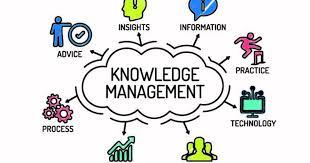
Knowledge management is a systematic process of capturing, processing, assessment, sharing, storing, distributing and using of knowledge (Croteau, 2016). It involves the best use of knowledge for achieving organizations set goals and objectives. Knowledge management consists of the initiatives, processes, strategies, and systems that ensure and heighten the creation, improvement, sharing, storage and application of the knowledge (Croteau, 2016).
Knowledge management is based on two main activities. The first activity is about capturing and documenting of all employees knowledge within the organization. With this capturing and recording of such knowledge, the organization can know what kind of assets it has regarding human manpower is a concern. That fact that people drive organizations, it makes it more logical to know what the organization has. It is people within the organization that sets the organization’s goals and objectives. As such, these employees are likely to work hard to achieve their organizational set goals and objectives.
The second activity is about the distribution of the valuable knowledge to all staff around the organization. Dissemination of such knowledge can be done through various means including; on the job training, direct supervising by respective line managers or heads of departments, through one on one talks with employees of an organization, hiring a trainer to come and train the employees and so on. As such, Knowledge management will not only allow the organization to have all the relevant information needed by the organization but also to use such information to organizational benefit.
Knowledge management encourages or focuses more on organizational learning with an aim of achieving the organization’s objectives such as continuous improvement in employee’s performance, acquiring more market share, being more innovative, improved profits, teamwork and togetherness through sharing of information learned or trained and so forth.
Valuable knowledge is very crucial for the success of any organization. As such, the organization that can create and diffuse knowledge to its employees is likely to gain a competitive age against its competitors. Having knowledge employees is great for an organization though it’s difficult to keep such employees within the organization. They may be lost through turnover, competition or even through retirement (Dalkir, 2011).
Knowledge management is closely linked to organizational success. It highlights the importance of managing useful knowledge to an organization. This useful knowledge is the one that will help in the achievement of organizational set goals and objectives.
Knowledge management is also defined as a systematic coordination of organizational resources in a way that can add value to an organization through use, reuse and innovation. These organizational resources include; people within the organization, processes within an organization, technology, organization structure and so on. This coordination is realized through creation, processing, distributing and application of the knowledge.
Knowledge management is the use of organizational brain power in a systematic manner to ensure that an organization gains a competitive age against its competitors, to achieve efficiencies in operations of an organization and to spur innovation within the organization (Groff and Jones, 2012).
Continuous organizational learning is crucial to an organization. People especially of an organization need to keep learning the environment an organization operates in keep changing every time and then. As such, employees ought to keep learning so as to gain more and more knowledge that will help in the achievement of organizational goals and objectives.
Knowledge management helps to keep an organization running at a high and efficient level. As such, organizational goals and objectives are likely to be achieved.
Knowledge management was recognized in the 1980s as a competitive asset to an organization. It was fueled by the development of Information and technology systems which made it simple for creation, storage, display and dissemination of information (Edvardsson, and Durst, 2013). Currently, most organizations have or are trying to adopt to knowledge management systems mostly due to its efficiency.
Want help to write your Essay or Assignments? Click here
What is Knowledge and what is the purpose of managing tacit and explicit knowledge?
Knowledge
Knowledge is different from information as well as data. Individuals absorb information and data in the development of knowledge. With knowledge can easily convert data information Knowledge is the total of what is recognised, resides in intelligence and competency of in individuals. In the recent past, knowledge is considered as production factor; however it is related to labor. This is a clear indication of the connection between knowledge-information-data.
For instance, policy an analyst is requested to establish if changes in policy about marketing of ABC products, in the clothing sector. The analysts begin by assessing the numbers on the ABC sales for the previous three years. The analysts use these numbers and develop a pattern for ABC products demonstrating that they have significantly increased for 3 years, especially after policy changes.
Such data is converted to information. To get practical descriptions that maximises sales, the analysts looks for further information, speaks with famous clothe retailers and distributers. Upon completion, the analyst and based of the analyst’s understanding, she states that attempts to market local fashion items expanded after policy implementation and positively increased the sales volume. In this case, the analysts used current and new knowledge. User her skills to recognise a certain element. Transforming data to information, while using current knowledge she reached a conclusion. In fact, she produced new knowledge (Hislop, 2013).
Knowledge is imperative because it encourages innovation – knowledge management system fosters innovation within an organization. Through sharing of information, employees of an organization can pick relevant information that may help them to develop some new within the organization. Knowledge management encourages the creation of knowledge. As such, new ways of doing things in an organization may be discovered. Knowledge is crucial to decision making since managers can access all relevant information they want for decision making within the organization.
In addition, knowledge, customers’ responses are timely received and may be acted upon quickly. Any organization that can respond to customers’ needs will be loved by its customer, hence more revenues to an organization. Knowledge helps in staff retention within an organization. This `is done by recognizing of employees’ within an organization. Recognition may be in the form of rewards such as increased salaries or wages.
Again, knowledge improves organization’s revenues. The knowledge management system ensures improved revenues when products and services get to the market faster. Knowledge management system provides the necessary information of what is required at any particular point in time. As such, an organization can easily and quickly respond to customers’ needs well.
With the adoption of knowledge system, an organization is likely to grow as far as technology is a concern since they can create, process, store, share and access all the relevant information that is beneficial at easy and quick. Consequently, knowledge is driving businesses to extend to other parts of the world. This international expansion is good for any business though it has to be undertaken carefully so as to reap all the benefits of globalization and avoid all the challenges that come with globalization such as management issues or difficulties.
Purpose of Managing Tacit and Explicit Knowledge
Tacit and Explicit Knowledge
People hold divergent forms of tacit and explicit information and employ their information in various ways. Moreover, people use divergent viewpoints to contemplate about anomalies and formulate solutions. Again, research shows that knowledge is disseminated in creative ways.
Tacit knowledge
This is knowledge that comes from common sense, it is automatic, and does not involve thought process. Tacit knowledge is critical when it comes to assisting firms not just in decision making processes but also impacting the corporate culture. In short tacit knowledge is individual, slanted form of information is informal. This type of knowledge is never found in books or written materials.
Mental tacit information integrates implicit mental representation and perspectives that are so entrenched and often never taken seriously. Perceptive models impact how people conceptualize world events. People can investigate story content and actions and employ useful tacit information in executing work-related functions.
For example, workers of Datafusion Inc, an ICT consulting organisation, capture and shares meeting footages with employees. This is to say that employees will
Explicit knowledge
Explicit knowledge is largely methodological or academic. Moreover, explicit knowledge is documented in formal prose such as manuals, computational formulas and shared through print media and electronic media among others. Explicit information is technical and involves a level of scholarly information or understanding that is attained through formal education, or structured education.
Explicit information is cautiously codified, stored in a hierarchy of repositories and is accessed with high quality, dependable fast data reclamation structures. Once classified, explicit knowledge assets can be used time and again to solve many comparable forms of issues or unite people with valuable reusable information.
For instance, Ernst & Young have developed an international brain of explicit data to comprise cultural disparities. Their database of best practices with a global reach is anchored on sharing and documenting information. The company’s approach to business issues stems from an array of perceptions.
Regardless of where problems occur, there is no right answer, but several practical methodologies. Ernst & Young see knowledge objects as templates of core insights that can be employed in any cultural setting.
Andersen Consulting for instance, developed ostentatious ways to classify, store and reuse explicit data. With this approach, any client sensitive data is removed while selected information is reprocessed. In short, data is transformed into a verified successful solution that can be employed in a similar industry.
Importance of knowledge management system
What are the assumptions made about KMS (Objective / practice-based)?
There are various assumptions of Knowledge management system. For example, KMS is associated with free circulation of information; it is assumed that information within an organization flows freely from one employee to another the information maybe about products an organization deals with, strategies, and structure. In reality, free flow of information within some organization is not possible. Some organizations have levels in which certain information can flow up to. Organizational information is mostly kept secretly and only shared with some few senior employees of an organization source
When it comes to knowledge sharing between employees – it is assumed that all employees of an organization trust each other and as such, they freely share whatever kind of information they have. In reality, particularly, where employees try to outdo each other in term of their performance and rewards. Source
There is the aspect of efficient research and retrieval system, which is assumed that all staff or employees of an organization can easily and efficiently search and retrieve all relevant information they need to help them perform their respective duties well. The reality may be different depending on an organization. Some organizations do not have efficient systems that can allow employees to search and retrieve information without difficulties.
Easy combination of different sources of information under KMS it is assumed that all employees of an organization can combine various sources of information and use that information for the better of an organization. This may not be true to some organization. Some organizations have departments or units in which employees are confined. As such, employees are restricted to what kind of information they can access depending on their respective departments or units. Source
With regards to employees’ abilities or competences information is easily accessible its assumed that all information about all employees abilities or competences within an organization is readily available in electronic form, and it can easily be accessible by anyone within an organization. In reality, some firms do not have such employees’ information on electronic yellow pages where everyone can access. Furthermore, some employees are not comfortable to have all their information available and accessible to anyone else apart from the ones they want them to get access to such personal information (Aggestam, 2015).
Owing to the fact that employees are experts in the particular area and can easily educate other employees, however in KMS; it is assumed that employees of an organization are experts in the certain field of their work and can quickly train and support other staff. This may not be true to some organization. Some employees may not be will to share their knowledge with each other for free. Unless some incentives are attached to information sharing within an organization, it will be difficult to for some employees to open up and share information with their colleagues.
It is widely acknowledged that project teams have virtual project offices, but under KMS, it is assumed that project teams have special virtual project rooms where all information and correspondence with internal and external customers is collected there. In reality, some organizations do not have such teams and rooms where such information and communication can be collected. Source
Bonus schemes are widely used in companies; nevertheless, it is assumed that most organizations have bonus schemes that are created to activate further knowledge sharing or flow with an organization. In reality, most organization do not have such bonus schemes to encourage employees to share and allow flow of information within the organization.
How do you define a small to medium enterprise (startup?)
Small and medium-sized enterprises (SMEs) are independent firms that employ fewer numbers of employees or workers. They are non-subsidiary firms. Small and medium-sized enterprises are those firms with fewer than 50 workers or employees, but this number of employees or workers may vary across countries all over the world (Hislop, 2013).
What is the Knowledge Economy and what does it have to do with SMEs?
Most of the small and medium-sized enterprises face several problems in their operations. Such problems include lack of enough capital, less marketing competition from large organizations, lack of quality operational knowledge (Croteau, 2016).
Some of these problems hinder Small and medium-sized enterprises to successful compete with other firms. It is, therefore, important for Small and medium-sized enterprises to adopt knowledge management system to help them improve their competitiveness. A good understanding and use of knowledge is an important boost to firms’ competitiveness.
Knowledge management system aims at improvement of firms, profits. As such, Small and medium-sized enterprises should adopt it. Small and medium-sized enterprises will benefit since knowledge management ensures effective communication within the firm and knowledge sharing which is very critical to any firm’s success or failure (Hislop, 2013).
Small and medium-sized enterprises should aim at improving their competitiveness so as to be able to survive in this tough market. With the adaptation of knowledge management system, Small and medium-sized enterprises will definitely improve their competitiveness hence a high chance of becoming large organizations.
Why would SMEs want to have KMS (eCommerce)?
Small and medium-sized enterprises want to have knowledge management system so as to; Increase revenues – since knowledge management systems enhance business revenues through getting products and services to the market faster, small and medium-sized enterprises desire to make more revenues so as to expand will drive them to knowledge management system use (Dalkir ,2011).
Knowledge management encourages innovation – knowledge management system fosters innovation within an organization. As such, small and medium – sized enterprises also desire to be more innovative so as to acquire a competitive age to help them grow to large organizations.
Improved customer services – knowledge management system ensures improved client services. As such, small and medium – sized enterprises will also desire to satisfy their customers. Satisfied customers are likely to remain loyal to an organization. With loyal customers’, small and medium – sized enterprises are more guaranteed to grow or develop to large organizations.
Discuss key challenges to the implementation of KMS in SMEs.
Implementation of knowledge management system in SMEs is hindered by various challenges. For instance, SMEs considerably rely on technology – knowledge management system relay more on technology. Therefore, a failure in technology may have a negative effect on the operation as well as the profits of an organization. It’s worth noting that knowledge management system is a technology-driven system. As such, it’s intricate to distinguish knowledge management system and technology.
Moreover, it is difficult to get employees to effectively use information – availing information to employees is not enough. Getting employees to effectively and efficiently use available information is more critical. Some people take the time to get interested in some information. As such, knowledge management system implementation in SMEs may take time for it to be accepted and put in effective and efficient use.
Constraints of information circulation among employees are somehow difficult in SMEs particularly when such information is likely to empower another employee to become more relevant and competitive within an organization. Employees do compete for promotions in some organization. As such, it will be very difficult for an employee to share with other (Aggestam, 2015).
Another challengelle is the unwillingness of information sharing amongst employees’ of an organization – it is a great deal to get an employee to share whatever information he or she has free of charge. Therefore, implementation of knowledge management system may not be possible for some SMEs.
References
Aggestam, L. (2015). Learning Organization or Knowledge Management–Which Came First, The Chicken or the Egg? Information technology and control, 35(3).
Borchardt, U. (2012, January). Selecting KMS for SME-A Need for Value-Orientation. In Workshops on Business Informatics Research (pp. 26-37). Springer Berlin Heidelberg.
Croteau, J. (2016). Knowledge Management Best Practices.
Dalkir, K. (2011). Knowledge management in theory and practice (2nd Edition). Cambridge, MA: MIT Press.
Edvardsson, I. R., & Durst, S. (2013). The benefits of knowledge management in small and medium-sized enterprises. Procedia-Social and Behavioral Sciences, 81, 351-354.
Groff, T., & Jones, T. (2012). Introduction to knowledge management. Routledge.
Hislop, D. (2013). Knowledge management in organizations: A critical introduction. Oxford University Press.
Holtshouse, D. K. (2013). Information technology for knowledge management. U. M. Borghoff, & R. Pareschi (Eds.). Springer Science & Business Media.
Jung, J. J. (2013). Semantic wiki-based knowledge management system by interleaving ontology mapping tool. International Journal of Software Engineering and Knowledge Engineering, 23(01), 51-63.
Lin, Y. C., & Lee, H. Y. (2012). Developing project communities of practice-based knowledge management system in construction. Automation in Construction, 22, 422- 432.
Matayong, S., & Kamil Mahmood, A. (2013). The review of approaches to knowledge management system studies. Journal of Knowledge Management, 17(3), 472-490.
Montequín, V. R., Fernández, F. O., Cabal, V. A.,& Gutierrez, N. R. (2006). An integrated framework for intellectual capital measurement and knowledge management implementation in small and medium-sized enterprises. Journal of Information Science, 32(6), 525-538.
Natek, S., & Zwilling, M. (2014). Student data mining solution–knowledge management system related to higher education institutions. Expert systems with applications, 41(14), 6400-6407.
Powell, W. W., & Snellman, K. (2004). The knowledge economy. Annual review of sociology, 199-220.
Premkumar, V., Krishnamurty, S., Wileden, J. C., & Grosse, I. R. (2014). A semantic knowledge management system for laminated composites. Advanced engineering informatics, 28(1), 91-101.
Rehman, M., Mahmood, A. K., K Sugathan, S., & Amin, A. (2009). Implementation of Knowledge Management in Small and Medium Enterprises–Malaysian Perspective.
Wang, S., Noe, R. A., & Wang, Z. M. (2014). Motivating knowledge sharing in knowledge management systems a quasi–field experiment. Journal of Management, 40(4), 978-1009.
Wiig, K. (2012). People-focused knowledge management. Routledge.
Zaim, S., Bayyurt, N., Tarim, M., Zaim, H., & Guc, Y. (2013). System dynamics modeling of a knowledge management process: A case study in Turkish Airlines. Procedia-Social and Behavioral Sciences, 99, 545-552.
Want help to write your Essay or Assignments? Click here
Want help to write your Essay or Assignments? Click here
Infinity Solar-Powered E-Bike Business Plan
EXECUTIVE SUMMARY
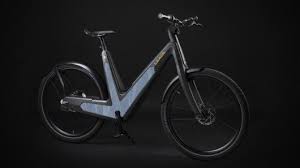
The Infinity Solar-powered E-Bike is an innovative bicycle technology that allows users to enjoy a manual ride and experience an electric bike at the same time. While there are many varieties of e-bikes in the market, the Infinity bike is an exceptional model in that it is not only solar powered but it also has an electronic motor control, such that the rider can switch between three modes of propulsion.
Besides this, the bike comes with a speedometer, which helps the rider determine the speed at which they are riding. The Infinity solar-powered e-bike is bound to attract major fandom based on its unique features which make it ideal for protecting riders from knee and back injuries.
The Infinity solar-powered bike targets three customer segments: adventure riders, people seeking cheaper transport alternatives, and employees and students who commute regularly. To reach the customers, the company will utilize digital media and social media marketing. These methods are capable of effectively promoting the bike to the selected group.
To successfully implement this lucrative idea, a considerable amount of resources is required, including set up expenses, equipment and material, staff and marketing. The amount available to the owner is however limited, hence the need to seek funding. This business plan details information that may be necessary in informing the bank’s decision to fund the business. If successful, this will be the beginning of a highly rewarding business venture.
Introduction
As the world increasingly embraces ‘green energy’ to reduce the impact of global warming and natural resource depletion, valuable innovations have emerged in the market, with solar energy being described as one of the most sustainable sources of energy. Solar energy has been successfully used in lighting houses, water heating running machines and equipment and most recently for the solar-powered cars. In the same bearing, the motivation to build a solar E-Bike resulted from observing the endless possibilities that can be achieved using solar energy.
This is a form of energy that is not only freely available but cannot be depleted like other natural resources. This means that it will offer continuity while providing cheap energy to power the E-Bike. While the idea of the solar E-Bike is highly feasible based on research and projected benefit to individuals and the environment, the execution remains an enigma, partly due to the need for financial resources necessary to begin production.
This business plan details the major concepts behind the solar-powered E-Bike and the commercial viability of the venture. Through this business plan, it will be possible for the bank to understand the motivation behind this business venture and how the finances obtained will be used in setting up an exceptional idea that will influence future generations.
Business Plan
Business Name and Address
Name: Infinity Solar-Powered E-Bikes
Address: .,,.,,.,.,.,..,.
Proprietor’s Name and Address
Name: Jiachen Bonnie ZHANG
Address: ………………………
Business Form
This business is a sole proprietorship run and managed by the business owner.
Business Activity
Infinity Solar E-Bike is the newest innovation in the market, featuring a bicycle that has an integrated electric motor and a solar panel which can be used for propulsion. The unique bike comes with a direct charging system that allows the user to charge the bike from a power socket and a solar panel that feeds solar energy into a battery. This power bike allow the user to not only take a manual ride but also use the electric motor control and solar motor control to propel the bike, thus increasing comfort and offering flexibility. The bicycle has an electronic display on the handlebar that shows the speed and battery level at any time.
An additional feature that makes the Infinity E-Bike attractive is the fact that it is a portable and foldable bike. This makes it suitable for expeditions and long-distance adventures since they can be easily transported in a motor vehicle and retrieved when needed. The flexibility of the bike also allows users to carry it around when taking public transport and then unfolding it for use in navigating areas that are not covered by public transport. It is therefore very versatile and convenient.
Aims of the business
The solar E-bike was developed with the aim of providing users with a superior experience from ordinary bikes. The solar bike provides a cheaper option than driving a car, given that it can effectively run on solar power, requires to gas or insurance. The E-bike targets people who are working and constantly endure long hours of traffic during rush hour. With this bike, users can make it to work in good time.
The bike is designed to increase user comfort. Compared to the traditional bicycle, the Infinity E-Bike is friendlier to knees and joints, thus minimizing discomfort and chances of injury. The Infinity solar-powered e-bike provides a more upright seating position and this plays an imperative role in reducing back and neck pain. The ride is also in a position to watch for obstacles and cars more easily, thus reducing risk of accident. The e-bike does not get hot when riding uphill and riding in the wind is no longer a challenge.
The e-bike also comes with a security feature aimed at protecting the bike from theft. The e-bike requires a key to operate is heavier to move, hence making it harder to move than traditional bikes.
Objectives
To reach 5000 customers within the first three months of operation
To achieve $2,640,000 in sales in the first year of operation
Market size and growth
The idea of a solar-powered bicycle is relatively new and has not been optimally explored. However, as solar panels become increasingly portable and affordable, competition is expected to rise significantly, thus saturating the market. Solar bikes first came into existence in the 1980s but their bulky nature which consisted of a trailer to carry the solar panels negatively affected their popularity. Currently, solar powered bikes are sleeker and less bulky.
The manufacture of solar powered e-bikes is still on small scale and not commercially exploited, with innovations mostly consisting of individual creations and custom-made orders. This is associated with high manufacturing costs and low adoption by potential users. The same applies for electric-powered bikes, which have continued to gain in recent years.
Competition analysis
Competitors
Name
Developer
Strengths
Weaknesses
eZee
NYCeWheels
-Electric bike – Popular brand -Folding varieties -In the process of developing solar-powered bikes -Financial strength-Superior power in all terrains
– Expensive to use -Better variety emerging in the market – Bulky
ELF
Organic Transit
-Bicycle-car hybrid -Roofed -Stable and can be used by non-riders (Has 3 wheels) -No gas required, runs on solar energy
– Lacks flexibility for use as a bike due to its size -Designed for smooth roads -Cannot navigate small spaces like a normal bike
Solarbike
Jesper Frausig, Germany
-Sleek design -Solar panels on wheels saves on space Both manual and electric -Light and portable – full battery could propel the user for over 40 miles and go up to a speed of 30mph.
– Still in product development stage -No backup source of energy, only solar
Infinity solar-powered E-Bike
Strengths
Weaknesses
-Sleek design -Foldable -Speed reader -Solar and electric power -three riding modes -Cheap -No need for gar/insurance -High chair for easy survey of surroundings and traffic -Does not heat up when going uphill
-Heavy -New in the market hence no customer base -Not yet tested by customers on the ground -Lacks funding for development
Competitive Advantages
The Infinity Solar-Powered E-bike is designed in such a way that it seeks to provide great value for cyclists, by offering them three power modes. The user can choose to either ride manually or switch between solar and electric modes. This provides backup power and the rider is not likely to get stranded, such as when there is no sunlight. The bike provides a solution for people who want to enjoy a bicycle ride but may not desire the physical intensity involved in manual riding. Furthermore, the bicycle offers a cheap alternative to vehicle transport since it does not require the use of gas. The e-bike is of high quality and is expected to serve users in an effective manner while providing value for money.
Proposed Customers
Selecting a target market ensures that the company can design products that are tailored towards satisfying their customers (Chuwiruch, N, Jhundra-Indra and Boonlua, 2015). Proposed customer identification also ensures targeted marketing, thus enhancing efficiency (Johnson et al, 2014). The Infinity solar e-bike will target three types of customers:
Adventure riders: The e-bike is designed in such a way that it can overcome tough terrains and uphill riding. It is therefore perfect for people who ride for fun or adventure.
Individuals seeking cheap transport alternatives: The price of gas is highly volatile and maintenance of cars can be quite expensive. Public transport also has its limitations in terms of costs and convenience. The solar e-bike takes care of this by providing a cheap alternative that is also convenient.
Employees and students: This group of customers consists of individuals who must either go to school or to work every day; often spending significant amount of time in traffic. The e-bike promises to reduce the time taken to get to work by a great percentage, thus enhancing convenience. Furthermore, the e-bike is useful for traversing areas where public transport is unavailable instead of walking.
Want help to write your Essay or Assignments? Click here
Marketing Strategy
Marketing strategy denotes the approaches taken in ensuring that the company’s products attract demand and that they can effectively compete with others in the market (Chuwiruch, Jhundra-Indra and Boonlua, 2015). A well-structured marketing strategy will assure high sales and profitability for the company. In reference to the marketing mix, the Infinity Solar-powered E-Bike will design its marketing strategy based on the following aspects.
Product
The Infinity solar e-bike aims at providing the highest level of customer satisfaction. This will be attained through producing quality products that are long-lasting, made possible through investing in high technology machines and quality input materials (Najmaei, 2014). To ensure maximum customer satisfaction, the e-bike will be made to accomplish all the positive features described. A return policy will be put in place, such that customers can return any faulty bike.
People
At infinity, the guiding principle will be to provide customers with the best quality e-bike and the best customer service possible, with the objective of turning them into loyal customers. Customer needs will be given first priority and every employee will be required to possess customer care skills and product knowledge necessary to provide effective feedback to customers. As noted by Valick, A. & Benavides (2011), responding to customer queries is not only a responsibility of customer care representatives and marketers but a common duty for all company staff; hence the need to familiarize with all product aspects.
Price
Price is a direct determinant of demand and the company must therefore set a price that is attractive for the customer while allowing a reasonable profit margin (Davari and Strutton, 2014). The pricing policy at Infinity will be to provide e-bikes at a reasonably low price. Due to the uniqueness of the brand, the bike will not be the lowest priced but it will be lowly priced for a product of its caliber. All e-bikes will be sold at the same price even where distributors and re-sellers are involved. This will enhance uniformity in price and hence create consistency. The cost for one solar-powered e-bike will be set at $1,100 per piece.
Promotion
This refers to the method of communication to targeted customers. This must be designed to appeal to the target market so that it can be effective in attracting customers (Davari and Strutton, 2014). Infinity solar-powered e-bikes will be advertised through digital media such as television and social media. Digital media is preferred due to its ability to show motion and hence give customers an idea of how the bike works instead of placing a still picture advertisement on print media (Kotler and Armstrong, 2015).
Social media is bound to be effective because the targeted market spends a significant proportion of their time on social media (Kumar, et al, 2016). Through videos and post shares, the company will ensure that the e-bike is advertised to target customers.
Place
The need to ensure that the customers can access the product easily calls for the creation of an effective supply chain (Kirovska, Josifovska and Kiselicki, 2016; Ashby, Leat and Hudson-Smith, 2012). In essence the company must ensure that the e-bike is accessible for potential customers through considering various channels of distribution including direct sales, franchising, wholesalers and retailers (Chelliah, et al, 2013). To begin with, the Infinity solar e-bike will be available in the United Kingdombefore expanding the company’s presence in other regions. The bike will be available in leading sports stores, supermarkets and individual retail stores besides direct sales from the factory.
Equipment
Effective production of solar-powered e-bikes will require the following equipment:
Equipment
Cost
Fork fixture
$1,675
Frame building tool
$4,100
Grinders
$300
Mill
$234
Lathe
$1500
Files
$150
Vacuum cleaners
$350
Bicycle assembly machine
$4500
Rim making machine
$7,000
Tube benders
$3000
Handlebar machines
$10,000
Welders
$6,500
Grinding and polishing machines
$13,000
End-forming machines
$9,500
The number of equipment and costs involved may initially be too high for the start-up company to afford. Accordingly, some of the equipment required will be leased for the first one year.
Key people and job functions
Financial Highlights
Forecast Profit and Loss Account
Infinity Solar-Powered E-Bike
Profit and Loss Account
For Period between August 2016 to July 2017
Sales
$2,640,000 (A)
Less variable costs
Materials
$550,000
Direct wages
$40,000
Transport
$230,000
Miscellaneous
$160,000
Total variable costs
$980,000
Gross profit
$1,660,000 (B)
Less Fixed costs
Salaries and wages
$150,000
Rent
$120,000
Equipment lease
$300,000
Electricity
$60,000
Telephone costs
$170,000
Advertising
$250,000
Insurance
$24,000
License renewal
$2,000
Taxes
$230,000
Depreciation
$5,000
Other costs
$3,000
Total fixed costs
$1,164,000 (C)
Net profit
$496,000
Break-even point
(A) x (C)
(B)
= 1,851180 units
Cash flow Forecast
Month
Aug
Sep
Oct
Nov
Dec
Jan
Feb
Mar
Apr
May
Jun
Jul
SALES
Volume
3
5
5
10
15
20
25
27
30
32
33
35
Value
33,000
55,000
55,000
110,000
165,000
220,000
275,000
297,000
330,000
352,000
363,000
385,000
RECEIPTS
Sales – Cash
33,000
55,000
55,000
110,000
165,000
220,000
275,000
297,000
330,000
352,000
363,000
385,000
Sales – Debtors
0
0
0
0
0
0
0
0
0
0
0
0
Capital Introduced
100,000
140,000
250,000
Grants, loans
250,000
Total (A)
383,000
195,000
55,000
110,000
165,000
470,000
275,000
297,000
330,000
352,000
363,000
385,000
PAYMENTS
Materials
85,000
40,000
30,000
30,000
30,000
30,000
30,000
30,000
30,000
30,000
30,000
30,000
Wages/Salaries
8,000
13,500
15,500
16,000
16,000
16,000
16,000
16,000
16,000
19,000
19,000
19,000
Rent
10,000
10,000
10,000
10,000
10,000
10,000
10,000
10,000
10,000
10,000
10,000
10,000
Equipment lease
25,000
25,000
25,000
25,000
25,000
25,000
25,000
25,000
25,000
25,000
25,000
25,000
Electricity
5,000
5,000
5,000
5,000
5,000
5,000
5,000
5,000
5,000
5,000
5,000
5,000
Telephone costs
25,000
22,000
19,000
14,000
13,000
11,000
11,000
11,000
11,000
11,000
11,000
11,000
Advertising
30,000
30,000
25,000
20,000
20,000
20,000
20,000
20,000
20,000
15,000
15,000
15,000
Insurance
24,000
0
0
0
0
0
0
0
0
0
0
0
License renewal
2,000
0
0
0
0
0
0
0
0
0
0
0
Taxes
0
0
0
0
0
0
0
0
0
0
0
230,000
Depreciation
0
0
0
0
0
0
0
0
0
0
0
5,000
Other costs
250
250
250
250
250
250
250
250
250
250
250
250
Capital Purchases
200,000
0
0
0
0
0
150,000
0
0
0
0
0
Loan repayments
10,000
10,000
10,000
10,000
10,000
10,000
10,000
10,000
10,000
10,000
10,000
10,000
Drawings/dividends
0
0
0
0
0
0
0
0
0
0
0
0
Total (B)
424,250
155,750
139,750
130,250
129,250
127,250
277,250
127,250
127,250
125,250
125,250
360,250
CASH BALANCES
Cash flow (A) – (B)
-41,250
39,250
-84,750
-20,250
35,750
342,750
-2,250
169,750
202,750
226,750
237,750
24,750
Opening balance
350,000
-41,250
-2,000
-86,750
-107,000
-71,250
271,500
269,250
439,000
641,750
868,500
1,106,250
Closing balance
-41,250
-2,000
-86,750
-107,000
-71,250
271,500
269,250
439,000
641,750
868,500
1,106,250
1,131,000
Approach to value creation
The process of value creation for the solar-powered bike business entails a five step process from when the product is developed, to when it achieves value creation.
The first step has mostly been accomplished, having developed the concept of the E-Bike and how it will operate. Gallego, Rubalcaba and Hipp (2013) present the case for innovation, stating that creating value is about presenting innovative products and services. The E-Bike presents a unique innovation which will allow users to use a E-Bike with three functions namely; manual ride, electric motor control and solar power motor control. Electronic display on the E-Bike allows the user to read speed and battery level; further demonstrating the level of innovation. The E-Bike, which is also foldable provides exceptional convenience.
The second step is demand creation, which basically includes marketing the E-bike to potential customers and convincing them to buy it. This will involve showing the value of the innovation and how it will impact their lives, affordability and durability of the E-bike (Lynch, 2012).
Once demand has been created and sales made, the next step is to convert buyers into loyal customers. This will be achieved through ensuring that the E-Bike meets their needs as expected during the marketing stage (Rath and Mousumi Singha, 2013).
Next is to enhance customer satisfaction through meeting their needs and addressing any concerns they may have regarding the E-Bike. At this level, the customers are likely to refer potential clients based on their level of satisfaction (Johnson et al, 2014).
The final step to value creation is to make customers part of the organization. By working with customers as partners, the company can seek ways to further improve the E-Bike’s performance and probably develop a new product that is more innovative (Grant, 2016). This step sets pace for the next value creation process.
Factors encouraging entrepreneurship
In life, every day is a learning process and a chance to become a better person. When I initially lost my job as a Digital Social Media company manager where I worked for six years, the next best thing would have been to seek employment elsewhere. However, I was inspired by a drive for independence and an opportunity to make a difference in the society, hence my decision to venture into business.
Moving to entrepreneurship depends on the kind of product one is dealing with and whether customers might be interested. Having observed that bicycles are widely used as a means of transport and recreation, I thought that users might be interested in a bike that offered them greater capabilities than just the manual ride. Internet searches revealed that solar power is the next energy frontier and the idea of an E-Bike appeared best suited to help me achieve my objective.
It is notable that the high level of instability in the country has impacted employment significantly. Job security is no longer assured and even where available, the level of remuneration is barely enough to sustain a favorable purchasing power. Entrepreneurship however opens endless possibilities, particularly when the product is innovative and appealing to customers. I therefore found it reasonable to increase my earning capacity through entrepreneurship, not only to improve my life but also contribute to national building through creating employment opportunities for others.
Want help to write your Essay or Assignments? Click here
Developing and appraising personal potential as an entrepreneur
As an entrepreneur, it is important to understand my competence and potential. In this regard, I will apply various techniques in developing and appraising personal potential as an entrepreneur. This will mostly include taking professional tests and self-assessments available online such as BDC Entrepreneurs First. The site provides a list of 50 questions on entrepreneurial attributes, motivation, attitudes and aptitudes which the user is expected to fill in.
Once completed, the site makes an analysis of the responses, which will then be used in determining entrepreneurial potential (BDC, 2016). Common professional assessment tools include Myers-Briggs Type Indicator, The Entrepreneur Equation, the StrengthsFinder, Teamability and FourSight Thinking Profile.
Functional skills appropriate to the management of SME
In the management of SMEs, certain functional skills are necessary to enhance performance and resilience in a competitive environment (Botha, Vuuren and Kunene, 2015). These skills include:
Finance management: SMEs must be in a position to manage their finances in order to stay afloat. The management must therefore be capable of managing cash flow, credit and have knowledge on financial reporting (Ayub, 2014).
Marketing: Being a small business, there is need for high level marketing to promote growth. Every contact with customers should be a chance to market the company (Goodman and Dingli, 2013). Functional skills also necessary include advertising and public relations.
Personal business skills: These include oral and written communication, computer skills, negotiation skills and organizational skills among others (Botha, Vuuren and Kunene, 2015).
Problem solving: The management of an SME should be capable of dealing with challenges and problems whenever they occur (Goodman and Dingli, 2013).
Dispute resolution: When working with a team, disputes and conflicts are also likely to emerge. The management should be in a position to resolve disputes amicably to enhance collaboration.
Conclusion
Infinity Solar-Power E-Bike presents an innovative product that is bound to change the face of solar e-bikes. The e-bike provides customers with a unique brand with flexible capabilities, demonstrated by its three function modes. This sets the bar higher because the rider can either use the manual, the electric motor control or the solar power motor control. The target customer group is expected to find the bike useful, both for navigation and fun expeditions.
As a cheap alternative to cars, the bike’s demand is expected to increase tremendously following its introduction. To enhance successful launch and sale of the product, various factors in the marketing mix are put into consideration to ensure that the product appeals to customers. The price of $1,100 is relatively cheap and the quality is excellent.
These characteristics coupled with effective promotional strategies, customer service and convenient access to the e-bikes will ensure that the company realizes adequate profits to make the business successful. The Solar E-Bike has great potential and at this juncture, the idea’s execution is only limited by unavailability of funds, hence the need to seek funding in the form of a business loan.
Ashby, A., Leat, M., & Hudson-Smith, M 2012, “Making connections: A review of supply chain management and sustainability literature.” Supply Chain Management, 17(5), 497-516. doi:http://dx.doi.org/10.1108/13598541211258573
Ayub, KM 2014, Diverse Contemporary Issues Facing Business Management Education, Herhey, PA, IGI Global.
Botha, M, van Vuuren, J, & Kunene, T 2015, ‘An integrated entrepreneurial performance model focusing on the importance and proficiency of competencies for start-up and established SMEs’, South African Journal Of Business Management, 46, 3, pp. 55-65, Business Source Complete, EBSCOhost, viewed 31 May 2016. Retrieved from eds.b.ebscohost.com/ehost/pdfviewer/pdfviewer?sid=039d867c-9fbc-4e0e-8d60-7cb40632e9b3%40sessionmgr104&vid=1&hid=121
Chelliah, S, Chin Kok, K, Annamalah, S, & Munusamy, J 2013, ‘Does Marketing Mix Still Relevant? A Study on Herbal Coffee in Malaysia’, International Journal Of Management & Innovation, 5, 1, pp. 31-45, Business Source Complete, EBSCOhost, viewed 31 May 2016. Retrieved from eds.b.ebscohost.com/ehost/pdfviewer/pdfviewer?sid=8c9f45cc-194e-432e-93cd-070f1f44bb6f%40sessionmgr120&vid=1&hid=121
Chuwiruch, N, Jhundra-Indra, P, & Boonlua, S 2015, ‘Marketing Innovation Strategy And Marketing Performance: A Conceptual Framework’, Allied Academies International Conference: Proceedings Of The Academy Of Marketing Studies (AMS), 20, 2, pp. 82-93, Business Source Complete, EBSCOhost, viewed 31 May 2016. Retrieved from eds.b.ebscohost.com/ehost/pdfviewer/pdfviewer?sid=d426671f-c0e2-45f0-a010-7a7ceb1a40e0%40sessionmgr107&vid=1&hid=121
Davari, A, & Strutton, D 2014, ‘Marketing mix strategies for closing the gap between green consumers’ pro-environmental beliefs and behaviors’, Journal Of Strategic Marketing, 22, 7, pp. 563-586, Business Source Complete, EBSCOhost, viewed 31 May 2016. Retrieved from eds.b.ebscohost.com/ehost/pdfviewer/pdfviewer?sid=5ecfe942-153a-4df9-a323-a73b06871484%40sessionmgr104&vid=1&hid=121
Goodman, M., & Dingli, SM 2013, Creativity and Strategic Innovation Management, New York, Routledge.
Grant R 2012, Contemporary Strategy Analysis: Concepts, techniques,applications, 8th Ed, London, Blackwell.
Grant, R. M 2016, Contemporary Strategy Analysis: text and cases, 9th edn. Chichester, Wiley & Sons.
Johnson et al 2014, Exploring Strategy: text and cases, 10th edn, London, Pearson.
Kirovska, Z, Josifovska, A, & Kiselicki, M 2016, ‘Efficient Management Of Supply Chain In Achieving A Significant Competitive Advantage In The Market’, Journal Of Sustainable Development (1857-8519), 5, 14, pp. 5-22, Business Source Complete, EBSCOhost, viewed 19 April 2016. Retrieved from eds.a.ebscohost.com/ehost/pdfviewer/pdfviewer?vid=8&sid=aaeacbc0-639c-47a8-a0be-b74cdd38d404%40sessionmgr4005&hid=4103
Kotler, P., & Armstrong, G 2015, Principles of Marketing. Harlow, UK: Pearson Education.
Kumar, A., Bezawada, R., Rishika, R., Janakiraman, R., & Kannan, P. K. (2016). From Social to
Sale: The Effects of Firm-Generated Content in Social Media on Customer Behavior. Journal of Marketing, 80(1), 7-25. doi:10.1509/jm.14.0249. Retrieved from eds.b.ebscohost.com/ehost/pdfviewer/pdfviewer?sid=6a26cf54-0115-4e50-aca9-3a3123e7ba89%40sessionmgr104&vid=1&hid=114
Lynch, R 2012, Strategic Management, 6th Ed, London, Prentice Hall
Najmaei, A 2014, ‘Towards an Integrative Model for Management of Organization’s Total Innovation: Insights from the Strategic-Process View’, IUP Journal Of Knowledge Management, 12, 3, pp. 61-73, Business Source Complete, EBSCOhost, viewed 25 March 2016. Retrieved from eds.b.ebscohost.com/ehost/pdfviewer/pdfviewer?vid=74&sid=7e831331-5b34-460b-b494-ea037a777b66%40sessionmgr112&hid=122
Rath, S, & Mousumi Singha, M 2013, ‘Brand Recognition and Advertising Effectiveness: Study of Youth Responses for Select Print Advertisements’, Journal Of Contemporary Management Research, 8, 2, pp. 82-88, Business Source Complete, EBSCOhost, viewed 27 March 2016. Retrieved from eds.b.ebscohost.com/ehost/pdfviewer/pdfviewer?vid=29&sid=7e831331-5b34-460b-b494-ea037a777b66%40sessionmgr112&hid=122
Valick, A. & Benavides, TJ 2011, Practical Human Resources for Public Managers: A CaseStudy Approach. Boca Raton, FL: CRC Press.
Want help to write your Essay or Assignments? Click here
Want help to write your Essay or Assignments? Click here
TATA Group
Abstract
TATA Group is among the largest Indian conglomerates, which has grown immensely over the years to become a well-recognized brand. The company is mostly known for its major businesses including TATA Motors, TATA Steel, TATA Power, TATA Consultancy Services, Titan, TATA Teleservices, TATA Communications and TATA Global Beverages. In this report, TATA’s environment is analyzed to determine internal and external environment factors that affect the company’s performance.
Through the SWOT and PESTEL analysis, the business environment is assessed. The company’s steel business is currently undergoing challenges after British Steel’s closure decision. In this relation, the company must seek alternative areas to invest in to ensure that the business continues to thrive.
Spain and China are suggested as potential countries and these are discussed in regard to their attractiveness. The paper also provides recommendations for TATA based on information collected from the report. By the end of the report, the reader will have a greater understanding of TATA, its operations and factors that affect its performance.
TATA Group
Introduction
TATA Group has developed its niche as a leading multinational company in India and in the world, having evolved from a small family business began 148 years ago. Taking advantage of increasing globalization, the company has expanded its business across borders and increased the types of businesses that it deals with by venturing into different industries. TATA’s success is associated with the favorable macro-environment, particularly in India that helped the company grow significantly.
The company’s commitment to success cannot be underestimated either and it is notable that by leveraging its strengths and market opportunities, TATA has grown its portfolio tremendously. TATA continues to expand its operations internationally through global acquisitions. However, not all its ventures have been successful, owing to country-specific factors that influence its business operations.
Selecting a potential country for further global expansion therefore requires that TATA performs thorough market research to establish marketplaces in which the company is likely to thrive. This paper seeks to identify factors in the macro-environment, which may have influenced TATA’s success as a leading company in India. It also outlines some of the countries in which TATA could further expand its operations and provides a recommended country TATA’s steel business.
Company Background
TATA Group is considered one of India’s global pillar, whose multinational status has seen it become a major conglomerate in India. The company which was formed in 1868 is headquartered in Mumbai, Maharashtra. TATA owns several companies which are independently operated and has over 600,000 employees. Through the years, the company has made several acquisitions across the globe, further improving its international presence.
The company continues to enjoy a global reach and considerable profit levels, with the latest financial information indicating that the company garnered $108.7 billion in 2014/2015 financial year (tata.com). TATA Group consists of different sub-companies including TATA Motors, TATA Steel, TATA Power, TATA Consultancy Services, Titan, TATA Teleservices, TATA Communications and TATA Global Beverages.
Besides its many sub-companies, TATA’s growth can be attributed to the purchase of various businesses globally including Daewoo Commercial Vehicle Company, Land Rover, Jaguar Cars, Eight O’clock Coffee an Good Earth Corporation among others, propelling it to an internationally recognized organization (tata.com).
Discussion
Macro-environmental factors
SWOT Analysis
Strengths Strong financial performance Brand strength Foreign investment Diversification Management professionalism and regard to employee welfare International acquisitions and collaboration Corporate social responsibility/ Commitment towards national growth
Opportunities Favorable government policies Emerging markets and developing countries Strategic alliances and mergers New product lines Increasing per capita income Changing customer needs
Weaknesses Excessive debt Diversification Management and control Controversy on illegal land acquisition Environmental concerns
Threats Rising cost of material and manufacturing Competition Economic and business volatility
Strengths
TATA’s strong financial performance plays a major role in enhancing its performance. Based on its last financial results, the group collectively earned $108.7 billion in revenue and $6.7 billion in profits in the 2014/2015 financial year. The company also owns major assets and property, which further enhance its financial position. Lynch (2012) notes that when a company is financially stable, it is more likely to mitigate any threats within the market place.
Brand strength remains a major boost for TATA. The company is not only well known in India but also internationally, mostly for its motor vehicle and steel business. This means that customers are more likely to trust its products and services.
TATA has invested significantly in foreign markets through direct investment, subsidiaries, strategic alliances and subsidiaries (Au, Ayyagari and Spencer, 2015). This gives the company a strong ground in the global market and also promotes its financial performance. Due to its global presence, TATA has gained tremendous experience on international trade and is therefore capable of enhanced success in terms of internationalization.
TATA has invested in numerous industries and this form of diversification is of great significance to its portfolio. To begin with, it means that the company can shield itself in times of financial crisis by benefitting from companies that are performing well. In essence, other companies can support the company’s performance in the event that certain industries are affected by business or environmental factors; thus enhancing continuity (Ramachandran, Manikandan and Pant, 2013).
Management professionalism and regard to employee welfare has ensured retention of professional managers and high performing employees. TATA is known for its hands-off approach where managers are allowed to make independent decisions without influence from the owners. This hastens business processes and is therefore considered a major strength for the company. It also provides attractive benefits for its employees and is thereby considered an employer of choice.
International acquisitions and collaboration ensure that the company’s international presence continues to grow. These add to the company’s financial performance and international experience and are therefore of major significance.
TATA is known for its commitment to corporate social responsibility, having undertaken numerous projects to promote living standards in India. TATA has invested in education, research, art, sports and cultural endeavors and is well known for its philanthropy. In 2007, TATA received the Carnegie Medal of Philanthropy (Carnegie, 2015). Corporate social responsibility is hailed in the business world as an efficient way to create a strong brand by creating community trust (Grant, 2016).
Opportunities
Favorable government policies have ensured that TATA conducts its business effectively. The company has received major support from the government of India and this has to a great extent enhanced its performance. TATA has also been well received in other countries where it operates. This is an opportunity that the TATA could utilize by investing more in its business.
Emerging markets including rural areas and developing countries present a good opportunity for TATA to exploit. The company should therefore work towards reaching these markets before they are exploited by others.
Strategic alliances and mergers are still a lucrative approach towards enhancing the company’s global market. It is notable that many companies across the globe are seeking companies they can collaborate with to achieve various goals including technological innovation. Companies considering buy-outs due to financial difficulties are also increasing and TATA could take advantage of such opportunities for growth.
TATA Group can enhance its performance through diversifying into new product lines. This will enhance their performance and hence promote is global position.
Weaknesses
TATA operates numerous companies and is constantly engaging in investment activities that require large amounts of money, such that it has accumulated a significant level of debt. These are repaid from its business proceeds and this means that in the event that business is affected by unforeseen risks, it may be difficult for the company to effectively repay the loans (Boone and Kurtz, 2012).
Diversification is considered a positive aspect of business performance. However, it may also present difficulties in management, such that the company fails to ensure optimal performance for each product (Boone and Kurtz, 2012). This could threaten TATA’s performance.
The TATA family is no longer managing the group of companies and this has been delegated to independent companies, which work under the board. Management and control issues could therefore be experienced if the respective managers are not as committed to success as the owners.
Controversy on illegal land acquisition has tainted TATA’s image to a significant extent. The company was a victim of public uproar on land grabbing accusations. This has affected TATA Tea and TATA Steel in India, where communities have claimed ownership of land possessed by TATA.
Environmental concerns have also emerged, with the company being accused of encroaching natural endowments and polluting the environment (Masani, 2015). This may affect the company’s reputation and thus limit its performance.
Threats
The rise in the number of businesses globally cannot be underestimated and TATA therefore faces stiff competition from emerging and existing businesses.
Rising cost of material and manufacturing is affecting the company’s productivity, given that it has to contend with lower profits than it would if the conditions remained the same.
TATA like any other company faces a major challenge in the form of economic and business volatility. According to Grant (2016), the world economy is highly unstable and components including interest rates, inflation, availability of credit, per capita income and customer demand keep changing. This is a major risk for global companies such as TATA.
Want help to write your Essay or Assignments? Click here
PESTEL Analysis
Political Factors
These refer to factors in the political environment in which a company operates. India enjoys a generally stable political environment that is suitable for business. TATA is however exposed to changes in government regimes that may influence the business environment through new regulations and policies (Beneke et al, 2013).
An example of a new law that is bound to affect TATA is the new rule on corporate social responsibility, where companies may be expected to give 2% of net profit earned towards community development. Given that TATA operates in different countries, the risk of international trade regulations is eminent. An example is the adoption of policies aimed at protecting local organizations, which is bound to affect international companies in a significant manner.
Economic Factors
The global economic conditions in recent years have been volatile and this to s significant extent affects company performance. The global economic crisis for example hit most companies, affecting their profitability. The collapse of British Steel following market factors is also a demonstration of economic impact on the business. India’s steel market remains among the largest in the world and this has ensured that TATA’s steel business grows steadily.
Social
The community in which TATA operates has influenced the company’s operations both positively and negatively. As the company expands, there are greater expectations from the company to give back to the community (Masani, 2015). This is further exacerbated by competitive pressure. TATA must therefore invest more in community social responsibility in order to create a good name for itself. Globalization has led to changes in indigenous culture and this has prompted TATA to invest in activities aimed at preserving the Indian culture.
Technological
In a world where technology is evolving rapidly, TATA is faced by the need to keep investing in newer technology. Customers are increasingly demanding highly sophisticated products and TATA is affected through increased expenditure for these products. In car manufacturing for example, the acquisition of Jaguar and Land Rover presents the company with a daunting task in terms of innovation, which will ensure that these cars maintain their class. The company must therefore be in touch with advances in technology to maintain its competitive position (Masani, 2015).
Environmental
There is growing pressure for companies to preserve the environment through exercising safe environmental practices; including the preservation of natural resources and reducing pollution. The company is striving to protect the environment through taking specific measures such as producing low fuel consumption cars and reducing gas emissions.
The company also participates in activities aimed at reducing industrial pollution, such as “Green Earth” campaigns; and preventing deforestation (tata.com). In the past, TATA has received criticism over river pollution, air pollution through gas emissions and natural resources encroachment.
Legal
TATA operates in different countries where varying laws governing business operations and issues such as taxation, employment and environmental responsibility among other factors (Beneke, 2013). The company has also been exposed to various legal battles during its existence, including legal cases challenging land ownership such as the Kerala Government law suit. In this case, TATA Tea was accused of grabbing 3,000 acres of government land in Munnar.
Potential international marketplaces for TATA foreign acquisition
As the world becomes increasingly interconnected following globalization, TATA may choose to invest in other countries, which also demonstrate great potential for business. Some of the countries in which TATA could invest in are discussed below.
Spain
The Forbes Magazine ranks Spain as the second-best country to invest in (Rapoza, 2015). This is based on its stable economic environment and the business environment has improved tremendously. The government recently reduced corporate taxation from 30-28% and tax rate on income from 56-47% (Rapoza, 2015). Tax on savings has also decreased, meaning that disposable income among consumers is bound to increase.
These conditions are favorable for the company and TATA should therefore consider investing in Spain. Currently, Spain’s GDP per capita is $1.7 trillion. At more than 3% per year, Spain’s economic growth can be considered strong; having recovered from the property boom effects. The country is highly ranked 16th in terms of purchasing power parity globally. TATA could therefore benefit significantly through investing in Spain for its steel business due to market availability.
China
China has been considered an attractive market to invest in, mostly based on its vibrant economic growth and the low cost of inputs and resources, including cheap labor. China has in the recent past attracted major investors who seek to capitalize on the favorable business conditions and government policy aimed at attracting foreign direct investment (Jalil and Feridun, 2011). The country also enjoys a stable political environment. It is notable that China is slowing down in terms of inward foreign direct investment and increasingly favoring alliances (Davies, 2013). This is therefore a great opportunity for TATA to leverage on.
In recent years, China has witnessed increased economic strength. Until 2015 when India overtook China as the fastest growing economy, China was taking the lead and this still presents the country as a lucrative marketplace to invest in. The country’s growth has averaged 10% over the last 30 years and its GDP per capita was $19.392 trillion in 2015 (IMF, 2016). The GDP growth in 2015 was recorded at 6.9%.
Preferred international marketplace for TATA Steel
TATA Steel faces a major challenge as British Steel heads for closure. Based on the discussion of potential global marketplaces where TATA could seek further acquisitions in China is recommended as the preferred location to further internationalize its steel making business. This is based on its favorability in terms of investment environment, government policy and steady economic environment. Johnson et al. (2014) notes that in order to make a decision on investment, the macro-environment within the country must be effectively studied to ensure that it will enhance business performance.
One of the first indicators of a conducive business environment is the economic environment, which should favor business growth and continuity. In this case, it can be established that the company is performing well and that potential for growth is high. Secondly, government accommodation towards foreign companies is also an important consideration for TATA to consider (Au, Ayyagari and Spencer, 2012). The survey on China indicates that the government policy supports foreign direct investment and TATA can therefore invest with confidence.
China’s government is on a mission to promote economic performance and reduce poverty; which has resulted in aggressive approaches aimed at increasing investment within the country. According to the Five-year Plan for 2016-2020, China aims at eliminating poverty and enhancing China’s development through creating a ‘new normal’, where China will no longer be viewed as a ‘cheap’ hub but an established economy (Hong, Cheung and Sit, 2015). One of the major ways this will be achieved is through promoting innovation investment, which TATA could leverage.
Want help to write your Essay or Assignments? Click here
Conclusion
This report explores TATA Group and its environment, establishing that it is influenced by various factors in its internal and external environments. It can be established that the company is performing exceptionally and that its current approach of managerial independence has contributed to its growth.
Owing to the high level of diversification, the company’s risks are spread across many sectors and this creates financial security. The company like any other company faces stiff competition and factors in the environment affect its operations. An example is British Steel which has been affected by economic factors, threatening its closure. In order to further expand its operations to other international markets, TATA could choose between Spain and China.
These two countries present perfect opportunities for the company, although China is considered as having greater potential for growth. This is because of its high economic growth and the fact that its steel industry has grown significantly.
Recommendations
TATA faces significant threats as established in the SWOT analysis. To address these challenges, the company needs to capitalize on its major strengths and opportunities to recover from such threats. An example is utilizing its strong financial position to invest more in new technology and innovation to create a competitive edge.
Continued diversification efforts by TATA need to be managed in order to ensure that they do not overwhelm the company. As noted in Masani (2015), too much diversification may hurt the company’s prospects and it is best that it engages in only what is achievable.
The need to protect the company from legal issues is imperative. This means that TATA should seek to refrain from activities that expose the company to such, including environmental degradation. In this relation, it should get more vigilant in terms of environmental conservation.
In its quest to invest more in the international market, the company must ensure that a thorough background is conducted to ensure that the country will accommodate the company.
Secondly, TATA needs to determine the possible unforeseen risks that may emerge in the market and thus develop a risk mitigation plan that can be applied in such a case.
References
Au, L. A., Ayyagari, M., & Spencer, J. (2015). Strategic Responses to FDI in Emerging Markets: Are Core Members More Responsive Than Peripheral Members Of Business Groups? Academy Of Management Journal, 58(6), 1869-1894. doi:10.5465/amj.2012.0521 Retrieved from eds.b.ebscohost.com/ehost/detail/detail?vid=5&sid=a0b3dfef-e1fe-4e6f-a386-ec4d7de005a4%40sessionmgr106&hid=103&bdata=JnNpdGU9ZWhvc3QtbGl2ZQ%3d%3d#AN=111855985&db=bth
Beneke, J., et al. (2013). The influence of perceived product quality, relative price and risk on customer value and willingness to buy: a study of private label merchandise. Journal of Product & Brand Management, 22(3), pp.218-228.
Jalil, A., & Feridun, M. (2011). Long-run relationship between income inequality and financial development in China. Journal of the Asia Pacific Economy, 16 (2). pp. 202-214
Johnson et al. (2014). Exploring Strategy: text and cases, 10th edn. London: Pearson.
Lynch R (2012). Strategic Management, 6th Ed. London: Prentice Hall
Manikandan, K. S., & Ramachandran, J. (2015). Beyond institutional voids: Business groups, incomplete markets, and organizational form. Strategic Management Journal, 36(4), 598-617. doi:10.1002/smj.2226 Retrieved from eds.b.ebscohost.com/ehost/pdfviewer/pdfviewer?sid=88d6a802-f8b6-4c73-bae4-1116ab61ef00%40sessionmgr107&vid=1&hid=103
Ramachandran, J., Manikandan, K. S., & Pant, A. (2013). Why Conglomerates Thrive (Outside the U.S.). Harvard Business Review, 91(12), 110-119. Retrieved from eds.b.ebscohost.com/ehost/pdfviewer/pdfviewer?sid=5262165e-4c89-48a6-9114-63d931dbabb8%40sessionmgr104&vid=1&hid=103
Want help to write your Essay or Assignments? Click here
Digital Marketing: Tool to Increase Hotel Awareness
Digital marketing is the process by which products, services or brands are advertised through one or more forms of electronic media. Unlike the old-style of marketing, this process consists of methods and strategies that allow an organization to evaluate marketing schemes and understand the approaches that work and what is not in real time. Digital marketers carefully observe how long and how often prospective customers visit the site.
The internet is the avenue that is closely related to digital marketing. However, digital marketing also involves the use of electronic billboards, digital television, radio channels, and mobile apps. Digital Marketing is important because most consumers spent more than half of the day online and they often use social media as a source of social interaction, entertainment, news, and shopping (Sas.com, n.d.).
Digital Marketing has some advantages. To begin with, it is a global platform – a website allows the business to find new target markets across the globe and be able to trade with other people even without seeing them. Second, it tracks and measures results – through the use of online metric tools, determining the number of buyers and consumers who visit the online website is easy. Therefore, the result or the statistics that can be drawn from the metric tools can be a useful measure to determine whether the company is reaching its targets and objectives.
Finally, it creates openness and personalisation. Social marketing and networking can help a company to build good relationships with their customers. Furthermore, digital marketing could rapidly increase the social awareness of a particular brand could (nibusinessinfo.co.uk, 2016).
Digital Marketing has been the primary tool of all industries – including hotels in the hospitality industry. The industry saw positive growth in 2015. With the continued progress, hotels are expected to use technology to increase the awareness of the market. The rise of millennial travelers as the dominant consumers in hotels has a growing interest in the usage of mobile devices and applications to look for more personalized hotel guest services (Hospitality Net, 2015). Therefore, it is important that Mobile Search is present in hotels.
The trend in Digital Marketing is the Mobile search. Research studies have established that three out of five individuals use mobile devices to explore and look for information, and 80% of local hunts are converted to purchases. It is worth noting that hotels have a website which is optimized for mobile search to enhance mobile traffic and ensure a full-bodied content that can be shared on social media. Also, sites should contain directory listings, maps, and local citations to strengthen the hotel’s local presence.
Engaging the customer through the content requires exciting local attraction, activities, visuals, and trending topics. Through the use of digital marketing tools which determine the time spent on a visited web page, hotels can identify the type of contents that should be enhanced to encourage customers to visit the website again. By doing this, a potential customer could buy products or services offered by the hotels (Blog.milestoneinternet.com, 2015).
Understanding the behavior of travelers would help to develop the digital marketing strategy of the hotel. The industry should realize that people are more interested in a business that knows their needs, provides a personalized and relevant communication and that which provides tailored preferences depending on their necessities. Therefore, it is essential that the company or hotel should update the content of their website based on the needs of the potential customers or travelers. This will help to attract more clients; thus, it will lead to more profit for the company (Sas.com, n.d.).
Hotels in the hospitality Industry should remember that brands will not exist without consumers patronizing on it. For this reason, the purpose of digital marketing is to build and increase brand awareness especially in remote hotels. The goal of the digital content marketing is to establish the hotel’s brand as attractive, valuable and trusted. The reason why digital marketing requires fresh and innovative content is to make sure that the brand message will not be overlooked.
It is necessary because nowadays high competition is very intense in the hotel industry. The high competition in the hotel industry is healthy because many search engines give rewards to those businesses that update the content of their sites with a higher ranking while silently punishing the stagnant websites with low organic rankings.
With this in mind, hotels can improve their websites in three simple ways. First, hotels should identify the interest of the travel enthusiasts’ and potential customers. Second, provide information that is relevant to their needs. Finally, provide them clients with an edge that will have value to them.
Though hotels can use the digital content marketing to showcase the new services and products, honesty and accuracy about the brand should be the primary core value. Digital content marketing allows the hotel to come up with a creative explanation on how they can address the needs of their customers. The content in websites should also indicate how the industry is established and the popularity of the business in the marketplace (Parker, 2016).
Regression Analysis
Regression analysis is a mathematical way of sorting out which variable has the most impact. It answers the questions of which variable matter most and how these variables interact with each other (Gallo, 2015). Regression analysis is used when we want to predict a continuous dependent variable from independent variables. After the collection of data (variables), all information will be relayed using a chart (Abrams, 2007).
The fundamental and the most common predictive analysis used is the Linear Regression analysis. The formula defines the basic form in one dependent and one independent variable:
y = β0 + β1x
Where y is the estimated dependent, β0 is constant; β1 is the regression coefficients, and x is the independent variable.
Regression analysis is often used in the casual analysis, the forecast of effect, and the trend of the forecast. To begin with, the casual analysis is used to determine the effect of the dependent variable to the independent variable. Second, forecast effects help the company to recognize the weight of result to the dependent variable change if there will be a change in one or more independent variables. Finally, forecasting the trend helps to point out the approximations where a typical question could be the price of X months from now (Statistics Solutions, 2013).
On the contrary, when conducting a hypothesis test, one is likely to come across two types of possible errors namely; Type I and Type II errors. The risks of these errors are determined by the level of significance and the power of the test. Therefore, it is important to identify which type of mistakes has more severe consequences.Type I error occurs when the null hypothesis is correct, and it has been rejected.
The common mistake for this kind of error is when it is confused with statistical significance and practical significance. One should be cautious that a large sample size is more likely to detect a small difference. Hence, it is essential to consider practical importance when the sample size is large (Ma.utexas.edu, 2011). Conversely, when the null hypothesis is not correct, and it is not rejected it is often referred to as Type II error (Support.minitab.com, 2016).
Assumptions of Regression
Some statisticians believed that when a statistical process is not normally distributed, there is a mistake with the process, or the process itself is out of control. A chart can be used to determine when the process is non-normal so that statisticians can make corrections and return it to normality. Many procedures do not follow the normal distributions. Some of the examples include cycle time, customer waiting time, shrinkage et cetera (Isixsigma.com, 2016). In line with this, content validity is concerned with sample-population representativeness such as knowledge and skills (Yu, 2012).
Linear regressions require at least two variables of metric scale. The rule of regression analysis is that it has to have at least twenty cases per independent variables in the analysis. Regression has four assumptions. First, it should be linear such that there should be a relationship between the dependent and independent variables. The use of scatter plot can be used to test this assumption. Second, all variables have to be multivariate normal as required in the regression analysis.
This assumption can be tested through the utilization of a fitted normal curve or a Q-Q plot and a histogram. Third, the analysis agrees that multicollinearity is not in the data. It happens when no dependence occurs among independent variables. Finally, auto correlation is expected to be less in the data of regression analysis. The auto correlation exists when there is no reliance on the residuals (Statistics Solutions, 2016).
The following will provide different formula with the corresponding variance of returns:
Beta value is a measure of how strong one stock responds to the systematic instability of the whole market. 1 Beta occurs when the stock reacts to the uncertainty of the market with the market on average.
Yi=α+βXi+εi
On the other hand, correlation coefficient should be between -1 and 1. Where -1 means that the market and the stock move in the opposite directions. On the other hand, 0 means that the market and the stock do not have a relationship with the movement. Lastly, 1 implies that the market moves along with the stock.
β^=cor(Jixi)⋅SD(Yi)SD(Xi)
Both will tell the strength of the linear relationship between Xi and Yi. However, they always provide distinct information. The correlation provides a restricted measure that can be understood independently of the scale of the two variables. On the other hand, Beta gives a useful quantity construed as the predicted change in the expected value of Yi for a particular value of Xi (Stats.stackexchange.com, 2012)
The R-squared is a measure used to identify how to close the data to the fitted regression line. R-squared is always between 0 and 100%. It is defined as the variable response variation’s percentage explained in a linear model.
The zero percent (0%) happen when there is none of the variability of the response data is around its mean. On the other hand, the 100% pertains when all its variability of the response data is around its mean. However, there is a question often asked on what should be the good value for R-squared or how big does R-squared is required for the regression model to be valid and reliable. It would be advisable to look at adjusted R-squared rather than R-squared (People.duke.edu, n.d.).
Want help to write your Essay or Assignments? Click here
Based on the result of the data from SPSS, R-squared is .145 or 14.5%. The adjusted R-squared is .139 or 13.9%, is just almost the same percentage of the R-squared pertaining to the mean square of regression which is 13.352. Since the R-squared is relatively low; the model proposed is not possible or fitted based on the data provided.
Moreover, the probability of examining the observed results when the question is valid from the null hypothesis is called the calculated probability or the P-value. The P is defined as rejecting the null hypothesis when it is true (Statsdirect.com, 2016). The one-sided P-value is only used when an unexpected direction from a significant change makes no relevance to the study. To connect with the hypothesis, the P-value is used to specify a probability which is adopted to calculate after a particular study, and the level of significance pertains to a pre-chosen likelihood.
Analysis
The increase of hotel awareness in relation to the data presented varies on the result of each of every variable in the calculation. The Pearson correlation of Y2_spc_brecal shows a positive 1.000 correlation. Moreover, the Pearson Correlation of X2_spc_person shows a positive .381 correlation. These values indicate that the variables in the data move in tandem since both are positive. As one variable increases, other variable increases, and vice versa. The table below shows the correlations between the variables.
The model summary of the result emphasized that R-squared is .145, or a 14.5%, and the adjusted R-squared is .139 or 13.9%. The result indicates that the model is not fitted because R-squared and adjusted R-squared are both low. The Standard Error of the Estimate is an estimate whether the prediction is accurate or not. In regression line, when the standard error of the estimate is small, the prediction tends to be accurate. Based on the result, it shows that the Standard Error of the Estimate is .737 or 73.7% which is obviously high. It means that the prediction is not accurate.
Marketing Hypotheses Analysis
There are several hypothesis that can be drawn in marketing but the most common and essential hypothesis is that digital advertising can directly enhance brand recall and recognition. The two (brand recall and brand recognition) are an entirely different thing. Though, there would be no brand recall without brand recognition. Remembering and recognizing a brand plays a critical role in attracting more buyers to stay firm in the brand of a certain product and buy them continually.
There are ways to study if a purchaser will select a product because of brand recall or brand recognition. For an instance, a brand recognition may occur when a customer watches movies or televisions where the advertisement of a product is placed. When a buyer knows the presence of a product through the online ads, the internet, or television, he/she will be aware of the product and subconsciously her/his brain will look for that brand and instantly decide to buy the product. Hence, digital marketing helps increase the recognition of a particular product/brand.
Another hypothesis could be brand recall can be improved through personalization in digital marketing. In a simple definition, personalization is the delivery of messages or experiences to a consumer based on the info about a particular person. Some terms that could describe digital personalization are data management platform (DMP). It is a database that saves consumer info which can be shared with other media like the website, email channel, applications and dynamic creative optimization (DCO), the technology that is utilized to modify sending messages from DMP data (Diamond, 2015).
There is two new development in digital personalization. The first pertains to the customers. It is said that consumers have changed as well as their demands. A brand gathers customer’s data with the conjecture that the info will be applied to add worth or value to a consumer’s experience. The anticipation of pertinent and personalized brand collaborations will progress as businesses keep on making more investments human capital and customer-focused technology.
The second development is the technology needed for integrating personalization in digital marketing stratagems which are more accessible to product trademarks. Currently, marketers have the tools to gather info wherein they can precisely reach the clients and prospects. It helps increase the effectivity and efficiency of their campaigns through digital marketing (Diamond, 2015).
In relation to the hotel industry, the hypotheses discussed are relevant in a sense that customers always rely based on the experience of other people. For example, if a traveler wants to stay in a particular place, he/she will browse the internet to see the different hotels and its reviews. He/she will read the experiences of the other people who stayed in the hotel. If the rating of a hotel is high or has excellent reviews, the probability of a potential customer to stay in that hotel is very high. Also, recognition and recall of a hotel’s name are crucial in the preferences of the client to stay in a hotel.
Table 3. Hypothesis and Its Correlation
Hypothesis
Correlation
Hypothesis 1: Digital Advertising can directly enhance brand recall and recognition
Based on the SPSS result there is a significant correlation between digital advertising and brand recall of because its regression result which is .416 is above 0.05 level.
Hypothesis 2: Engagement in digital marketing with interactive media programming and value content can increase brand recognition and brand recall.
Hypothesis 3:Positive and neutral value added UGC is valuable in affecting brand recall in digital marketing.
Hypothesis 4: Brand recall can be improved through personalization in digital marketing
Hypothesis 4: Brand recall can be improved through personalization in digital marketing
Hypothesis 5:Brand awareness can be increased by influence in digital marketing
Hypothesis 6: Digital advertising can increase brand recall.
Hypothesis 7: Digital personalization can increase brand recall.
Hypothesis 8: Digital influence can increase brand recall. Hypothesis 9: Digital user-generated-content can increase brand recall
Hypothesis 10: Digital engagement can increase brand recall.
Conclusion
It is evident that Digital Marketing and Social media are having a substantial impact on how customers behave. With the use of technology, hotels can take advantage of the growing online spending and Smartphone technologies. Through the use of social media and mobile marketing strategies, hotels can increase the awareness of brands in the hospitality industry since prospective customers spend most of the time using different social media tools.
Travel enthusiasts and other potential customers will be provided with direct reservations using the booking software hotels continue to embrace the idea of digital marketing.Through the use of regression analysis, hotels in the hospitality industry would be able to determine the behaviors of the travelers. Moreover, this will allow hotels to identify how they can provide full-bodied information to engage customers and lead them through finalizing their purchase.
Ma.utexas.edu. (2011). Type I and II Errors. [online] Available at: https://www.ma.utexas.edu/users/mks/statmistakes/errortypes.html [Accessed 26 May 2016].
Want help to write your Essay or Assignments? Click here
Promotional Strategies
MistAway Case Study
MistAway is a mosquito misting system that is designed to control mosquitos and some other troublesome insects from one’s courtyard. It is a permanently installed system that kills all mosquitos within its perimeter all year round. To ensure that MistAway is familiarized and is used more than the other methods of mosquito control, the manufacturers have employed a number of promotional strategies. The push and pull promotional strategies have been used intensively through Mistaway.com website.
MistAway Company guarantees installation services to their customers, which is an example of Push promotional strategies. With this type of promotional strategies, a seller gives offers so as to attract customers, something which they have effectively done through their installation programs. Through the dealers, customers are guaranteed of consistent maintenance services for their systems. A pull strategy is yet another intensely used promotional tool, as MistAway manufacturers use advertisement to a great extent in luring customers to use their services. With this approach, the seller creates a need so that buyers find it necessary to use their services. MistAway manufacturers show a number of videos about the effectiveness of the system as compared to other methods. Besides, they have educational videos on the advantages of the system and why individuals should install it in their backyards.
The use of pull and push approach is effective in serving the marketing strategies of MistAway manufactures. Teaching people about the utilization of particular technologies, and helping them see the effectiveness raises their demand for that product. Further, guaranteeing of assistance regarding maintenance and installation services reduces their cost.
MistAway manufacturers could be targeting homesteads and other institutions as hotels. Provision of outdoor mosquito control is a good idea for places that are designed for providing comfortable and serene environments.
Though the strategies used by the MistAway manufacturers is valid, it may not be sufficient for them to reach a wider market. The website-based advertisement may not arrive at a large number of potential users, which limits their organizational targets. So as to have an improvement in this aspect, the company may employ other platforms such as social media, televisions, and others.
Healthcare marketing activities and strategies should be unique from other forms in the sense that they should be focused on patient and user outcomes rather that profit making. Healthcare marketers should give priority to the welfare of patients and the whole population. It should not be carried out to lure persons to use services that are not designed for them. Accountability and care should be an essential part of all healthcare advertisements.
Laureate Education, Inc. (Executive Producer). (2010). Strategic planning and implementation: Strategic planning in action: Good Samaritan Hospital of Maryland. Baltimore, MD:
Want help to write your Essay or Assignments? Click here
Want help to write your Essay or Assignments? Click here
Product Vision
In an existing and competitive market, the need to develop a compelling and innovative product is important. The new product should meet the needs of all the stakeholders, and be part of the company’s mission and vision. To ensure that the new product creates customer traffic, an intensive feasibility study is essential in determining the expectations of the market.
Moreover, a business model that showcases the qualities needed for business to succeed would be created about the company’s business and corporate values. To succeed in the competitive market, a well-articulated product vision acts as a motivator to stakeholders and is key to bringing growth and profitability to the business. The new market is in food and beverage industry, and it seems viable due to low restrictions to entry, low start-up capital, and a high market share.
Product vision and organizational values
Product vision is an outline of the expectations of the product. According to Tim (2015), a good product vision incorporates the needs of the customers, the value the product will add to the customer, and how it will gain a competitive edge. To develop a persuasive product vision, one should illustrate the elements of motivation towards the new product, make the vision be an inspiration to all stakeholders, integrate all parties to the product, and make sure the vision gives guidance towards decision-making processes.
For a start up, a compelling product vision goes a long way in ensuring the business gets a substantial market share. If the vision does not meet the standards of the product and market competition, the business is bound to fail. For the new product, the product vision will be “Our vision is to improve the lives of people daily. Our organizational goal supports the vision by making sumptuous and natural foods and beverages that help people preserve their health.”
Business and corporate values define and support product vision and mirror the company’s image (Wendy, 2013). These values incorporate internal and external structures of the business, assist in decision making and are used by customers and potential investors to evaluate the company.
Thus, there is a dire need to come up with business and corporate values that will help the new business realize its goals. The business and corporate values that I intend to create are: commitment to a quality product and other aspects of the business, exercising utmost integrity towards all stakeholders, innovation for product and brand improvement, corporate social responsibility, and having a balanced work life for the employees.
Want help to write your Essay or Assignments? Click here
Need for the product and market overview
As a start-up company, there is a need to diversify the product portfolio to ensure that the business is sustained. Depending on one or a few products is risky thus it is important to develop the new product so as to tap a new target market for increment in revenue generation. There is a market gap in the form of unsatisfied customers who are ready to exploit new products thus if the necessary components are incorporated into the product the potential for business success is high. Thus, the need for a new product is to increase product portfolio for the business, increase market share, increase revenue and profits and increase value to customers.
The new market is in foods and beverage industry. Though it’s one of the most competitive industries in the world, entry is free and restrictions are few, initial capital set up is low since raw materials are easily and cheaply accessible, a high number of potential customers and operational costs are low. Though competition is high due to a high number of substitutes, customers go for healthy and nutritious products which most competitors haven’t been able to provide.
Currently, most customers have filed complaints regarding the service and quality of products offered by most of the existing businesses thus creating a golden opportunity for the business to introduce the product. Customers will flock in the firm to try out the new product and will be looking forward to a product that satisfies their needs. Therefore, since the business is committed to the provision of a quality product as per the product vision, customer traffic, and revenue will increase leading to sustained growth for the whole organization.
Business model
The business model is the layout that a business uses to describe what it intends to offer in the market, project profitability and market expectations. A great business model is one that attracts customers to the new product, retains the customers, increases value to the customers, and generates revenue to the business. On the other hand, a business model that makes it hard to satisfy customers does not position the product in the market, and does not provide required capital for growth should be avoided.
Thus, for a business model to qualify for application, it should bring value to the customer and the business (Andrea, 2015). Some of the elements of the business model include a statement describing what the business has to offer that the competitors do not have, product choices in the form of a menu, the targeted customer base, profitability and financial forecasts, and strategies the business will use to penetrate the market.
By using the example of Amazon, the applicable business model will be price cut so as to first penetrate the market for long-term sustainability at a later stage. The first thing to do is to get market share, and since the industry is already over-populated, provision of quality products at low prices to the target market.
Afterward, given that the company will grow, supplies will be engaged so that they can reduce the price for the supplies, more investment will be made on capital structures and technology so that service and product delivery will be enhanced. As a result of reduced product costs, the business will continue to provide the products at low prices and market share will increase.
Feasibility analysis
The main reason for carrying out a feasibility study is to identify root issues that relate to a particular product or service. At the end of the analysis, the business idea should be termed as viable or be rejected (UWCC, 2013). Most importantly, the feasibility study should identify potential roadblocks for the business idea so that necessary precaution measures can be undertaken. For the analysis, the areas covered include market, financial, and organizational analysis.
Market analysis: Competition is intense in food and beverage industry due to low start-up costs and not restrictions on entry, market is in existence for the product due to high number of unsatisfied customers, raw materials are readily available since most of them come from nearby town that is agricultural based, the target population for the product is the working population since it the premises are within the town centre.
Technology and organizational analysis: Since the company is partnership form of business, the partners will take full control of managing the business thus it will be possible implement the idea. It is easy to plan and execute the idea when owners of the business are the ones involves since they have undivided interest towards the business. To tap into technology, use of online marketing tools would serve as an innovative tool to access a market share.
Financial analysis: initial set-up costs and operating costs will be funded by partners from the capital contributed during the start-up process.
From the feasibility analysis, the business idea is feasible since most of the required resources are available. However, some of the roadblocks the new product may face are competition from substitutes, financial problems since it’s hard to source for revenue without enough security, and conflict of interest among the partners.
Want help to write your Essay or Assignments? Click here
Future financial position of the company
The future of the company depends on the success rate of the new product line. Getting into a new venture is usually a risky process, and it requires proper implementation and dedication to succeed. Based on the feasibility analysis, there is a high chance that the product will succeed and bring profits both in the short-term and long-term. If all the stakeholders have a common goal and use the product vision and set up business and corporate values, the future financial position of the business will be high.
From the market analysis, it is evident that a market gap exists in the form of value addition to the customers. It, therefore, calls for the business to acquire quality materials and manufacture products that meet the desires of the customers, which will drive sales and profits thereby. Additionally, supplies are available from the nearby community thus costs will reduce and make it possible to offer the new products at low prices.
The premises are based within the town center, and the target market is composed of the working people who have specific times for accessing the stores. Thus it makes it easy to plan for processing, packaging, and sales. The use of the online platform is meant to increase awareness of the new products and increase market share. Though competition will be high due to existing substitutes, financial success is likely to be realized in the short term.
Penetrating a new market and get a consistent flow of customers usually takes time but if a proper feasibility analysis is carried out and right resources put in place, success is guaranteed. Food and beverage industry is one of the most competitive due to few restrictions to entry and low start-up capital requirements. However, it takes a compelling product vision and company values to be able to make right decisions that will see the business satisfying the needs of the customers and generates profits.
If all the needs of the stakeholders are met and every employee works towards realization of the product vision, a business is guaranteed of future financial growth if the right resources are matched with the market needs. The business already has enough capital to implement the idea, the owners will take responsibility for managing the resources, a gap exists in the market for possible product penetration, and fresh and quality raw materials are readily available.
Want help to write your Essay or Assignments? Click here
The Four Business Elements: A Consultancy Report
Instruction
Elbanna (2009) asserts that the use of the four elements concerning the business management to different corporate is considered one of the most important aspect. Nonetheless, proper and successful implementation of a business financial program requires the full application of the four famous four functions concerning the management of the business (Elbanna, 2009).
The major purpose of creating incorporate the best business ideas is to ensure that the best business ideas have been applied in parliamentary procedure to create a solid institution and production background, which is likewise run by a highly productive team (Ajmal et al., 2009). Therefore, this paper will delve on determining how the appropriate implementation of the four business elements can be employed to manage the Outdoor Adventure called Outdoor Paintball Park.
How the Four Business Elements can be used to improve the outdoor venture
First, it is worth noting that the Outdoor Adventure Paintball Park is one of the most contemporary businesses that offer Outdoor Adventure. The appropriate adoption and the application of the business management tool is considered important, especially considering that the out adventure has continued experiencing some of the most important management inefficiencies (Rind Christensen & Klyver, 2006).
Therefore, the use of the P-L-O-C platform will help pinpoint some of the issues that have ended up affecting the company’s effective performance and how the move can improve the rate of the goal attainment (Elbanna, 2009). As a result, several issues will be covered during the recommendation stage, which includes important facts such as the;
The need for devising a proper and mind blowing business statement concerning the business
Creating a better way that will improve the management of scarce organizational resources such as the enactment of a proper and a functional personnel
Laying more emphasis on the need for recruiting employees through training in order to make them fit and ready to work within the new company
Creation of a proper mechanism that can be used to conduct tom improve the standard, as well as other forms of the measurable outcomes
Devising a good mechanism that can pave way for the effective achievement of the organizational achievements where the members should be encouraged to use the P-L-O-C principles and practices
Want help to write your Essay or Assignments? Click here
The Incorporation of the Proper Planning Procedure
First, it is imperative noting the use of a proper planning procedure is considered one of the most important aspects when it comes to devising the proper ways that can improve the business performance (Rind Christensen & Klyver, 2006). As the financial business consultant, one should understand that he/she is supposed to make sure the businesses can only be implemented through the appropriate setting of the business objectives (Elbanna, 2009).
Moreover, the consultant should also demonstrate, clearly, how the business owner(s) should come up with a proper management the set goals in a more clear and effective manner (Ajmal et al., 2009). Some of the business activities and aspects that can be improved through the appropriate use of planning procedure include;
The setting up of a good mission and vision statement- here, it will be appropriate devising an appropriate mission and vision statement for the new company since it is clear it lacks one. Thus, some of the recommended mission and vision statement are listed below;
“The achievement of happiness among the teenagers, working teams, and the young adults, through offering the best outdoor experience, is our ultimate and final goal as the Outdoor Paintball Park Community.”
“Strive to become the leading and number one company in providing ‘refreshing’ experience of the teenagers and the young adults while becoming a leading source of livelihood to the young adults”
The use of a clear and concise mission and vision statement can help to realign the general process of achieving the overall goals of the Outdoor Adventure. As such, it should be carried out in a more comprehensive and careful manner. In fact, this is the only way the organization will be able to meet its long-run objectives (Cobbold et al., 2004).
The Implementation of the Organizing Procedure
The organization should go ahead with the definition of the culture. It is worth remembering that the birth of the business came as a coincidence when the three family members joined hands (Ajmal et al., 2009). Therefore, in order to achieve a good way of improving the cultures, the organization should integrate it with the themes of the mission and vision statements (Parks, 2000).
The organizational structure should also be created where there should be a clear distinction of each and everyone’s role. The proper implementation of such procedures will help eliminate issues such as the development of conflict during the business development stage (Parks, 2000). Each member should be given the overall authority of achieving certain strategic objectives in order to avoid a collision.
The Incorporation of the Leadership Skills
It is an imperative noting Outdoor Adventure lacks a proper mechanism of defining its leadership hierarchy. Thus, the move has the potential of affecting not only the lowly ranked employees but also the target and potential customers (Cobbold et al., 2004). Therefore, in order to improve the leadership skills, the company should emphasize on the need to providing constant training and undertaking of seminars for the employees who are in the leadership positions.
The move will help expand their mind on how they can handle a diverse workplace and customers (Parks, 2000). As a result, the move will help meet their satisfaction. The other employees should also be empowered, through training them regularly, in order to promote their independent thinking to promote the organization (Cobbold et al., 2004).
The use Control Procedure
The Outdoor Adventure will need to devise a proper way that will be used to define standards, as well as measure the achievement of the target results. The move will make the achievement of the appropriate objectives are highly achievable. For instance, it can make of instruments such as the balanced scorecard (Chavan, 2009). According to Chavan (2009), the use of the use an instrument will help to translate the laid strategies, mission, and vision into a reality.
References
Ajmal, M. M., Nordström, F., & Helo, P. (2009). Assessing the effectiveness of business consulting in operations development projects. Int J Productivity & Perf Mgmt, 58(6), 523-541. Retrieved from http://www.emeraldinsight.com/doi/abs/10.1108/17410400910977073
Cobbold, I., Lawrie, G., & Issa, K. (2004). Designing a strategic management system using the third‐generation balanced scorecard. Int J Productivity & Perf Mgmt, 53(7), 624-633. Retrieved from http://www.emeraldinsight.com/doi/abs/10.1108/175542509109653459
How Is Globalization Affecting the Key Actors in the International System?
Introduction
Globalization basically has no precise definition. In actual fact, globalization is in danger of becoming the truism of the modern era. Even so, the word globalization encompasses aspects of an extensive perception that there is a widening, deepening and accelerating of global interconnectedness in virtually every aspect of life (Rourke & Boyer, 2000). At the core of globalization is a global shift; meaning, the globe being shaped by technological and economic forces, into a collective political and economic arena. The three main perspectives with regard to globalization include transformationalist, the sceptical, and the hyperglobalist viewpoints (Verma & Singh, 2010).
Hyperglobalists: those who hold this viewpoint maintain the world today is a more and more global world wherein countries are being subject to immense political as well as economic processes of transformation. These processes serve to erode and fragment countries and reduce the power of political leaders. In circumstances such as these ones, countries are becoming gradually more the ‘decision- takers’ rather than the ‘decision-makers’ (D’Anieri, 2011).
The sceptical: those with this viewpoint strongly oppose the perspective of hyperglobalists and maintain that present-day global circumstances are not unprecedented. According to them, although there has been an increase in social and international activity in the past few years, this has served to reinforce and enhance the powers of state in a number of domains (D’Anieri, 2011).
Transformationalists: those who have this view maintain that globalization is producing novel economic, political as well as social situations that are actually altering powers of the state and the context wherein countries operate. Transformationalists do not try to envisage the outcome (Popa, 2014). They maintain that it is uncertain – but assert that politics is not just rooted in nation-states.
Globalization
Globalization can suitably be seen as a process which exemplifies a change in the spatial organization of social transactions as well as relations, resulting in interregional or transcontinental flows and networks of activities, interaction as well as power (Kilic, 2015). Globalization is typified by the following: integration of international/global economic decision-making, integration of international economic decision-making, exponential growth in global fiscal transactions, increases in global Non-Governmental Organizations and Activities (NGOs), and strengthened political International Governmental Organizations (IGOs) (Goldstein & Pevehouse, 2006).
Furthermore, globalization is typified by 4 kinds of change:
(i) globalization entails a stretching of economic, political and social activities across political regions, frontiers, and countries.
(ii) Globalization involves the intensification of interconnectedness as well as flows of migration, finance, investment, and trade.
(iii) The increasing intensity and extensity of international interconnectedness could be associated with an increase of international processes and interactions, as the development of global communication and transport systems increases the rate of the dissemination of information, capital, people, goods and ideas (Goldstein & Pevehouse, 2006).
(iv) The rising intensity, extensity and rate of international interactions can be linked to their increasing impact such that the effects of distant occurrences could be very considerable in other places.
In fact, the most local events and occurrences could have considerable international implications. As such, the boundaries between international affairs and domestic matters can become more and more blurred. On the whole, globalization could be described as the broadening, increasing, accelerating and rising impact of international interconnectedness (Nederveen & Dasgupta, 2009). When globalization is thought of in this manner, then patterns of international relations and connections could be empirically mapped in all major domains of human activity.
Principal actors in international system
In the international system, the key actors include country government, international organizations, non-government organizations, multinational enterprises, inter-governmental organizations, and transnational corporations.
State Actors
On the modern world stage, the state is certainly one of the oldest and universally recognized actors. A State refers to a political unit which has sovereignty over a territory and the citizens in that territory (Gaur, 2015). Examples of states include sovereign country governments such as Italy, Canada, USA, UK, and Egypt among other countries.
Intergovernmental Organizations
Even as States are still the leading and main actors on the global stage, other important actors also exist such as intergovernmental organizations (IGOs). These are created by states, often through a treaty. The common IGOs are International Monetary Fund, World Trade Organization, International Criminal Police Organizations, and the World Bank Group. IGOs mainly do not have a way of enforcing state compliance with their decisions, perhaps except with the assistance of powerful nations (Kegley Jr. & Wittkopf, 2004).
Nongovernmental Organizations (NGOs)
Not every actor on the world’s stage has governmental roles. NGOs are essentially not-for-profit voluntary organizations which support public good or pursue it. These organizations are by and large involved in such things as economic development, issues pertaining to human rights, social welfare, as well as humanitarian assistance. Common non-governmental organizations are Greenpeace, the Amnesty International, Oxfam, and the Red Cross (Nederveen, & Dasgupta, 2009).
Multinational Enterprises
Theother significant grouping of actors comprises multinational enterprises (MNEs). These are for-profit organizations with presence in more than 1 country. It is notable that some multinational enterprises such as Sony, General Electric, General Motors, and Wal-mart have very large amounts of monetary resources that equal or exceed the resources of smaller nations like Burundi, Fiji and Somalia. It is notable that an MNE’s interests do not essentially coincide with those of the countries wherein they do business, or even the MNE’s home country (Seitan, 2014).
Sub-state actors or domestic actors
These comprise groups of persons who have the same interests not beyond the countries which can affect the foreign policy of the State. Examples include tobacco sector and automobile sector in USA. These sectors, in essence, have interests in the country’s foreign fiscal policy so that they may sell automobiles or cigarette products overseas and decrease importations of competing products produced overseas. They can influence the decisions made with regard to their country’s laws with the aim of protecting the rights of workers (Antonelli, & Fassio, 2016).
Intergovernmental Organizations (IGOs)
These are organizations whose members comprise at least 3 countries. These organizations are formed by countries to resolve common problems that give them authority of making collective decisions to deal with various problems and issues on the international agenda (Francioni, Musso & Vardiabasis, 2013). In IGOs, the representatives of country governments assemble to talk about issues which are of shared interests to member countries. There are 2 major kinds of Intergovernmental Organizations: the global Intergovernmental Organizations and the regional Intergovernmental Organizations.
Global Intergovernmental Organizations are organizations with universal or nearly universal membership; this means that each country is a member such as the International Monetary Fund, World Trade Organization, and the United Nations. Regional Intergovernmental Organizations are essentially a subset of countries as members basing upon a certain interest or region, for instance the European Union and Association of Southeast Asian Nations (ASEAN) (Kegley Jr. & Wittkopf, 2004).
There are several reasons that cause countries to create or join Intergovernmental Organization. As per liberal institutionalism, states form Intergovernmental Organizations since it is in their best interest to form. With Intergovernmental Organizations, some problems or issues could be resolved easily and cheaper than without them. In particular, liberal institutionalism is focused on collective problems, for instance the security dilemma, the appeal to execute competitive tariffs, as well as the difficulty in agreeing to protect the environment (Art & Jervis, 2011).
Countries should correspond with one another and oversee other countries in order to ensure that they are actually sticking to their commitments to acknowledge many of the problems. For instance, in the case of free trade, the World Trade Organization was created to coordinate the negotiation of tariffs and offer a mechanism for dispute resolution. Some of these tasks may be more complex and costly to implement without the Intergovernmental Organizations (Taylor et al., 2014).
There are times in which Intergovernmental Organizations are not only formed to resolve problems but also to offer a platform for discussing crucial issues (Art & Jervis, 2011). The United Nations General Assembly has no predetermined agenda but offers a forum for countries to talk about and debate matters that come up. Likewise, one of the goals of the World Trade Organization is to organize meetings at which countries would negotiate to resolve major issues (Goldstein & Pevehouse, 2006).
Common Intergovernmental organizations and their functions
The United Nations: This is in charge of maintaining international peace and security. It also develops friendly relations amongst countries. It also seeks to accomplish international cooperation in resolving global problems. Furthermore, it functions as a center for harmonizing the actions of states. World Trade Organization: this organization manages disputes that arise from trading partners.
It also monitors trade in agriculture and manufacture commodities. ASEAN: this organization promotes regional economic, social and culture cooperation amongst the nations situated in the Southeast Asia region (Vadlamannati, 2015). NATO: this organization is a system of joint defense in which the member countries agree to collective defense in response to a military attack by a country that is not a NATO member state.
Transnational Actors
These are actors which function below the state level. However, they function across the state borders. The 2 sorts of transnational actors include nongovernmental organizations and multinational/transnational corporations. Multinational/Transnational Corporations: Multinational corporations are firms which have headquarters in one country but do business extensively in other countries. Such companies are based in one country but have divisions that operate in other nations (Goldstein & Pevehouse, 2006). Put simply, such a firm is a big organization operating globally in different nations at the same time, with fixed facilities and staff members in state.
Types of multinational companies
Industrial corporations manufacture their products in production facilities in different states and sell them to businesses and clients located in different states. The biggest multinational companies operate in the automobile, oil and electronic industries. Virtually every multinational corporation has its headquarters in the Group of Seven countries. Examples of these firms include Sony, Honda, Toyota, BP, BMW, General Motors, Wal-Mart, Total and Apple.
Financial institutions like banks: these do business globally but have more restrictions compared to industrial corporations (Mehrabanfar, 2015). Examples include international airlines like Asiana Airlines, Virgin Atlantic; Hilton Hotels & Resorts and Sheraton; and services like McDonald’s fast-food chain.
Multinational corporations are becoming more and more powerful as autonomous actors. A lot of the industrial multinational corporations, Wal-Mart for instance, have yearly revenues of tens of billions of dollars annually. Multinational corporations can match most global companies in monetary resources as well as size. The biggest intergovernmental organizations, which is the United Nations, has an estimated two billion dollars annual revenue, which is really small in comparison to over 250 billion dollars for the largest multinational corporations.
The biggest country economically, USA, has government revenues of over $2 trillion annually. This clearly demonstrates that the power of multinational corporations does not rival the biggest countries but in fact surpasses a lot of poorer countries (Francioni, Musso & Vardiabasis, 2013). Multinational corporations are viewed as citizens of the world and they are beholden to not any government.
Head of Dow Chemicals Company once envisioned to purchase an island to construct the company’s head office. In such view, multinational corporations act internationally in the interests of their global stockholders. In actual fact, they do not owe loyalty to any country. Multinational corporations are motivated by the need to maximize profitability (Nederveen, & Dasgupta, 2009).
The operations of multinational corporations support an international business infrastructure linking a global community of businesspersons. For instance, an American manager who arrives in Tokyo Japan does not find a confusing and puzzling scene of strange customs, locations, as well as languages. Instead, this manager would be able to move through a known series of faxes and telephone calls, multinational hotels, airport lounges, business conference facilities, and international news broadcasts – most likely hearing the English language spoken in all of these (Mehrabanfar, 2015).
Moreover, multinational corporations contribute to the development of their host country. As transnational companies operate in other countries, they create job opportunities for the locals in that country and in so doing help to stabilize the economy in that particular country.
Nongovernmental Organizations (NGOs)
In the contemporary world, a lot of people find that by joining nongovernmental organizations, they may be able take part in the global system and lobby to influence international organizations. Most have joined as members of one or more nongovernmental organizations, which have roughly 30,000 members worldwide. Nongovernmental organizations are private global actors whose members are not countries, but rather volunteers from populations of 2 or more countries that have formed organizations to foster their common interests and ideals for the purpose of influencing the policies of intergovernmental organizations and country governments.
Nongovernmental organizations handle many international issues and seek changes in the world for various causes like human rights, environmental protection and disarmament, among others (Nederveen & Dasgupta, 2009). Many nongovernmental organizations pursue objectives that are very much respected and positive, hence do not result in any controversies or a lot of resistance.
NGOs interact with multinational companies, nation-states, and sub-state actors, plus other NGOs. NGOs are increasingly becoming recognized in the UN and other forums, as real actors together with countries but are not equal to them. Some of the groups have a political purpose, some a humanitarian purpose, while others have an economic purpose.
There are times in which nongovernmental organizations mix efforts by means of transnational advocacy networks (Antonelli & Fassio, 2016). By joining nongovernmental organizations, a lot of people learn that they may take part in the global system and lobby to influence multinational organizations.
Examples of nongovernmental organizations
A nongovernmental organization that particularly fights for human rights is the Amnesty International; a global movement of individuals campaigning for globally acknowledged human rights for everyone. They carry out research and generate actions aimed at preventing or ending serious human rights abuses and demanding justice for people whose human rights have been infringed.
The main issues which have been campaigned include freedom of the press, welfare of children, protection of civilians during armed conflicts, rights of women, disability rights, rights of people with AIDS, human impact of pollution and environmental degradation among others (Goldstein & Pevehouse, 2006). The other sort of nongovernmental organizations is the religious movement.
They are a politically active organization rooted in strong religious beliefs. Even though religious movements had a powerful influence in politics in the past decades for instance being able to cause a war between communities with different religious beliefs, religious movements these days are in fact peace makers between conflicting countries.
Political Groups that Advocate Violence: Terrorists
Political factions which support violence or terrorism may really not refer to themselves nongovernmental organizations, but they operate in more or less the same fashion which is by interacting with countries and with relevant populations or institutions by means of violence and terrorist attacks. These groups have great power. They influence the international relations between different countries. One group that is currently active is the Islamic State group.
International Criminal Groups
These actors are that are seen as transnational actors but they act in an illicit fashion. Most of these them have a great capacity of monetary resources which gives them the ability to influence the policies of the state (Goldstein & Pevehouse, 2006). Some international criminal groups can even threaten the security of the country. They are mainly operated secretly making it not easy for the authorities and the police to find them.
These groups are largely involved in various crimes including human trafficking, drugs, prostitution, as well as firearms. Examples of international criminal groups include the Sicilian Mafia in Italy, Yakuza in Japan, and also Triads in Taiwan, Macau, and Hong Kong, Macau (Art & Jervis, 2011).
Impacts of Globalization
There are several effects that emerge from globalization which impacts different economies of the world. The production of goods and services is affected by different elements of globalization. This has also seen the development of different approaches of production such as capital and other inputs and labor that are primarily dependent on the levels of globalization.
Additionally, competitiveness as seen in producing a good or service has resulted in the diffusion of technology that has resulted in the initiation of nations to other developed cities (Gaur, 2015). Having considered this, globalization is therefore ascribed as the force behind the efficiencies that have been experienced in affecting investment opportunities of different organizations within different nations and markets.
Investments are known to play a central role in technological transfer, formation of global investment and in industrial restructuring which have an effect in the national level (Luković, 2015). New technological advancements in different economies additionally remain an essential factor in globalization that stimulate competition and enhances the diffusion of nations through foreign direct investments.
Perception in world politics
Facts do not speak for themselves. Facts are organized by concepts, structured by theories, interpreted by worldviews and assessed in the light of individual and subjective value systems. Realism: this view depicts the world’s political system as a disordered chaotic struggle for security and power amongst competing nation-states. There is no higher authority besides these countries (Verma & Singh, 2010).
As such, countries individually, or alongside other countries, provide for their own defense. In essence, the only effectual way of assuring security is power. Idealism-Liberal Internationalism: this view maintains that there is reason to believe that the leading global role of countries may in fact be declining (Art & Jervis, 2011). Therefore, the world should be described not just in terms of country interactions, but also in terms of growing community.
Conclusion
In conclusion, even though countries remain as the most significant actors in the global system in today’s world, non-state actors have a growing power and influence in globalization. One of the biggest multinational enterprises has annual revenues which actually exceed some of the gross domestic product of poorer countries and this demonstrates their growing influences. As the world keeps globalizing, it would really not be easy to different between multinationals, states and other actors in a period of collapsing states and reemerging countries.
References
Antonelli, C., & Fassio, C. (2016). Globalization and the Knowledge-Driven Economy. Economic Development Quarterly, 30(1), 3-14. doi:10.1177/0891242415617239
Art, R. J., & Jervis, R. (2011). International Politics: Enduring Concepts and Contemporary Issues (10th ed.). New York: Pearson Education.
Bourguignon, F. (2016). Inequality and Globalization. Foreign Affairs, 95(1), 11-15.
D’Anieri, P. (2011). International Politics: Power and Purpose in Global Affairs (Brief ed.). Stamford, United States of America: Wadsworth/Cengage Learning.
Gaur, A. (2015). Impact of Globalization on Trade and Employment. International Journal Of Multidisciplinary Approach & Studies, 2(5), 110-113.
Goldstein, J. S., & Pevehouse, J. C. (2006). International Relations (7th ed.). New York, United States of America: Pearson Education.
Kegley Jr., C. W., & Wittkopf, E. R. (2004). World Politics : Trend & Transformation (9th ed.). Belmont, United States of America: Wadsworth/Thomson Learning.
Kilic, C. (2015). Effects of Globalization on Economic Growth: Panel Data Analysis for Developing Countries. Economic Insights – Trends & Challenges, 67(1), 1-11.
Mehrabanfar, E. (2015). Globalization Streams in Futures Studies. Informatica Economica, 19(3), 96-106. doi:10.12948/issn14531305/19.3.2015.09
Nederveen P. J., & Dasgupta, S. (2009). Politics of Globalization. Los Angeles: SAGE Publications India Pvt., Ltd.
Popa, F. (2014). The Inference of Globalization from the Regionalization Process. Economics, Management & Financial Markets, 9(4), 486-493.
Rourke, J. T., & Boyer, M. A. (2000). World Politics: International Politics on the World Stage, Brief (3rd ed.). New York, United States of America: Dushkin/McGraw-Hill.
Seitan, S. (2014). Problems of the Impact which Globalization Has on the Macroeconomic Balance. Economic Insights – Trends & Challenges, 66(3), 49-57.
Taylor, P. J., Hoyler, M., Pain, K., & Vinciguerra, S. (2014). Extensive and Intensive Globalizations: Explicating the Low Connectivity Puzzle Of U.S. Cities Using A City-Dyad Analysis. Journal of Urban Affairs, 36(5), 876-890. doi:10.1111/juaf.12077
Vadlamannati, K. C. (2015). Rewards of (Dis) Integration: Economic, Social, and Political Globalization and Freedom of Association and Collective Bargaining Rights of Workers in Developing Countries. Industrial & Labor Relations Review, 68(1), 3-27. doi:10.1177/0019793914555851
Verma, S., & Singh, P. (2010). Organizing and Managing in the Era of Globalization. New Delhi, India: SAGE Publications India Pvt., Ltd.
Want help to write your Essay or Assignments? Click here